How Livestock Guardians Bond With Animals
Jeff Davis | https://herdingdogcentral.com
 0
0 0
0 0
0 0
0 0
0
Anyone who has spent time around working dogs knows there is a world of difference between a dog that merely lives near stock and one that truly belongs with them. A livestock guardian dog is not just guarding a pasture the way a house dog guards a porch. The best guardians settle into the rhythm of the herd or flock until their presence feels as natural as the grass underfoot. That bond is the heart of their work, and without it, all the size, bark, and courage in the world will not carry them far.
I have seen young guardian dogs step into a pen awkward and uncertain, then weeks later move through a group of ewes like they had been born there. The sheep barely lifted their heads. That kind of ease does not come from tricks or force. It comes from steady exposure, proper raising, and a dog’s instinct being shaped in the right direction from the beginning.
For dog owners interested in herding dogs, it helps to understand that livestock guardians are built on a different idea entirely. A Border Collie gathers and moves stock through pressure and control. A guardian earns trust by living among the animals, reading their moods, and defending them without disturbing them. The bond is not flashy. Most of the time it is quiet, patient, and easy to miss unless you know what you are looking at.
Bonding Begins With Early Exposure
The foundation of a livestock guardian’s bond is laid early. In most good programs, puppies are introduced to livestock while they are still young enough to accept the animals as part of their world. That does not mean tossing a pup into a field and hoping instinct sorts it out. Good bonding is managed. The pup is given safe, close, repeated contact with calm stock so the sights, smells, and sounds become familiar and reassuring rather than exciting.
This early stage matters because a guardian dog is learning who it belongs to. A pup raised in the house, doted on constantly, and only occasionally shown livestock may become attached to people first and stock second. There is nothing wrong with a guardian liking human company, but if the dog is meant to stay with sheep, goats, or cattle, livestock must become the center of its daily life. The strongest guardians see their animals as their social group. They rest near them, follow their movement, and notice when something is wrong.
That bond is built through repetition. Day after day, the young dog eats, sleeps, and watches the herd. It learns the clatter of hooves, the nervous shuffle before a storm, the stillness that falls over a pasture at dusk. Over time, stock stop being objects of curiosity and become companions the dog recognizes individually and collectively.
Calm Stock Help Shape a Calm Dog
One hard lesson many beginners learn is that the wrong livestock can sour a young guardian’s development. Wild, flighty animals can trigger chasing, while aggressive stock can make a pup fearful or defensive. Calm older ewes, gentle nanny goats, or settled cattle often make the best teachers. They show the pup what normal looks like. A young dog raised around that kind of steadiness usually matures with better judgment.
In the field, calmness is everything. A good guardian is not supposed to stir up the herd every time it moves. It should carry itself like a trusted neighbor. When the animals are relaxed in the dog’s presence, that is one of the clearest signs real bonding is taking place.
The Difference Between Attachment and Possession
Real bonding is often misunderstood. Some folks think a guardian dog is bonded if it refuses to leave the pasture or plants itself near the stock all day. That can be part of it, but true bonding goes deeper than simple attachment to place. It is measured in behavior. Does the dog remain composed around newborns? Does it investigate a disturbance while keeping itself between danger and stock? Does it correct its own behavior when the animals show discomfort? Those are better signs than mere proximity.
A bonded livestock guardian does not treat stock like toys, trophies, or something to control. It does not grip heels, stalk lambs, or pester kids into running. Instead, it learns restraint. That self-control is one of the finest traits in any working guardian. You can walk into a pasture before sunrise and find the dog lying where it can watch both the gate and the flock, ears twitching, head up, but body relaxed. That picture tells you more about bonding than any pedigree ever could.
Trust Runs Both Directions
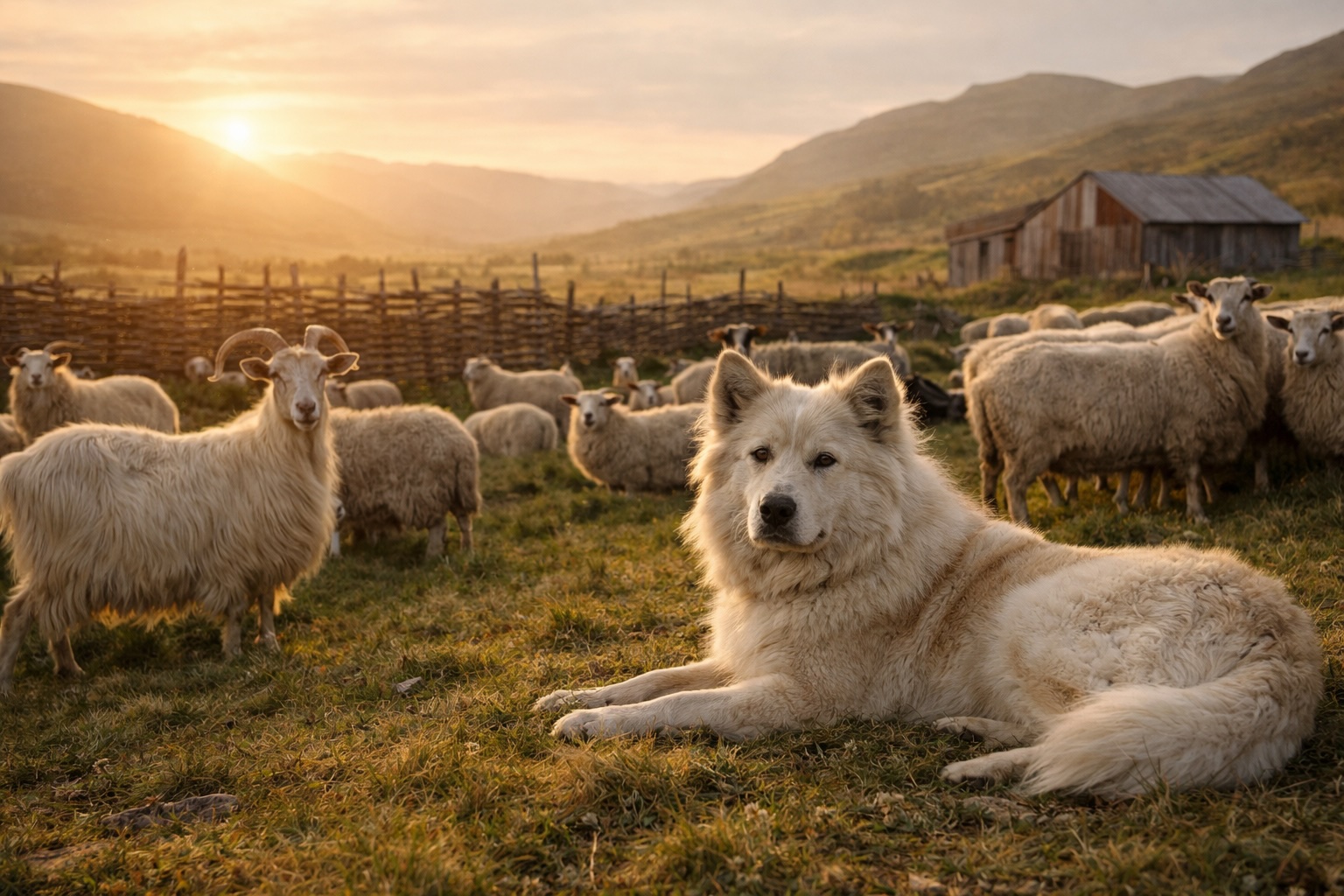
People often talk about whether the dog accepts the livestock, but the reverse matters just as much. The animals must learn to trust the dog. Sheep that bunch and bolt every time the guardian stands up are not yet settled with it. Goats that avoid the dog at feeding time are telling you the relationship is not right. Healthy bonding shows in the stock’s behavior. They graze near the guardian. They bed down in its vicinity. Mothers tolerate the dog around their young because they have learned it is part of the safe order of things.
I have watched lambs climb over a sleeping guardian like it was a warm rock in the sun. That kind of acceptance is earned slowly. The dog earns it by being predictable. Livestock, like wild game, notice patterns. They know the difference between a creature that belongs and one that brings trouble. If a guardian is rough, restless, or overly playful, the animals hold it at arm’s length. If it is steady and respectful, they draw close on their own.
Why Human Handling Still Matters
There is a mistake some owners make when they hear that guardian dogs should bond to livestock. They assume that means people should barely touch or train them. In my experience, that creates more problems than it solves. A livestock guardian still needs to accept guidance, veterinary care, fencing routines, and basic handling. The trick is balance. The dog should trust you without becoming so human-focused that it abandons its stock whenever it gets bored or lonely.
The best handlers are present but not overbearing. They correct rough behavior early, reward calmness, and keep routines consistent. They do not smother the dog with attention, and they do not leave its development to chance. A guardian with solid livestock bonding and solid human handling is far more useful than one lacking either piece.
Instinct Opens the Door, Experience Finishes the Job
Breed instincts matter. Great Pyrenees, Anatolian Shepherds, Akbash, Maremmas, and other guardian breeds were developed to live with and defend stock. That inherited tendency gives them a head start, but instinct alone does not complete the picture. Young dogs still need maturity, correction, and time. Most guardians are not fully reliable when they are very young, and many go through rough stages where chewing, chasing, or overexcitement show up.
This is where patience separates successful stockmen from frustrated ones. Bonding is not a single event. It is a process that deepens as the dog matures and proves itself in real conditions. A thunderstorm, a coyote singing beyond the fence, a difficult kidding season, a stretch of bitter weather when the herd huddles together and the dog stays on watch through the night—those are the moments that strengthen the relationship. Shared routine creates familiarity, but shared hardship often forges the deepest trust.
Out on rural ground, there is a look a seasoned guardian develops. It is hard to describe unless you have seen it. The dog stops acting like a youngster playing at responsibility and starts carrying itself with calm authority. The stock sense it too. They move around that dog as if it is part of the flock’s own intelligence. By then, bonding is no longer a training goal. It has become a fact of daily life.
Common Mistakes That Disrupt Bonding
Plenty can go wrong if owners rush the process. Too much unsupervised freedom too early can teach a young dog bad habits. Too little contact with livestock can leave the dog socially adrift. Rough corrections can make a sensitive guardian wary in the pasture, while constant pet-dog treatment can pull its attention away from the animals it is supposed to protect.
Another mistake is expecting a guardian to behave like a herding dog. Livestock guardians are meant to be thoughtful and independent. If every natural decision is punished because it does not look tidy to human eyes, the dog can become confused or ineffective. These dogs need structure, yes, but they also need room to settle into their role. Bonding grows best when instinct, management, and experience are allowed to work together.
Reading the Signs of a Strong Bond
A well-bonded guardian checks stock without harassing them. It stays close during vulnerable times such as lambing or kidding. It shows concern when animals are distressed. It barks with purpose rather than noise for the sake of noise. It positions itself where it can monitor both herd and surroundings. Most importantly, the livestock themselves appear at ease.
If you want a simple measure, watch what happens when the herd beds down. A bonded guardian does not hover nervously or wander off to seek entertainment. It settles in with them. That quiet scene says the work is being done exactly as it should be.
Why This Bond Matters So Much
The real power of livestock guardian dogs is not aggression. It is allegiance. Predators test weakness, confusion, and isolation. A guardian that truly bonds with its animals closes those gaps. It does not protect stock as outsiders. It protects them as its own charges. That shift changes everything about how the dog watches, reacts, and endures.
For dog owners coming from the herding world, that can be a beautiful thing to witness. Herding dogs impress you with motion, precision, and responsiveness. Livestock guardians impress you with presence. They bring a kind of old, steady honesty to the pasture. When the bond is right, the flock gains more than a defender. It gains a calm center.
In the end, livestock guardians bond with animals the same way all enduring working partnerships are built: through time, trust, and shared living. There is no shortcut worth taking. Raise them well, give them the right stock, stay patient through the awkward stages, and let experience shape their instincts. When it comes together, you do not just have a dog in a pasture. You have a guardian woven into the life of the herd, and that is where the best of them have always belonged.
I have seen young guardian dogs step into a pen awkward and uncertain, then weeks later move through a group of ewes like they had been born there. The sheep barely lifted their heads. That kind of ease does not come from tricks or force. It comes from steady exposure, proper raising, and a dog’s instinct being shaped in the right direction from the beginning.
For dog owners interested in herding dogs, it helps to understand that livestock guardians are built on a different idea entirely. A Border Collie gathers and moves stock through pressure and control. A guardian earns trust by living among the animals, reading their moods, and defending them without disturbing them. The bond is not flashy. Most of the time it is quiet, patient, and easy to miss unless you know what you are looking at.
Bonding Begins With Early Exposure
The foundation of a livestock guardian’s bond is laid early. In most good programs, puppies are introduced to livestock while they are still young enough to accept the animals as part of their world. That does not mean tossing a pup into a field and hoping instinct sorts it out. Good bonding is managed. The pup is given safe, close, repeated contact with calm stock so the sights, smells, and sounds become familiar and reassuring rather than exciting.
This early stage matters because a guardian dog is learning who it belongs to. A pup raised in the house, doted on constantly, and only occasionally shown livestock may become attached to people first and stock second. There is nothing wrong with a guardian liking human company, but if the dog is meant to stay with sheep, goats, or cattle, livestock must become the center of its daily life. The strongest guardians see their animals as their social group. They rest near them, follow their movement, and notice when something is wrong.
That bond is built through repetition. Day after day, the young dog eats, sleeps, and watches the herd. It learns the clatter of hooves, the nervous shuffle before a storm, the stillness that falls over a pasture at dusk. Over time, stock stop being objects of curiosity and become companions the dog recognizes individually and collectively.
Calm Stock Help Shape a Calm Dog
One hard lesson many beginners learn is that the wrong livestock can sour a young guardian’s development. Wild, flighty animals can trigger chasing, while aggressive stock can make a pup fearful or defensive. Calm older ewes, gentle nanny goats, or settled cattle often make the best teachers. They show the pup what normal looks like. A young dog raised around that kind of steadiness usually matures with better judgment.
In the field, calmness is everything. A good guardian is not supposed to stir up the herd every time it moves. It should carry itself like a trusted neighbor. When the animals are relaxed in the dog’s presence, that is one of the clearest signs real bonding is taking place.
The Difference Between Attachment and Possession
Real bonding is often misunderstood. Some folks think a guardian dog is bonded if it refuses to leave the pasture or plants itself near the stock all day. That can be part of it, but true bonding goes deeper than simple attachment to place. It is measured in behavior. Does the dog remain composed around newborns? Does it investigate a disturbance while keeping itself between danger and stock? Does it correct its own behavior when the animals show discomfort? Those are better signs than mere proximity.
A bonded livestock guardian does not treat stock like toys, trophies, or something to control. It does not grip heels, stalk lambs, or pester kids into running. Instead, it learns restraint. That self-control is one of the finest traits in any working guardian. You can walk into a pasture before sunrise and find the dog lying where it can watch both the gate and the flock, ears twitching, head up, but body relaxed. That picture tells you more about bonding than any pedigree ever could.
Trust Runs Both Directions
People often talk about whether the dog accepts the livestock, but the reverse matters just as much. The animals must learn to trust the dog. Sheep that bunch and bolt every time the guardian stands up are not yet settled with it. Goats that avoid the dog at feeding time are telling you the relationship is not right. Healthy bonding shows in the stock’s behavior. They graze near the guardian. They bed down in its vicinity. Mothers tolerate the dog around their young because they have learned it is part of the safe order of things.
I have watched lambs climb over a sleeping guardian like it was a warm rock in the sun. That kind of acceptance is earned slowly. The dog earns it by being predictable. Livestock, like wild game, notice patterns. They know the difference between a creature that belongs and one that brings trouble. If a guardian is rough, restless, or overly playful, the animals hold it at arm’s length. If it is steady and respectful, they draw close on their own.
Why Human Handling Still Matters
There is a mistake some owners make when they hear that guardian dogs should bond to livestock. They assume that means people should barely touch or train them. In my experience, that creates more problems than it solves. A livestock guardian still needs to accept guidance, veterinary care, fencing routines, and basic handling. The trick is balance. The dog should trust you without becoming so human-focused that it abandons its stock whenever it gets bored or lonely.
The best handlers are present but not overbearing. They correct rough behavior early, reward calmness, and keep routines consistent. They do not smother the dog with attention, and they do not leave its development to chance. A guardian with solid livestock bonding and solid human handling is far more useful than one lacking either piece.
Instinct Opens the Door, Experience Finishes the Job
Breed instincts matter. Great Pyrenees, Anatolian Shepherds, Akbash, Maremmas, and other guardian breeds were developed to live with and defend stock. That inherited tendency gives them a head start, but instinct alone does not complete the picture. Young dogs still need maturity, correction, and time. Most guardians are not fully reliable when they are very young, and many go through rough stages where chewing, chasing, or overexcitement show up.
This is where patience separates successful stockmen from frustrated ones. Bonding is not a single event. It is a process that deepens as the dog matures and proves itself in real conditions. A thunderstorm, a coyote singing beyond the fence, a difficult kidding season, a stretch of bitter weather when the herd huddles together and the dog stays on watch through the night—those are the moments that strengthen the relationship. Shared routine creates familiarity, but shared hardship often forges the deepest trust.
Out on rural ground, there is a look a seasoned guardian develops. It is hard to describe unless you have seen it. The dog stops acting like a youngster playing at responsibility and starts carrying itself with calm authority. The stock sense it too. They move around that dog as if it is part of the flock’s own intelligence. By then, bonding is no longer a training goal. It has become a fact of daily life.
Common Mistakes That Disrupt Bonding
Plenty can go wrong if owners rush the process. Too much unsupervised freedom too early can teach a young dog bad habits. Too little contact with livestock can leave the dog socially adrift. Rough corrections can make a sensitive guardian wary in the pasture, while constant pet-dog treatment can pull its attention away from the animals it is supposed to protect.
Another mistake is expecting a guardian to behave like a herding dog. Livestock guardians are meant to be thoughtful and independent. If every natural decision is punished because it does not look tidy to human eyes, the dog can become confused or ineffective. These dogs need structure, yes, but they also need room to settle into their role. Bonding grows best when instinct, management, and experience are allowed to work together.
Reading the Signs of a Strong Bond
A well-bonded guardian checks stock without harassing them. It stays close during vulnerable times such as lambing or kidding. It shows concern when animals are distressed. It barks with purpose rather than noise for the sake of noise. It positions itself where it can monitor both herd and surroundings. Most importantly, the livestock themselves appear at ease.
If you want a simple measure, watch what happens when the herd beds down. A bonded guardian does not hover nervously or wander off to seek entertainment. It settles in with them. That quiet scene says the work is being done exactly as it should be.
Why This Bond Matters So Much
The real power of livestock guardian dogs is not aggression. It is allegiance. Predators test weakness, confusion, and isolation. A guardian that truly bonds with its animals closes those gaps. It does not protect stock as outsiders. It protects them as its own charges. That shift changes everything about how the dog watches, reacts, and endures.
For dog owners coming from the herding world, that can be a beautiful thing to witness. Herding dogs impress you with motion, precision, and responsiveness. Livestock guardians impress you with presence. They bring a kind of old, steady honesty to the pasture. When the bond is right, the flock gains more than a defender. It gains a calm center.
In the end, livestock guardians bond with animals the same way all enduring working partnerships are built: through time, trust, and shared living. There is no shortcut worth taking. Raise them well, give them the right stock, stay patient through the awkward stages, and let experience shape their instincts. When it comes together, you do not just have a dog in a pasture. You have a guardian woven into the life of the herd, and that is where the best of them have always belonged.




View all 0 comments