Alaskan Malamutes and Freight Pulling
Power, Purpose, and Working-Dog Heritage
Jeff Davis | https://herdingdogcentral.com
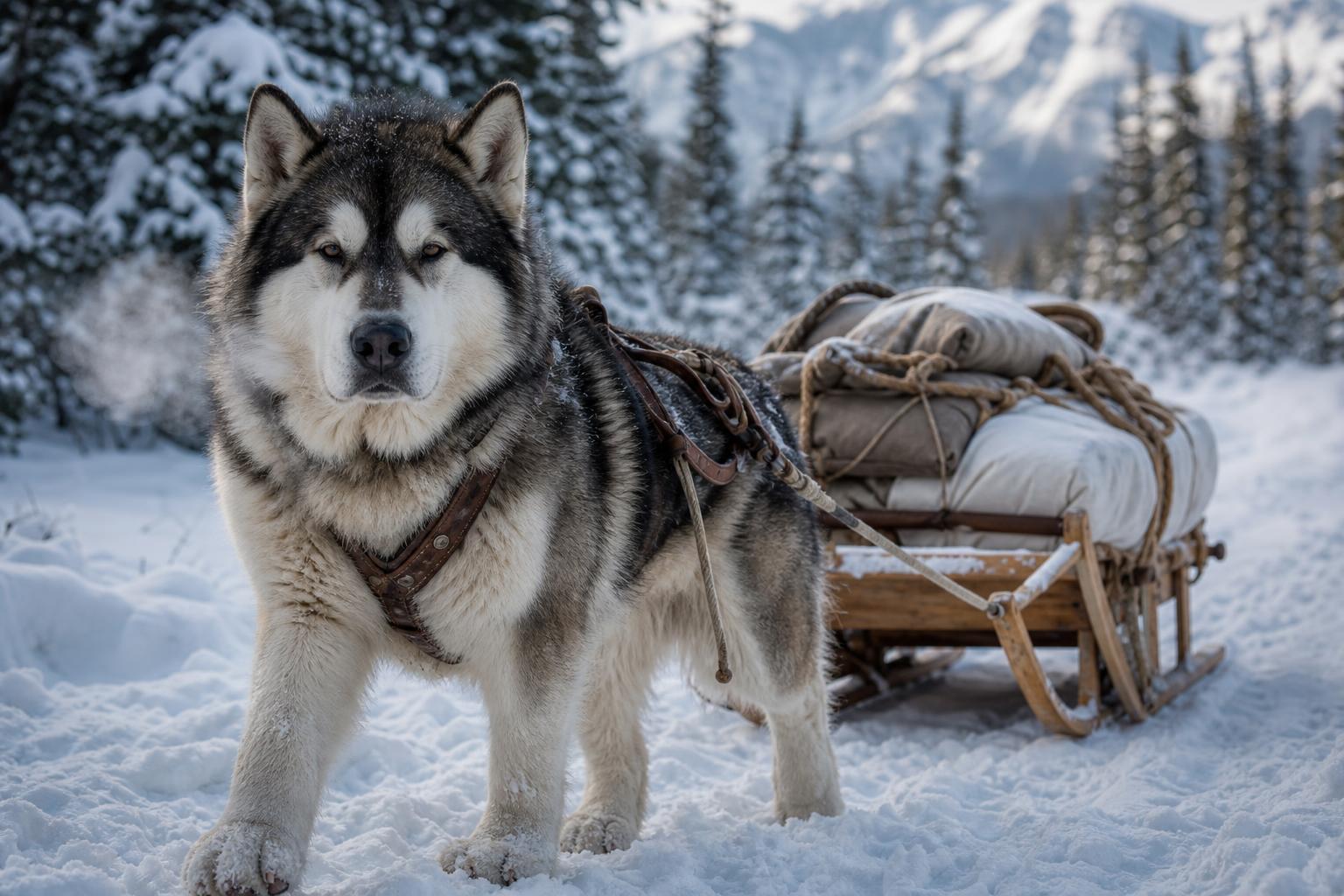
There are some dogs you admire from the porch, and there are some you understand only after you have watched them lean into a load with their whole heart. The Alaskan Malamute belongs in that second camp. A good Malamute in a proper freight harness is not just strong. He is steady, thoughtful, and committed in a way that tells you this work is older than any modern hobby. For dog owners interested in herding dogs and other working breeds, freight pulling offers a sharp lesson in what purposeful breeding really looks like.
The Alaskan Malamute was developed to move substantial loads over long distances in brutal northern conditions. That history matters. It shaped the breed’s bone, muscle, feet, coat, and, just as important, its mind. While herding dogs are prized for gathering, controlling movement, and reading stock, the Malamute was bred for power, endurance, and practical teamwork with people. Different job, same truth: when a dog is bred for work, you can see it in every step.
The Working Roots of the Alaskan Malamute
Long before organized pull events and recreational carting, Alaskan Malamutes earned their keep in the real world. They were freight dogs, expected to haul supplies where machines could not go and where weakness was exposed fast. Snow, ice, hunger, distance, and bitter wind do not tolerate poor breeding. Dogs that lacked soundness, toughness, or willingness simply did not hold up. Over time, what remained was a breed known for strength and resilience, but also for a measured kind of determination.
That is one thing many newcomers misunderstand. A Malamute is not a frantic dog. He is not built for jittery speed or nervous motion. In freight pulling, the best ones often look almost calm before the line tightens. Then the chest drops, the hindquarters engage, and the dog commits with a deliberate drive that seems to gather the ground under him. It is power delivered with sense behind it.
For owners familiar with herding breeds, this can be a fascinating contrast. A Border Collie may work with eye, pressure, and instant response. A Malamute, by comparison, brings brute traction, patience, and a strong internal sense of task. Both are working minds, but they are expressed in very different ways.
Why Freight Pulling Fits the Breed So Well
Freight pulling is not just something a Malamute can do. It is something the breed was built to do. The broad chest, strong shoulders, dense frame, and balanced movement all serve the job of drawing weight efficiently. A proper Malamute should not look exaggerated or clumsy. He should look like a dog capable of honest labor, one that can apply force without falling apart under it.
Structure matters more here than many pet owners realize. Heavy bone alone means very little if the dog lacks sound joints, proper angulation, solid feet, and core stability. In the field, a dog that pulls with poor mechanics pays for it in fatigue and strain. The old-timers knew this well. They valued dogs that could work tomorrow, not just impress someone for a minute today.
Temperament is equally important. Freight pulling demands cooperation. The dog must accept harness work, tolerate pressure, and stay mentally connected to the handler. The strongest dog in the yard is useless if he fights the equipment, loses focus, or refuses direction. Good Malamutes often carry an independent streak, but when properly raised and trained, they can channel that confidence into reliable work.
Strength Is Only Part of the Story
I have seen plenty of big dogs that looked the part standing still. Once the harness went on, though, they told a different story. Some balked. Some lunged without rhythm and wasted themselves. Some had no patience for the slow, grinding effort that freight work requires. A seasoned Malamute does not merely throw his body at a load. He settles into it, feels the resistance, and works through it.
That distinction matters for owners who are thinking about training. Freight pulling is as much about efficiency and attitude as raw muscle. The dog has to understand the task, trust the handler, and learn how to use his body correctly.
Training Alaskan Malamutes for Freight Pulling
Training starts long before any meaningful weight is involved. The first goal is not power. It is confidence and clarity. A young Malamute should be introduced to the harness in a calm, positive way. Let him wear it, move in it, and understand that harness time means work with guidance, not confusion. Rushing this stage creates problems that can linger.
Once the dog is comfortable, light resistance can be introduced. That might be a small drag, a tire suited to conditions, or a cart with almost no load. The point is to teach forward drive, steady pulling, and response to voice commands. A dog that learns to start cleanly, hold tension, and continue without panic is building the right foundation.
Short sessions are often best, especially early on. You want the dog leaving eager, not mentally cooked or physically sore. Praise matters. So does timing. When the Malamute finds the line, leans correctly, and moves the load, that moment should be reinforced. Over time, the dog begins to understand both the mechanics and the purpose.
Conditioning should be increased gradually and with a hard eye on soundness. Pulling heavy weight too young, or before the dog has proper muscular development, is a fool’s shortcut. It risks injury and can sour the dog on the work. Mature joints, controlled progress, and regular rest are part of responsible training. The old freight dogs were tough, but tough does not mean careless.
Equipment, Surface, and Safety
If there is one place where inexperience shows up fast, it is in gear and footing. A properly fitted freight harness is essential. It should distribute load correctly, allow full shoulder movement, and avoid chafing or pinching. Poor equipment can turn a willing dog into a resentful one in a hurry.
The ground matters too. Different surfaces change resistance and strain. Snow, packed trail, dirt, and wheeled setups all ask different things from the dog. Handlers need to be aware of temperature, traction, and fatigue. Even a powerful Malamute can overheat if worked hard in unsuitable weather. Beneath that heavy coat is a dog designed for cold-country labor, not careless summer exertion.
Hydration, paw care, and recovery should be treated as part of the job. Check feet often. Watch gait closely after work. A dog that is slower to rise, shortening stride, or reluctant to harness may be telling you something important.
What Freight Pulling Reveals About Working Dogs
For people who come to Herding Dog Central because they admire purpose-bred dogs, Malamutes offer a worthwhile study. Freight pulling highlights a central truth across all working breeds: real function leaves fingerprints on body and mind. Whether a dog gathers sheep, guards stock, trails game, or hauls freight, form follows duty.
That is why the Alaskan Malamute deserves more than a casual reputation as a big fluffy northern dog. At its best, this breed represents the practical wisdom of generations who needed dependable canine labor. There is dignity in that. Watch a good Malamute pull and you are looking at a piece of living history, one that still makes perfect sense when given the chance to work.
I have always believed you learn a breed best by seeing it do what it was made to do. In the hunting world, that might mean watching a dog quarter a field, trail wounded game, or hold steady under gunfire. With Malamutes, freight pulling is that proving ground. It strips away ornament and leaves you with the essentials: structure, nerve, willingness, and stamina.
Is Freight Pulling Right for Today’s Malamute Owner?
Not every owner plans to run formal pull events, and that is fine. Freight pulling can still teach valuable lessons about channeling a working dog’s instincts. A Malamute with meaningful exercise, harness work, and a clear job is often a better companion than one left to invent his own entertainment. This is a breed that benefits from purpose.
That said, freight pulling is not something to approach casually or as a stunt. It requires maturity, preparation, proper gear, and honest respect for the dog’s limits. Owners who take the time to learn often find the experience deeply rewarding. The bond that forms when a dog leans into a task with trust is hard to match. It feels old-fashioned in the best way, like stepping back into a time when dogs were partners first and decorations second.
For households used to the quick reflexes and stock sense of herding dogs, the Malamute may seem slower to reveal himself. Give him real work, though, and the picture sharpens. You begin to see the intelligence in his pacing, the value of his steadiness, and the quiet grit that made freight pulling possible in the hardest country on earth.
In the end, Alaskan Malamutes and freight pulling belong together because the work matches the breed’s very foundation. This is not a modern gimmick pasted onto an old dog. It is a continuation of purpose. And if you care about working dogs of any kind, that is something worth understanding, preserving, and respecting.
The Alaskan Malamute was developed to move substantial loads over long distances in brutal northern conditions. That history matters. It shaped the breed’s bone, muscle, feet, coat, and, just as important, its mind. While herding dogs are prized for gathering, controlling movement, and reading stock, the Malamute was bred for power, endurance, and practical teamwork with people. Different job, same truth: when a dog is bred for work, you can see it in every step.
The Working Roots of the Alaskan Malamute
Long before organized pull events and recreational carting, Alaskan Malamutes earned their keep in the real world. They were freight dogs, expected to haul supplies where machines could not go and where weakness was exposed fast. Snow, ice, hunger, distance, and bitter wind do not tolerate poor breeding. Dogs that lacked soundness, toughness, or willingness simply did not hold up. Over time, what remained was a breed known for strength and resilience, but also for a measured kind of determination.
That is one thing many newcomers misunderstand. A Malamute is not a frantic dog. He is not built for jittery speed or nervous motion. In freight pulling, the best ones often look almost calm before the line tightens. Then the chest drops, the hindquarters engage, and the dog commits with a deliberate drive that seems to gather the ground under him. It is power delivered with sense behind it.
For owners familiar with herding breeds, this can be a fascinating contrast. A Border Collie may work with eye, pressure, and instant response. A Malamute, by comparison, brings brute traction, patience, and a strong internal sense of task. Both are working minds, but they are expressed in very different ways.
Why Freight Pulling Fits the Breed So Well
Freight pulling is not just something a Malamute can do. It is something the breed was built to do. The broad chest, strong shoulders, dense frame, and balanced movement all serve the job of drawing weight efficiently. A proper Malamute should not look exaggerated or clumsy. He should look like a dog capable of honest labor, one that can apply force without falling apart under it.
Structure matters more here than many pet owners realize. Heavy bone alone means very little if the dog lacks sound joints, proper angulation, solid feet, and core stability. In the field, a dog that pulls with poor mechanics pays for it in fatigue and strain. The old-timers knew this well. They valued dogs that could work tomorrow, not just impress someone for a minute today.
Temperament is equally important. Freight pulling demands cooperation. The dog must accept harness work, tolerate pressure, and stay mentally connected to the handler. The strongest dog in the yard is useless if he fights the equipment, loses focus, or refuses direction. Good Malamutes often carry an independent streak, but when properly raised and trained, they can channel that confidence into reliable work.
Strength Is Only Part of the Story
I have seen plenty of big dogs that looked the part standing still. Once the harness went on, though, they told a different story. Some balked. Some lunged without rhythm and wasted themselves. Some had no patience for the slow, grinding effort that freight work requires. A seasoned Malamute does not merely throw his body at a load. He settles into it, feels the resistance, and works through it.
That distinction matters for owners who are thinking about training. Freight pulling is as much about efficiency and attitude as raw muscle. The dog has to understand the task, trust the handler, and learn how to use his body correctly.
Training Alaskan Malamutes for Freight Pulling
Training starts long before any meaningful weight is involved. The first goal is not power. It is confidence and clarity. A young Malamute should be introduced to the harness in a calm, positive way. Let him wear it, move in it, and understand that harness time means work with guidance, not confusion. Rushing this stage creates problems that can linger.
Once the dog is comfortable, light resistance can be introduced. That might be a small drag, a tire suited to conditions, or a cart with almost no load. The point is to teach forward drive, steady pulling, and response to voice commands. A dog that learns to start cleanly, hold tension, and continue without panic is building the right foundation.
Short sessions are often best, especially early on. You want the dog leaving eager, not mentally cooked or physically sore. Praise matters. So does timing. When the Malamute finds the line, leans correctly, and moves the load, that moment should be reinforced. Over time, the dog begins to understand both the mechanics and the purpose.
Conditioning should be increased gradually and with a hard eye on soundness. Pulling heavy weight too young, or before the dog has proper muscular development, is a fool’s shortcut. It risks injury and can sour the dog on the work. Mature joints, controlled progress, and regular rest are part of responsible training. The old freight dogs were tough, but tough does not mean careless.
Equipment, Surface, and Safety
If there is one place where inexperience shows up fast, it is in gear and footing. A properly fitted freight harness is essential. It should distribute load correctly, allow full shoulder movement, and avoid chafing or pinching. Poor equipment can turn a willing dog into a resentful one in a hurry.
The ground matters too. Different surfaces change resistance and strain. Snow, packed trail, dirt, and wheeled setups all ask different things from the dog. Handlers need to be aware of temperature, traction, and fatigue. Even a powerful Malamute can overheat if worked hard in unsuitable weather. Beneath that heavy coat is a dog designed for cold-country labor, not careless summer exertion.
Hydration, paw care, and recovery should be treated as part of the job. Check feet often. Watch gait closely after work. A dog that is slower to rise, shortening stride, or reluctant to harness may be telling you something important.
What Freight Pulling Reveals About Working Dogs
For people who come to Herding Dog Central because they admire purpose-bred dogs, Malamutes offer a worthwhile study. Freight pulling highlights a central truth across all working breeds: real function leaves fingerprints on body and mind. Whether a dog gathers sheep, guards stock, trails game, or hauls freight, form follows duty.
That is why the Alaskan Malamute deserves more than a casual reputation as a big fluffy northern dog. At its best, this breed represents the practical wisdom of generations who needed dependable canine labor. There is dignity in that. Watch a good Malamute pull and you are looking at a piece of living history, one that still makes perfect sense when given the chance to work.
I have always believed you learn a breed best by seeing it do what it was made to do. In the hunting world, that might mean watching a dog quarter a field, trail wounded game, or hold steady under gunfire. With Malamutes, freight pulling is that proving ground. It strips away ornament and leaves you with the essentials: structure, nerve, willingness, and stamina.
Is Freight Pulling Right for Today’s Malamute Owner?
Not every owner plans to run formal pull events, and that is fine. Freight pulling can still teach valuable lessons about channeling a working dog’s instincts. A Malamute with meaningful exercise, harness work, and a clear job is often a better companion than one left to invent his own entertainment. This is a breed that benefits from purpose.
That said, freight pulling is not something to approach casually or as a stunt. It requires maturity, preparation, proper gear, and honest respect for the dog’s limits. Owners who take the time to learn often find the experience deeply rewarding. The bond that forms when a dog leans into a task with trust is hard to match. It feels old-fashioned in the best way, like stepping back into a time when dogs were partners first and decorations second.
For households used to the quick reflexes and stock sense of herding dogs, the Malamute may seem slower to reveal himself. Give him real work, though, and the picture sharpens. You begin to see the intelligence in his pacing, the value of his steadiness, and the quiet grit that made freight pulling possible in the hardest country on earth.
In the end, Alaskan Malamutes and freight pulling belong together because the work matches the breed’s very foundation. This is not a modern gimmick pasted onto an old dog. It is a continuation of purpose. And if you care about working dogs of any kind, that is something worth understanding, preserving, and respecting.