Common Herding Commands Used by Stockmen
The language behind a good stock dog
Jeff Davis | https://herdingdogcentral.com
 0
0 0
0 0
0 0
0 0
0
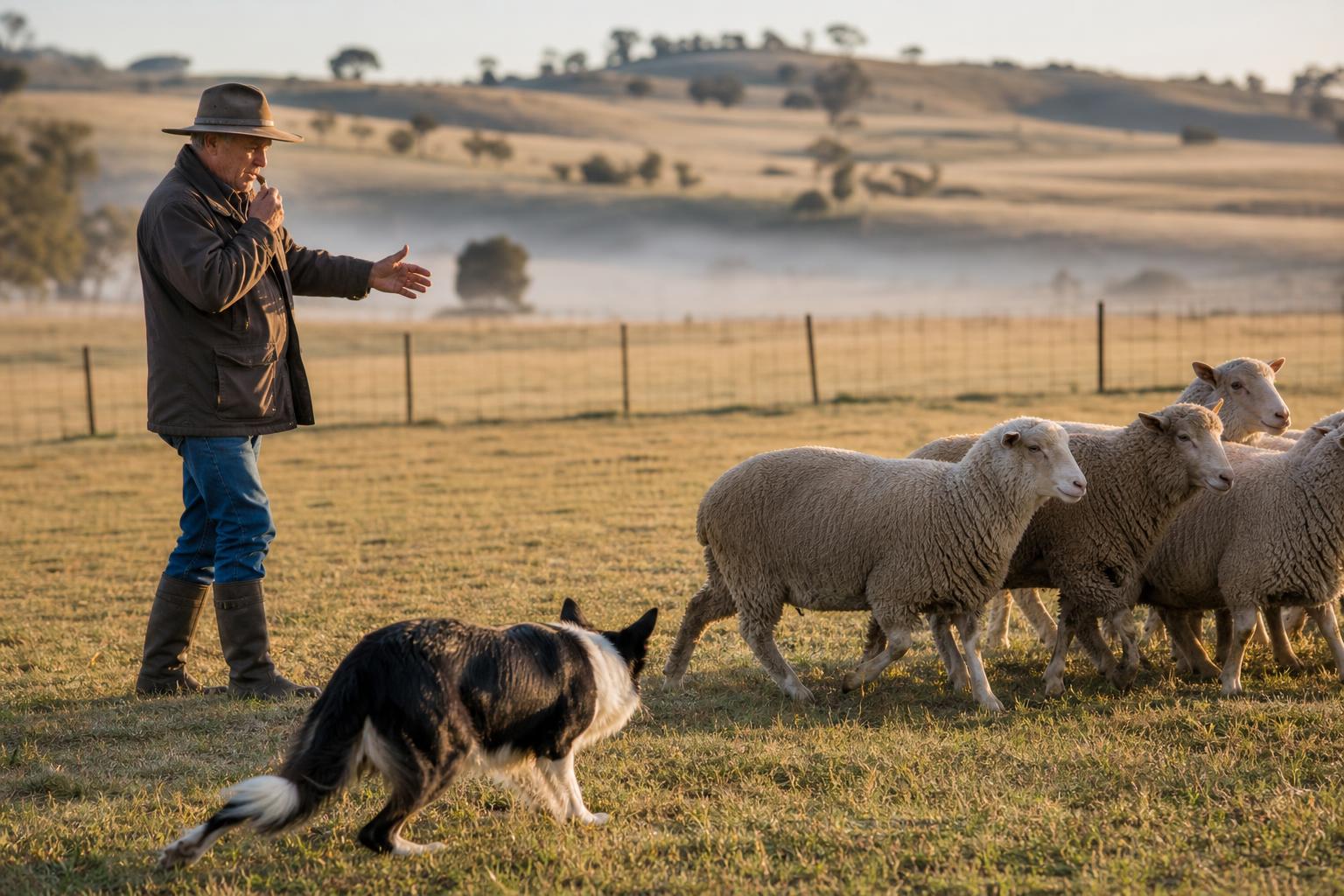
A stockman whistles once, says a clipped word or two, and a dog arcs wide across a pasture, settles behind a bunch of ewes, and brings them home without much fuss. It can look like instinct alone, but anybody who has worked dogs in rough weather, on uneven ground, and around nervous stock knows better. Instinct matters, breeding matters, and grit matters, but commands are what shape all that raw ability into useful work.
Herding commands used by stockmen are not just fancy trial terms. They are practical tools, born out of necessity and sharpened by repetition. A command has to carry in the wind, cut through distance, and mean the same thing every single time. Whether a man is moving range sheep across open country or shifting a handful of cattle through a narrow gate, the dog needs clear direction. For dog owners interested in herding breeds, understanding these commands opens a window into how working handlers communicate with dogs under pressure.
Why stockmen rely on short, consistent commands
In the field, there is no room for speeches. Livestock react in seconds, and a dog already in motion needs an instruction it can recognize instantly. That is why most herding commands are short, sharp, and used with the same tone over and over. Stockmen often stick with one set of words for life because changing language halfway through training muddies the dog’s confidence.
Some handlers use traditional terms tied to old sheepdog culture, while others prefer plain English. One stockman may say “come-bye,” another may say “go by,” and another may simply say “left,” depending on the direction and system he was taught. The exact word matters less than consistency. Dogs do not care about tradition nearly as much as they care about patterns they can trust.
The core flanking commands
Come-bye or go-bye
This is one of the most familiar herding commands, especially in Border Collie work. It tells the dog to flank in one direction around the stock, usually clockwise from the handler’s point of view, though some handlers define it from the dog’s perspective. That difference is one reason beginners need to train under a clear system and not mix terminology from several trainers at once.
A good flank is more than movement in a circle. The dog should travel with purpose, maintain enough distance not to blow the stock apart, and come into balance at the right point. When you watch a seasoned dog take a clean flank on sheep that are ready to break, it is a fine thing. The dog seems to pour around them like water, not crowding, not hesitating, just applying enough influence to shape the bunch.
Away to me
This command sends the dog in the opposite flanking direction. If come-bye takes the dog one way around the stock, away to me sends it the other. Together, these two commands form the steering wheel of stock dog work. A stockman uses them to place the dog precisely where pressure needs to be applied. That might mean gathering scattered sheep off a hill, turning cattle off a fence line, or lining up goats that would rather test every weak spot in the pen.
The best handlers do not overuse these commands. They ask for a flank, then let the dog carry it out. Constant nagging can make a dog mechanical and uncertain. Field work favors dogs that understand the command and finish the job with some independence.
Commands that control pace and pressure
Walk up
Walk up tells the dog to move straight in on the stock with controlled pressure. It is one of the most useful commands a stockman has because most real work comes down to advancing livestock calmly and directly. A dog that walks up steadily can push stock through a lane, ease them toward a trailer, or hold them to the handler without a lot of racket.
This command separates flashy movement from useful movement. Plenty of dogs can run, flank, and make a scene. Fewer dogs can shorten their stride, lower the heat, and walk into stubborn animals with calm authority. On rank cattle, that kind of steadiness is worth its weight in feed.
Steady
Steady means slow down, think, and soften your pressure. It is often used when a dog is getting too excited or when the stock are light and ready to bolt. Good stockmen know every bunch of animals carries a different mind. Fresh sheep on a windy day may need a whisper of pressure. Brood cows with calves may need something firmer but measured. Steady keeps the dog from rushing the moment and turning manageable livestock into a wreck.
Many young dogs hear this command often. Youth comes with eagerness, and eagerness without control can scatter stock from one end of the pasture to the other. A dog that truly understands steady learns that backing off is not weakness. It is skill.
Stopping and holding commands
Lie down
Lie down is the classic stop command in sheepdog work, though some handlers use “down,” “stand,” or “stay.” Interestingly, many trained dogs respond to lie down by freezing in place rather than literally dropping flat, especially in practical work where terrain, speed, or stock pressure make a full down unnecessary. The purpose is immediate control. The dog must stop influencing the stock so the handler can reset the picture.
A reliable stop saves more situations than any other command. If stock start to split, if the dog is pushing too hard, if a gate is not ready, or if danger appears, that stop has to mean something. Old stockmen value obedience here because the field has a way of punishing sloppy control. One missed stop near a road, a bog, or a set of horns can turn into a hard lesson.
Stand
Stand asks the dog to hold position without creeping. Some handlers prefer it over lie down in close work because it keeps the dog mentally engaged and ready to move again. Around cattle in particular, standing can keep the dog balanced and prepared to dodge if an animal turns aggressive. It is a small distinction, but in practical stock work small distinctions often matter.
That’ll do
This is the release command, the signal that the work is over or paused and the dog should come off stock and return to the handler. For a hard-driving dog, that can be a difficult ask. Strong workers often want one more push, one more circle, one more chance to hold control. A solid that’ll do shows trust. The dog is saying, in effect, that if the boss says the job is done, then it is done.
Commands for gathering, driving, and positioning
Outrun and get out
When stock are spread out or set far from the handler, the dog may be sent on an outrun, a wide cast around the animals to gather them. Some stockmen use “get out” or similar language to widen that path if the dog is slicing in too tight. Width matters. A tight outrun can spook stock before the dog ever reaches balance, and once animals break, the whole gather gets harder.
Watching a proper outrun across open ground is one of the pleasures of herding dogs. The dog leaves with speed, bends wide, disappears briefly in grass or rolling ground, then reappears in exactly the right place behind the stock. It looks graceful, but it is really geometry and pressure playing out in real time.
Get back
Get back usually asks the dog to increase distance from the stock or give them more room. This is especially helpful with flighty animals and with young dogs that want to grip the work too closely. Distance is part of control. A dog pressing too near may think it is showing power, but often it is just creating panic. Skilled handlers teach dogs that backing off can move stock better than crowding ever will.
Look back
Look back sends the dog to search for missed or trailing stock. On a ranch or farm, that can be the difference between bringing in the whole bunch and leaving two ewes bedded in a draw or one calf hidden in brush. This command demands a thinking dog. It is not just movement but initiative guided by a cue. The dog must turn away from what it already has and trust the handler that more work remains behind.
Whistles, voice, and the stockman’s style
Many stockmen pair voice commands with whistle commands, especially at distance. A whistle carries farther than the human voice and cuts cleaner through wind. Some handlers can run nearly an entire gather with whistles alone. Others stick mostly to voice in smaller fields or pen work. Neither method is automatically better. The best system is the one the dog understands and the handler can deliver consistently.
Style also varies by country, by stock, and by breed. Border Collies dominate formal sheep work, so much of the command vocabulary comes from that tradition. Australian Shepherds, Kelpies, Catahoulas, and other working breeds may be trained with more plainspoken ranch language. A cattle hand might say “get around,” “easy,” “walk on,” or “here,” and his dog may be every bit as broke as a trial dog that knows the old terms. Useful work has many accents.
Teaching commands so they hold under pressure
No command means much until it has been tested against live stock and real distraction. Dogs learn these words in pieces. First comes exposure and instinct, then direction, then timing, then the long seasoning process that turns a dog from promising to dependable. Good trainers do not dump a dozen commands on a green dog in one week. They build understanding step by step and make sure the dog connects each word with a clear action.
Timing is the heart of it. Say the command too late and the dog learns the wrong lesson. Correct too harshly and you dull initiative. Let too much slide and bad habits harden. Stockmen who train useful dogs develop feel as much as method. They watch the stock, watch the dog, and choose the moment. There is an old truth in working dogs: the livestock often tell you whether your command landed correctly.
Why these commands matter to herding dog owners
Even if you do not work sheep every week or move cattle for a living, understanding common herding commands used by stockmen helps you see your dog more clearly. Herding breeds are wired to respond to pressure, motion, space, and direction. That instinct shows up in daily life, sometimes in ways owners enjoy and sometimes in ways that need management. The same dog that naturally gathers children in the backyard or circles other dogs at the park is revealing pieces of the working mind these commands are designed to shape.
Learn the language, and you learn respect for the craft behind the dog. A finished stock dog is not just obedient. It is thoughtful, measured, brave when needed, and biddable enough to take correction in the middle of excitement. Stockmen have relied on these commands for generations because they work. They turn instinct into partnership, and partnership is what makes a herding dog worth following through dust, rain, and the long light of evening chores.
Herding commands used by stockmen are not just fancy trial terms. They are practical tools, born out of necessity and sharpened by repetition. A command has to carry in the wind, cut through distance, and mean the same thing every single time. Whether a man is moving range sheep across open country or shifting a handful of cattle through a narrow gate, the dog needs clear direction. For dog owners interested in herding breeds, understanding these commands opens a window into how working handlers communicate with dogs under pressure.
Why stockmen rely on short, consistent commands
In the field, there is no room for speeches. Livestock react in seconds, and a dog already in motion needs an instruction it can recognize instantly. That is why most herding commands are short, sharp, and used with the same tone over and over. Stockmen often stick with one set of words for life because changing language halfway through training muddies the dog’s confidence.
Some handlers use traditional terms tied to old sheepdog culture, while others prefer plain English. One stockman may say “come-bye,” another may say “go by,” and another may simply say “left,” depending on the direction and system he was taught. The exact word matters less than consistency. Dogs do not care about tradition nearly as much as they care about patterns they can trust.
The core flanking commands
Come-bye or go-bye
This is one of the most familiar herding commands, especially in Border Collie work. It tells the dog to flank in one direction around the stock, usually clockwise from the handler’s point of view, though some handlers define it from the dog’s perspective. That difference is one reason beginners need to train under a clear system and not mix terminology from several trainers at once.
A good flank is more than movement in a circle. The dog should travel with purpose, maintain enough distance not to blow the stock apart, and come into balance at the right point. When you watch a seasoned dog take a clean flank on sheep that are ready to break, it is a fine thing. The dog seems to pour around them like water, not crowding, not hesitating, just applying enough influence to shape the bunch.
Away to me
This command sends the dog in the opposite flanking direction. If come-bye takes the dog one way around the stock, away to me sends it the other. Together, these two commands form the steering wheel of stock dog work. A stockman uses them to place the dog precisely where pressure needs to be applied. That might mean gathering scattered sheep off a hill, turning cattle off a fence line, or lining up goats that would rather test every weak spot in the pen.
The best handlers do not overuse these commands. They ask for a flank, then let the dog carry it out. Constant nagging can make a dog mechanical and uncertain. Field work favors dogs that understand the command and finish the job with some independence.
Commands that control pace and pressure
Walk up
Walk up tells the dog to move straight in on the stock with controlled pressure. It is one of the most useful commands a stockman has because most real work comes down to advancing livestock calmly and directly. A dog that walks up steadily can push stock through a lane, ease them toward a trailer, or hold them to the handler without a lot of racket.
This command separates flashy movement from useful movement. Plenty of dogs can run, flank, and make a scene. Fewer dogs can shorten their stride, lower the heat, and walk into stubborn animals with calm authority. On rank cattle, that kind of steadiness is worth its weight in feed.
Steady
Steady means slow down, think, and soften your pressure. It is often used when a dog is getting too excited or when the stock are light and ready to bolt. Good stockmen know every bunch of animals carries a different mind. Fresh sheep on a windy day may need a whisper of pressure. Brood cows with calves may need something firmer but measured. Steady keeps the dog from rushing the moment and turning manageable livestock into a wreck.
Many young dogs hear this command often. Youth comes with eagerness, and eagerness without control can scatter stock from one end of the pasture to the other. A dog that truly understands steady learns that backing off is not weakness. It is skill.
Stopping and holding commands
Lie down
Lie down is the classic stop command in sheepdog work, though some handlers use “down,” “stand,” or “stay.” Interestingly, many trained dogs respond to lie down by freezing in place rather than literally dropping flat, especially in practical work where terrain, speed, or stock pressure make a full down unnecessary. The purpose is immediate control. The dog must stop influencing the stock so the handler can reset the picture.
A reliable stop saves more situations than any other command. If stock start to split, if the dog is pushing too hard, if a gate is not ready, or if danger appears, that stop has to mean something. Old stockmen value obedience here because the field has a way of punishing sloppy control. One missed stop near a road, a bog, or a set of horns can turn into a hard lesson.
Stand
Stand asks the dog to hold position without creeping. Some handlers prefer it over lie down in close work because it keeps the dog mentally engaged and ready to move again. Around cattle in particular, standing can keep the dog balanced and prepared to dodge if an animal turns aggressive. It is a small distinction, but in practical stock work small distinctions often matter.
That’ll do
This is the release command, the signal that the work is over or paused and the dog should come off stock and return to the handler. For a hard-driving dog, that can be a difficult ask. Strong workers often want one more push, one more circle, one more chance to hold control. A solid that’ll do shows trust. The dog is saying, in effect, that if the boss says the job is done, then it is done.
Commands for gathering, driving, and positioning
Outrun and get out
When stock are spread out or set far from the handler, the dog may be sent on an outrun, a wide cast around the animals to gather them. Some stockmen use “get out” or similar language to widen that path if the dog is slicing in too tight. Width matters. A tight outrun can spook stock before the dog ever reaches balance, and once animals break, the whole gather gets harder.
Watching a proper outrun across open ground is one of the pleasures of herding dogs. The dog leaves with speed, bends wide, disappears briefly in grass or rolling ground, then reappears in exactly the right place behind the stock. It looks graceful, but it is really geometry and pressure playing out in real time.
Get back
Get back usually asks the dog to increase distance from the stock or give them more room. This is especially helpful with flighty animals and with young dogs that want to grip the work too closely. Distance is part of control. A dog pressing too near may think it is showing power, but often it is just creating panic. Skilled handlers teach dogs that backing off can move stock better than crowding ever will.
Look back
Look back sends the dog to search for missed or trailing stock. On a ranch or farm, that can be the difference between bringing in the whole bunch and leaving two ewes bedded in a draw or one calf hidden in brush. This command demands a thinking dog. It is not just movement but initiative guided by a cue. The dog must turn away from what it already has and trust the handler that more work remains behind.
Whistles, voice, and the stockman’s style
Many stockmen pair voice commands with whistle commands, especially at distance. A whistle carries farther than the human voice and cuts cleaner through wind. Some handlers can run nearly an entire gather with whistles alone. Others stick mostly to voice in smaller fields or pen work. Neither method is automatically better. The best system is the one the dog understands and the handler can deliver consistently.
Style also varies by country, by stock, and by breed. Border Collies dominate formal sheep work, so much of the command vocabulary comes from that tradition. Australian Shepherds, Kelpies, Catahoulas, and other working breeds may be trained with more plainspoken ranch language. A cattle hand might say “get around,” “easy,” “walk on,” or “here,” and his dog may be every bit as broke as a trial dog that knows the old terms. Useful work has many accents.
Teaching commands so they hold under pressure
No command means much until it has been tested against live stock and real distraction. Dogs learn these words in pieces. First comes exposure and instinct, then direction, then timing, then the long seasoning process that turns a dog from promising to dependable. Good trainers do not dump a dozen commands on a green dog in one week. They build understanding step by step and make sure the dog connects each word with a clear action.
Timing is the heart of it. Say the command too late and the dog learns the wrong lesson. Correct too harshly and you dull initiative. Let too much slide and bad habits harden. Stockmen who train useful dogs develop feel as much as method. They watch the stock, watch the dog, and choose the moment. There is an old truth in working dogs: the livestock often tell you whether your command landed correctly.
Why these commands matter to herding dog owners
Even if you do not work sheep every week or move cattle for a living, understanding common herding commands used by stockmen helps you see your dog more clearly. Herding breeds are wired to respond to pressure, motion, space, and direction. That instinct shows up in daily life, sometimes in ways owners enjoy and sometimes in ways that need management. The same dog that naturally gathers children in the backyard or circles other dogs at the park is revealing pieces of the working mind these commands are designed to shape.
Learn the language, and you learn respect for the craft behind the dog. A finished stock dog is not just obedient. It is thoughtful, measured, brave when needed, and biddable enough to take correction in the middle of excitement. Stockmen have relied on these commands for generations because they work. They turn instinct into partnership, and partnership is what makes a herding dog worth following through dust, rain, and the long light of evening chores.