Differences Between Guarding and Herding Instincts in Dogs
Jeff Davis | https://herdingdogcentral.com
 0
0 0
0 0
0 0
0 0
0
Spend enough years around working dogs, livestock, and open ground, and you learn fast that not every hard stare means the same thing. To some folks, a dog circling sheep, blocking a gate, and barking at strangers may all look like versions of the same behavior. Out in the real world, though, guarding and herding instincts come from different jobs, different pressures, and different wiring in the dog's mind. Understanding that difference matters, especially for owners who live with herding breeds and wonder why their dog chases the kids, shadows the vacuum, or plants itself between the family and the front door.
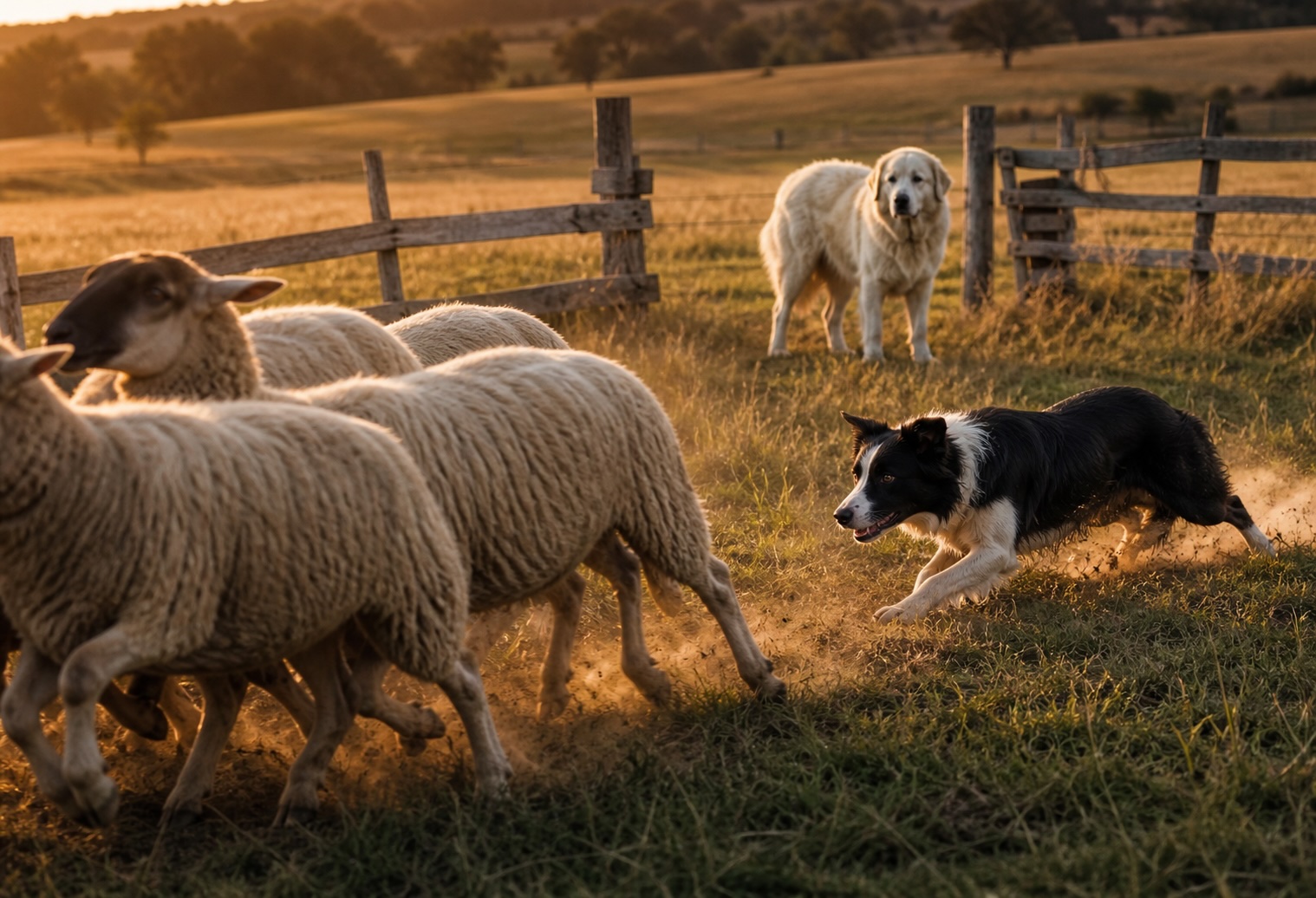
At Herding Dog Central, this is one of the most important distinctions to get right. A guarding dog is built to protect territory, people, or livestock by deterring threats. A herding dog is built to gather, move, and control stock without destroying the group it is managing. Those two instincts can overlap in some breeds, and some farm dogs do a bit of both, but the engines driving those behaviors are not the same.
What a Guarding Instinct Is Really About
A true guarding instinct is rooted in defense. The dog identifies something of value, whether that is land, home, flock, or family, and responds to a perceived threat with presence, warning, or action. In practical terms, the guarding dog is asking, "Do you belong here?" and then deciding how much pressure to apply.
I have seen good guarding dogs work with an honesty that is hard to forget. They do not waste motion. They stand tall, read the wind, read the person, and make it plain that crossing a line will have consequences. Their attention is drawn toward outsiders, unusual movement, sudden sounds, and anything that feels wrong in the environment. They are not trying to organize movement. They are trying to stop intrusion, discourage danger, and hold ground.
That is why many guarding breeds show territorial behavior, suspicion of strangers, and a strong sense of ownership over space. Their confidence often comes from staying put and controlling access. Even when they move, they move with the purpose of interception and defense.
What a Herding Instinct Is Really About
A herding instinct is less about defense and more about control through movement. The classic herding dog sees scattered stock and feels compelled to gather them, hold them together, and direct them where the handler wants them to go. That is a very different assignment from protecting a boundary.
The best herding dogs I have handled carry a kind of useful pressure. They read angles, balance points, speed, and the mood of the animals in front of them. They know when to apply force and when to take it off. Instead of asking whether something belongs, they are asking where it is headed and whether it should be heading somewhere else.
This is where many owners get confused. Herding behavior can include stalking, circling, barking, gripping, blocking, and intense staring. On the surface, some of that can look pushy or even protective. But the goal is different. The dog is trying to influence movement, not defend territory for its own sake.
The Eye, the Flank, and the Gather
Anyone who has watched a strong Border Collie cast out wide at daybreak and bring sheep off a hillside has seen herding instinct in its purest form. The dog uses distance, posture, and pressure to gather the group without scattering it. That silent outrun, the low body, the steady eye, and the careful flank all serve one purpose: keeping stock together and under control.
Even upright loose-eyed breeds, like Australian Shepherds and Australian Cattle Dogs, are still managing movement first. They may work closer, bark more, or use more physical force, but they are still shaping the direction and behavior of stock rather than simply standing guard over them.
The Core Difference Between Guarding and Herding Instincts
If I had to put the difference plainly, I would say this: guarding resists intrusion, while herding directs motion. A guarding dog wants to secure. A herding dog wants to organize. One is focused on threats coming in. The other is focused on stock drifting out, bunching wrong, breaking away, or refusing pressure.
That difference shows up in body language. Guarding dogs often square up, hold position, and project warning. Herding dogs often arc, flank, crouch, or cut across a path to influence where the animal goes next. The guarding dog uses presence as a wall. The herding dog uses movement as a tool.
It also shows up in emotional tone. A guarding dog may be naturally suspicious. A herding dog may be intensely reactive to motion. That is why many herding breeds fixate on bicycles, joggers, children running through the yard, or even chickens milling around the feed shed. Motion wakes up their instincts in a way that has nothing to do with territorial defense.
Why Herding Dogs Sometimes Seem Protective
Here is where life on a farm, ranch, or even a busy household can blur the line. Many herding dogs become deeply bonded to their people and highly aware of their surroundings. They may bark at strangers, patrol the fence, or place themselves between family members and something unfamiliar. To the average owner, that can look like guarding.
Sometimes it is. More often, it is a mix of alertness, sensitivity, confidence, and a strong desire to control what is happening nearby. Herding breeds are observant by nature. They notice change quickly. They tend to intervene when the environment feels disorderly. That does not automatically make them natural guard dogs.
I have known plenty of herding dogs that would bark like they meant business from the porch, only to soften the moment a stranger stepped in calmly. I have known others that were serious enough to back that bark with action. Breed lines, socialization, training, and individual nerve all matter. But the original job still tells you a lot. Most herding dogs were selected to work stock with precision and responsiveness, not to independently confront human threats.
Farm Dogs Can Carry More Than One Job
Old-time farm dogs were not always as specialized as modern breed descriptions make them sound. Some dogs gathered cattle in the morning, trailed behind a wagon in the afternoon, and sounded the alarm after dark. Practical people bred for useful traits, and usefulness often meant versatility.
Still, even in multipurpose dogs, one instinct usually sits deeper than the other. A dog bred primarily for herding will default toward controlling movement. A dog bred primarily for livestock guarding or property protection will default toward watching, warning, and confronting threats. The distinction becomes obvious under pressure.
How These Instincts Show Up in the Home
For owners of herding dogs, this difference is more than theory. It explains a lot of household behavior. A young herding dog may circle children in the yard, nip at heels, block doorways, or race to head off another pet moving down the hall. That is not the dog trying to guard the house in the traditional sense. More often, it is the dog trying to gather and control motion in a setting where no real livestock exists.
Guarding behavior in the home tends to center more on strangers, boundaries, and access points. The dog may react strongly to someone approaching the fence, entering the driveway, or stepping through the front door. The concern is who is coming in and whether they belong there.
Knowing the difference helps with training. A herding dog that is chasing movement needs outlets for mental control, obedience, and structured work. A guarding dog with territorial intensity needs clear boundaries, socialization, and safe management around visitors. Treating one like the other often leads to frustration.
Training Matters, but Instinct Sets the Table
One thing decades with dogs has taught me is that training can shape instinct, but it cannot erase the blueprint. You can channel a herding dog into stock work, dog sports, advanced obedience, or well-managed family life, but the urge to read and influence movement is still there. You can teach a guarding breed stability and control, but you are still working with a dog that naturally scans for trouble and takes ownership seriously.
That is why breed choice matters so much. If a dog owner wants a companion that is highly responsive, athletic, and eager to work, a herding breed can be a fine fit, provided there is enough time and structure. If the real goal is a dog whose first instinct is to deter threats and hold a line, then many herding breeds are not the ideal answer, no matter how bold they may appear.
Choosing the Right Lens for Your Dog
Too many dogs are misunderstood because people label every strong behavior as aggression or protection. A dog that is slicing in front of running children may be expressing herding instinct, not dominance. A dog that stands still at the gate and rumbles at a stranger may be showing a guarding instinct, not simple fear. The details matter. Watch the posture, the trigger, and the goal of the behavior.
When you learn to see what the dog is trying to accomplish, the picture gets clearer. Is the dog trying to stop access? Is it trying to move a person, pet, or flock? Is it reacting to motion, or to intrusion? Those questions tell you far more than the noise and speed of the moment.
In the end, guarding and herding are both honorable working instincts shaped by generations of practical need. They may share courage, intelligence, and intensity, but they serve different masters. One protects what is valuable by standing against a threat. The other manages what is valuable by keeping it together and in motion. For owners of herding dogs, that understanding is the difference between fighting the dog you have and learning how to work with the instincts that made the breed worth keeping in the first place.
At Herding Dog Central, this is one of the most important distinctions to get right. A guarding dog is built to protect territory, people, or livestock by deterring threats. A herding dog is built to gather, move, and control stock without destroying the group it is managing. Those two instincts can overlap in some breeds, and some farm dogs do a bit of both, but the engines driving those behaviors are not the same.
What a Guarding Instinct Is Really About
A true guarding instinct is rooted in defense. The dog identifies something of value, whether that is land, home, flock, or family, and responds to a perceived threat with presence, warning, or action. In practical terms, the guarding dog is asking, "Do you belong here?" and then deciding how much pressure to apply.
I have seen good guarding dogs work with an honesty that is hard to forget. They do not waste motion. They stand tall, read the wind, read the person, and make it plain that crossing a line will have consequences. Their attention is drawn toward outsiders, unusual movement, sudden sounds, and anything that feels wrong in the environment. They are not trying to organize movement. They are trying to stop intrusion, discourage danger, and hold ground.
That is why many guarding breeds show territorial behavior, suspicion of strangers, and a strong sense of ownership over space. Their confidence often comes from staying put and controlling access. Even when they move, they move with the purpose of interception and defense.
What a Herding Instinct Is Really About
A herding instinct is less about defense and more about control through movement. The classic herding dog sees scattered stock and feels compelled to gather them, hold them together, and direct them where the handler wants them to go. That is a very different assignment from protecting a boundary.
The best herding dogs I have handled carry a kind of useful pressure. They read angles, balance points, speed, and the mood of the animals in front of them. They know when to apply force and when to take it off. Instead of asking whether something belongs, they are asking where it is headed and whether it should be heading somewhere else.
This is where many owners get confused. Herding behavior can include stalking, circling, barking, gripping, blocking, and intense staring. On the surface, some of that can look pushy or even protective. But the goal is different. The dog is trying to influence movement, not defend territory for its own sake.
The Eye, the Flank, and the Gather
Anyone who has watched a strong Border Collie cast out wide at daybreak and bring sheep off a hillside has seen herding instinct in its purest form. The dog uses distance, posture, and pressure to gather the group without scattering it. That silent outrun, the low body, the steady eye, and the careful flank all serve one purpose: keeping stock together and under control.
Even upright loose-eyed breeds, like Australian Shepherds and Australian Cattle Dogs, are still managing movement first. They may work closer, bark more, or use more physical force, but they are still shaping the direction and behavior of stock rather than simply standing guard over them.
The Core Difference Between Guarding and Herding Instincts
If I had to put the difference plainly, I would say this: guarding resists intrusion, while herding directs motion. A guarding dog wants to secure. A herding dog wants to organize. One is focused on threats coming in. The other is focused on stock drifting out, bunching wrong, breaking away, or refusing pressure.
That difference shows up in body language. Guarding dogs often square up, hold position, and project warning. Herding dogs often arc, flank, crouch, or cut across a path to influence where the animal goes next. The guarding dog uses presence as a wall. The herding dog uses movement as a tool.
It also shows up in emotional tone. A guarding dog may be naturally suspicious. A herding dog may be intensely reactive to motion. That is why many herding breeds fixate on bicycles, joggers, children running through the yard, or even chickens milling around the feed shed. Motion wakes up their instincts in a way that has nothing to do with territorial defense.
Why Herding Dogs Sometimes Seem Protective
Here is where life on a farm, ranch, or even a busy household can blur the line. Many herding dogs become deeply bonded to their people and highly aware of their surroundings. They may bark at strangers, patrol the fence, or place themselves between family members and something unfamiliar. To the average owner, that can look like guarding.
Sometimes it is. More often, it is a mix of alertness, sensitivity, confidence, and a strong desire to control what is happening nearby. Herding breeds are observant by nature. They notice change quickly. They tend to intervene when the environment feels disorderly. That does not automatically make them natural guard dogs.
I have known plenty of herding dogs that would bark like they meant business from the porch, only to soften the moment a stranger stepped in calmly. I have known others that were serious enough to back that bark with action. Breed lines, socialization, training, and individual nerve all matter. But the original job still tells you a lot. Most herding dogs were selected to work stock with precision and responsiveness, not to independently confront human threats.
Farm Dogs Can Carry More Than One Job
Old-time farm dogs were not always as specialized as modern breed descriptions make them sound. Some dogs gathered cattle in the morning, trailed behind a wagon in the afternoon, and sounded the alarm after dark. Practical people bred for useful traits, and usefulness often meant versatility.
Still, even in multipurpose dogs, one instinct usually sits deeper than the other. A dog bred primarily for herding will default toward controlling movement. A dog bred primarily for livestock guarding or property protection will default toward watching, warning, and confronting threats. The distinction becomes obvious under pressure.
How These Instincts Show Up in the Home
For owners of herding dogs, this difference is more than theory. It explains a lot of household behavior. A young herding dog may circle children in the yard, nip at heels, block doorways, or race to head off another pet moving down the hall. That is not the dog trying to guard the house in the traditional sense. More often, it is the dog trying to gather and control motion in a setting where no real livestock exists.
Guarding behavior in the home tends to center more on strangers, boundaries, and access points. The dog may react strongly to someone approaching the fence, entering the driveway, or stepping through the front door. The concern is who is coming in and whether they belong there.
Knowing the difference helps with training. A herding dog that is chasing movement needs outlets for mental control, obedience, and structured work. A guarding dog with territorial intensity needs clear boundaries, socialization, and safe management around visitors. Treating one like the other often leads to frustration.
Training Matters, but Instinct Sets the Table
One thing decades with dogs has taught me is that training can shape instinct, but it cannot erase the blueprint. You can channel a herding dog into stock work, dog sports, advanced obedience, or well-managed family life, but the urge to read and influence movement is still there. You can teach a guarding breed stability and control, but you are still working with a dog that naturally scans for trouble and takes ownership seriously.
That is why breed choice matters so much. If a dog owner wants a companion that is highly responsive, athletic, and eager to work, a herding breed can be a fine fit, provided there is enough time and structure. If the real goal is a dog whose first instinct is to deter threats and hold a line, then many herding breeds are not the ideal answer, no matter how bold they may appear.
Choosing the Right Lens for Your Dog
Too many dogs are misunderstood because people label every strong behavior as aggression or protection. A dog that is slicing in front of running children may be expressing herding instinct, not dominance. A dog that stands still at the gate and rumbles at a stranger may be showing a guarding instinct, not simple fear. The details matter. Watch the posture, the trigger, and the goal of the behavior.
When you learn to see what the dog is trying to accomplish, the picture gets clearer. Is the dog trying to stop access? Is it trying to move a person, pet, or flock? Is it reacting to motion, or to intrusion? Those questions tell you far more than the noise and speed of the moment.
In the end, guarding and herding are both honorable working instincts shaped by generations of practical need. They may share courage, intelligence, and intensity, but they serve different masters. One protects what is valuable by standing against a threat. The other manages what is valuable by keeping it together and in motion. For owners of herding dogs, that understanding is the difference between fighting the dog you have and learning how to work with the instincts that made the breed worth keeping in the first place.