How Terrain Influences Herding Style
Jeff Davis | https://herdingdogcentral.com
 0
0 0
0 0
0 0
0 0
0
Anyone who has spent real time behind good stock dogs knows the ground is never just background. Terrain has a hand in every move a herding dog makes. It affects how a dog gathers, how hard it presses, where stock want to drift, and how much room a handler truly has to work. A dog may look stylish and balanced on a clean, open field, then seem rough, hesitant, or overly tight the minute you put that same dog on a rocky slope, in creek-bottom mud, or through brushy corners where sheep can vanish in a blink.
That is why understanding terrain is one of the most practical skills a dog owner can develop. Herding style is not just bred into a dog, though breeding matters a great deal. Style is also shaped, tested, and refined by the country the dog works. The land teaches lessons quickly. A dog that learns to read stock on flat pasture is learning one language. A dog that can hold a line on sidehill ground, push through heavy cover, and rate itself in tight pens is speaking several.
Terrain Is Part of the Herding Conversation
When people talk about herding style, they often focus on eye, pace, power, flank, and biddability. All of that matters. But terrain influences every one of those qualities in motion. Open ground invites wider outruns and cleaner lifts. Tight spaces compress decisions. Hills create pressure points stock can use to escape or balk. Mud steals speed. Brush blocks sight lines. Fences and gates turn a soft dog sticky and can turn a pushy dog into a wrecking ball if the handler does not adjust.
A seasoned dog begins to account for the land almost without thinking. You see it in the way it bends its path around a washout, checks stock before they hit a downhill run, or gives a ewe and lamb pair a little more room in a rocky draw. That is not luck. That is terrain shaping style through repetition and consequence.
Open Pasture Encourages Width and Clean Balance
On broad, open pasture, herding tends to look the way many people picture it in their heads. There is room for a proper outrun, room for stock to settle, and room for the dog to find balance without crashing into the bubble of pressure too soon. A dog working this kind of country often appears more stylish because the ground allows it to be. It can cast naturally, hold a steady line, and make corrections from a distance.
Open terrain also exposes weaknesses. If a dog slices its outrun, there is nowhere to hide it. If it lacks feel for stock, you will see the flock split or surge long before they should. Flat or gently rolling ground can make training cleaner because the handler can read everything unfolding in front of them, but it can also fool people into thinking a dog is finished before it has truly been tested.
Many dogs build confidence here. Young dogs especially benefit from country that gives them enough room to make a mistake without instantly blowing stock into a fence or brush pile. In open going, a thoughtful dog often learns to carry less pressure and trust distance. That becomes the foundation for a calmer herding style later on.
Why Open Ground Favors Natural Gatherers
Dogs bred with a strong gathering instinct often shine in open country because the stock are visible and the path around them is clear. The dog can shape the movement rather than force it. You get those sweeping flanks and smooth fetches that make work look easy. But even here, the wind, the draw of a gate, and the slight pitch of the pasture all tug at stock. A skilled dog learns those little pulls and covers them before trouble starts.
Hills and Slopes Change Pressure Instantly
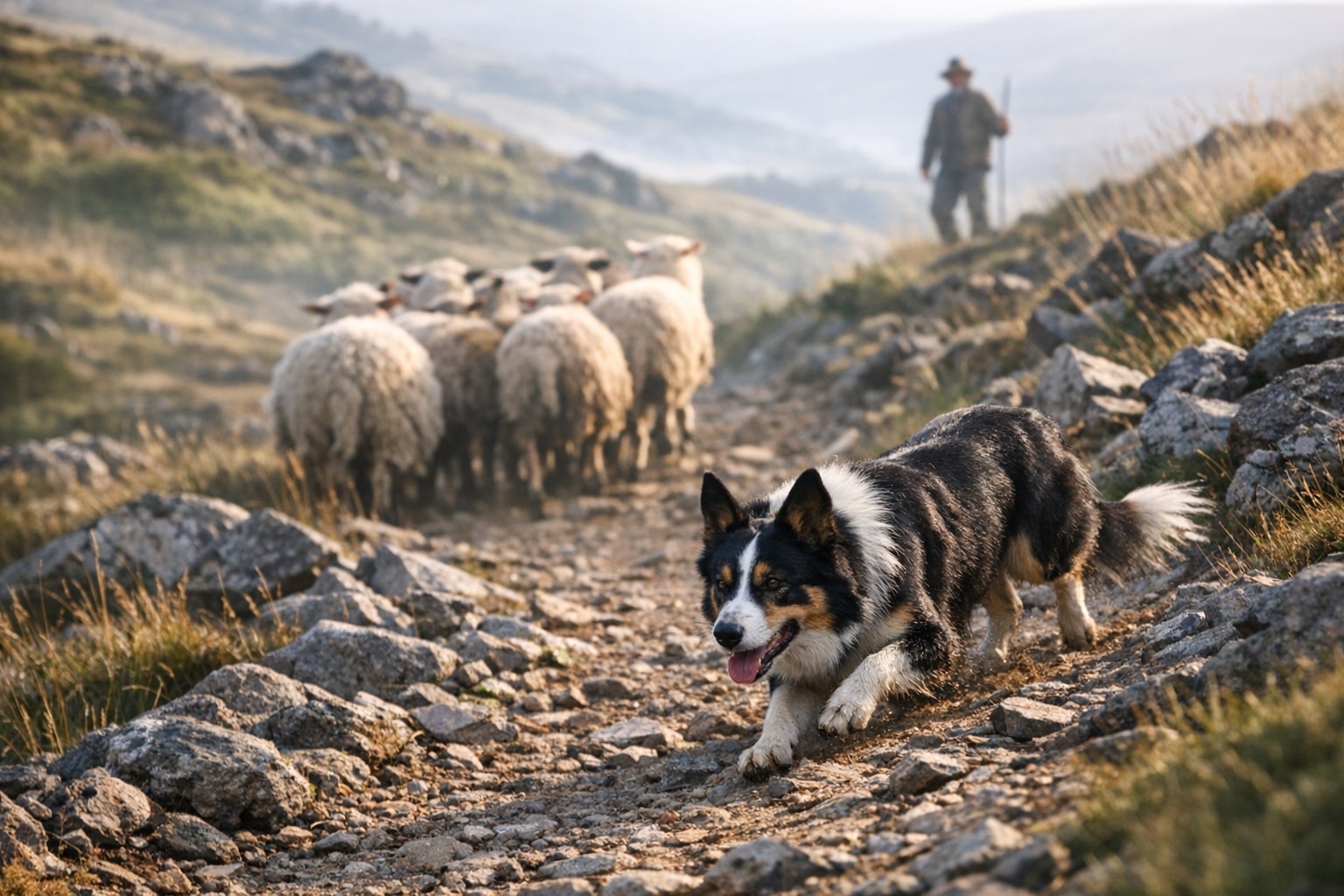
If you want to see how terrain truly influences herding style, put a dog on hills. Stock do not move the same uphill as they do downhill. They tire differently, bunch differently, and look for escape routes differently. A dog that presses too hard downhill can start a dangerous run. A dog that gives too much room uphill may lose authority and let the group stall or peel away.
I have seen dogs that looked average on level ground become excellent on rough hills because they had the feet, stamina, and instinct to control movement before it got away. I have also seen flashy dogs come apart when they had to rate themselves on a sidehill where every step mattered. Hills reveal whether a dog can think while moving.
On sloped country, many dogs naturally work a little tighter because the stock feel less secure and are more likely to break. The handler has to be careful not to mistake necessary closeness for bad style. Sometimes what looks like extra pressure is simply a dog compensating for gravity, footing, and stock intent. The land narrows the margin for error.
Sidehill Work Demands Balance and Footing
Sidehill work is one of the best teachers a dog will ever have. Stock want to drift along contour lines, drop to easier footing, or rush toward familiar paths. A smart herding dog learns to hold the high side when needed and to step into the right pocket of pressure without overcommitting. This often creates a more practical, less ornamental style. The dog wastes less motion because wasted motion costs control.
Brush, Timber, and Broken Ground Create a Different Dog
Once stock disappear in brush or broken gullies, style changes again. A dog cannot rely on constant eye contact with the flock. It has to use nose, memory, stock sense, and nerve. In this terrain, a dog may need to work closer, move more decisively, and push through cover where a looser dog might hesitate. That does not mean roughness is acceptable. It means invisibility changes timing.
Brush country favors dogs that stay mentally connected when the picture gets messy. The stock may pop out of a draw twenty yards off line. A ewe may duck behind scrub oak and hold. Lambs may string out through briars. A useful dog in this country learns to gather pieces and reassemble them without panic. Its herding style becomes economical and gritty. There is often less beauty in the wide-open trial sense and more real usefulness in the ranch sense.
Handlers also become more important in thick terrain. Voice, whistle, and trust have to carry where eyesight cannot. A dog that can take a flank into cover and hold pressure without constant supervision is worth remembering.
Tight Pens and Small Fields Reward Control Over Flash
Not all herding happens in sprawling fields. Small paddocks, working alleys, pens, and gate areas ask for a very different kind of style. Here, too much eye can stall stock. Too much push can slam them into rails. Too much flank can simply waste space that is not there. Tight terrain rewards a dog that can shorten up, soften pressure, and listen.
This is where many owners discover that a dog with plenty of natural ability still needs maturity. Confined work exposes impulsiveness. A dog that grips the air with intensity but cannot rate itself near a gate will create trouble fast. On the other hand, a sensible dog that might seem plain in open field work often proves invaluable in close quarters because it understands restraint.
The best pen dogs are not always the fastest or most dramatic. They are often the ones that keep stock thinking forward without making them feel trapped. In practical terms, terrain here teaches patience. It trims excess movement and asks the dog to solve problems in inches rather than yards.
Mud, Heat, Water, and Surface Conditions Matter Too
Terrain is not only about shape and cover. Surface matters. Mud changes stride and confidence. Loose shale tests feet and nerve. Deep sand drains energy. Wet grass can turn a quick stop into a skid. A creek crossing may stop one group of sheep cold and pull another through in a rush. All of this alters herding style because the dog must adjust speed, angle, and force to fit the footing.
A dog that works beautifully in cool weather on dry pasture may become too tight in heat simply because fatigue shortens patience. Another dog may slow in mud and begin using more presence than motion to hold stock together. Good handlers notice these shifts early. They do not demand the same picture from the dog under every condition, because the land is changing the work underfoot.
How Handlers Should Read Terrain Before Sending the Dog
One of the biggest mistakes beginners make is watching only the stock. Watch the country first. Find the draw that will pull sheep off line. Find the high side they will climb to if pressured. Notice the muddy corner, the dead ground behind the shed, the gate they remember, the patch of brush where one stubborn ewe will duck out and make you earn your supper.
When you read terrain well, you stop asking the dog impossible questions. You begin to send wider where the hill will suck stock away. You hold pressure earlier before the downhill run starts. You slow your dog in the pen instead of correcting after the wreck. Terrain-aware handling brings out the best in the dog’s natural style because you are working with the ground instead of pretending it does not matter.
Training a Herding Dog Across Different Terrain
If you want a versatile herding dog, vary the country. Dogs trained only in one kind of field often become specialists in that field and little else. Let them learn open gathers, tight pen work, slopes, rough footing, and moderate cover as their confidence grows. Each setting will sharpen a different piece of the dog.
Young dogs should be introduced carefully. Set them up to think, not fail. A bad lesson on tricky terrain can stick. But done right, varied ground deepens judgment. The dog learns when to widen, when to walk in, when to hold the line, and when to let stock search for a path without blowing them apart. That is where true working style comes from—not from rehearsed movement alone, but from experience meeting instinct in the real world.
The Best Herding Style Fits the Ground
In the end, the best herding style is not the prettiest one in every setting. It is the one that matches the terrain, respects the stock, and gets the job done with the least fuss. A wide, graceful dog may own the open hill pasture. A tougher, closer worker may be exactly right for brush and broken draws. A calm, adjustable dog may be gold in pens and lane ways. None of that is accidental.
The land shapes the dog, and over time the dog answers back. That is one of the finest parts of working herding dogs. You are not just watching instinct. You are watching instinct meet weather, footing, slope, cover, and stock pressure, then turn into style. For dog owners interested in herding, that is a lesson worth learning early: if you want to understand the dog, start by understanding the ground beneath it.
That is why understanding terrain is one of the most practical skills a dog owner can develop. Herding style is not just bred into a dog, though breeding matters a great deal. Style is also shaped, tested, and refined by the country the dog works. The land teaches lessons quickly. A dog that learns to read stock on flat pasture is learning one language. A dog that can hold a line on sidehill ground, push through heavy cover, and rate itself in tight pens is speaking several.
Terrain Is Part of the Herding Conversation
When people talk about herding style, they often focus on eye, pace, power, flank, and biddability. All of that matters. But terrain influences every one of those qualities in motion. Open ground invites wider outruns and cleaner lifts. Tight spaces compress decisions. Hills create pressure points stock can use to escape or balk. Mud steals speed. Brush blocks sight lines. Fences and gates turn a soft dog sticky and can turn a pushy dog into a wrecking ball if the handler does not adjust.
A seasoned dog begins to account for the land almost without thinking. You see it in the way it bends its path around a washout, checks stock before they hit a downhill run, or gives a ewe and lamb pair a little more room in a rocky draw. That is not luck. That is terrain shaping style through repetition and consequence.
Open Pasture Encourages Width and Clean Balance
On broad, open pasture, herding tends to look the way many people picture it in their heads. There is room for a proper outrun, room for stock to settle, and room for the dog to find balance without crashing into the bubble of pressure too soon. A dog working this kind of country often appears more stylish because the ground allows it to be. It can cast naturally, hold a steady line, and make corrections from a distance.
Open terrain also exposes weaknesses. If a dog slices its outrun, there is nowhere to hide it. If it lacks feel for stock, you will see the flock split or surge long before they should. Flat or gently rolling ground can make training cleaner because the handler can read everything unfolding in front of them, but it can also fool people into thinking a dog is finished before it has truly been tested.
Many dogs build confidence here. Young dogs especially benefit from country that gives them enough room to make a mistake without instantly blowing stock into a fence or brush pile. In open going, a thoughtful dog often learns to carry less pressure and trust distance. That becomes the foundation for a calmer herding style later on.
Why Open Ground Favors Natural Gatherers
Dogs bred with a strong gathering instinct often shine in open country because the stock are visible and the path around them is clear. The dog can shape the movement rather than force it. You get those sweeping flanks and smooth fetches that make work look easy. But even here, the wind, the draw of a gate, and the slight pitch of the pasture all tug at stock. A skilled dog learns those little pulls and covers them before trouble starts.
Hills and Slopes Change Pressure Instantly
If you want to see how terrain truly influences herding style, put a dog on hills. Stock do not move the same uphill as they do downhill. They tire differently, bunch differently, and look for escape routes differently. A dog that presses too hard downhill can start a dangerous run. A dog that gives too much room uphill may lose authority and let the group stall or peel away.
I have seen dogs that looked average on level ground become excellent on rough hills because they had the feet, stamina, and instinct to control movement before it got away. I have also seen flashy dogs come apart when they had to rate themselves on a sidehill where every step mattered. Hills reveal whether a dog can think while moving.
On sloped country, many dogs naturally work a little tighter because the stock feel less secure and are more likely to break. The handler has to be careful not to mistake necessary closeness for bad style. Sometimes what looks like extra pressure is simply a dog compensating for gravity, footing, and stock intent. The land narrows the margin for error.
Sidehill Work Demands Balance and Footing
Sidehill work is one of the best teachers a dog will ever have. Stock want to drift along contour lines, drop to easier footing, or rush toward familiar paths. A smart herding dog learns to hold the high side when needed and to step into the right pocket of pressure without overcommitting. This often creates a more practical, less ornamental style. The dog wastes less motion because wasted motion costs control.
Brush, Timber, and Broken Ground Create a Different Dog
Once stock disappear in brush or broken gullies, style changes again. A dog cannot rely on constant eye contact with the flock. It has to use nose, memory, stock sense, and nerve. In this terrain, a dog may need to work closer, move more decisively, and push through cover where a looser dog might hesitate. That does not mean roughness is acceptable. It means invisibility changes timing.
Brush country favors dogs that stay mentally connected when the picture gets messy. The stock may pop out of a draw twenty yards off line. A ewe may duck behind scrub oak and hold. Lambs may string out through briars. A useful dog in this country learns to gather pieces and reassemble them without panic. Its herding style becomes economical and gritty. There is often less beauty in the wide-open trial sense and more real usefulness in the ranch sense.
Handlers also become more important in thick terrain. Voice, whistle, and trust have to carry where eyesight cannot. A dog that can take a flank into cover and hold pressure without constant supervision is worth remembering.
Tight Pens and Small Fields Reward Control Over Flash
Not all herding happens in sprawling fields. Small paddocks, working alleys, pens, and gate areas ask for a very different kind of style. Here, too much eye can stall stock. Too much push can slam them into rails. Too much flank can simply waste space that is not there. Tight terrain rewards a dog that can shorten up, soften pressure, and listen.
This is where many owners discover that a dog with plenty of natural ability still needs maturity. Confined work exposes impulsiveness. A dog that grips the air with intensity but cannot rate itself near a gate will create trouble fast. On the other hand, a sensible dog that might seem plain in open field work often proves invaluable in close quarters because it understands restraint.
The best pen dogs are not always the fastest or most dramatic. They are often the ones that keep stock thinking forward without making them feel trapped. In practical terms, terrain here teaches patience. It trims excess movement and asks the dog to solve problems in inches rather than yards.
Mud, Heat, Water, and Surface Conditions Matter Too
Terrain is not only about shape and cover. Surface matters. Mud changes stride and confidence. Loose shale tests feet and nerve. Deep sand drains energy. Wet grass can turn a quick stop into a skid. A creek crossing may stop one group of sheep cold and pull another through in a rush. All of this alters herding style because the dog must adjust speed, angle, and force to fit the footing.
A dog that works beautifully in cool weather on dry pasture may become too tight in heat simply because fatigue shortens patience. Another dog may slow in mud and begin using more presence than motion to hold stock together. Good handlers notice these shifts early. They do not demand the same picture from the dog under every condition, because the land is changing the work underfoot.
How Handlers Should Read Terrain Before Sending the Dog
One of the biggest mistakes beginners make is watching only the stock. Watch the country first. Find the draw that will pull sheep off line. Find the high side they will climb to if pressured. Notice the muddy corner, the dead ground behind the shed, the gate they remember, the patch of brush where one stubborn ewe will duck out and make you earn your supper.
When you read terrain well, you stop asking the dog impossible questions. You begin to send wider where the hill will suck stock away. You hold pressure earlier before the downhill run starts. You slow your dog in the pen instead of correcting after the wreck. Terrain-aware handling brings out the best in the dog’s natural style because you are working with the ground instead of pretending it does not matter.
Training a Herding Dog Across Different Terrain
If you want a versatile herding dog, vary the country. Dogs trained only in one kind of field often become specialists in that field and little else. Let them learn open gathers, tight pen work, slopes, rough footing, and moderate cover as their confidence grows. Each setting will sharpen a different piece of the dog.
Young dogs should be introduced carefully. Set them up to think, not fail. A bad lesson on tricky terrain can stick. But done right, varied ground deepens judgment. The dog learns when to widen, when to walk in, when to hold the line, and when to let stock search for a path without blowing them apart. That is where true working style comes from—not from rehearsed movement alone, but from experience meeting instinct in the real world.
The Best Herding Style Fits the Ground
In the end, the best herding style is not the prettiest one in every setting. It is the one that matches the terrain, respects the stock, and gets the job done with the least fuss. A wide, graceful dog may own the open hill pasture. A tougher, closer worker may be exactly right for brush and broken draws. A calm, adjustable dog may be gold in pens and lane ways. None of that is accidental.
The land shapes the dog, and over time the dog answers back. That is one of the finest parts of working herding dogs. You are not just watching instinct. You are watching instinct meet weather, footing, slope, cover, and stock pressure, then turn into style. For dog owners interested in herding, that is a lesson worth learning early: if you want to understand the dog, start by understanding the ground beneath it.