How to Build Confidence in Young Herding Dogs
Jeff Davis | https://herdingdogcentral.com
 0
0 0
0 0
0 0
0 0
0
A young herding dog can have all the instinct in the world and still fall apart if confidence never gets built underneath it. I have seen pups with sharp eyes, good movement, and plenty of natural interest turn hesitant because they were rushed, overcorrected, or simply asked to take on too much before they were ready. I have also seen average pups grow into dependable workers because somebody took the time to let them mature right. Confidence is not noise, and it is not wild energy. In a good herding dog, confidence shows up as steady feet, a clear head, and the willingness to step into pressure without quitting.
If you want to build confidence in young herding dogs, the job starts long before serious stock work. It begins in the yard, on walks, in the truck, around strangers, and in all the little moments when a pup decides whether the world is something to fear or something it can handle. A confident dog is not born from constant praise alone. It comes from repeated success, fair guidance, and a handler who knows when to push and when to back off.
Why Confidence Matters in a Young Herding Dog
Herding work asks a lot from a young dog. It has to think while moving, read pressure from livestock, take direction, and recover quickly when things get messy. Sheep drift, cattle turn hard, gates clang, handlers get tense, and weather changes everything. A dog lacking confidence will often show it in ways people miss at first. Some get sticky and refuse to move in. Some slice wide because they do not want pressure. Others bark, grip recklessly, or spin from excitement that is really uncertainty wearing a louder coat.
That is why confidence-building is not just about making a dog feel good. It is about making a dog usable. The best young herding dogs learn that pressure can be managed. They learn they can enter a pen, approach stock, hear correction, and come back to work without shrinking. That kind of mental steadiness is what turns instinct into something reliable.
Start With the Pup in Front of You
Every young dog comes with its own wiring. One pup meets the world chest first. Another hangs back, studies the scene, and needs a minute. Neither type is automatically better. The mistake is training them like they are the same dog. Building confidence in young herding dogs begins with recognizing temperament honestly. If a pup is naturally thoughtful, you do not help it by treating caution as weakness. If a pup is bold but shallow, you do not help it by mistaking chaos for courage.
I like to watch how a young dog handles small surprises. A new surface underfoot, a strange noise from the barn, a person walking up too fast, a change in routine. The dog tells you plenty if you are quiet enough to notice. Confident dogs do not have to ignore everything. What matters is recovery. A pup that startles, checks in, and moves on is on the right track. A pup that locks up or unravels needs simpler wins and calmer handling.
Confidence Grows Through Recovery
One of the biggest lessons for any handler is that confidence is not built by avoiding all discomfort. A young dog has to feel a little uncertainty now and then, then find its way through it. That is how the mind hardens in a healthy way. If you step in too fast every time the pup hesitates, the dog never learns it can solve anything. If you leave it hanging too long, you teach the opposite lesson. Good handling lives in that middle ground.
Socialization That Supports Working Ability
People often talk about socialization as if it only means meeting other dogs or getting petted by strangers. For a herding dog, useful socialization is broader than that. It means teaching the pup to move through different environments without losing itself. Dirt roads, feed lots, gravel drives, slick floors, trailers, barking kennels, flapping tarps, running children, and livestock sounds all become part of the dog’s map of the world.
The key is not to flood the pup with everything at once. Short, calm exposure works better than overdoing it. I would rather take a young dog on ten simple outings where it succeeds than one long chaotic trip that leaves it wrung out. Let the pup look, sniff, and process. Keep your own energy level even. Dogs are quick to borrow our nerves.
A young herding dog should also learn early that new places do not always mean high pressure. Some trips should be nothing more than a quiet walk by the pasture or time sitting near the stock pens while the pup watches the world go by. Not every exposure needs to become a lesson. Sometimes the lesson is simply that nothing bad happened.
Use Training to Create Small, Repeatable Wins
Before a young dog is asked to do meaningful work, it needs a foundation that makes the world feel understandable. Basic obedience helps here, but only if it is taught clearly and fairly. A dog that knows how to come, stop, wait, load up, and settle on command carries less confusion into stock training. Confusion erodes confidence fast.
I prefer short sessions with a purpose. Ask for something the pup can reasonably do, mark the right effort, and finish before the wheels come off. Too many young dogs lose confidence because handlers keep drilling until the dog is mentally flat. Leave a little gas in the tank. A pup that walks away feeling successful usually comes back braver the next time.
That applies to environmental challenges too. If a dog is uncertain about crossing a narrow board, entering a trailer, or moving through a gate, break the task down. Reward forward thought. Let the dog work out the problem instead of dragging it through. Once a pup discovers that effort leads to success, confidence starts to root deep.
Timing Matters More Than Force
Nothing will take the bloom off a young dog faster than unfair pressure. Correction has a place in training, but it must fit the dog, the moment, and the level of understanding. When a pup is confused or genuinely worried, heavy-handed handling does not create confidence. It creates avoidance. A confident working dog respects guidance because it understands it, not because it is afraid to try.
Introducing Livestock the Right Way
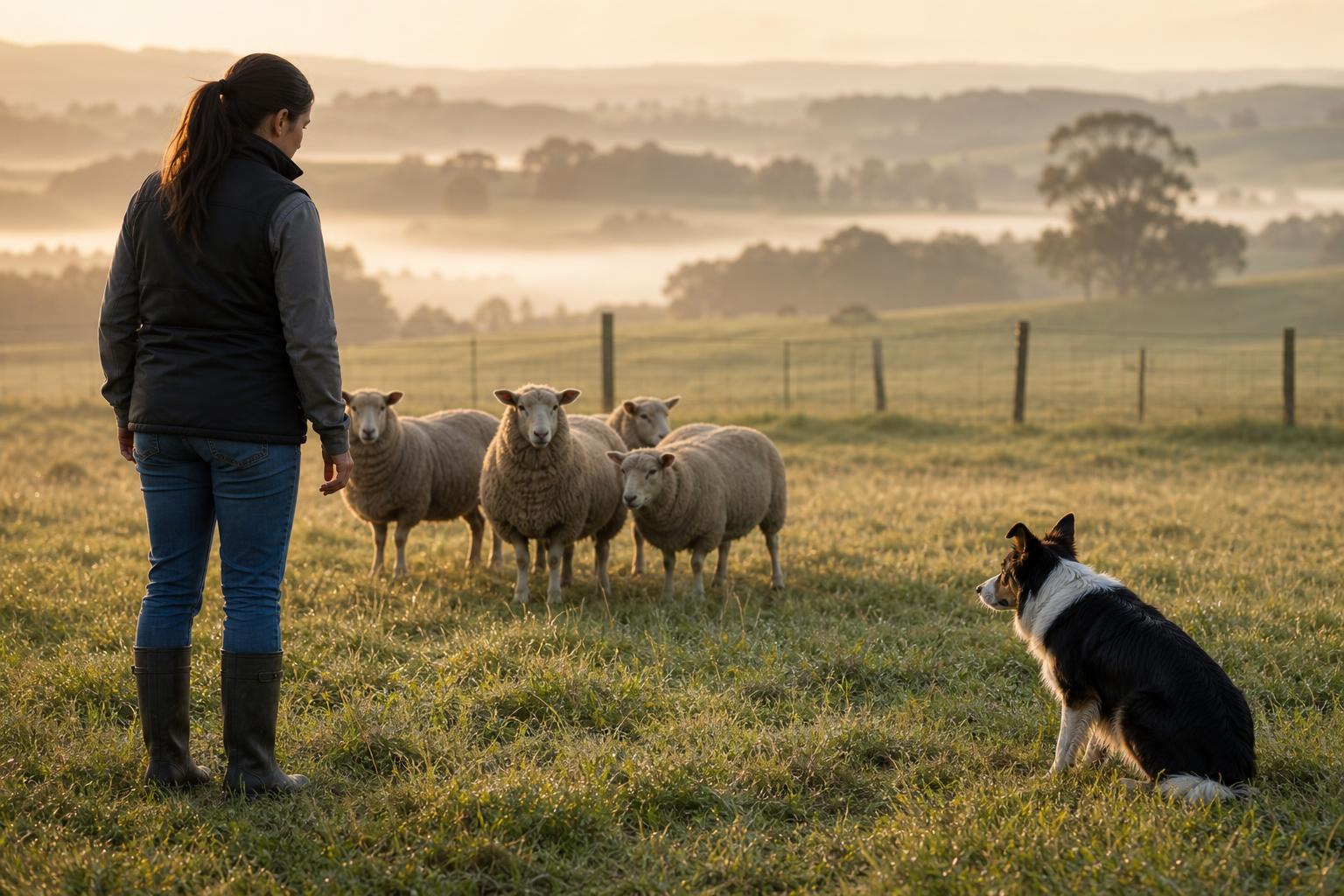
The first stock experiences matter more than many people realize. Young herding dogs remember pressure. If their early sessions are too intense, they can come away rattled, overamped, or sour. I like to start with stock that will move cleanly and not bully the dog. Quiet sheep in a controlled space give many pups the chance to discover balance and purpose without getting overwhelmed.
When the moment is right, you can see instinct wake up in a good youngster like a spark taking to dry grass. The dog drops its head, begins to gather movement, and for a second everything looks natural. That is a fine thing to witness, but it is also where handlers get greedy. They stay in too long, crowd the dog, shout too much, or ask for precision before the pup understands the game. Early stock work should build desire and understanding, not strain it.
Keep sessions short enough that the young dog leaves wanting more. If the pup shows hesitation, do not assume lack of instinct. It may simply need more distance, calmer stock, or less handler noise. Confidence on livestock grows when the dog learns it can influence movement without being crushed by pressure.
Let the Dog Mature at Its Own Rate
Some young herding dogs come on early. Others take time to settle in their mind and body. That is especially true with sensitive dogs and thoughtful lines. There is always temptation to compare one pup to another, especially when somebody else’s youngster is already doing flashy work. Comparison ruins more good dogs than bad breeding does. The dog in front of you is the one that matters.
I have watched late-blooming young dogs turn into the kind you would trust in a tight corner with stubborn stock. They were not spectacular at first. They were uncertain, careful, and a little slow to commit. But their handlers stayed patient, protected their early confidence, and kept giving them manageable work. Over time, those dogs found themselves.
Confidence Is Built in the Quiet Days
Most of the making of a solid dog happens outside the dramatic moments. It happens when the pup loads calmly after a long day, walks through a strange gate without fuss, settles beside you while chores are getting done, and steps back into work after a mistake. Those ordinary repetitions shape a dog’s view of itself. The young dog starts to believe, through experience, that it can handle what is asked.
Handler Attitude Shapes the Dog
A nervous handler can make a worried dog. An impatient handler can make a defensive one. Young herding dogs read us closely, especially when pressure rises. If you go into every session braced for a problem, the dog often meets that tension before it ever meets the sheep. Calm leadership is not soft. It is steady, readable, and consistent.
One of the best things you can do for a young dog is to keep your responses measured. When the pup makes a mistake, correct what needs correcting, then move on. Do not carry frustration from one rep to the next. Dogs learn fastest when they trust that the work stays fair. That trust is the backbone of confidence.
Building a Dog That Trusts Itself
In the end, building confidence in young herding dogs is about creating a partner that trusts both you and its own judgment. You want a dog that will take direction, but also one that can hold itself together when the stock break wrong and things get western in a hurry. That kind of dog is not made through force or fuss. It is made through exposure, patience, timing, and honest work.
Give the young dog room to learn. Let it struggle a little without drowning. Set it up to succeed, then step back enough for it to feel that success belongs to it. When you do that consistently, you will see the change. The uncertain pup begins to move with purpose. The eyes stay clearer. The feet stay steadier. And one day, without much fanfare, you realize that the youngster no longer needs borrowing from your confidence. It has grown some of its own.
If you want to build confidence in young herding dogs, the job starts long before serious stock work. It begins in the yard, on walks, in the truck, around strangers, and in all the little moments when a pup decides whether the world is something to fear or something it can handle. A confident dog is not born from constant praise alone. It comes from repeated success, fair guidance, and a handler who knows when to push and when to back off.
Why Confidence Matters in a Young Herding Dog
Herding work asks a lot from a young dog. It has to think while moving, read pressure from livestock, take direction, and recover quickly when things get messy. Sheep drift, cattle turn hard, gates clang, handlers get tense, and weather changes everything. A dog lacking confidence will often show it in ways people miss at first. Some get sticky and refuse to move in. Some slice wide because they do not want pressure. Others bark, grip recklessly, or spin from excitement that is really uncertainty wearing a louder coat.
That is why confidence-building is not just about making a dog feel good. It is about making a dog usable. The best young herding dogs learn that pressure can be managed. They learn they can enter a pen, approach stock, hear correction, and come back to work without shrinking. That kind of mental steadiness is what turns instinct into something reliable.
Start With the Pup in Front of You
Every young dog comes with its own wiring. One pup meets the world chest first. Another hangs back, studies the scene, and needs a minute. Neither type is automatically better. The mistake is training them like they are the same dog. Building confidence in young herding dogs begins with recognizing temperament honestly. If a pup is naturally thoughtful, you do not help it by treating caution as weakness. If a pup is bold but shallow, you do not help it by mistaking chaos for courage.
I like to watch how a young dog handles small surprises. A new surface underfoot, a strange noise from the barn, a person walking up too fast, a change in routine. The dog tells you plenty if you are quiet enough to notice. Confident dogs do not have to ignore everything. What matters is recovery. A pup that startles, checks in, and moves on is on the right track. A pup that locks up or unravels needs simpler wins and calmer handling.
Confidence Grows Through Recovery
One of the biggest lessons for any handler is that confidence is not built by avoiding all discomfort. A young dog has to feel a little uncertainty now and then, then find its way through it. That is how the mind hardens in a healthy way. If you step in too fast every time the pup hesitates, the dog never learns it can solve anything. If you leave it hanging too long, you teach the opposite lesson. Good handling lives in that middle ground.
Socialization That Supports Working Ability
People often talk about socialization as if it only means meeting other dogs or getting petted by strangers. For a herding dog, useful socialization is broader than that. It means teaching the pup to move through different environments without losing itself. Dirt roads, feed lots, gravel drives, slick floors, trailers, barking kennels, flapping tarps, running children, and livestock sounds all become part of the dog’s map of the world.
The key is not to flood the pup with everything at once. Short, calm exposure works better than overdoing it. I would rather take a young dog on ten simple outings where it succeeds than one long chaotic trip that leaves it wrung out. Let the pup look, sniff, and process. Keep your own energy level even. Dogs are quick to borrow our nerves.
A young herding dog should also learn early that new places do not always mean high pressure. Some trips should be nothing more than a quiet walk by the pasture or time sitting near the stock pens while the pup watches the world go by. Not every exposure needs to become a lesson. Sometimes the lesson is simply that nothing bad happened.
Use Training to Create Small, Repeatable Wins
Before a young dog is asked to do meaningful work, it needs a foundation that makes the world feel understandable. Basic obedience helps here, but only if it is taught clearly and fairly. A dog that knows how to come, stop, wait, load up, and settle on command carries less confusion into stock training. Confusion erodes confidence fast.
I prefer short sessions with a purpose. Ask for something the pup can reasonably do, mark the right effort, and finish before the wheels come off. Too many young dogs lose confidence because handlers keep drilling until the dog is mentally flat. Leave a little gas in the tank. A pup that walks away feeling successful usually comes back braver the next time.
That applies to environmental challenges too. If a dog is uncertain about crossing a narrow board, entering a trailer, or moving through a gate, break the task down. Reward forward thought. Let the dog work out the problem instead of dragging it through. Once a pup discovers that effort leads to success, confidence starts to root deep.
Timing Matters More Than Force
Nothing will take the bloom off a young dog faster than unfair pressure. Correction has a place in training, but it must fit the dog, the moment, and the level of understanding. When a pup is confused or genuinely worried, heavy-handed handling does not create confidence. It creates avoidance. A confident working dog respects guidance because it understands it, not because it is afraid to try.
Introducing Livestock the Right Way
The first stock experiences matter more than many people realize. Young herding dogs remember pressure. If their early sessions are too intense, they can come away rattled, overamped, or sour. I like to start with stock that will move cleanly and not bully the dog. Quiet sheep in a controlled space give many pups the chance to discover balance and purpose without getting overwhelmed.
When the moment is right, you can see instinct wake up in a good youngster like a spark taking to dry grass. The dog drops its head, begins to gather movement, and for a second everything looks natural. That is a fine thing to witness, but it is also where handlers get greedy. They stay in too long, crowd the dog, shout too much, or ask for precision before the pup understands the game. Early stock work should build desire and understanding, not strain it.
Keep sessions short enough that the young dog leaves wanting more. If the pup shows hesitation, do not assume lack of instinct. It may simply need more distance, calmer stock, or less handler noise. Confidence on livestock grows when the dog learns it can influence movement without being crushed by pressure.
Let the Dog Mature at Its Own Rate
Some young herding dogs come on early. Others take time to settle in their mind and body. That is especially true with sensitive dogs and thoughtful lines. There is always temptation to compare one pup to another, especially when somebody else’s youngster is already doing flashy work. Comparison ruins more good dogs than bad breeding does. The dog in front of you is the one that matters.
I have watched late-blooming young dogs turn into the kind you would trust in a tight corner with stubborn stock. They were not spectacular at first. They were uncertain, careful, and a little slow to commit. But their handlers stayed patient, protected their early confidence, and kept giving them manageable work. Over time, those dogs found themselves.
Confidence Is Built in the Quiet Days
Most of the making of a solid dog happens outside the dramatic moments. It happens when the pup loads calmly after a long day, walks through a strange gate without fuss, settles beside you while chores are getting done, and steps back into work after a mistake. Those ordinary repetitions shape a dog’s view of itself. The young dog starts to believe, through experience, that it can handle what is asked.
Handler Attitude Shapes the Dog
A nervous handler can make a worried dog. An impatient handler can make a defensive one. Young herding dogs read us closely, especially when pressure rises. If you go into every session braced for a problem, the dog often meets that tension before it ever meets the sheep. Calm leadership is not soft. It is steady, readable, and consistent.
One of the best things you can do for a young dog is to keep your responses measured. When the pup makes a mistake, correct what needs correcting, then move on. Do not carry frustration from one rep to the next. Dogs learn fastest when they trust that the work stays fair. That trust is the backbone of confidence.
Building a Dog That Trusts Itself
In the end, building confidence in young herding dogs is about creating a partner that trusts both you and its own judgment. You want a dog that will take direction, but also one that can hold itself together when the stock break wrong and things get western in a hurry. That kind of dog is not made through force or fuss. It is made through exposure, patience, timing, and honest work.
Give the young dog room to learn. Let it struggle a little without drowning. Set it up to succeed, then step back enough for it to feel that success belongs to it. When you do that consistently, you will see the change. The uncertain pup begins to move with purpose. The eyes stay clearer. The feet stay steadier. And one day, without much fanfare, you realize that the youngster no longer needs borrowing from your confidence. It has grown some of its own.