Introducing Dogs to Cattle
Building Confidence, Control, and Trust
Jeff Davis | https://herdingdogcentral.com
 0
0 0
0 0
0 0
0 0
0
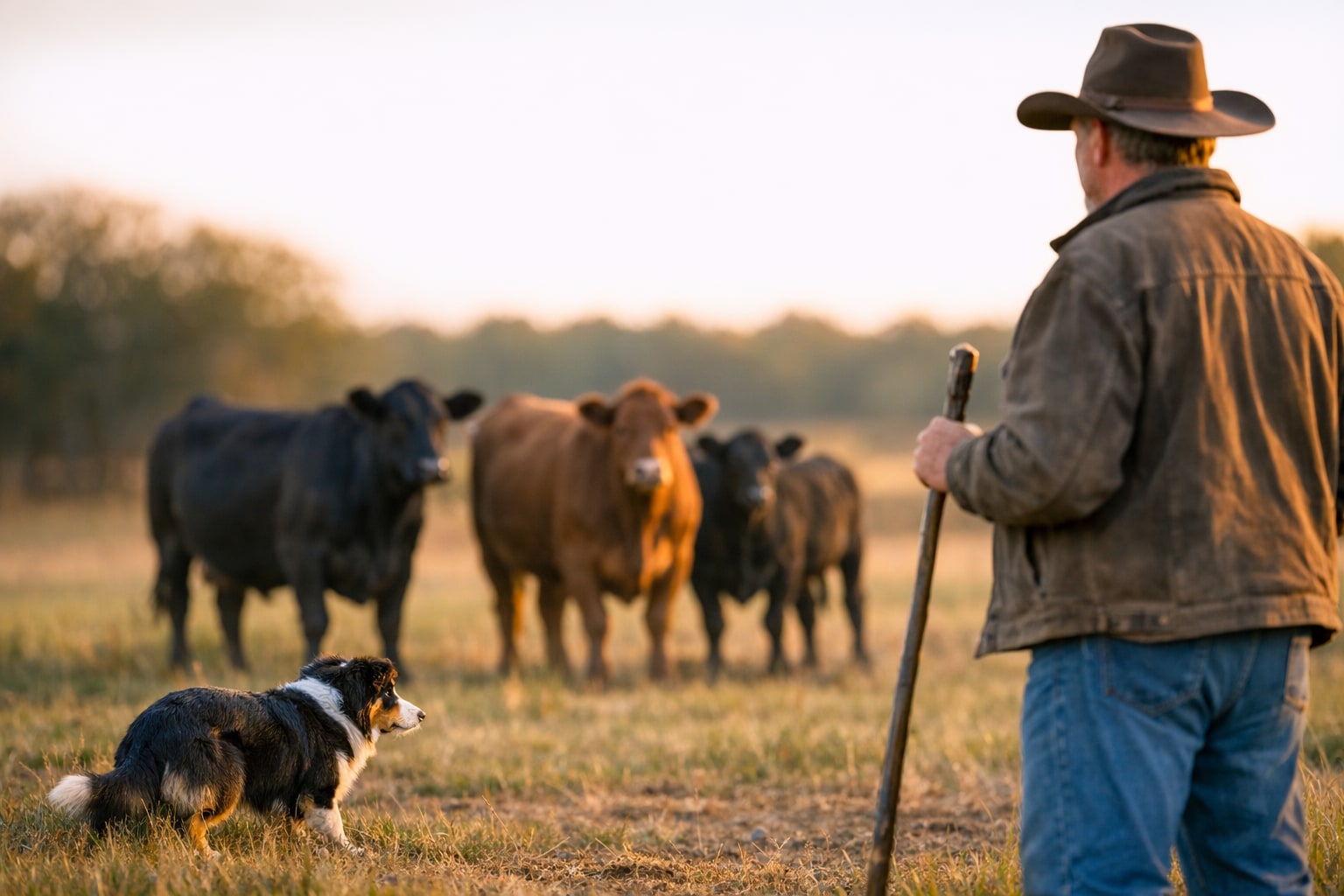
There comes a moment with every young herding dog when groundwork has to meet the real thing. You can teach obedience in the yard, sharpen recall in the pasture, and build focus with all the right drills, but introducing dogs to cattle is where instinct, nerve, and training start showing their true shape. It is also where many handlers either set a dog up for steady progress or rush the process and spend the next year trying to undo avoidable mistakes.
I have always believed cattle teach a dog differently than sheep do. They are heavier, more deliberate, and far less likely to forgive foolish pressure. A dog can bluff a few sheep and still keep things moving. Try that with cattle, especially mature cows, and the lesson comes back hard and fast. That is why first exposure matters so much. The goal is not to prove how brave your dog is. The goal is to introduce stock in a way that develops confidence without letting the dog become reckless, sticky, or intimidated.
For dog owners interested in herding dogs, this stage can feel intimidating, but it does not need to be if you approach it with patience and good stock sense. A calm plan and the right cattle will do more for a young dog than ten noisy sessions full of correction.
Start Before the First Turnout
Long before a dog sees cattle, I want a few simple pieces in place. The dog does not need to be polished, but it should have a workable recall, some respect for pressure, and enough maturity to recover when things get exciting. A pup that melts down under pressure or ignores every cue in open ground is not ready just because it shows interest in livestock from the fence.
That readiness has less to do with age than people think. Some dogs are mentally prepared at a young age, while others need more time to mature. I would rather start a dog a little later and keep its confidence intact than push too early and make cattle seem like a fight. Good stock work is built on controlled curiosity, not chaos.
It also helps if the dog already understands how to move around you, settle when asked, and look for direction. Herding instinct is valuable, but instinct without structure can become chasing, gripping, or blind pressure. Those habits are much easier to prevent than to fix.
Choose the Right Cattle for the First Sessions
If I could give one piece of advice to anyone introducing dogs to cattle, it would be this: use the right cattle. Quiet, dog-broke, lighter cattle in a smaller training area are worth their weight in gold. Fresh cows with calves, hard-headed range cattle, or animals that have never seen a dog can turn a training session into a wreck in a hurry.
The best cattle for beginners are those that respect a dog without hunting one. They should move off pressure, group naturally, and stay manageable in a pen or small arena. Good training stock helps the dog discover the balance between eye, movement, and authority. Bad stock only teaches panic, avoidance, or needless aggression.
I remember one young dog that looked ordinary on sheep but came alive the first time it stepped to sensible cattle. The stock gave just enough resistance to make the dog think, then yielded when the pressure was right. You could almost see the gears turn. By the end of that short session, the dog was not wild or overamped. It was measured. That is what you want.
The First Introduction Should Be Short and Clean
There is a temptation to stay in the pen too long when things are going well. Resist it. One of the best habits a handler can learn is ending early. The first few sessions should be short enough that the dog leaves wanting more, not so long that it gets tired, frustrated, or sloppy.
When I first introduce a dog to cattle, I watch more than I talk. I want to see whether the dog approaches with confidence, whether it naturally flanks or charges straight in, whether it respects the cattle’s movement, and whether it comes back mentally after a correction or a hard look from a cow. Those first minutes tell you a lot.
If the dog dives in too hard, I do not want a shouting match. I want calm control. Let the cattle teach some of the lesson while you support the dog and shape the work. If the dog backs off after pressure from the stock, that is not always a problem. A little respect is healthy. The trick is helping the dog step back in with purpose rather than letting caution turn into avoidance.
Keep the session focused on movement and feel. At this stage, you are not trying to run a polished gather or drive. You are helping the dog understand that cattle can be influenced, that pressure has consequences, and that calm, thoughtful work gets results.
Reading the Dog Matters More Than Following a Script
No two dogs take to cattle exactly alike. A bold dog may need help slowing down and thinking. A softer dog may need room to build confidence without being crowded by too much handler pressure. Some dogs naturally hold the head of the cattle. Others prefer to work the flank and need time to understand where their presence matters most.
This is where experience counts, because introducing dogs to cattle is not a step-by-step recipe so much as a conversation. The stock says one thing, the dog answers, and the handler decides when to support, when to stay quiet, and when to step in. If you force every dog through the same mold, you miss what that individual animal is trying to show you.
I have seen handlers overhandle a good young dog right out of its natural style. They talk too much, crowd too hard, and interrupt every honest attempt the dog makes to read stock. Then they wonder why the dog loses initiative. A working dog needs guidance, but it also needs room to learn stock sense for itself.
Common Mistakes When Introducing Dogs to Cattle
The biggest mistake is moving too fast. People get excited when a dog shows power and start testing it on tougher cattle before the foundation is ready. That usually ends with gripping, frantic circling, loss of control, or a dog that gets rattled and wants no part of heavy stock. Confidence is built in layers.
Another common mistake is using too much pressure from the handler. Constant correction can make a dog sticky and uncertain, especially on cattle that already demand respect. You want the dog to feel responsible for moving stock, not frozen between the fear of being wrong and the fear of getting challenged.
Then there is the issue of poor timing. Correct a dog too late and it has no idea what earned the correction. Correct too early and you may shut down a useful effort before it develops. Good timing is often quieter than people expect. Sometimes all it takes is stepping into the right place, changing your body position, or asking for a brief pause before sending the dog on again.
Finally, many people underestimate how much fatigue affects stock work. A tired dog loses judgment. That is when slices get tight, tails get high, and foolish decisions happen near the cattle’s head. Short sessions keep thinking clear.
When a Dog Shows Too Much Bite or Not Enough Push
These are two problems that show up often in first cattle work. A dog with too much bite usually lacks control more than courage. It feels pressure, gets excited, and answers with its teeth before it has learned how to use position and presence. That is not a dog you encourage into more confrontation. It is a dog you settle, shape, and give better stock so it can learn authority without conflict.
On the other side, some dogs show interest but do not bring enough push. They circle, look, and hesitate when cattle stand their ground. Sometimes that is softness. Sometimes it is simply inexperience. A dog that learns on sensible cattle and gets rewarded for correct pressure can gain a lot of power in a few good sessions. What you do not want is to shame a cautious dog for showing respect. Respect can be built into confidence. Panic is harder to rebuild.
Building a Useful Cattle Dog Over Time
Once the first introductions go well, the work becomes about consistency. The dog needs repeated chances to settle into its role, feel how cattle respond, and understand that controlled pressure is the key to getting the job done. This is where little improvements matter. Cleaner flanks. Better rate. Less waste motion. More willingness to hold a line and stay present at the point of balance.
A real cattle dog is not made in one flashy day. It is made in many ordinary sessions where the dog learns patience, courage, and responsibility. Some days the stock is quiet and everything flows. Other days the cattle test every hole in your training. Both kinds of days are useful if you keep your head and train what is in front of you.
I have always liked dogs that leave a pen wanting to work again tomorrow. That tells me the balance is right. They were challenged, but not crushed. Corrected, but not confused. Allowed to use instinct, but not left to make a mess. That middle ground is where progress lives.
Final Thoughts on Introducing Dogs to Cattle
Introducing dogs to cattle is one of the most important stages in developing a dependable herding dog. It is not about drama, and it is not about testing toughness for the sake of it. It is about teaching the dog to read stock, respect pressure, and discover that calm, controlled work is what moves cattle best.
If you start with the right cattle, keep sessions short, and pay attention to the dog in front of you, you will give that young dog a fair chance to grow into its work. That is what every good handler should want. Not a reckless dog, not a timid one, but a thoughtful worker with enough grit to step in and enough sense to do it right.
I have always believed cattle teach a dog differently than sheep do. They are heavier, more deliberate, and far less likely to forgive foolish pressure. A dog can bluff a few sheep and still keep things moving. Try that with cattle, especially mature cows, and the lesson comes back hard and fast. That is why first exposure matters so much. The goal is not to prove how brave your dog is. The goal is to introduce stock in a way that develops confidence without letting the dog become reckless, sticky, or intimidated.
For dog owners interested in herding dogs, this stage can feel intimidating, but it does not need to be if you approach it with patience and good stock sense. A calm plan and the right cattle will do more for a young dog than ten noisy sessions full of correction.
Start Before the First Turnout
Long before a dog sees cattle, I want a few simple pieces in place. The dog does not need to be polished, but it should have a workable recall, some respect for pressure, and enough maturity to recover when things get exciting. A pup that melts down under pressure or ignores every cue in open ground is not ready just because it shows interest in livestock from the fence.
That readiness has less to do with age than people think. Some dogs are mentally prepared at a young age, while others need more time to mature. I would rather start a dog a little later and keep its confidence intact than push too early and make cattle seem like a fight. Good stock work is built on controlled curiosity, not chaos.
It also helps if the dog already understands how to move around you, settle when asked, and look for direction. Herding instinct is valuable, but instinct without structure can become chasing, gripping, or blind pressure. Those habits are much easier to prevent than to fix.
Choose the Right Cattle for the First Sessions
If I could give one piece of advice to anyone introducing dogs to cattle, it would be this: use the right cattle. Quiet, dog-broke, lighter cattle in a smaller training area are worth their weight in gold. Fresh cows with calves, hard-headed range cattle, or animals that have never seen a dog can turn a training session into a wreck in a hurry.
The best cattle for beginners are those that respect a dog without hunting one. They should move off pressure, group naturally, and stay manageable in a pen or small arena. Good training stock helps the dog discover the balance between eye, movement, and authority. Bad stock only teaches panic, avoidance, or needless aggression.
I remember one young dog that looked ordinary on sheep but came alive the first time it stepped to sensible cattle. The stock gave just enough resistance to make the dog think, then yielded when the pressure was right. You could almost see the gears turn. By the end of that short session, the dog was not wild or overamped. It was measured. That is what you want.
The First Introduction Should Be Short and Clean
There is a temptation to stay in the pen too long when things are going well. Resist it. One of the best habits a handler can learn is ending early. The first few sessions should be short enough that the dog leaves wanting more, not so long that it gets tired, frustrated, or sloppy.
When I first introduce a dog to cattle, I watch more than I talk. I want to see whether the dog approaches with confidence, whether it naturally flanks or charges straight in, whether it respects the cattle’s movement, and whether it comes back mentally after a correction or a hard look from a cow. Those first minutes tell you a lot.
If the dog dives in too hard, I do not want a shouting match. I want calm control. Let the cattle teach some of the lesson while you support the dog and shape the work. If the dog backs off after pressure from the stock, that is not always a problem. A little respect is healthy. The trick is helping the dog step back in with purpose rather than letting caution turn into avoidance.
Keep the session focused on movement and feel. At this stage, you are not trying to run a polished gather or drive. You are helping the dog understand that cattle can be influenced, that pressure has consequences, and that calm, thoughtful work gets results.
Reading the Dog Matters More Than Following a Script
No two dogs take to cattle exactly alike. A bold dog may need help slowing down and thinking. A softer dog may need room to build confidence without being crowded by too much handler pressure. Some dogs naturally hold the head of the cattle. Others prefer to work the flank and need time to understand where their presence matters most.
This is where experience counts, because introducing dogs to cattle is not a step-by-step recipe so much as a conversation. The stock says one thing, the dog answers, and the handler decides when to support, when to stay quiet, and when to step in. If you force every dog through the same mold, you miss what that individual animal is trying to show you.
I have seen handlers overhandle a good young dog right out of its natural style. They talk too much, crowd too hard, and interrupt every honest attempt the dog makes to read stock. Then they wonder why the dog loses initiative. A working dog needs guidance, but it also needs room to learn stock sense for itself.
Common Mistakes When Introducing Dogs to Cattle
The biggest mistake is moving too fast. People get excited when a dog shows power and start testing it on tougher cattle before the foundation is ready. That usually ends with gripping, frantic circling, loss of control, or a dog that gets rattled and wants no part of heavy stock. Confidence is built in layers.
Another common mistake is using too much pressure from the handler. Constant correction can make a dog sticky and uncertain, especially on cattle that already demand respect. You want the dog to feel responsible for moving stock, not frozen between the fear of being wrong and the fear of getting challenged.
Then there is the issue of poor timing. Correct a dog too late and it has no idea what earned the correction. Correct too early and you may shut down a useful effort before it develops. Good timing is often quieter than people expect. Sometimes all it takes is stepping into the right place, changing your body position, or asking for a brief pause before sending the dog on again.
Finally, many people underestimate how much fatigue affects stock work. A tired dog loses judgment. That is when slices get tight, tails get high, and foolish decisions happen near the cattle’s head. Short sessions keep thinking clear.
When a Dog Shows Too Much Bite or Not Enough Push
These are two problems that show up often in first cattle work. A dog with too much bite usually lacks control more than courage. It feels pressure, gets excited, and answers with its teeth before it has learned how to use position and presence. That is not a dog you encourage into more confrontation. It is a dog you settle, shape, and give better stock so it can learn authority without conflict.
On the other side, some dogs show interest but do not bring enough push. They circle, look, and hesitate when cattle stand their ground. Sometimes that is softness. Sometimes it is simply inexperience. A dog that learns on sensible cattle and gets rewarded for correct pressure can gain a lot of power in a few good sessions. What you do not want is to shame a cautious dog for showing respect. Respect can be built into confidence. Panic is harder to rebuild.
Building a Useful Cattle Dog Over Time
Once the first introductions go well, the work becomes about consistency. The dog needs repeated chances to settle into its role, feel how cattle respond, and understand that controlled pressure is the key to getting the job done. This is where little improvements matter. Cleaner flanks. Better rate. Less waste motion. More willingness to hold a line and stay present at the point of balance.
A real cattle dog is not made in one flashy day. It is made in many ordinary sessions where the dog learns patience, courage, and responsibility. Some days the stock is quiet and everything flows. Other days the cattle test every hole in your training. Both kinds of days are useful if you keep your head and train what is in front of you.
I have always liked dogs that leave a pen wanting to work again tomorrow. That tells me the balance is right. They were challenged, but not crushed. Corrected, but not confused. Allowed to use instinct, but not left to make a mess. That middle ground is where progress lives.
Final Thoughts on Introducing Dogs to Cattle
Introducing dogs to cattle is one of the most important stages in developing a dependable herding dog. It is not about drama, and it is not about testing toughness for the sake of it. It is about teaching the dog to read stock, respect pressure, and discover that calm, controlled work is what moves cattle best.
If you start with the right cattle, keep sessions short, and pay attention to the dog in front of you, you will give that young dog a fair chance to grow into its work. That is what every good handler should want. Not a reckless dog, not a timid one, but a thoughtful worker with enough grit to step in and enough sense to do it right.