Protecting Working Dogs From Predators in the Field and on the Farm
Jeff Davis | https://herdingdogcentral.com
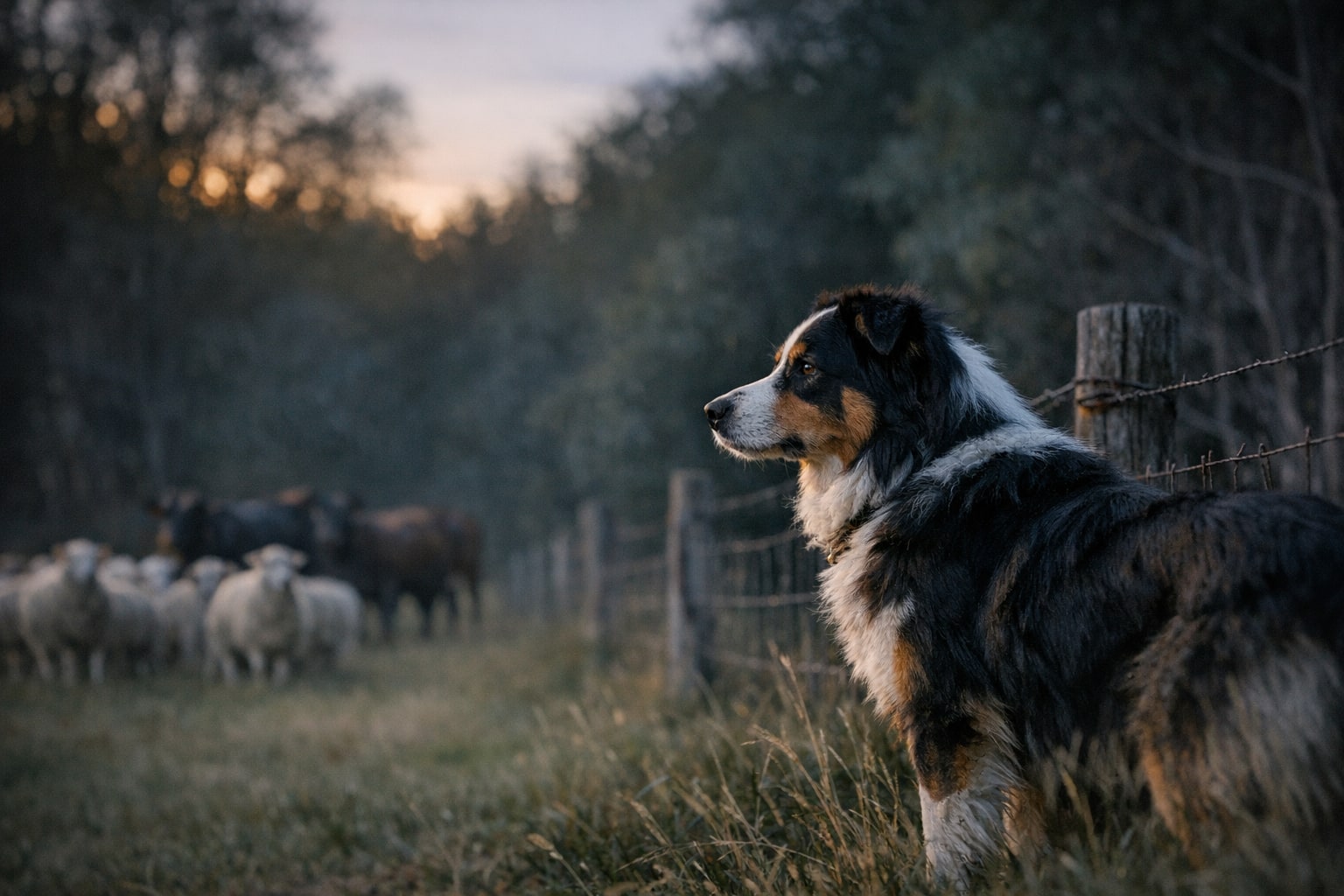
Any man or woman who has spent enough mornings behind a good dog knows one hard truth: the same country that grows grit in a working dog can also kill one. Predators are not campfire stories when you live and work close to stock, brush, timber, and open range. They are real, they are efficient, and they pay attention to weakness, routine, and opportunity. A herding dog that works sheep in the back pasture, checks fence rows at dusk, or sleeps near a calving lot can draw attention from coyotes, wolves, mountain lions, bears, and even stray packs of domestic dogs. Protecting working dogs from predators is not about turning them timid. It is about keeping a valuable partner alive long enough to do the job well for years.
I have seen bold dogs do foolish things and careful dogs survive bad country because the handler understood the ground, the season, and the habits of the animals sharing that space. Predator safety begins before the dog ever leaves the yard. The best protection is usually a stack of small habits done right every day, not one miracle product hung around a dog’s neck after trouble has already started.
Know What Is Hunting in Your Country
The first rule is simple: know your local predators and understand how they behave. Coyotes are often the most common threat around farms and ranches. A single coyote may test a dog, but pairs and family groups can bait, draw, and ambush. Wolves, where they are present, are a different level of danger altogether. They are bigger, more coordinated, and more willing to close distance with confidence. Mountain lions are stealth hunters that prefer surprise and can strike a dog that ranges too far ahead or works in broken cover. Bears are less likely to stalk a dog as prey in many places, but defensive encounters around carcasses, cubs, feed, or garbage can become deadly in a hurry.
Season matters as much as species. Late winter and spring can bring territorial behavior. Summer often means young predators testing boundaries. Fall can increase movement as food patterns shift. During denning and pup-rearing periods, predators may react aggressively to dogs entering areas they consider theirs. A herding dog pushing stock through creek bottoms, cedar brakes, canyon rims, or overgrown fence lines is often passing through exactly the sort of cover predators like to use.
Learn the Warning Signs Before Your Dog Does
Tracks, scat, alarm calls from livestock, deer blowing out of cover, ravens circling low, and sudden silence in brush country all deserve attention. A working dog may sense danger before you do, but relying on the dog alone is asking too much. If your dog starts checking back unusually often, raising its head to wind, or refusing to push into certain cover, take that seriously. Good dogs are brave, but they are not foolish by nature. When one shows hesitation in familiar country, something may be there that should not be ignored.
Control Range and Maintain Contact
One of the biggest mistakes owners make is allowing a working dog to range too far when predator pressure is high. Distance creates vulnerability. A dog a hundred yards out in open pasture can still be supported. A dog three ridges over in timber, a dry wash, or tall brush is on its own. Herding dogs are not hounds, and even the independent ones should be trained to work with awareness of the handler’s location. Reliable recall, directional control, and a habit of checking in are not just obedience points. They are survival tools.
In risky country, keep dogs closer during dawn, dusk, and after dark. Those are predator movement windows in many regions. If stock needs to be moved early or late, consider using two dogs together only if they truly work as a team and do not overextend in excitement. Sometimes one steady dog under tight command is safer than two that feed off each other’s drive and disappear over a rise.
Use the Right Gear Without Depending on It
Protective gear can help, but it is not a substitute for handling. Cut vests and chest protectors designed for rough country can offer some defense against bites, claws, and brush injuries. High-visibility collars or vests make it easier to keep track of a dog in mixed cover. GPS tracking collars are worth serious consideration for owners working large acreage or broken terrain. Knowing where a dog is in real time can shave precious minutes off a response when something goes wrong.
Some owners use protective collars with wider profiles or studded designs meant to shield the neck, which is often the first target in a predator attack. Those tools can provide an edge, especially against coyotes, but they should be chosen carefully so they do not interfere with movement, breathing, or stock work. The point of gear is to improve odds, not burden the dog. If a piece of equipment slows a herding dog down, snags in wire, or distracts it from livestock, it may create a new hazard while solving an old one.
Lights, Noise, and Presence Matter Around the Farmstead
Close to home, predator deterrence often comes down to visibility and routine disruption. Motion lights near kennels, barns, and feed areas can discourage nighttime approaches. Clean yards, secure feed, and proper carcass disposal remove attractants that bring scavengers in close. If a dog sleeps outside, the kennel should be stout, roofed if practical, and placed where the dog is not isolated from the house or barn activity. Predators prefer easy chances. A dog penned in a dark corner at the far edge of the property is at greater risk than one housed where human scent, light, and noise are constant.
Train for Awareness, Not Recklessness
A strong working dog naturally meets pressure head-on. That is one reason we value them. But there is a line between courage and self-destruction, and a good handler teaches the difference. Dogs should learn that coming off pressure when called is not failure. It is part of the job. I have known dogs that would square up to anything that growled, and those are the ones that often make you proud right before they break your heart.
Predator-proof training starts with rock-solid recall and stop commands under distraction. It also means exposing young dogs carefully to rough terrain, livestock commotion, gunfire if relevant to your operation, vehicles, and changing weather so they do not panic and run blind when something unexpected happens. A dog that keeps its head is easier to protect than one that bolts into the brush from excitement or fear.
Work Stock With Predator Pressure in Mind
Livestock work can create situations that draw predators closer. Birthing areas, weak animals, dead stock, spilled grain, and watering points all concentrate scent and activity. If you know coyotes have been sounding off near lambing sheds or a lion has been seen around creek crossings, adjust how and when you use your dog. Move stock in fuller daylight. Avoid sending a single dog into blind cover to gather scattered animals. If possible, ride or walk the line first, especially in thick country where visibility is poor.
There is also wisdom in reading the livestock. Cattle bunching in an odd pocket of pasture, sheep refusing a draw they normally use, or goats staring into one cutbank too long can tell you trouble is nearby. A seasoned dog watches stock, but a seasoned owner watches both stock and dog. That double layer of awareness can prevent a bad encounter before it starts.
Nighttime Is When Many Good Dogs Are Lost
Too many owners trust the dark because the farm feels familiar. That is when predators use the edges. If your working dog patrols at night, ask whether that job is truly necessary or just tradition. A dog loose after dark near brush, timber, ravines, or open draws is vulnerable, especially if it works alone. Bringing dogs in at night, using secure kennels, and limiting unsupervised roaming are some of the simplest and most effective predator safety measures available.
What to Do After an Encounter
If your dog tangles with a predator and survives, act fast. Punctures can look minor and still hide crushing damage, infection, or internal injury. Shock, blood loss, and tissue trauma can set in quickly. Get the dog leashed or secured, control bleeding with direct pressure, keep it calm and warm, and seek veterinary care as soon as possible. Even if the dog appears to recover, bites around the neck, chest, shoulder, and abdomen should never be shrugged off.
Afterward, change your routines. Predators that have tested a dog once may return, especially if they found feed, carrion, or vulnerable livestock nearby. Reassess where the dog works, when it is turned out, and what signs you may have missed. One close call should buy wisdom, not confidence.
Protect the Dog Without Taking Away Its Job
There is always a balance to strike with herding dogs. They need freedom to think, pressure stock, and use the instincts bred into them. Smothering that drive can make them less useful. But letting a dog work exposed country with no plan, no equipment, and no awareness of predator activity is not toughness. It is neglect dressed up as old-school handling.
The best handlers I have known were not the loudest or the most dramatic. They were observant. They noticed fresh tracks in mud by the trough. They changed pasture routes when ravens kept hanging over one cedar flat. They called a dog in early when the hair rose on its back and it would not take its eyes off a rimrock ledge. Those people kept dogs longer, and their dogs stayed useful because caution rode alongside grit.
Protecting working dogs from predators comes down to respect. Respect the dog’s value, respect the country, and respect the predator enough not to underestimate it. A good herding dog gives everything it has when asked. The least we can do is stack the odds in its favor before we ever open the gate.
I have seen bold dogs do foolish things and careful dogs survive bad country because the handler understood the ground, the season, and the habits of the animals sharing that space. Predator safety begins before the dog ever leaves the yard. The best protection is usually a stack of small habits done right every day, not one miracle product hung around a dog’s neck after trouble has already started.
Know What Is Hunting in Your Country
The first rule is simple: know your local predators and understand how they behave. Coyotes are often the most common threat around farms and ranches. A single coyote may test a dog, but pairs and family groups can bait, draw, and ambush. Wolves, where they are present, are a different level of danger altogether. They are bigger, more coordinated, and more willing to close distance with confidence. Mountain lions are stealth hunters that prefer surprise and can strike a dog that ranges too far ahead or works in broken cover. Bears are less likely to stalk a dog as prey in many places, but defensive encounters around carcasses, cubs, feed, or garbage can become deadly in a hurry.
Season matters as much as species. Late winter and spring can bring territorial behavior. Summer often means young predators testing boundaries. Fall can increase movement as food patterns shift. During denning and pup-rearing periods, predators may react aggressively to dogs entering areas they consider theirs. A herding dog pushing stock through creek bottoms, cedar brakes, canyon rims, or overgrown fence lines is often passing through exactly the sort of cover predators like to use.
Learn the Warning Signs Before Your Dog Does
Tracks, scat, alarm calls from livestock, deer blowing out of cover, ravens circling low, and sudden silence in brush country all deserve attention. A working dog may sense danger before you do, but relying on the dog alone is asking too much. If your dog starts checking back unusually often, raising its head to wind, or refusing to push into certain cover, take that seriously. Good dogs are brave, but they are not foolish by nature. When one shows hesitation in familiar country, something may be there that should not be ignored.
Control Range and Maintain Contact
One of the biggest mistakes owners make is allowing a working dog to range too far when predator pressure is high. Distance creates vulnerability. A dog a hundred yards out in open pasture can still be supported. A dog three ridges over in timber, a dry wash, or tall brush is on its own. Herding dogs are not hounds, and even the independent ones should be trained to work with awareness of the handler’s location. Reliable recall, directional control, and a habit of checking in are not just obedience points. They are survival tools.
In risky country, keep dogs closer during dawn, dusk, and after dark. Those are predator movement windows in many regions. If stock needs to be moved early or late, consider using two dogs together only if they truly work as a team and do not overextend in excitement. Sometimes one steady dog under tight command is safer than two that feed off each other’s drive and disappear over a rise.
Use the Right Gear Without Depending on It
Protective gear can help, but it is not a substitute for handling. Cut vests and chest protectors designed for rough country can offer some defense against bites, claws, and brush injuries. High-visibility collars or vests make it easier to keep track of a dog in mixed cover. GPS tracking collars are worth serious consideration for owners working large acreage or broken terrain. Knowing where a dog is in real time can shave precious minutes off a response when something goes wrong.
Some owners use protective collars with wider profiles or studded designs meant to shield the neck, which is often the first target in a predator attack. Those tools can provide an edge, especially against coyotes, but they should be chosen carefully so they do not interfere with movement, breathing, or stock work. The point of gear is to improve odds, not burden the dog. If a piece of equipment slows a herding dog down, snags in wire, or distracts it from livestock, it may create a new hazard while solving an old one.
Lights, Noise, and Presence Matter Around the Farmstead
Close to home, predator deterrence often comes down to visibility and routine disruption. Motion lights near kennels, barns, and feed areas can discourage nighttime approaches. Clean yards, secure feed, and proper carcass disposal remove attractants that bring scavengers in close. If a dog sleeps outside, the kennel should be stout, roofed if practical, and placed where the dog is not isolated from the house or barn activity. Predators prefer easy chances. A dog penned in a dark corner at the far edge of the property is at greater risk than one housed where human scent, light, and noise are constant.
Train for Awareness, Not Recklessness
A strong working dog naturally meets pressure head-on. That is one reason we value them. But there is a line between courage and self-destruction, and a good handler teaches the difference. Dogs should learn that coming off pressure when called is not failure. It is part of the job. I have known dogs that would square up to anything that growled, and those are the ones that often make you proud right before they break your heart.
Predator-proof training starts with rock-solid recall and stop commands under distraction. It also means exposing young dogs carefully to rough terrain, livestock commotion, gunfire if relevant to your operation, vehicles, and changing weather so they do not panic and run blind when something unexpected happens. A dog that keeps its head is easier to protect than one that bolts into the brush from excitement or fear.
Work Stock With Predator Pressure in Mind
Livestock work can create situations that draw predators closer. Birthing areas, weak animals, dead stock, spilled grain, and watering points all concentrate scent and activity. If you know coyotes have been sounding off near lambing sheds or a lion has been seen around creek crossings, adjust how and when you use your dog. Move stock in fuller daylight. Avoid sending a single dog into blind cover to gather scattered animals. If possible, ride or walk the line first, especially in thick country where visibility is poor.
There is also wisdom in reading the livestock. Cattle bunching in an odd pocket of pasture, sheep refusing a draw they normally use, or goats staring into one cutbank too long can tell you trouble is nearby. A seasoned dog watches stock, but a seasoned owner watches both stock and dog. That double layer of awareness can prevent a bad encounter before it starts.
Nighttime Is When Many Good Dogs Are Lost
Too many owners trust the dark because the farm feels familiar. That is when predators use the edges. If your working dog patrols at night, ask whether that job is truly necessary or just tradition. A dog loose after dark near brush, timber, ravines, or open draws is vulnerable, especially if it works alone. Bringing dogs in at night, using secure kennels, and limiting unsupervised roaming are some of the simplest and most effective predator safety measures available.
What to Do After an Encounter
If your dog tangles with a predator and survives, act fast. Punctures can look minor and still hide crushing damage, infection, or internal injury. Shock, blood loss, and tissue trauma can set in quickly. Get the dog leashed or secured, control bleeding with direct pressure, keep it calm and warm, and seek veterinary care as soon as possible. Even if the dog appears to recover, bites around the neck, chest, shoulder, and abdomen should never be shrugged off.
Afterward, change your routines. Predators that have tested a dog once may return, especially if they found feed, carrion, or vulnerable livestock nearby. Reassess where the dog works, when it is turned out, and what signs you may have missed. One close call should buy wisdom, not confidence.
Protect the Dog Without Taking Away Its Job
There is always a balance to strike with herding dogs. They need freedom to think, pressure stock, and use the instincts bred into them. Smothering that drive can make them less useful. But letting a dog work exposed country with no plan, no equipment, and no awareness of predator activity is not toughness. It is neglect dressed up as old-school handling.
The best handlers I have known were not the loudest or the most dramatic. They were observant. They noticed fresh tracks in mud by the trough. They changed pasture routes when ravens kept hanging over one cedar flat. They called a dog in early when the hair rose on its back and it would not take its eyes off a rimrock ledge. Those people kept dogs longer, and their dogs stayed useful because caution rode alongside grit.
Protecting working dogs from predators comes down to respect. Respect the dog’s value, respect the country, and respect the predator enough not to underestimate it. A good herding dog gives everything it has when asked. The least we can do is stack the odds in its favor before we ever open the gate.