Weather Challenges for Farm Dogs
Keeping Herding Dogs Safe, Steady, and Ready in Every Season
Jeff Davis | https://herdingdogcentral.com
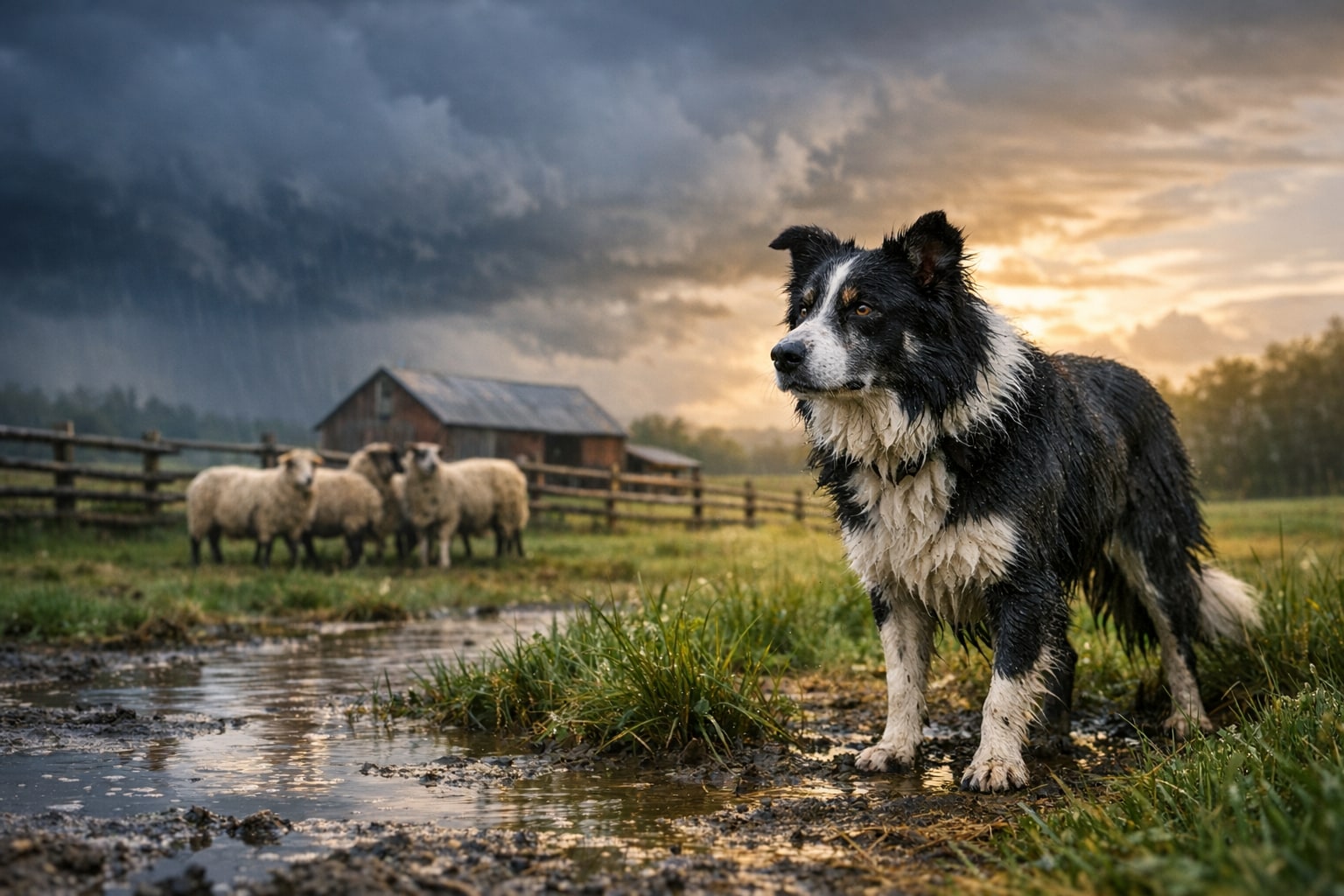
If you spend enough years around stock dogs, bird dogs, and hard country weather, you learn something simple in a hurry: weather changes everything. A farm dog may be born with grit, brains, and a motor that never seems to quit, but even the best dog can be worn down by heat, slowed by ice, distracted by wind, or rattled by a hard storm moving across open ground. Folks who rely on herding dogs know this already. Weather is not just background scenery on a farm. It shapes the work, the pace, the stock, and the dog.
Good farm dogs are expected to show up every day. They gather, drive, hold pressure on livestock, patrol fence lines, and move through mud, dust, snow, and standing water like it is all in a day’s work. Most of the time, it is. But weather has a way of turning ordinary chores into risky ones, especially when a dog is asked to push hard without enough support from the handler. Understanding weather challenges for farm dogs is not about coddling them. It is about keeping them useful, sound, and safe for the long haul.
Heat Stress in Working Farm Dogs
Summer heat is one of the biggest threats to any working dog, and herding breeds are especially vulnerable because they tend to work past the point of comfort. A keen dog will often ignore fatigue if there is stock to gather or a gate to hold. That kind of heart is valuable, but it can also get a dog in trouble fast. On hot days, body heat builds quickly, especially during intense outruns, close pen work, or repeated driving in direct sun.
I have seen dogs look sharp leaving the truck and turn loose-eyed and heavy-tongued in less time than it takes to sort a stubborn bunch of ewes. Heat stress does not always arrive with drama. Sometimes it starts with slower returns, wider casts, hesitation at commands, or a dog seeking shade every chance it gets. Heavy panting, glazed eyes, weakness, disorientation, and vomiting are more serious signs that the dog is moving toward heat exhaustion or heatstroke.
Dark-coated dogs, thick-coated dogs, older dogs, overweight dogs, and young dogs still learning to pace themselves can all struggle in hot weather. Humidity makes matters worse because the dog cannot cool efficiently through panting. Add dust, long grass, poor air movement, and hot trailer floors, and the risk climbs fast.
Managing Heat Without Taking the Dog Out of Work
The answer is not to stop using a farm dog all summer. It is to work smarter. Early morning and late evening are often the best windows for demanding tasks. Water should be close, shade should be available, and jobs should be broken into shorter efforts when possible. A dog that is conditioned properly heading into warm months will handle heat better than one that has been idle, but conditioning does not make any dog heatproof.
Handlers should pay attention to recovery time. A good dog should bounce back after a hard push. If recovery drags, the weather may be taking more out of the dog than it appears. Cooling should be gradual and steady, with access to water and rest, not a panicked plunge into unsafe cold water after overheating. Heat injuries can sneak up once and leave a mark for the rest of that dog’s working life.
Cold Weather and Winter Hazards
Cold weather brings a different set of problems. A farm dog bred for work often handles chilly mornings better than most people expect, but cold becomes dangerous when it combines with wind, moisture, and long exposure. Snow crust can cut feet. Ice can strain joints and shoulders. Freezing rain can soak a coat down to the skin and pull body heat away with surprising speed.
On winter mornings, a dog may leave the yard feeling bold and willing, only to stiffen up after repeated slips in a frozen lot or a long push through drifts. Herding dogs that work low to the ground and turn hard can take a beating when surfaces are slick. It is not only about frostbite or hypothermia, though those are real risks. It is also about the wear and tear that winter conditions put on muscles, pads, and confidence.
Puppies, seniors, and short-coated dogs tend to need more support in bitter weather. So do dogs recovering from injury. A seasoned dog may hide discomfort and keep working, but that does not mean the cold is not costing him. Watch for shivering, lifting feet, reluctance to lie down, slowed response to commands, and unusual stiffness after work.
Foot Care Matters More Than Most Folks Realize
Feet are where weather often does its quiet damage. Ice balls can pack between toes. Frozen manure, sharp stubble, and crusted snow can split pads and create the kind of soreness that ruins a week of work. Mud that freezes later can be just as hard on feet as straight ice. Checking pads after winter chores should be routine. A dog with sore feet may start refusing fligid approaches, turning oddly, or lagging behind stock, and it is easy to mistake that for attitude when it is really pain.
Shelter is just as important in winter as water is in summer. A working farm dog needs a dry place out of the wind, bedding that stays usable, and enough fuel to hold body condition. Calories matter when dogs are burning energy to stay warm as well as to work.
Rain, Mud, and the Slow Grind of Wet Conditions
Rainy weather rarely gets the same attention as heat or deep cold, but a long stretch of wet conditions can wear a farm dog down. Wet coats hold chill. Mud steals traction. Soggy ground makes every gather more tiring. Cattle and sheep often behave differently in rain too, bunching up, becoming stubborn, or refusing to move through slick gateways. That means the dog has to apply more pressure and spend more energy on work that would be straightforward on dry footing.
There is also the hidden side of wet weather. Skin troubles can flare when dogs stay damp too long. Ears can become irritated. Minor scrapes soften and worsen in muddy lots. Kennel areas that do not drain well can turn into a source of constant stress on paws and joints. None of this looks dramatic in one day, but over weeks it adds up.
After a hard day in rain, drying a dog properly is not fussing. It is basic maintenance. A dog that goes to bed wet and chilled may be slower, sorer, and less eager the next morning. Over time, that kind of management gap shows up in performance.
Wind, Storms, and Nerve
Wind changes stock, and when stock changes, the dog has to adjust. On blustery days, scent is scattered, commands are harder to hear, and livestock may become restless or flighty. A dog that normally reads pressure beautifully can struggle when everything in the pasture feels unsettled. Wind also carries debris, dust, and pollen that can irritate eyes and airways.
Then there are storms. Some dogs take thunder in stride, while others become anxious long before the first crack overhead. A nervous dog may stop taking commands cleanly, stick too close to the handler, or rush stock out of tension. If lightning is in the area, no chore is worth gambling with a dog’s life. Open fields, wire fences, metal gates, and panicked livestock make bad combinations in electrical weather.
Nerve is part of what makes a trustworthy farm dog, but confidence should not be confused with recklessness. Strong dogs still need sensible handling when storms roll through.
Seasonal Transitions Can Be the Hardest Part
In my experience, the shift between seasons often catches dogs harder than the peak of any one season. The first real hot spell of late spring can hit a dog before its body has adjusted. The first hard freeze of autumn can expose poor footing and sore joints in a hurry. During these transition periods, handlers need to watch closely and avoid assuming yesterday’s performance means the dog will handle today the same way.
Coat changes, fluctuating moisture, allergens, insects, and changing workloads all show up around seasonal transitions. A dog can be fit, willing, and well trained, yet still need a lighter hand for a week or two while conditions turn. Good stockmen notice these things. Good dog men do too.
Reading the Dog in Real Time
The best weather protection on any farm is not gear. It is attention. A handler who knows the dog can spot trouble early. Maybe the dog that usually flanks wide starts cutting in because the heat is draining him. Maybe the one that never misses a whistle seems dull in a cold rain. Maybe a dog that normally grips only when necessary starts acting sharp because the wind and pressure have livestock stirred up. Weather often shows itself through behavior before it shows itself through a clear medical problem.
This is where experience matters. You learn to watch the dog coming off a gather, not just going out on one. You notice how he drinks, how he stands, how fast he recovers, whether he shakes off water and goes right back to work or lingers behind. These little details are worth more than any fancy theory because they tell you what the dog in front of you can handle that day.
Keeping Herding Dogs Working Safely Year-Round
A farm dog is not a porch ornament. Most of them would rather work in rough weather than stay behind. That willingness is part of what we admire in them. Still, the weather challenges for farm dogs are real, and ignoring them is a good way to shorten a promising dog’s career. Thoughtful scheduling, proper conditioning, solid shelter, clean water, foot checks, and common-sense observation do more to protect a working dog than any last-minute fix.
For owners interested in herding dogs, the goal is not softness. It is durability. A dog that is cared for with the weather in mind stays sharper, healthier, and more dependable when the farm needs him most. Through heat waves, sleet, muddy springs, and hard winter wind, the best dogs keep trying. They deserve handlers who are paying equal attention.
Good farm dogs are expected to show up every day. They gather, drive, hold pressure on livestock, patrol fence lines, and move through mud, dust, snow, and standing water like it is all in a day’s work. Most of the time, it is. But weather has a way of turning ordinary chores into risky ones, especially when a dog is asked to push hard without enough support from the handler. Understanding weather challenges for farm dogs is not about coddling them. It is about keeping them useful, sound, and safe for the long haul.
Heat Stress in Working Farm Dogs
Summer heat is one of the biggest threats to any working dog, and herding breeds are especially vulnerable because they tend to work past the point of comfort. A keen dog will often ignore fatigue if there is stock to gather or a gate to hold. That kind of heart is valuable, but it can also get a dog in trouble fast. On hot days, body heat builds quickly, especially during intense outruns, close pen work, or repeated driving in direct sun.
I have seen dogs look sharp leaving the truck and turn loose-eyed and heavy-tongued in less time than it takes to sort a stubborn bunch of ewes. Heat stress does not always arrive with drama. Sometimes it starts with slower returns, wider casts, hesitation at commands, or a dog seeking shade every chance it gets. Heavy panting, glazed eyes, weakness, disorientation, and vomiting are more serious signs that the dog is moving toward heat exhaustion or heatstroke.
Dark-coated dogs, thick-coated dogs, older dogs, overweight dogs, and young dogs still learning to pace themselves can all struggle in hot weather. Humidity makes matters worse because the dog cannot cool efficiently through panting. Add dust, long grass, poor air movement, and hot trailer floors, and the risk climbs fast.
Managing Heat Without Taking the Dog Out of Work
The answer is not to stop using a farm dog all summer. It is to work smarter. Early morning and late evening are often the best windows for demanding tasks. Water should be close, shade should be available, and jobs should be broken into shorter efforts when possible. A dog that is conditioned properly heading into warm months will handle heat better than one that has been idle, but conditioning does not make any dog heatproof.
Handlers should pay attention to recovery time. A good dog should bounce back after a hard push. If recovery drags, the weather may be taking more out of the dog than it appears. Cooling should be gradual and steady, with access to water and rest, not a panicked plunge into unsafe cold water after overheating. Heat injuries can sneak up once and leave a mark for the rest of that dog’s working life.
Cold Weather and Winter Hazards
Cold weather brings a different set of problems. A farm dog bred for work often handles chilly mornings better than most people expect, but cold becomes dangerous when it combines with wind, moisture, and long exposure. Snow crust can cut feet. Ice can strain joints and shoulders. Freezing rain can soak a coat down to the skin and pull body heat away with surprising speed.
On winter mornings, a dog may leave the yard feeling bold and willing, only to stiffen up after repeated slips in a frozen lot or a long push through drifts. Herding dogs that work low to the ground and turn hard can take a beating when surfaces are slick. It is not only about frostbite or hypothermia, though those are real risks. It is also about the wear and tear that winter conditions put on muscles, pads, and confidence.
Puppies, seniors, and short-coated dogs tend to need more support in bitter weather. So do dogs recovering from injury. A seasoned dog may hide discomfort and keep working, but that does not mean the cold is not costing him. Watch for shivering, lifting feet, reluctance to lie down, slowed response to commands, and unusual stiffness after work.
Foot Care Matters More Than Most Folks Realize
Feet are where weather often does its quiet damage. Ice balls can pack between toes. Frozen manure, sharp stubble, and crusted snow can split pads and create the kind of soreness that ruins a week of work. Mud that freezes later can be just as hard on feet as straight ice. Checking pads after winter chores should be routine. A dog with sore feet may start refusing fligid approaches, turning oddly, or lagging behind stock, and it is easy to mistake that for attitude when it is really pain.
Shelter is just as important in winter as water is in summer. A working farm dog needs a dry place out of the wind, bedding that stays usable, and enough fuel to hold body condition. Calories matter when dogs are burning energy to stay warm as well as to work.
Rain, Mud, and the Slow Grind of Wet Conditions
Rainy weather rarely gets the same attention as heat or deep cold, but a long stretch of wet conditions can wear a farm dog down. Wet coats hold chill. Mud steals traction. Soggy ground makes every gather more tiring. Cattle and sheep often behave differently in rain too, bunching up, becoming stubborn, or refusing to move through slick gateways. That means the dog has to apply more pressure and spend more energy on work that would be straightforward on dry footing.
There is also the hidden side of wet weather. Skin troubles can flare when dogs stay damp too long. Ears can become irritated. Minor scrapes soften and worsen in muddy lots. Kennel areas that do not drain well can turn into a source of constant stress on paws and joints. None of this looks dramatic in one day, but over weeks it adds up.
After a hard day in rain, drying a dog properly is not fussing. It is basic maintenance. A dog that goes to bed wet and chilled may be slower, sorer, and less eager the next morning. Over time, that kind of management gap shows up in performance.
Wind, Storms, and Nerve
Wind changes stock, and when stock changes, the dog has to adjust. On blustery days, scent is scattered, commands are harder to hear, and livestock may become restless or flighty. A dog that normally reads pressure beautifully can struggle when everything in the pasture feels unsettled. Wind also carries debris, dust, and pollen that can irritate eyes and airways.
Then there are storms. Some dogs take thunder in stride, while others become anxious long before the first crack overhead. A nervous dog may stop taking commands cleanly, stick too close to the handler, or rush stock out of tension. If lightning is in the area, no chore is worth gambling with a dog’s life. Open fields, wire fences, metal gates, and panicked livestock make bad combinations in electrical weather.
Nerve is part of what makes a trustworthy farm dog, but confidence should not be confused with recklessness. Strong dogs still need sensible handling when storms roll through.
Seasonal Transitions Can Be the Hardest Part
In my experience, the shift between seasons often catches dogs harder than the peak of any one season. The first real hot spell of late spring can hit a dog before its body has adjusted. The first hard freeze of autumn can expose poor footing and sore joints in a hurry. During these transition periods, handlers need to watch closely and avoid assuming yesterday’s performance means the dog will handle today the same way.
Coat changes, fluctuating moisture, allergens, insects, and changing workloads all show up around seasonal transitions. A dog can be fit, willing, and well trained, yet still need a lighter hand for a week or two while conditions turn. Good stockmen notice these things. Good dog men do too.
Reading the Dog in Real Time
The best weather protection on any farm is not gear. It is attention. A handler who knows the dog can spot trouble early. Maybe the dog that usually flanks wide starts cutting in because the heat is draining him. Maybe the one that never misses a whistle seems dull in a cold rain. Maybe a dog that normally grips only when necessary starts acting sharp because the wind and pressure have livestock stirred up. Weather often shows itself through behavior before it shows itself through a clear medical problem.
This is where experience matters. You learn to watch the dog coming off a gather, not just going out on one. You notice how he drinks, how he stands, how fast he recovers, whether he shakes off water and goes right back to work or lingers behind. These little details are worth more than any fancy theory because they tell you what the dog in front of you can handle that day.
Keeping Herding Dogs Working Safely Year-Round
A farm dog is not a porch ornament. Most of them would rather work in rough weather than stay behind. That willingness is part of what we admire in them. Still, the weather challenges for farm dogs are real, and ignoring them is a good way to shorten a promising dog’s career. Thoughtful scheduling, proper conditioning, solid shelter, clean water, foot checks, and common-sense observation do more to protect a working dog than any last-minute fix.
For owners interested in herding dogs, the goal is not softness. It is durability. A dog that is cared for with the weather in mind stays sharper, healthier, and more dependable when the farm needs him most. Through heat waves, sleet, muddy springs, and hard winter wind, the best dogs keep trying. They deserve handlers who are paying equal attention.