Complete Guide to Livestock Guardian Dog Breeds
Jeff Davis | https://herdingdogcentral.com
 0
0 0
0 0
0 0
0 0
0
Spend enough time around farms, open range, or rough country edges where coyotes sing at dusk, and you learn there is a world of difference between a dog that moves stock and a dog that protects it. Herding dogs gather, drive, and control. Livestock guardian dogs, often called LGDs, settle in with the animals and treat that flock or herd as their own. It is a quieter kind of work, but no less serious. A good guardian dog does not waste motion. It watches, patrols, listens, and when pressure comes, it meets it with nerve and presence.
Folks new to working dogs sometimes assume a guardian breed is just a larger version of a herding dog. That is not how it works in the field. These breeds were developed over generations to bond with sheep, goats, or cattle and stay with them around the clock. Rather than waiting for human direction every minute, they make decisions on their own. That independent mind is one of their greatest strengths, and one of the first things an owner must respect.
What Makes a Livestock Guardian Dog Different?
The biggest distinction is purpose. A Border Collie reads stock movement and responds to handler cues with precision. A Great Pyrenees or Anatolian Shepherd reads the landscape, the weather, the sounds in the dark, and the behavior of the animals under its care. It is less concerned with pleasing a person on command and more concerned with keeping peace in its territory.
That means livestock guardian dog breeds tend to be calm, observant, and deeply territorial. They are usually not high-energy dogs in the way many herding breeds are. You will not always see fireworks from them during the day. In truth, a fine guardian often looks almost lazy until something changes. Then you notice the head come up, the posture shift, and the attention lock hard on the far fence line. That is the kind of dog you want on country where predators test boundaries.
They also mature slowly. Many owners make the mistake of expecting a young LGD to think like a seasoned dog too early. In my experience, time in the pasture matters just as much as bloodline. The dog has to grow into the job, and that takes patience, supervision, and proper exposure to livestock from an early age.
Best Known Livestock Guardian Dog Breeds
Great Pyrenees
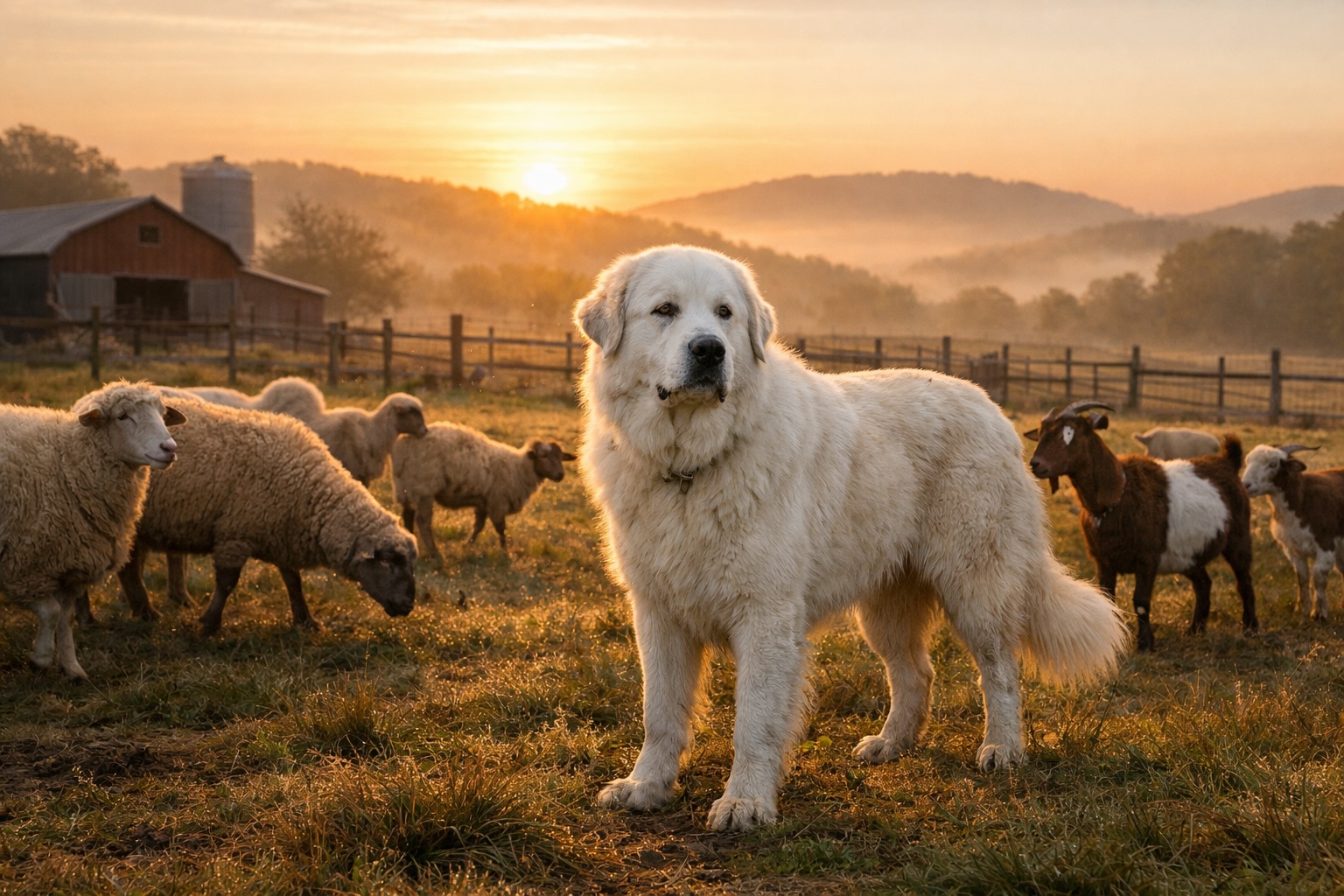
The Great Pyrenees is the breed many people picture first, and for good reason. These dogs have a long history guarding sheep in mountain country and they carry themselves with a steady, dignified confidence. They are large, thick-coated, and especially well suited for colder climates. Around family and livestock, a good Pyrenees is often gentle and composed. Around threats, it can be surprisingly bold.
They are a common choice for small farms because they often balance guardian instinct with a manageable temperament. Still, they bark, patrol, and think for themselves. Anyone wanting a highly obedient suburban pet will likely be frustrated. Anyone needing a dependable presence in the pasture may see exactly why the breed has lasted so long.
Anatolian Shepherd
If the Pyrenees often feels like a white sentinel at rest, the Anatolian Shepherd brings a harder edge. Bred in Turkey to guard stock against serious predators, the Anatolian is known for speed, endurance, and an impressive protective drive. These dogs are athletic for their size and often cover large acreage well.
They are not a breed for timid ownership. An Anatolian needs clear boundaries, proper socialization, and meaningful work. On the right property, though, they can be exceptional guardians. They tend to be more suspicious of strangers than some other LGD breeds, which can be an asset when managed correctly and a problem when it is not.
Maremma Sheepdog
The Maremma Sheepdog, developed in Italy, is a handsome white guardian known for staying close to stock and maintaining a calm, sensible nature. Many shepherds appreciate the breed for its strong bond with sheep and goats. Maremmas often show a good mix of attentiveness and composure, and they can fit well on family farms where owners are hands-on and involved.
There is an honesty to this breed I have always admired. A good Maremma often does not posture more than needed. It watches, assesses, and acts without drama. For owners who want a guardian that remains stock-focused without being overly reactive, the Maremma deserves a close look.
Akbash
The Akbash is another Turkish guardian breed, leaner and often somewhat more agile in build than the Great Pyrenees. These dogs were developed to combine the size to deter predators with the speed to respond quickly. In the field, they often strike me as serious dogs. They are not clowns, and they are rarely interested in nonsense.
Akbash dogs can be outstanding with sheep and goats, especially where predators are persistent. They usually need room, a purpose, and owners who understand guardian behavior. They are not dogs to be managed casually. When raised right, however, they can be resolute and highly effective.
Komondor and Kuvasz
Hungary gave us more than one respected guardian breed. The Komondor, with its unmistakable corded coat, is a powerful livestock protector with a long history in rough country. It is striking to look at, but no one should choose one for appearance alone. Under that coat is a serious working dog with strong instincts and a natural distrust of threats.
The Kuvasz is somewhat more refined in appearance, though no less capable in spirit. Traditionally used as both estate and livestock guardian, the Kuvasz is intelligent, alert, and deeply loyal. Both breeds require experienced handling and enough room to do what they were bred to do.
Tibetan Mastiff and Other Regional Guardians
There are several other breeds that may be used as livestock guardians depending on region and need, including the Tibetan Mastiff, Kangal-type dogs, and Central Asian Shepherds. These dogs were shaped by difficult terrain, harsh weather, and real predator pressure. In areas where wolves, large cats, or persistent packs of wild canines remain a concern, these heavier guardian traditions still make sense.
For the average owner, though, availability, breeder quality, and fit with the property matter more than chasing a rare name. A well-bred, well-raised guardian of a common LGD breed is usually a better choice than an exotic dog that arrives with unclear instincts or poor early development.
Choosing the Right Livestock Guardian Dog Breed
The right breed depends on what you are protecting, how much land you have, your fencing, your climate, and the kind of predator pressure in your area. A small goat operation in wooded country may need a somewhat different dog than a wide-open sheep ranch. Heavy-coated breeds handle bitter winters well, while leaner guardians may fare better in hotter, drier regions.
Temperament should matter just as much as reputation. Some owners need a dog that works close to home and around children. Others need a hard guardian for remote acreage where human traffic is minimal. Be honest about your setup. These dogs are not decorative farm additions. They are working animals with instincts that can be inconvenient if you place them in the wrong environment.
Training and Raising an LGD the Right Way
The word training means something different with livestock guardian dogs. You are not trying to create a flashy obedience performer. You are shaping judgment, reliability, and bond with livestock. That begins young. Puppies should be raised with the kind of stock they will protect, under controlled conditions that keep both pup and animals safe.
Correction should be fair and timely, but overhandling can backfire. You want a guardian that respects you, not one that depends on constant direction. Exposure to fences, feeding routines, night sounds, and normal farm activity helps the dog settle into its role. So does pairing a younger dog with a mature, trustworthy guardian when possible. Few teachers are better than an old dog that already knows the country.
One thing worth saying plainly is that not every pup makes the grade. Even within strong working lines, some dogs have better stock sense than others. Good breeders know this and will talk honestly about their dogs. That kind of honesty is worth paying for.
Common Mistakes New Owners Make
The most common mistake is confusing a livestock guardian dog with either a pet or a herding dog. An LGD that roams, barks through the night, and questions strangers is not necessarily poorly behaved. It may be doing exactly what it was bred to do. The real issue is whether the dog has the right job and boundaries.
Another mistake is expecting too much too soon. A young guardian may play too hard with stock, test fences, or bark at every shifting shadow. Maturity takes time. So does trust. Owners who stay patient and consistent usually end up with a far better dog than those who try to force instant polish.
The final mistake is weak infrastructure. Even the best guardian needs secure fencing, proper nutrition, regular health care, and a property setup that supports success. You cannot ask a dog to protect livestock well if the basics are neglected.
Are Livestock Guardian Dogs Right for Herding Dog Owners?
For owners interested in herding dogs, livestock guardian breeds can be fascinating because they represent a different branch of stock work entirely. Both are valuable, but they solve separate problems. On some farms, a herding dog and a guardian dog complement each other beautifully. One moves animals where they need to go. The other keeps them safe when the workday is over.
If you admire intelligence, grit, and purpose in a working dog, there is much to respect in a good LGD. But admiration alone is not enough. These dogs belong in situations where their instincts make sense. Give them livestock, room, structure, and time, and many will repay you with the kind of steady protection that cannot be faked.
There is a certain comfort in hearing a guardian dog give one deep warning bark in the dark and then settle again when the threat passes. It tells you somebody is on watch. Out in farm country, that still means something. Always has.
Folks new to working dogs sometimes assume a guardian breed is just a larger version of a herding dog. That is not how it works in the field. These breeds were developed over generations to bond with sheep, goats, or cattle and stay with them around the clock. Rather than waiting for human direction every minute, they make decisions on their own. That independent mind is one of their greatest strengths, and one of the first things an owner must respect.
What Makes a Livestock Guardian Dog Different?
The biggest distinction is purpose. A Border Collie reads stock movement and responds to handler cues with precision. A Great Pyrenees or Anatolian Shepherd reads the landscape, the weather, the sounds in the dark, and the behavior of the animals under its care. It is less concerned with pleasing a person on command and more concerned with keeping peace in its territory.
That means livestock guardian dog breeds tend to be calm, observant, and deeply territorial. They are usually not high-energy dogs in the way many herding breeds are. You will not always see fireworks from them during the day. In truth, a fine guardian often looks almost lazy until something changes. Then you notice the head come up, the posture shift, and the attention lock hard on the far fence line. That is the kind of dog you want on country where predators test boundaries.
They also mature slowly. Many owners make the mistake of expecting a young LGD to think like a seasoned dog too early. In my experience, time in the pasture matters just as much as bloodline. The dog has to grow into the job, and that takes patience, supervision, and proper exposure to livestock from an early age.
Best Known Livestock Guardian Dog Breeds
Great Pyrenees
The Great Pyrenees is the breed many people picture first, and for good reason. These dogs have a long history guarding sheep in mountain country and they carry themselves with a steady, dignified confidence. They are large, thick-coated, and especially well suited for colder climates. Around family and livestock, a good Pyrenees is often gentle and composed. Around threats, it can be surprisingly bold.
They are a common choice for small farms because they often balance guardian instinct with a manageable temperament. Still, they bark, patrol, and think for themselves. Anyone wanting a highly obedient suburban pet will likely be frustrated. Anyone needing a dependable presence in the pasture may see exactly why the breed has lasted so long.
Anatolian Shepherd
If the Pyrenees often feels like a white sentinel at rest, the Anatolian Shepherd brings a harder edge. Bred in Turkey to guard stock against serious predators, the Anatolian is known for speed, endurance, and an impressive protective drive. These dogs are athletic for their size and often cover large acreage well.
They are not a breed for timid ownership. An Anatolian needs clear boundaries, proper socialization, and meaningful work. On the right property, though, they can be exceptional guardians. They tend to be more suspicious of strangers than some other LGD breeds, which can be an asset when managed correctly and a problem when it is not.
Maremma Sheepdog
The Maremma Sheepdog, developed in Italy, is a handsome white guardian known for staying close to stock and maintaining a calm, sensible nature. Many shepherds appreciate the breed for its strong bond with sheep and goats. Maremmas often show a good mix of attentiveness and composure, and they can fit well on family farms where owners are hands-on and involved.
There is an honesty to this breed I have always admired. A good Maremma often does not posture more than needed. It watches, assesses, and acts without drama. For owners who want a guardian that remains stock-focused without being overly reactive, the Maremma deserves a close look.
Akbash
The Akbash is another Turkish guardian breed, leaner and often somewhat more agile in build than the Great Pyrenees. These dogs were developed to combine the size to deter predators with the speed to respond quickly. In the field, they often strike me as serious dogs. They are not clowns, and they are rarely interested in nonsense.
Akbash dogs can be outstanding with sheep and goats, especially where predators are persistent. They usually need room, a purpose, and owners who understand guardian behavior. They are not dogs to be managed casually. When raised right, however, they can be resolute and highly effective.
Komondor and Kuvasz
Hungary gave us more than one respected guardian breed. The Komondor, with its unmistakable corded coat, is a powerful livestock protector with a long history in rough country. It is striking to look at, but no one should choose one for appearance alone. Under that coat is a serious working dog with strong instincts and a natural distrust of threats.
The Kuvasz is somewhat more refined in appearance, though no less capable in spirit. Traditionally used as both estate and livestock guardian, the Kuvasz is intelligent, alert, and deeply loyal. Both breeds require experienced handling and enough room to do what they were bred to do.
Tibetan Mastiff and Other Regional Guardians
There are several other breeds that may be used as livestock guardians depending on region and need, including the Tibetan Mastiff, Kangal-type dogs, and Central Asian Shepherds. These dogs were shaped by difficult terrain, harsh weather, and real predator pressure. In areas where wolves, large cats, or persistent packs of wild canines remain a concern, these heavier guardian traditions still make sense.
For the average owner, though, availability, breeder quality, and fit with the property matter more than chasing a rare name. A well-bred, well-raised guardian of a common LGD breed is usually a better choice than an exotic dog that arrives with unclear instincts or poor early development.
Choosing the Right Livestock Guardian Dog Breed
The right breed depends on what you are protecting, how much land you have, your fencing, your climate, and the kind of predator pressure in your area. A small goat operation in wooded country may need a somewhat different dog than a wide-open sheep ranch. Heavy-coated breeds handle bitter winters well, while leaner guardians may fare better in hotter, drier regions.
Temperament should matter just as much as reputation. Some owners need a dog that works close to home and around children. Others need a hard guardian for remote acreage where human traffic is minimal. Be honest about your setup. These dogs are not decorative farm additions. They are working animals with instincts that can be inconvenient if you place them in the wrong environment.
Training and Raising an LGD the Right Way
The word training means something different with livestock guardian dogs. You are not trying to create a flashy obedience performer. You are shaping judgment, reliability, and bond with livestock. That begins young. Puppies should be raised with the kind of stock they will protect, under controlled conditions that keep both pup and animals safe.
Correction should be fair and timely, but overhandling can backfire. You want a guardian that respects you, not one that depends on constant direction. Exposure to fences, feeding routines, night sounds, and normal farm activity helps the dog settle into its role. So does pairing a younger dog with a mature, trustworthy guardian when possible. Few teachers are better than an old dog that already knows the country.
One thing worth saying plainly is that not every pup makes the grade. Even within strong working lines, some dogs have better stock sense than others. Good breeders know this and will talk honestly about their dogs. That kind of honesty is worth paying for.
Common Mistakes New Owners Make
The most common mistake is confusing a livestock guardian dog with either a pet or a herding dog. An LGD that roams, barks through the night, and questions strangers is not necessarily poorly behaved. It may be doing exactly what it was bred to do. The real issue is whether the dog has the right job and boundaries.
Another mistake is expecting too much too soon. A young guardian may play too hard with stock, test fences, or bark at every shifting shadow. Maturity takes time. So does trust. Owners who stay patient and consistent usually end up with a far better dog than those who try to force instant polish.
The final mistake is weak infrastructure. Even the best guardian needs secure fencing, proper nutrition, regular health care, and a property setup that supports success. You cannot ask a dog to protect livestock well if the basics are neglected.
Are Livestock Guardian Dogs Right for Herding Dog Owners?
For owners interested in herding dogs, livestock guardian breeds can be fascinating because they represent a different branch of stock work entirely. Both are valuable, but they solve separate problems. On some farms, a herding dog and a guardian dog complement each other beautifully. One moves animals where they need to go. The other keeps them safe when the workday is over.
If you admire intelligence, grit, and purpose in a working dog, there is much to respect in a good LGD. But admiration alone is not enough. These dogs belong in situations where their instincts make sense. Give them livestock, room, structure, and time, and many will repay you with the kind of steady protection that cannot be faked.
There is a certain comfort in hearing a guardian dog give one deep warning bark in the dark and then settle again when the threat passes. It tells you somebody is on watch. Out in farm country, that still means something. Always has.


View all 0 comments