Basic Herding Commands Every Dog Must Learn
Jeff Davis | https://herdingdogcentral.com
 0
0 0
0 0
0 0
0 0
0
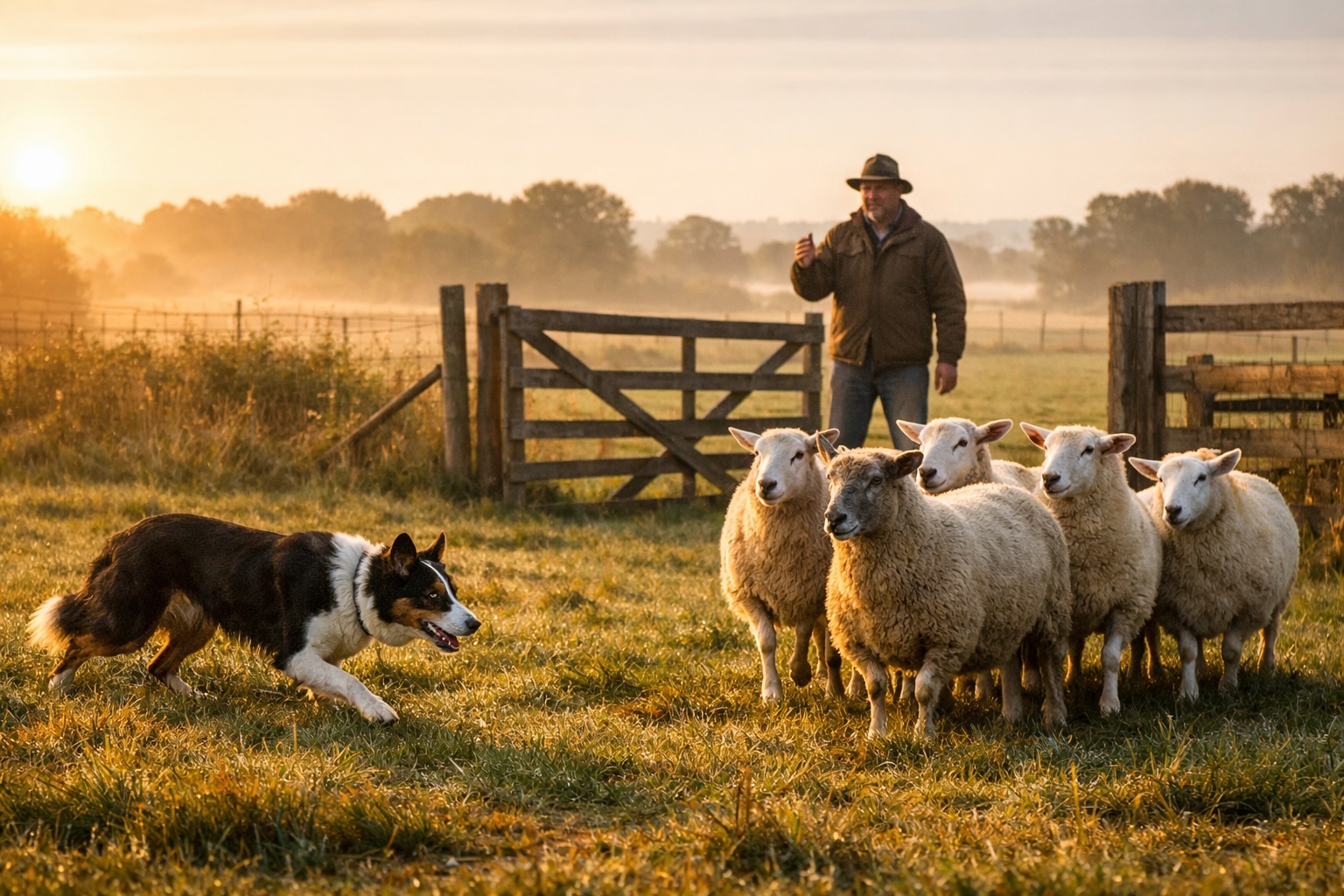
There is a world of difference between a dog that likes to chase stock and a dog that can truly gather, move, and settle them under control. I have watched young dogs light up the first time they see sheep, eyes sharp and feet quick, but raw instinct alone does not make a reliable herding partner. What turns talent into usefulness is language. A dog needs clear, repeatable commands that mean the same thing every time, whether you are standing in a small pen on a cool morning or calling across a windy pasture with livestock drifting toward the wrong fence.
For dog owners interested in herding dogs, the basics matter more than fancy work. Before a dog can handle pressure, read stock well, or work at distance, it needs a foundation of commands that create direction, pace, and obedience. These commands are the backbone of practical herding, and if you teach them with patience and consistency, you will build a dog that is easier to handle and far more dependable when it counts.
Why Basic Herding Commands Matter
When livestock begin to move, events can speed up in a hurry. Sheep break left, cattle hesitate at a gate, or a handful of nervous animals turn back toward the draw they came from. In those moments, your dog cannot afford confusion. Basic herding commands give shape to instinct. They tell the dog where to go, how much pressure to apply, when to stop, and when to bring that energy down.
Good commands also protect stock. A dog without control can grip unnecessarily, crowd animals, or push them into corners. Even a keen dog can become too much if it does not understand how to slow down and listen. Herding is not just movement. It is measured movement. The finest working dogs I have seen carried plenty of fire, but that fire stayed under the handler's hand.
The First Command: Lie Down
If I had to start with one command above all others, it would be lie down. Some handlers use down, stand, or stop depending on their style, but the purpose is the same. This command interrupts motion and puts control back in your hands. A dog that will stop on command, even when excited, is a dog you can shape into something useful.
In the early stages, this command often needs to be taught away from stock and then reinforced in controlled work. A young dog may hear you perfectly well while still feeling the pull to circle, rush, or tighten in. That is normal. Herding dogs are bred to respond to movement, and stopping against that instinct takes practice. Keep your tone firm and clear. Do not chatter. Give the command, make it mean something, and reward compliance by easing pressure and letting the dog think.
A solid lie down does more than stop mistakes. It lets livestock settle, gives nervous animals room to breathe, and helps the dog learn that calm control is part of the job. I have seen many promising dogs improve the day they understood that stopping was not punishment. It was part of working well.
Teaching Directional Commands
Directional commands are the steering wheel of herding. Without them, your dog may have drive and style, but you will struggle to place that dog where it needs to be.
"Come bye" usually sends the dog clockwise around stock. Think of it as telling the dog to flank one way to gather or position livestock. The command should be crisp and consistent. The dog learns that this sound always means the same direction, never something close and never something guessed.
Many dogs pick up one side faster than the other. That is common. Just as some people are more comfortable turning one way than the other, dogs often favor a side. Your job is to build confidence and understanding on both flanks until the response becomes smooth and reliable.
"Away to me" sends the dog the opposite direction, usually counterclockwise. In practical work, this matters constantly. You may need the dog to widen out on a cast, cover an escape route, or approach stock from the correct side to move them through a gate. If the dog mixes up these two commands, your work can fall apart quickly.
Keep these lessons simple at first. Set the dog up for success in a small area where movement is easier to manage. Praise accuracy, not frenzy. Fast is not always right in herding. Correct and balanced is better.
The Command That Shapes Pressure: Steady
One of the most useful commands in any herding program is steady. This tells the dog to slow pace, soften pressure, and work with more thought. It is not a full stop. It is a reminder to bring the volume down.
This command becomes especially valuable with lighter stock or when animals are already unsettled. A dog that barrels in too hard can split a group, blow them past an opening, or create panic where calm would have done the job. Steady teaches patience. It teaches the dog that pace is part of skill.
I have always liked a dog with some grit, but I like one even better when that grit comes with a brake pedal. Steady is that brake pedal. Used well, it can turn a pushy youngster into a thoughtful worker that handles stock with much more class.
Walk Up and Moving Stock Forward
Walk up asks the dog to move straight in on stock with purpose. This command is central to driving and controlled forward pressure. Instead of circling wide, the dog is asked to step in and move animals ahead.
This sounds simple, but it requires discipline. A good walk up is direct without being reckless. The dog should hold a line, maintain focus, and apply just enough pressure to keep stock moving. Too little and the stock stalls. Too much and they scatter. That balance is what separates a rough effort from polished work.
When training walk up, watch the stock as much as the dog. Livestock will tell you if the pressure is right. Heads lifting, bunching too tightly, or rushing off are signs the dog may need correction or a steadying word. Calm movement is the picture you want.
Recall and Call-Off Commands
Every herding dog needs a dependable recall or call-off command. Some handlers use that'll do, and it remains one of the classic phrases in stock dog work. It tells the dog the job is finished or that it should break off and return to the handler.
This command matters for safety as much as obedience. Gates get left open. Stock can tangle in corners. Conditions change in a heartbeat. You need a way to end the work cleanly and bring your dog out of pressure. A dog that refuses to disengage can turn a manageable situation into a long afternoon.
Teach this command with intent. Do not use it casually one day and then ignore it the next. The dog should come to understand that when you say it, work ends and the dog returns. That kind of clarity brings peace to training and confidence to real farm use.
Look Back and Gathering Missed Stock
As a dog advances, look back becomes an important command. It tells the dog to turn away from the stock in front and search for others that may have been left behind. This is a beautiful piece of work when done right. A seasoned dog hears the command, wheels out, and brings in the stragglers you barely noticed near the far fence line.
For beginners, this may come later, but it is worth understanding early. Herding is often about the stock you do not immediately see. A useful dog learns that the job is not always the animals right under its nose. Sometimes the real task lies behind.
How to Teach Commands So They Stick
Dogs learn best when your timing is clean and your expectations are fair. Say the command once, help the dog find the right answer, and release pressure when it gets there. Repetition matters, but mindless repetition can dull a dog just as easily as sharpen it. Keep sessions purposeful. End on something the dog understands.
It also helps to remember that stock are part of the lesson. Not all sheep or cattle teach the same way. Dog-broke stock can help a young dog gain confidence. Flighty animals can magnify mistakes and make a green dog feel wilder than it really is. Match the challenge to the dog in front of you.
Your voice should become a tool, not background noise. The best handlers are often quieter than people expect. They do not fill the air with commands. They speak when it matters. A dog learns to respect that kind of language because it is meaningful.
Common Mistakes New Handlers Make
One of the biggest mistakes is asking for too much too soon. A dog that is still learning flanks and stop commands should not be expected to handle complicated gathers across large fields. Build the pieces first. Distance and precision come later.
Another common problem is inconsistency. If come bye means one thing on Monday and something looser on Friday, the dog will struggle. Herding dogs thrive on clear patterns. Be steady in your words, your tone, and your expectations.
Finally, do not mistake excitement for progress. A flashy young dog can fool you. True advancement shows up in control, responsiveness, and stock sense that improves with each outing. The dog should become more useful, not just more animated.
Building a Working Partnership
At its heart, herding is a conversation between handler and dog carried out over grass, dust, gates, and moving animals. The basic commands are the language that makes that conversation possible. Lie down, come bye, away to me, steady, walk up, that'll do, and eventually look back are not just sounds. They are the framework of trust.
When you teach them well, your dog begins to understand not only what to do, but how to do it with purpose. That is when training starts to feel less like correction and more like teamwork. You send the dog wide, it takes the flank cleanly, settles at your steady, and eases stock toward the pen as if the two of you had already discussed it.
That kind of work is satisfying in a way that is hard to explain unless you have stood in a field and watched it unfold. It is quiet, useful, and honest. For dog owners raising herding dogs, these basic commands are where that journey begins. Teach them with patience, use them with consistency, and your dog will have the tools it needs to become far more than eager. It will become dependable.
For dog owners interested in herding dogs, the basics matter more than fancy work. Before a dog can handle pressure, read stock well, or work at distance, it needs a foundation of commands that create direction, pace, and obedience. These commands are the backbone of practical herding, and if you teach them with patience and consistency, you will build a dog that is easier to handle and far more dependable when it counts.
Why Basic Herding Commands Matter
When livestock begin to move, events can speed up in a hurry. Sheep break left, cattle hesitate at a gate, or a handful of nervous animals turn back toward the draw they came from. In those moments, your dog cannot afford confusion. Basic herding commands give shape to instinct. They tell the dog where to go, how much pressure to apply, when to stop, and when to bring that energy down.
Good commands also protect stock. A dog without control can grip unnecessarily, crowd animals, or push them into corners. Even a keen dog can become too much if it does not understand how to slow down and listen. Herding is not just movement. It is measured movement. The finest working dogs I have seen carried plenty of fire, but that fire stayed under the handler's hand.
The First Command: Lie Down
If I had to start with one command above all others, it would be lie down. Some handlers use down, stand, or stop depending on their style, but the purpose is the same. This command interrupts motion and puts control back in your hands. A dog that will stop on command, even when excited, is a dog you can shape into something useful.
In the early stages, this command often needs to be taught away from stock and then reinforced in controlled work. A young dog may hear you perfectly well while still feeling the pull to circle, rush, or tighten in. That is normal. Herding dogs are bred to respond to movement, and stopping against that instinct takes practice. Keep your tone firm and clear. Do not chatter. Give the command, make it mean something, and reward compliance by easing pressure and letting the dog think.
A solid lie down does more than stop mistakes. It lets livestock settle, gives nervous animals room to breathe, and helps the dog learn that calm control is part of the job. I have seen many promising dogs improve the day they understood that stopping was not punishment. It was part of working well.
Teaching Directional Commands
Directional commands are the steering wheel of herding. Without them, your dog may have drive and style, but you will struggle to place that dog where it needs to be.
"Come bye" usually sends the dog clockwise around stock. Think of it as telling the dog to flank one way to gather or position livestock. The command should be crisp and consistent. The dog learns that this sound always means the same direction, never something close and never something guessed.
Many dogs pick up one side faster than the other. That is common. Just as some people are more comfortable turning one way than the other, dogs often favor a side. Your job is to build confidence and understanding on both flanks until the response becomes smooth and reliable.
"Away to me" sends the dog the opposite direction, usually counterclockwise. In practical work, this matters constantly. You may need the dog to widen out on a cast, cover an escape route, or approach stock from the correct side to move them through a gate. If the dog mixes up these two commands, your work can fall apart quickly.
Keep these lessons simple at first. Set the dog up for success in a small area where movement is easier to manage. Praise accuracy, not frenzy. Fast is not always right in herding. Correct and balanced is better.
The Command That Shapes Pressure: Steady
One of the most useful commands in any herding program is steady. This tells the dog to slow pace, soften pressure, and work with more thought. It is not a full stop. It is a reminder to bring the volume down.
This command becomes especially valuable with lighter stock or when animals are already unsettled. A dog that barrels in too hard can split a group, blow them past an opening, or create panic where calm would have done the job. Steady teaches patience. It teaches the dog that pace is part of skill.
I have always liked a dog with some grit, but I like one even better when that grit comes with a brake pedal. Steady is that brake pedal. Used well, it can turn a pushy youngster into a thoughtful worker that handles stock with much more class.
Walk Up and Moving Stock Forward
Walk up asks the dog to move straight in on stock with purpose. This command is central to driving and controlled forward pressure. Instead of circling wide, the dog is asked to step in and move animals ahead.
This sounds simple, but it requires discipline. A good walk up is direct without being reckless. The dog should hold a line, maintain focus, and apply just enough pressure to keep stock moving. Too little and the stock stalls. Too much and they scatter. That balance is what separates a rough effort from polished work.
When training walk up, watch the stock as much as the dog. Livestock will tell you if the pressure is right. Heads lifting, bunching too tightly, or rushing off are signs the dog may need correction or a steadying word. Calm movement is the picture you want.
Recall and Call-Off Commands
Every herding dog needs a dependable recall or call-off command. Some handlers use that'll do, and it remains one of the classic phrases in stock dog work. It tells the dog the job is finished or that it should break off and return to the handler.
This command matters for safety as much as obedience. Gates get left open. Stock can tangle in corners. Conditions change in a heartbeat. You need a way to end the work cleanly and bring your dog out of pressure. A dog that refuses to disengage can turn a manageable situation into a long afternoon.
Teach this command with intent. Do not use it casually one day and then ignore it the next. The dog should come to understand that when you say it, work ends and the dog returns. That kind of clarity brings peace to training and confidence to real farm use.
Look Back and Gathering Missed Stock
As a dog advances, look back becomes an important command. It tells the dog to turn away from the stock in front and search for others that may have been left behind. This is a beautiful piece of work when done right. A seasoned dog hears the command, wheels out, and brings in the stragglers you barely noticed near the far fence line.
For beginners, this may come later, but it is worth understanding early. Herding is often about the stock you do not immediately see. A useful dog learns that the job is not always the animals right under its nose. Sometimes the real task lies behind.
How to Teach Commands So They Stick
Dogs learn best when your timing is clean and your expectations are fair. Say the command once, help the dog find the right answer, and release pressure when it gets there. Repetition matters, but mindless repetition can dull a dog just as easily as sharpen it. Keep sessions purposeful. End on something the dog understands.
It also helps to remember that stock are part of the lesson. Not all sheep or cattle teach the same way. Dog-broke stock can help a young dog gain confidence. Flighty animals can magnify mistakes and make a green dog feel wilder than it really is. Match the challenge to the dog in front of you.
Your voice should become a tool, not background noise. The best handlers are often quieter than people expect. They do not fill the air with commands. They speak when it matters. A dog learns to respect that kind of language because it is meaningful.
Common Mistakes New Handlers Make
One of the biggest mistakes is asking for too much too soon. A dog that is still learning flanks and stop commands should not be expected to handle complicated gathers across large fields. Build the pieces first. Distance and precision come later.
Another common problem is inconsistency. If come bye means one thing on Monday and something looser on Friday, the dog will struggle. Herding dogs thrive on clear patterns. Be steady in your words, your tone, and your expectations.
Finally, do not mistake excitement for progress. A flashy young dog can fool you. True advancement shows up in control, responsiveness, and stock sense that improves with each outing. The dog should become more useful, not just more animated.
Building a Working Partnership
At its heart, herding is a conversation between handler and dog carried out over grass, dust, gates, and moving animals. The basic commands are the language that makes that conversation possible. Lie down, come bye, away to me, steady, walk up, that'll do, and eventually look back are not just sounds. They are the framework of trust.
When you teach them well, your dog begins to understand not only what to do, but how to do it with purpose. That is when training starts to feel less like correction and more like teamwork. You send the dog wide, it takes the flank cleanly, settles at your steady, and eases stock toward the pen as if the two of you had already discussed it.
That kind of work is satisfying in a way that is hard to explain unless you have stood in a field and watched it unfold. It is quiet, useful, and honest. For dog owners raising herding dogs, these basic commands are where that journey begins. Teach them with patience, use them with consistency, and your dog will have the tools it needs to become far more than eager. It will become dependable.


View all 0 comments