Guardian Dogs vs Electric Fencing
What Really Protects Stock and Working Dogs
Jeff Davis | https://herdingdogcentral.com
 0
0 0
0 0
0 0
0 0
0
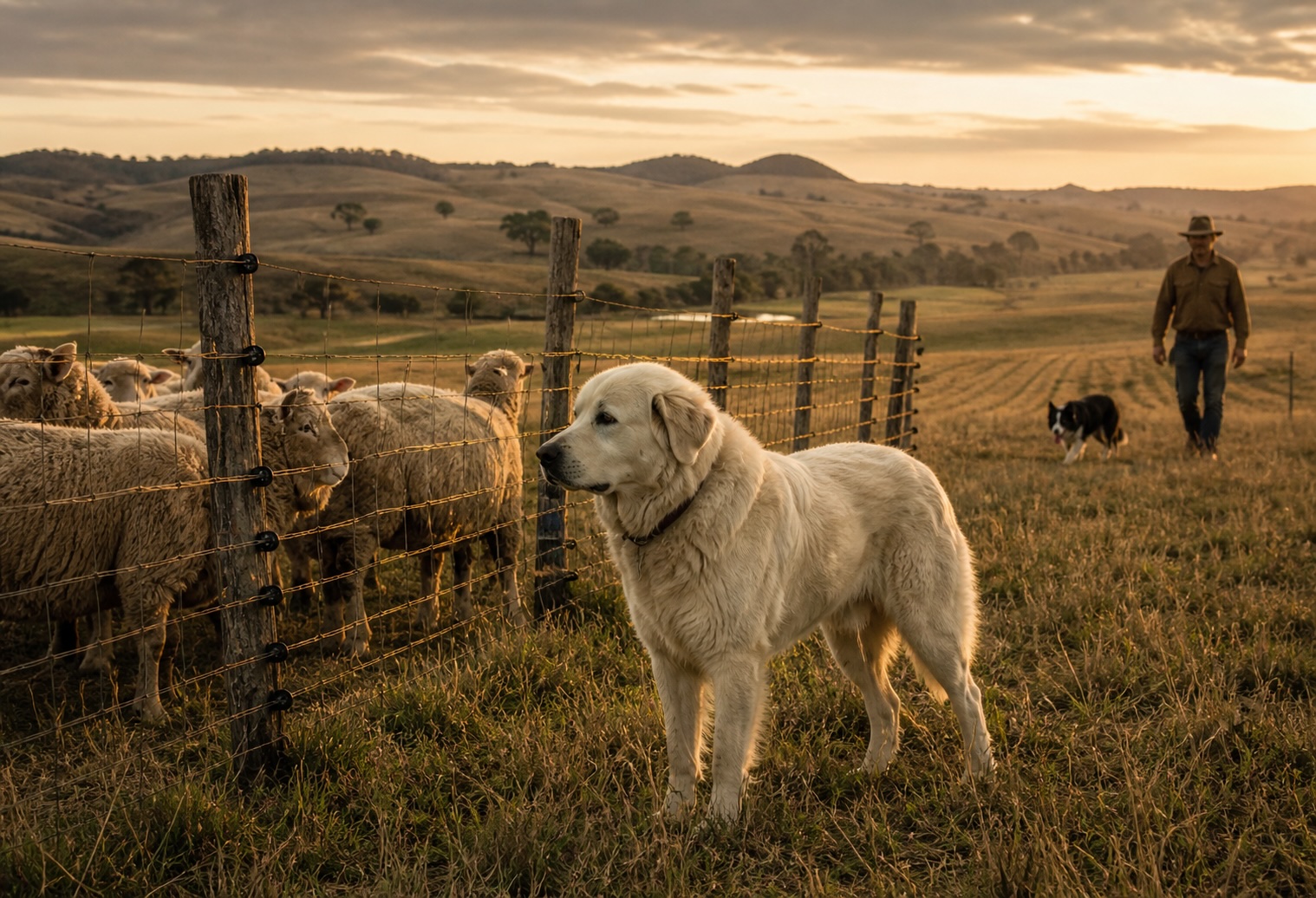
Folks who keep stock long enough eventually come around to the same hard question: what is the better line of defense, a guardian dog or electric fencing? It sounds simple when you first ask it, but it usually comes after a few rough mornings, a torn fence line, missing poultry, lambs pushed into a corner, or a coyote bold enough to test the edge of your place in daylight. There is no shortage of opinions on the matter. Some swear by a hot wire and good grounding. Others would not sleep easy without a steady guardian dog making rounds under the moon. From where I stand, after years around working dogs and livestock country, the truth is not that one makes the other obsolete. It is that each solves a different part of the same problem.
For owners interested in herding dogs, this matters even more. Herding dogs are workers, thinkers, and partners, but they are not built to fill the role of a livestock guardian dog. Ask a Border Collie to watch the back pasture all night against predators and you are asking a carpenter to plow a field. A good herding dog can help you manage stock with remarkable precision, but predator pressure, boundary control, and nighttime security are separate jobs entirely. That is where the comparison between guardian dogs and electric fencing becomes practical, not theoretical.
What Guardian Dogs Bring That Fencing Never Will
A proper guardian dog does more than occupy space. It lives with the stock, reads the rhythm of the place, and responds to threats in real time. That is the great strength of a living protector. Fencing is fixed. A guardian dog is adaptive. If a predator circles, tests a weak point, or slips through timber and draws near from a place you did not expect, a seasoned guardian does not need a power source or a map. It hears, scents, watches, and acts.
I have seen places where coyotes learned the fence line better than the owner did. They found washouts, rooted under loose spots, and slipped through after storms. A guardian dog changed that pattern almost overnight. Predators that will challenge wire often think twice when they know there is a confident dog on patrol. The deterrent is not just force. It is presence. Barking through the dark, moving with the flock, posting up near a gate, and making it known that the pasture is occupied can take the ease out of a predator’s plan.
Guardian dogs also work in terrain where fencing alone can become an endless chore. On rocky ground, creek bottoms, timber edges, and rough country where limbs fall and weather shifts fast, fence maintenance can feel like a second full-time job. A dog can cover uneven ground, move with stock, and respond to changing conditions in a way fixed infrastructure never can.
The Limits of Guardian Dogs
That said, a guardian dog is not magic. It is a commitment. Good ones take time to mature, need the right breeding and temperament, and must be placed with stock correctly. A poorly started guardian can wander, bark excessively, challenge visitors, or become more interested in the road than the flock. Some bond beautifully with sheep or goats. Others require more management before they settle in. Feed costs, veterinary care, and training are part of the deal. So is patience. Many young guardian dogs are not fully reliable until they have had time to grow into the work.
They can also complicate things if the property is busy with frequent traffic, delivery drivers, neighbors, or recreational visitors. A guardian dog is supposed to be suspicious. That is the point. But a dog making sound decisions around invited guests, children, and your own working dogs requires careful handling and strong boundaries.
What Electric Fencing Does Better Than Dogs
Electric fencing shines where consistency matters. A properly built hot fence establishes a clear boundary every hour of the day. It does not get distracted, age out, or decide to investigate the far ridge. For rotational grazing, paddock division, and keeping stock where they belong, electric fencing is one of the handiest tools a landowner can put in place. It is especially useful for owners with herding dogs because it creates structure. The cleaner the stock flow, the easier it is to work dogs safely and effectively.
There is another advantage many people overlook: electric fencing helps manage not only predators but livestock behavior. Sheep that learn to respect a boundary are less likely to pressure weak corners. Goats, which seem born with a degree in escape, often become more manageable with a well-designed electric system. This reduces the kind of chaos that can put herding dogs in bad positions. A dog gathering scattered stock along a road or sorting animals that have broken into feed storage is doing dangerous, unnecessary work if the fence could have prevented the mess.
On the predator side, electric fencing can be extremely effective when it is designed for the target pressure. Height, wire spacing, charger strength, vegetation control, and grounding all matter. A flimsy setup that barely bites a weed is not predator fencing. But a robust system can discourage digging, climbing, and casual testing. In many situations, especially on smaller acreages, it offers a predictable and lower-maintenance answer than trying to raise and manage a guardian dog.
Where Electric Fencing Falls Short
Its weakness is the same thing that gives it order: it is static. If a tree falls across it, power drops, or a gate gets left open, the whole system becomes vulnerable in a hurry. Predators also learn. A desperate or experienced one may test weak spots after weather events, during breeding season, or when young stock are on the ground. Electric fencing can delay, discourage, and often stop trouble, but it cannot investigate a disturbance at the back line or chase pressure away from the lambing shed.
It also asks for regular attention. Chargers fail. Posts lean. Ground dries out. Grass shorts the lower wires in summer. Snow changes fence function in winter. If a person thinks fencing is a one-time purchase and not an ongoing system, disappointment usually follows.
How Each Option Affects Herding Dogs
This is where owners of herding breeds need to think clearly. Herding dogs are easiest to keep safe and useful when the jobs on the property are well defined. A guardian dog protects. A fence contains. A herding dog gathers, drives, sorts, and applies pressure under direction. Trouble starts when these lines blur.
If there is no secure perimeter and no predator deterrence, many owners start leaning too heavily on the herding dog. They use it to check stock repeatedly, push animals away from tree lines, or clean up preventable escapes. That may look like productivity, but over time it creates stress, risks injury, and can sour even a talented dog. Good stock work is thoughtful, not frantic. Herding dogs should not be the patch over poor infrastructure or missing protection.
Guardian dogs can also create friction with herding dogs if introductions and routines are sloppy. A mature guardian that does not trust the fast-moving dog entering its stock group may challenge it. On a well-run place, the livestock guardian learns that the herding dog is part of ranch business, and the herding dog learns to work calmly and avoid unnecessary confrontation. That understanding takes management, especially early on. Electric fencing can actually help here by creating separate working spaces and reducing confusion during training and chores.
The Best Answer for Many Properties: Use Both
If you forced me to choose only one tool on certain pieces of ground, I could make a case either way depending on acreage, predator pressure, stock type, and budget. But the strongest operations I have seen rarely treat this as an either-or debate. They use electric fencing to create dependable boundaries and guardian dogs to add judgment, presence, and active defense. That combination covers weaknesses on both sides.
A good fence slows and shapes movement. A guardian dog responds when life ignores the blueprint. The fence keeps stock where they belong and cuts down on daily disorder. The dog handles the things a wire cannot smell coming. Together they also reduce the burden on herding dogs, allowing those dogs to do the work they were bred for with more confidence and less strain.
I remember one place where lamb losses had become a yearly frustration. The owner had some fencing, but much of it was tired, and coyotes had learned the routine. After upgrading the electric perimeter and adding a steady guardian dog, the tone of the whole farm changed. The sheep settled. The owner spent less time chasing problems. The herding dog, a sharp little worker that had been doing too much cleanup, became calmer and more effective because the place finally had structure. That is what people often miss. Protection is not just about stopping predators. It is about bringing order back to the farm.
How to Decide What Fits Your Ground
If your acreage is small, your boundaries are straightforward, and predator pressure is moderate, a serious electric fencing system may solve most of your practical needs. If your land is rough, your stock are spread out, or predators are persistent and bold, a guardian dog may be worth every pound of feed. If you are raising vulnerable young stock or keeping animals in remote pastures, the value of a living deterrent rises quickly.
Still, the best decision usually starts with honest evaluation. Look at your land, your time, your budget, and your tolerance for maintenance. Ask whether you are prepared to train and manage a guardian dog properly. Ask whether your fencing plan is truly adequate or just hopeful. Then consider how your herding dogs fit into the picture. The goal is not to turn one dog into every kind of worker. The goal is to build a system where each part supports the other.
In the end, guardian dogs and electric fencing are not enemies in some farmyard argument. They are tools, and good stockmen learn what each tool does best. If you want safer livestock, steadier routines, and a better life for your working dogs, choose with clear eyes. Better yet, where it makes sense, let the wire hold the line and let the guardian own the night.
For owners interested in herding dogs, this matters even more. Herding dogs are workers, thinkers, and partners, but they are not built to fill the role of a livestock guardian dog. Ask a Border Collie to watch the back pasture all night against predators and you are asking a carpenter to plow a field. A good herding dog can help you manage stock with remarkable precision, but predator pressure, boundary control, and nighttime security are separate jobs entirely. That is where the comparison between guardian dogs and electric fencing becomes practical, not theoretical.
What Guardian Dogs Bring That Fencing Never Will
A proper guardian dog does more than occupy space. It lives with the stock, reads the rhythm of the place, and responds to threats in real time. That is the great strength of a living protector. Fencing is fixed. A guardian dog is adaptive. If a predator circles, tests a weak point, or slips through timber and draws near from a place you did not expect, a seasoned guardian does not need a power source or a map. It hears, scents, watches, and acts.
I have seen places where coyotes learned the fence line better than the owner did. They found washouts, rooted under loose spots, and slipped through after storms. A guardian dog changed that pattern almost overnight. Predators that will challenge wire often think twice when they know there is a confident dog on patrol. The deterrent is not just force. It is presence. Barking through the dark, moving with the flock, posting up near a gate, and making it known that the pasture is occupied can take the ease out of a predator’s plan.
Guardian dogs also work in terrain where fencing alone can become an endless chore. On rocky ground, creek bottoms, timber edges, and rough country where limbs fall and weather shifts fast, fence maintenance can feel like a second full-time job. A dog can cover uneven ground, move with stock, and respond to changing conditions in a way fixed infrastructure never can.
The Limits of Guardian Dogs
That said, a guardian dog is not magic. It is a commitment. Good ones take time to mature, need the right breeding and temperament, and must be placed with stock correctly. A poorly started guardian can wander, bark excessively, challenge visitors, or become more interested in the road than the flock. Some bond beautifully with sheep or goats. Others require more management before they settle in. Feed costs, veterinary care, and training are part of the deal. So is patience. Many young guardian dogs are not fully reliable until they have had time to grow into the work.
They can also complicate things if the property is busy with frequent traffic, delivery drivers, neighbors, or recreational visitors. A guardian dog is supposed to be suspicious. That is the point. But a dog making sound decisions around invited guests, children, and your own working dogs requires careful handling and strong boundaries.
What Electric Fencing Does Better Than Dogs
Electric fencing shines where consistency matters. A properly built hot fence establishes a clear boundary every hour of the day. It does not get distracted, age out, or decide to investigate the far ridge. For rotational grazing, paddock division, and keeping stock where they belong, electric fencing is one of the handiest tools a landowner can put in place. It is especially useful for owners with herding dogs because it creates structure. The cleaner the stock flow, the easier it is to work dogs safely and effectively.
There is another advantage many people overlook: electric fencing helps manage not only predators but livestock behavior. Sheep that learn to respect a boundary are less likely to pressure weak corners. Goats, which seem born with a degree in escape, often become more manageable with a well-designed electric system. This reduces the kind of chaos that can put herding dogs in bad positions. A dog gathering scattered stock along a road or sorting animals that have broken into feed storage is doing dangerous, unnecessary work if the fence could have prevented the mess.
On the predator side, electric fencing can be extremely effective when it is designed for the target pressure. Height, wire spacing, charger strength, vegetation control, and grounding all matter. A flimsy setup that barely bites a weed is not predator fencing. But a robust system can discourage digging, climbing, and casual testing. In many situations, especially on smaller acreages, it offers a predictable and lower-maintenance answer than trying to raise and manage a guardian dog.
Where Electric Fencing Falls Short
Its weakness is the same thing that gives it order: it is static. If a tree falls across it, power drops, or a gate gets left open, the whole system becomes vulnerable in a hurry. Predators also learn. A desperate or experienced one may test weak spots after weather events, during breeding season, or when young stock are on the ground. Electric fencing can delay, discourage, and often stop trouble, but it cannot investigate a disturbance at the back line or chase pressure away from the lambing shed.
It also asks for regular attention. Chargers fail. Posts lean. Ground dries out. Grass shorts the lower wires in summer. Snow changes fence function in winter. If a person thinks fencing is a one-time purchase and not an ongoing system, disappointment usually follows.
How Each Option Affects Herding Dogs
This is where owners of herding breeds need to think clearly. Herding dogs are easiest to keep safe and useful when the jobs on the property are well defined. A guardian dog protects. A fence contains. A herding dog gathers, drives, sorts, and applies pressure under direction. Trouble starts when these lines blur.
If there is no secure perimeter and no predator deterrence, many owners start leaning too heavily on the herding dog. They use it to check stock repeatedly, push animals away from tree lines, or clean up preventable escapes. That may look like productivity, but over time it creates stress, risks injury, and can sour even a talented dog. Good stock work is thoughtful, not frantic. Herding dogs should not be the patch over poor infrastructure or missing protection.
Guardian dogs can also create friction with herding dogs if introductions and routines are sloppy. A mature guardian that does not trust the fast-moving dog entering its stock group may challenge it. On a well-run place, the livestock guardian learns that the herding dog is part of ranch business, and the herding dog learns to work calmly and avoid unnecessary confrontation. That understanding takes management, especially early on. Electric fencing can actually help here by creating separate working spaces and reducing confusion during training and chores.
The Best Answer for Many Properties: Use Both
If you forced me to choose only one tool on certain pieces of ground, I could make a case either way depending on acreage, predator pressure, stock type, and budget. But the strongest operations I have seen rarely treat this as an either-or debate. They use electric fencing to create dependable boundaries and guardian dogs to add judgment, presence, and active defense. That combination covers weaknesses on both sides.
A good fence slows and shapes movement. A guardian dog responds when life ignores the blueprint. The fence keeps stock where they belong and cuts down on daily disorder. The dog handles the things a wire cannot smell coming. Together they also reduce the burden on herding dogs, allowing those dogs to do the work they were bred for with more confidence and less strain.
I remember one place where lamb losses had become a yearly frustration. The owner had some fencing, but much of it was tired, and coyotes had learned the routine. After upgrading the electric perimeter and adding a steady guardian dog, the tone of the whole farm changed. The sheep settled. The owner spent less time chasing problems. The herding dog, a sharp little worker that had been doing too much cleanup, became calmer and more effective because the place finally had structure. That is what people often miss. Protection is not just about stopping predators. It is about bringing order back to the farm.
How to Decide What Fits Your Ground
If your acreage is small, your boundaries are straightforward, and predator pressure is moderate, a serious electric fencing system may solve most of your practical needs. If your land is rough, your stock are spread out, or predators are persistent and bold, a guardian dog may be worth every pound of feed. If you are raising vulnerable young stock or keeping animals in remote pastures, the value of a living deterrent rises quickly.
Still, the best decision usually starts with honest evaluation. Look at your land, your time, your budget, and your tolerance for maintenance. Ask whether you are prepared to train and manage a guardian dog properly. Ask whether your fencing plan is truly adequate or just hopeful. Then consider how your herding dogs fit into the picture. The goal is not to turn one dog into every kind of worker. The goal is to build a system where each part supports the other.
In the end, guardian dogs and electric fencing are not enemies in some farmyard argument. They are tools, and good stockmen learn what each tool does best. If you want safer livestock, steadier routines, and a better life for your working dogs, choose with clear eyes. Better yet, where it makes sense, let the wire hold the line and let the guardian own the night.