Summer Training for Sled Dogs
Building Endurance, Focus, and Teamwork in the Off-Season
Jeff Davis | https://herdingdogcentral.com
 0
0 0
0 0
0 0
0 0
0
When folks picture sled dogs, they usually see a hard winter trail, steam rolling off a team at sunrise, and a musher leaning into the runners as the dogs settle into their work. What many do not see is the long stretch of warm-weather preparation that makes that winter performance possible. Summer training for sled dogs is not about pretending it is January in the middle of July. It is about building the body, the mind, and the habits that carry a dog safely and confidently into the working season.
I have always believed the off-season tells you more about a dog than the first fast run on snow. Winter can hide weaknesses for a while because excitement covers a lot. Summer does not. In summer, you see whether a dog can settle, listen, recover, and keep its head when the pace is slower and the weather asks for caution. For dog owners interested in herding dogs and other hardworking breeds, there is a familiar lesson here. Good working dogs are not made by one season of effort. They are shaped by steady, thoughtful training when nobody is watching.
Why Summer Training Matters for Sled Dogs
Warm-weather work is where endurance begins. It is also where discipline gets polished. A sled dog that spends the entire off-season idle often comes into fall tight in the body, restless in the kennel, and mentally rusty. That kind of dog may have heart, but heart alone is not enough. Summer conditioning helps support muscle tone, foot toughness, cardiovascular fitness, and mental steadiness. Just as important, it lets you identify small issues before they turn into winter problems, whether that means a hitching habit, a weak recall, or a dog that needs more confidence in the team.
There is another point worth making. Summer training teaches restraint to the handler as much as to the dogs. Heat changes the rules. You cannot chase mileage when the temperature is wrong and expect good results. The goal is not to prove toughness. The goal is to build a durable athlete without putting that athlete at risk. Anybody who has handled serious working dogs learns sooner or later that patience is part of conditioning.
Start with Heat Safety, Not Ambition
If there is one thing that should guide every summer session, it is temperature awareness. Sled dogs are bred to work, but they are also built for cold. Even the toughest dog can overheat quickly in humid or warm conditions. Training has to be planned around the coolest parts of the day, usually early morning and sometimes late evening if the air has truly dropped off. Shade, airflow, and water access matter every bit as much as the workout itself.
Watch the dog in front of you, not the plan you wrote on paper. Heavy panting that does not settle, sluggish response, glazed focus, or a dog lagging behind the line are all signs to shut things down. There is no prize for finishing a session that should have ended ten minutes earlier. I have seen handlers with good intentions push because the dogs looked eager. Eagerness can fool you. A willing worker will often go farther than it should. It is your job to call it before the dog pays for your mistake.
Reading the Dog in Warm WeatherEvery dog handles summer differently. Some carry themselves light and efficient even when the mornings are warm. Others struggle sooner, especially heavy-coated dogs, older workers, and young dogs that have not yet learned to pace themselves. Get in the habit of checking gums, watching recovery after exercise, and noticing how long it takes each dog to return to normal breathing. Those little observations add up over a season and tell you which dogs are thriving and which need a different program.
Conditioning Without Snow
Most summer training for sled dogs has to be low-impact, controlled, and adjusted for the weather. Roadwork in cool temperatures, free running in safe enclosed areas, hiking, swimming for dogs that enjoy water, and strength-building through natural terrain can all have a place. The main thing is to keep the work progressive. Sudden jumps in intensity are hard on joints, shoulders, wrists, and feet. A team does not need heroic sessions in June. It needs consistent work that stacks week by week.
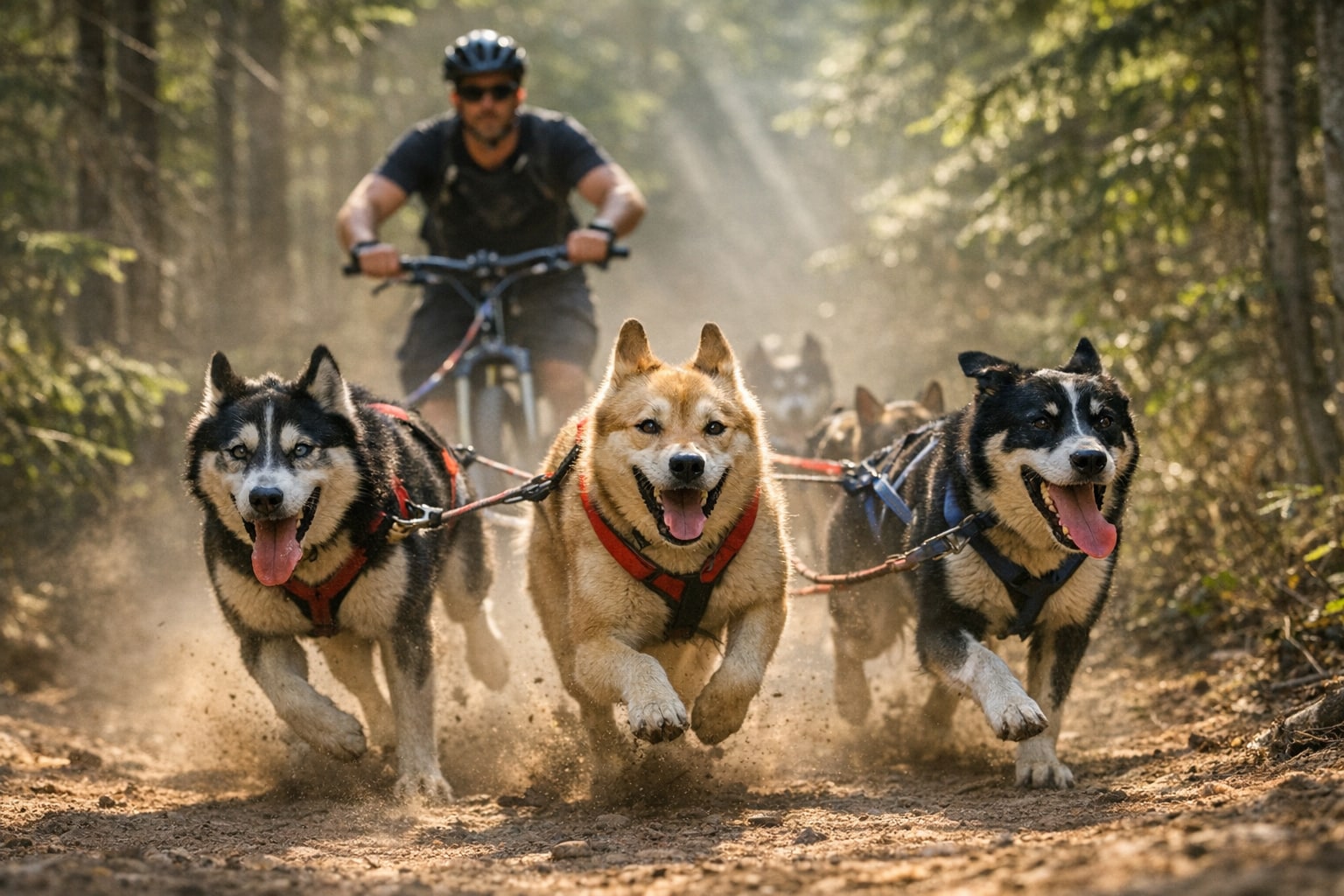
Some handlers use lightweight carts, scooters, or ATVs during the off-season when conditions allow. That can be effective, but only if temperatures are appropriate and the equipment is handled with a careful hand. I prefer to think of dryland work as a tool, not a test. It should reinforce line-out, teamwork, response to commands, and controlled pulling mechanics. It should never become a race against common sense.
For owners coming from herding breeds, there is a useful comparison here. Just as a stock dog benefits from controlled exposure, fitness, and repeated obedience under distraction, a sled dog thrives when training is structured and purposeful. Work is not merely exercise. It is education.
Building the Engine: Endurance and Strength
Endurance in a sled dog is built slowly, and summer is where the foundation is poured. Shorter sessions at an easy pace, repeated regularly, usually do more good than sporadic hard efforts. A dog that learns to move efficiently, recover well, and hold its mind together under light work becomes far easier to bring along when colder months arrive. This is also the time to build the stabilizing muscles that protect the body in winter. Uneven trails, gentle hills, and controlled movement over different surfaces can strengthen a dog in ways flat ground never will.
I like to see dogs finish a summer session with something left in the tank. That old saying matters in working dogs. Stop while they are still confident and willing, and they come out the next time ready to work. Empty them too often, especially in the heat, and you start chipping away at the very attitude you are trying to preserve.
Paw Care and Surface Awareness
One part of summer training that gets overlooked is foot care. Hot ground can do damage fast, and rough surfaces can wear a dog down before the lungs ever do. Check pads regularly. Keep nails in good order. Pay attention to how each dog travels on gravel, dirt, grass, or packed trails. Feet are the tires of the whole outfit. If they are compromised, everything behind them suffers.
Mental Training Is Half the Game
A good sled dog is not just fit. It is attentive, mannerly, and mentally settled. Summer is an ideal time to work on obedience, kennel manners, loading, unloading, standing quietly in harness, and clean responses to voice commands. Those things may not look exciting, but they save frustration later. A dog that drags chaos into every setup burns energy before the run even begins.
This is where seasoned handlers separate themselves from folks just chasing mileage. They use the off-season to sharpen the little things. Come, whoa, line-out, gee, haw, and calm behavior around the team all deserve repetition. If a dog is confused in summer, winter will not magically clear that up. In fact, snow and excitement usually make confusion louder.
There is also value in giving dogs varied mental challenges beyond harness work. Problem-solving games, controlled social exposure, and novel but safe environments help create a dog that thinks instead of panics. Working dogs need a job, but they also need composure. A dog that can handle change with a clear head is a dog you can trust when conditions get rough.
Nutrition, Recovery, and the Off-Season Body
Summer training is not just what happens during the workout. Recovery tells the whole truth. Dogs in active off-season programs still need quality nutrition, proper hydration, and time to rest. Some handlers ease calories too far when winter ends, then wonder why dogs look flat when conditioning starts again. Others keep feeding as if every day is peak season and let dogs grow heavy. Neither approach does the dog any favors.
Look for a lean, muscled body with good coat condition and steady energy. Water intake should be encouraged before and after work, and rest days should be respected. A dog gets stronger while recovering from correct work, not while doing endless work. That sounds simple, but many people forget it.
Young Dogs, Older Dogs, and Different Expectations
Not every dog in the yard should train the same way. Young dogs need exposure, confidence, and form more than hard conditioning. They are learning how to be part of a team and how to carry themselves as workers. Older dogs may still have plenty of drive, but they often benefit from shorter, smarter sessions and closer monitoring. The experienced dog can teach the team a lot, though, especially in command work and calm behavior.
One of the best sights in any working kennel is a seasoned dog showing a younger one how to settle into the routine. You cannot buy that kind of example. You earn it over years of fair handling and steady expectations.
What Summer Training Teaches the Handler
More than once, I have gone into summer with a tidy plan and come out humbled by what the dogs told me instead. One needed more recovery. One needed confidence. One had the motor but not the patience. Another looked average in cool weather but proved to be the steadiest worker in the yard once training became regular. Summer reveals those truths because it strips the work back to fundamentals.
That is why summer training for sled dogs matters so much. It is not a placeholder until real work begins. It is real work, just quieter. It is where trust gets built, habits get cleaned up, and bodies get prepared for the strain of a winter season. For owners who appreciate herding dogs and all purpose-bred working dogs, the principle is the same across disciplines. The best dogs are not merely driven. They are conditioned with care, handled with patience, and taught to understand the job from the ground up.
When the air finally turns sharp and the first honest cold arrives, a well-prepared dog tells the story. It leans into the line with confidence, listens without fuss, and works as though the season never left. That kind of readiness is born in the long days of summer, when the smart handler chooses steady progress over pride and gives the dog every chance to come into winter sound, willing, and ready to pull.
I have always believed the off-season tells you more about a dog than the first fast run on snow. Winter can hide weaknesses for a while because excitement covers a lot. Summer does not. In summer, you see whether a dog can settle, listen, recover, and keep its head when the pace is slower and the weather asks for caution. For dog owners interested in herding dogs and other hardworking breeds, there is a familiar lesson here. Good working dogs are not made by one season of effort. They are shaped by steady, thoughtful training when nobody is watching.
Why Summer Training Matters for Sled Dogs
Warm-weather work is where endurance begins. It is also where discipline gets polished. A sled dog that spends the entire off-season idle often comes into fall tight in the body, restless in the kennel, and mentally rusty. That kind of dog may have heart, but heart alone is not enough. Summer conditioning helps support muscle tone, foot toughness, cardiovascular fitness, and mental steadiness. Just as important, it lets you identify small issues before they turn into winter problems, whether that means a hitching habit, a weak recall, or a dog that needs more confidence in the team.
There is another point worth making. Summer training teaches restraint to the handler as much as to the dogs. Heat changes the rules. You cannot chase mileage when the temperature is wrong and expect good results. The goal is not to prove toughness. The goal is to build a durable athlete without putting that athlete at risk. Anybody who has handled serious working dogs learns sooner or later that patience is part of conditioning.
Start with Heat Safety, Not Ambition
If there is one thing that should guide every summer session, it is temperature awareness. Sled dogs are bred to work, but they are also built for cold. Even the toughest dog can overheat quickly in humid or warm conditions. Training has to be planned around the coolest parts of the day, usually early morning and sometimes late evening if the air has truly dropped off. Shade, airflow, and water access matter every bit as much as the workout itself.
Watch the dog in front of you, not the plan you wrote on paper. Heavy panting that does not settle, sluggish response, glazed focus, or a dog lagging behind the line are all signs to shut things down. There is no prize for finishing a session that should have ended ten minutes earlier. I have seen handlers with good intentions push because the dogs looked eager. Eagerness can fool you. A willing worker will often go farther than it should. It is your job to call it before the dog pays for your mistake.
Reading the Dog in Warm WeatherEvery dog handles summer differently. Some carry themselves light and efficient even when the mornings are warm. Others struggle sooner, especially heavy-coated dogs, older workers, and young dogs that have not yet learned to pace themselves. Get in the habit of checking gums, watching recovery after exercise, and noticing how long it takes each dog to return to normal breathing. Those little observations add up over a season and tell you which dogs are thriving and which need a different program.
Conditioning Without Snow
Most summer training for sled dogs has to be low-impact, controlled, and adjusted for the weather. Roadwork in cool temperatures, free running in safe enclosed areas, hiking, swimming for dogs that enjoy water, and strength-building through natural terrain can all have a place. The main thing is to keep the work progressive. Sudden jumps in intensity are hard on joints, shoulders, wrists, and feet. A team does not need heroic sessions in June. It needs consistent work that stacks week by week.
Some handlers use lightweight carts, scooters, or ATVs during the off-season when conditions allow. That can be effective, but only if temperatures are appropriate and the equipment is handled with a careful hand. I prefer to think of dryland work as a tool, not a test. It should reinforce line-out, teamwork, response to commands, and controlled pulling mechanics. It should never become a race against common sense.
For owners coming from herding breeds, there is a useful comparison here. Just as a stock dog benefits from controlled exposure, fitness, and repeated obedience under distraction, a sled dog thrives when training is structured and purposeful. Work is not merely exercise. It is education.
Building the Engine: Endurance and Strength
Endurance in a sled dog is built slowly, and summer is where the foundation is poured. Shorter sessions at an easy pace, repeated regularly, usually do more good than sporadic hard efforts. A dog that learns to move efficiently, recover well, and hold its mind together under light work becomes far easier to bring along when colder months arrive. This is also the time to build the stabilizing muscles that protect the body in winter. Uneven trails, gentle hills, and controlled movement over different surfaces can strengthen a dog in ways flat ground never will.
I like to see dogs finish a summer session with something left in the tank. That old saying matters in working dogs. Stop while they are still confident and willing, and they come out the next time ready to work. Empty them too often, especially in the heat, and you start chipping away at the very attitude you are trying to preserve.
Paw Care and Surface Awareness
One part of summer training that gets overlooked is foot care. Hot ground can do damage fast, and rough surfaces can wear a dog down before the lungs ever do. Check pads regularly. Keep nails in good order. Pay attention to how each dog travels on gravel, dirt, grass, or packed trails. Feet are the tires of the whole outfit. If they are compromised, everything behind them suffers.
Mental Training Is Half the Game
A good sled dog is not just fit. It is attentive, mannerly, and mentally settled. Summer is an ideal time to work on obedience, kennel manners, loading, unloading, standing quietly in harness, and clean responses to voice commands. Those things may not look exciting, but they save frustration later. A dog that drags chaos into every setup burns energy before the run even begins.
This is where seasoned handlers separate themselves from folks just chasing mileage. They use the off-season to sharpen the little things. Come, whoa, line-out, gee, haw, and calm behavior around the team all deserve repetition. If a dog is confused in summer, winter will not magically clear that up. In fact, snow and excitement usually make confusion louder.
There is also value in giving dogs varied mental challenges beyond harness work. Problem-solving games, controlled social exposure, and novel but safe environments help create a dog that thinks instead of panics. Working dogs need a job, but they also need composure. A dog that can handle change with a clear head is a dog you can trust when conditions get rough.
Nutrition, Recovery, and the Off-Season Body
Summer training is not just what happens during the workout. Recovery tells the whole truth. Dogs in active off-season programs still need quality nutrition, proper hydration, and time to rest. Some handlers ease calories too far when winter ends, then wonder why dogs look flat when conditioning starts again. Others keep feeding as if every day is peak season and let dogs grow heavy. Neither approach does the dog any favors.
Look for a lean, muscled body with good coat condition and steady energy. Water intake should be encouraged before and after work, and rest days should be respected. A dog gets stronger while recovering from correct work, not while doing endless work. That sounds simple, but many people forget it.
Young Dogs, Older Dogs, and Different Expectations
Not every dog in the yard should train the same way. Young dogs need exposure, confidence, and form more than hard conditioning. They are learning how to be part of a team and how to carry themselves as workers. Older dogs may still have plenty of drive, but they often benefit from shorter, smarter sessions and closer monitoring. The experienced dog can teach the team a lot, though, especially in command work and calm behavior.
One of the best sights in any working kennel is a seasoned dog showing a younger one how to settle into the routine. You cannot buy that kind of example. You earn it over years of fair handling and steady expectations.
What Summer Training Teaches the Handler
More than once, I have gone into summer with a tidy plan and come out humbled by what the dogs told me instead. One needed more recovery. One needed confidence. One had the motor but not the patience. Another looked average in cool weather but proved to be the steadiest worker in the yard once training became regular. Summer reveals those truths because it strips the work back to fundamentals.
That is why summer training for sled dogs matters so much. It is not a placeholder until real work begins. It is real work, just quieter. It is where trust gets built, habits get cleaned up, and bodies get prepared for the strain of a winter season. For owners who appreciate herding dogs and all purpose-bred working dogs, the principle is the same across disciplines. The best dogs are not merely driven. They are conditioned with care, handled with patience, and taught to understand the job from the ground up.
When the air finally turns sharp and the first honest cold arrives, a well-prepared dog tells the story. It leans into the line with confidence, listens without fuss, and works as though the season never left. That kind of readiness is born in the long days of summer, when the smart handler chooses steady progress over pride and gives the dog every chance to come into winter sound, willing, and ready to pull.


View all 0 comments