Draft Dogs
The Forgotten Working Dogs of Farms and Towns
Jeff Davis | https://herdingdogcentral.com
 0
0 0
0 0
0 0
0 0
0
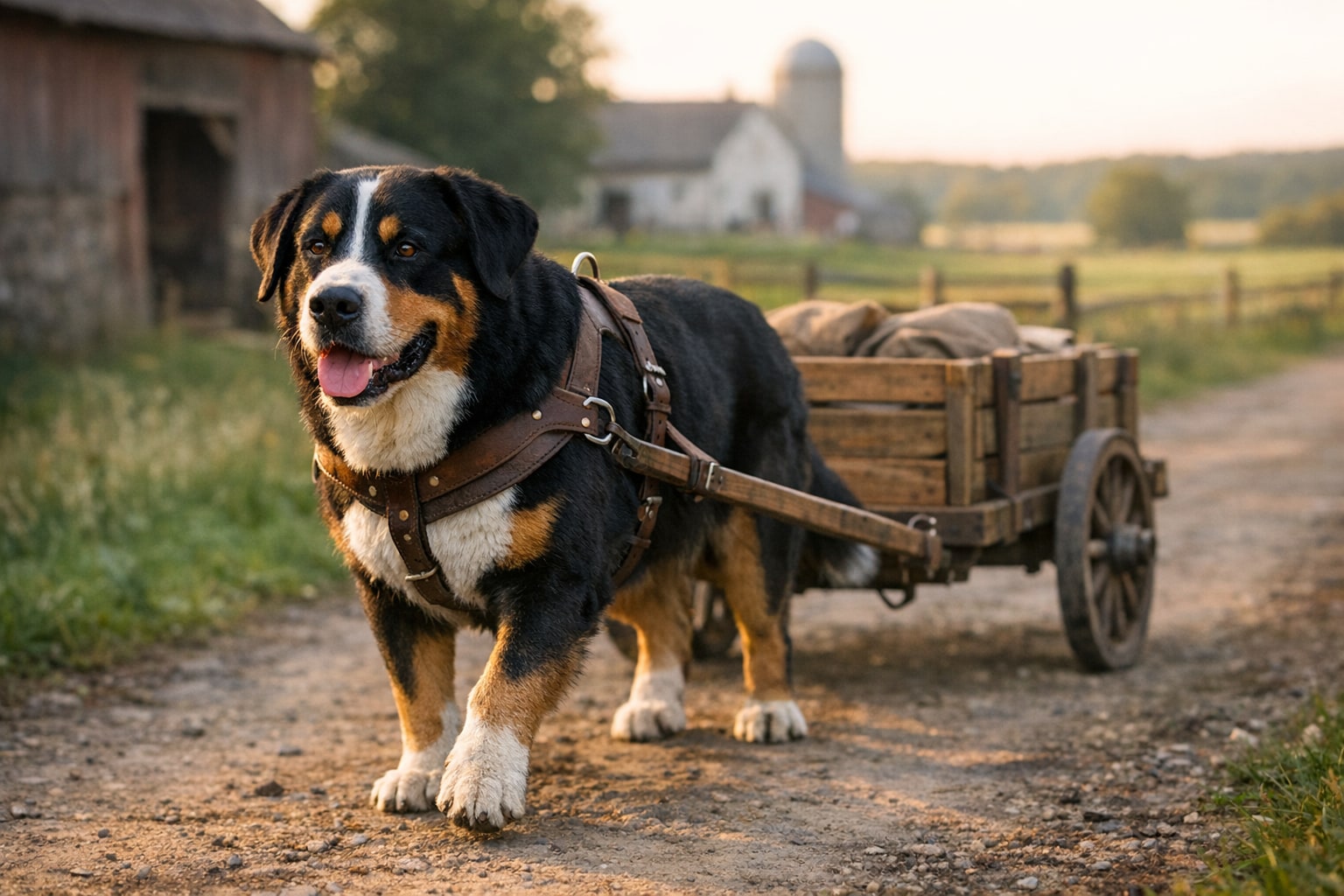
There was a time when a good dog did more than gather sheep, trail cattle, or sleep by the woodstove after a hard day. On farms and in small towns, some dogs earned their keep in harness, leaning into a load with the quiet determination of an old team horse. These were draft dogs, the forgotten working dogs that hauled milk cans, laundry, kindling, garden produce, feed sacks, and sometimes the very groceries a family needed to get through the week. Folks today often think of dogs in terms of companionship, sport, or herding alone, but there was once a practical place for canine hauling in everyday life, and it deserves remembering.
I have always admired a dog with a job, especially one that understands steady work. There is something deeply satisfying about watching a willing dog lower its shoulders into the traces, find its footing, and pull clean and true. It is not flashy work. It does not carry the drama of a hard gather in rough country or the sharp precision of a trial field. Still, draft work shows another side of working-dog character: patience, balance, grit, and a level head in the middle of noise, motion, and weight.
The old place of draft dogs in daily life
Before machinery became cheap and common, muscle mattered. On many small farms, every bit of labor had to count. A dog that could pull a cart from the barn to the house or from the garden to the root cellar saved time and spared human backs. In European towns, draft dogs once hauled bread, dairy, meat, and market goods through narrow streets where a horse and wagon might be too much trouble. In rural communities, they fetched churns, hauled pails, and carried supplies where wheelbarrows bogged down and children grew tired.
These dogs were especially useful for small jobs that did not justify hitching a horse. Anyone who has spent time around livestock knows there are endless chores just big enough to be burdensome and just small enough to be repeated all day. That was the sweet spot for a draft dog. A sturdy dog could move a surprising amount of weight over short distances, particularly on good ground with a well-balanced cart. For farm wives, peddlers, dairymen, and tradesmen, a reliable draft dog was more than a novelty. It was practical equipment with a heartbeat.
As trucks and tractors spread, draft dogs faded from the landscape. Laws in some places also restricted dog-drawn carts in towns. Over time, the image of the cart dog slipped into old photographs and scattered memory. Yet the work itself never stopped making sense. Even now, a dog trained for carting can haul firewood from a shed, bring tools to a fence line, move feed to a chicken coop, or carry supplies around a small acreage with surprising efficiency.
What makes a good draft dog?
Not every dog is built for draft work, and good sense ought to come before romance. A proper draft dog needs sound structure, enough body to handle resistance, and a calm, trainable nature. You want good shoulders, a strong back, solid feet, and a dog mature enough to bear the task safely. This is not work for puppies, and it is not work for unsound dogs, no matter how game they may be.
Temperament matters every bit as much as muscle. A draft dog must tolerate harness, movement behind its body, changing noise, and the occasional rattle or bump from a cart. A nervous dog may spook, and a hard-headed dog may fight the equipment instead of accepting it. The best cart dogs tend to be sensible, biddable, and steady under pressure. They do not have to be dull. In fact, a little initiative can help. But they do need enough self-control to pull without panic and wait without fretting.
Breeds often suited to draft work
Among the breeds most often associated with draft work are Bernese Mountain Dogs, Greater Swiss Mountain Dogs, Newfoundlands, Rottweilers, and other large, substantial working breeds. Historically, many mixed-breed farm dogs also served as draft dogs simply because they had the build and attitude for the task. Some herding breeds, particularly the larger and heavier individuals, may take to light carting well, though they are not always natural heavy pullers in the traditional sense.
For readers interested in herding dogs, this is where the subject gets especially relevant. Herding breeds were developed to think, respond, and work in close partnership with people. That willingness can make them excellent candidates for light draft work when size and structure allow. A rugged Bouvier des Flandres is one of the better examples, with enough substance and old farm-dog utility to bridge both worlds. Even so, common sense rules the day. The dog in front of you matters more than the category on the registration paper.
Training a draft dog the right way
Good draft training starts long before there is any load in the shafts. First, the dog needs obedience you can trust: stand, wait, walk on, easy, gee, haw, and whoa if you like old working commands. The exact words do not matter nearly as much as consistency. A dog in harness must understand that you are directing the work from beginning to end.
Then comes harness acceptance. Let the dog wear the harness without stress. Let it move, stand, turn, and settle. After that, introduce the feel of light resistance. A tire drag, a light pole, or another controlled setup can teach the dog to accept pressure behind it without the surprise of a full cart. Done right, this stage builds confidence rather than forcing compliance.
When the dog is ready, introduce a properly fitted cart on level ground. Keep the first sessions short and clean. No heavy loads. No bad footing. No confusion. The dog should finish wanting more, not feeling trapped or overfaced. I have seen more trouble come from eager owners pushing too much too soon than from any lack of canine ability. A draft dog is made through patient repetition, not by one big test of heart.
Safety and equipment matter
A sound harness is not optional. Poor fit creates rubbing, pressure points, and bad pulling mechanics. A well-balanced cart matters just as much. If the shafts are wrong or the weight is poorly distributed, the dog may carry more downward pressure than it should. That turns useful work into unfair work in a hurry. Always match the load, distance, terrain, and weather to the dog’s condition. Heat, mud, steep slopes, and rough footing can turn a simple task into a dangerous one.
Veterinary clearance is wise before serious draft work begins, especially for breeds prone to joint issues. Mature bones, healthy joints, and sensible conditioning are non-negotiable. A dog may be willing long before it is truly ready, and willingness should never be mistaken for physical suitability.
Why draft dogs still matter today
It would be easy to treat draft dogs as a charming relic, the kind of old-country skill that looks good in a calendar and not much else. That would be a mistake. Draft work still offers real value for the right dog and owner. It gives strong, sensible working dogs a structured outlet that builds discipline and confidence. It sharpens teamwork. It asks a dog to think through pressure and movement in a calm, methodical way. For many dogs, that kind of purposeful labor is deeply satisfying.
On a practical level, carting remains useful around homesteads, hobby farms, and rural properties. A dog hauling kindling from the woodlot or garden produce to the porch is not playing at history. It is doing a job. For owners of heritage working breeds, draft training can also preserve instincts and traditions that ought not be lost entirely to the show ring or the couch.
There is another benefit that should not be overlooked. Draft work changes how people see their dogs. When a dog learns to pull with purpose, many owners begin to appreciate structure, conditioning, and temperament in a more honest way. They stop asking only whether a dog is pretty or pleasant. They begin asking whether it is capable, steady, and useful. That is old-fashioned thinking, maybe, but there is wisdom in it.
The connection between herding dogs and broader farm work
Herding dog owners, maybe more than most, understand that farm dogs were seldom one-dimensional. A good farm dog might move stock in the morning, guard the place at night, and ride to town in between. The lines we draw now between herding, guarding, drafting, and general utility were often blurrier in real rural life. That is one reason the story of draft dogs belongs on a site devoted to herding dogs. It reminds us that working dogs were developed for usefulness first.
That lesson still matters. Even if your own dog never pulls a cart farther than the end of the lane, there is value in honoring the broad working heritage behind many farm breeds. Understanding draft dogs gives context to the toughness, patience, and trainability we still prize today. It also encourages owners to think beyond pure entertainment and toward meaningful activity suited to a dog’s body and mind.
Remembering the dogs that pulled their share
The old draft dogs may be mostly gone from the streets and barnyards, but their story deserves better than obscurity. They were not famous in the way sheepdogs and sled dogs became famous. They were not celebrated for speed or spectacle. They were simply useful, and on any honest farm, usefulness is a kind of greatness all its own.
If you have a strong, sensible dog and a mind to train carefully, there is still room for this old work. Start small. Learn the craft. Respect the dog in front of you. What you may find, somewhere between the first rattle of the shafts and the steady creak of a loaded cart, is a deeper connection to the old partnership between people and dogs. It is a partnership built not just on affection, but on shared labor. In my experience, that kind of bond runs deep and lasts.
I have always admired a dog with a job, especially one that understands steady work. There is something deeply satisfying about watching a willing dog lower its shoulders into the traces, find its footing, and pull clean and true. It is not flashy work. It does not carry the drama of a hard gather in rough country or the sharp precision of a trial field. Still, draft work shows another side of working-dog character: patience, balance, grit, and a level head in the middle of noise, motion, and weight.
The old place of draft dogs in daily life
Before machinery became cheap and common, muscle mattered. On many small farms, every bit of labor had to count. A dog that could pull a cart from the barn to the house or from the garden to the root cellar saved time and spared human backs. In European towns, draft dogs once hauled bread, dairy, meat, and market goods through narrow streets where a horse and wagon might be too much trouble. In rural communities, they fetched churns, hauled pails, and carried supplies where wheelbarrows bogged down and children grew tired.
These dogs were especially useful for small jobs that did not justify hitching a horse. Anyone who has spent time around livestock knows there are endless chores just big enough to be burdensome and just small enough to be repeated all day. That was the sweet spot for a draft dog. A sturdy dog could move a surprising amount of weight over short distances, particularly on good ground with a well-balanced cart. For farm wives, peddlers, dairymen, and tradesmen, a reliable draft dog was more than a novelty. It was practical equipment with a heartbeat.
As trucks and tractors spread, draft dogs faded from the landscape. Laws in some places also restricted dog-drawn carts in towns. Over time, the image of the cart dog slipped into old photographs and scattered memory. Yet the work itself never stopped making sense. Even now, a dog trained for carting can haul firewood from a shed, bring tools to a fence line, move feed to a chicken coop, or carry supplies around a small acreage with surprising efficiency.
What makes a good draft dog?
Not every dog is built for draft work, and good sense ought to come before romance. A proper draft dog needs sound structure, enough body to handle resistance, and a calm, trainable nature. You want good shoulders, a strong back, solid feet, and a dog mature enough to bear the task safely. This is not work for puppies, and it is not work for unsound dogs, no matter how game they may be.
Temperament matters every bit as much as muscle. A draft dog must tolerate harness, movement behind its body, changing noise, and the occasional rattle or bump from a cart. A nervous dog may spook, and a hard-headed dog may fight the equipment instead of accepting it. The best cart dogs tend to be sensible, biddable, and steady under pressure. They do not have to be dull. In fact, a little initiative can help. But they do need enough self-control to pull without panic and wait without fretting.
Breeds often suited to draft work
Among the breeds most often associated with draft work are Bernese Mountain Dogs, Greater Swiss Mountain Dogs, Newfoundlands, Rottweilers, and other large, substantial working breeds. Historically, many mixed-breed farm dogs also served as draft dogs simply because they had the build and attitude for the task. Some herding breeds, particularly the larger and heavier individuals, may take to light carting well, though they are not always natural heavy pullers in the traditional sense.
For readers interested in herding dogs, this is where the subject gets especially relevant. Herding breeds were developed to think, respond, and work in close partnership with people. That willingness can make them excellent candidates for light draft work when size and structure allow. A rugged Bouvier des Flandres is one of the better examples, with enough substance and old farm-dog utility to bridge both worlds. Even so, common sense rules the day. The dog in front of you matters more than the category on the registration paper.
Training a draft dog the right way
Good draft training starts long before there is any load in the shafts. First, the dog needs obedience you can trust: stand, wait, walk on, easy, gee, haw, and whoa if you like old working commands. The exact words do not matter nearly as much as consistency. A dog in harness must understand that you are directing the work from beginning to end.
Then comes harness acceptance. Let the dog wear the harness without stress. Let it move, stand, turn, and settle. After that, introduce the feel of light resistance. A tire drag, a light pole, or another controlled setup can teach the dog to accept pressure behind it without the surprise of a full cart. Done right, this stage builds confidence rather than forcing compliance.
When the dog is ready, introduce a properly fitted cart on level ground. Keep the first sessions short and clean. No heavy loads. No bad footing. No confusion. The dog should finish wanting more, not feeling trapped or overfaced. I have seen more trouble come from eager owners pushing too much too soon than from any lack of canine ability. A draft dog is made through patient repetition, not by one big test of heart.
Safety and equipment matter
A sound harness is not optional. Poor fit creates rubbing, pressure points, and bad pulling mechanics. A well-balanced cart matters just as much. If the shafts are wrong or the weight is poorly distributed, the dog may carry more downward pressure than it should. That turns useful work into unfair work in a hurry. Always match the load, distance, terrain, and weather to the dog’s condition. Heat, mud, steep slopes, and rough footing can turn a simple task into a dangerous one.
Veterinary clearance is wise before serious draft work begins, especially for breeds prone to joint issues. Mature bones, healthy joints, and sensible conditioning are non-negotiable. A dog may be willing long before it is truly ready, and willingness should never be mistaken for physical suitability.
Why draft dogs still matter today
It would be easy to treat draft dogs as a charming relic, the kind of old-country skill that looks good in a calendar and not much else. That would be a mistake. Draft work still offers real value for the right dog and owner. It gives strong, sensible working dogs a structured outlet that builds discipline and confidence. It sharpens teamwork. It asks a dog to think through pressure and movement in a calm, methodical way. For many dogs, that kind of purposeful labor is deeply satisfying.
On a practical level, carting remains useful around homesteads, hobby farms, and rural properties. A dog hauling kindling from the woodlot or garden produce to the porch is not playing at history. It is doing a job. For owners of heritage working breeds, draft training can also preserve instincts and traditions that ought not be lost entirely to the show ring or the couch.
There is another benefit that should not be overlooked. Draft work changes how people see their dogs. When a dog learns to pull with purpose, many owners begin to appreciate structure, conditioning, and temperament in a more honest way. They stop asking only whether a dog is pretty or pleasant. They begin asking whether it is capable, steady, and useful. That is old-fashioned thinking, maybe, but there is wisdom in it.
The connection between herding dogs and broader farm work
Herding dog owners, maybe more than most, understand that farm dogs were seldom one-dimensional. A good farm dog might move stock in the morning, guard the place at night, and ride to town in between. The lines we draw now between herding, guarding, drafting, and general utility were often blurrier in real rural life. That is one reason the story of draft dogs belongs on a site devoted to herding dogs. It reminds us that working dogs were developed for usefulness first.
That lesson still matters. Even if your own dog never pulls a cart farther than the end of the lane, there is value in honoring the broad working heritage behind many farm breeds. Understanding draft dogs gives context to the toughness, patience, and trainability we still prize today. It also encourages owners to think beyond pure entertainment and toward meaningful activity suited to a dog’s body and mind.
Remembering the dogs that pulled their share
The old draft dogs may be mostly gone from the streets and barnyards, but their story deserves better than obscurity. They were not famous in the way sheepdogs and sled dogs became famous. They were not celebrated for speed or spectacle. They were simply useful, and on any honest farm, usefulness is a kind of greatness all its own.
If you have a strong, sensible dog and a mind to train carefully, there is still room for this old work. Start small. Learn the craft. Respect the dog in front of you. What you may find, somewhere between the first rattle of the shafts and the steady creak of a loaded cart, is a deeper connection to the old partnership between people and dogs. It is a partnership built not just on affection, but on shared labor. In my experience, that kind of bond runs deep and lasts.


View all 0 comments