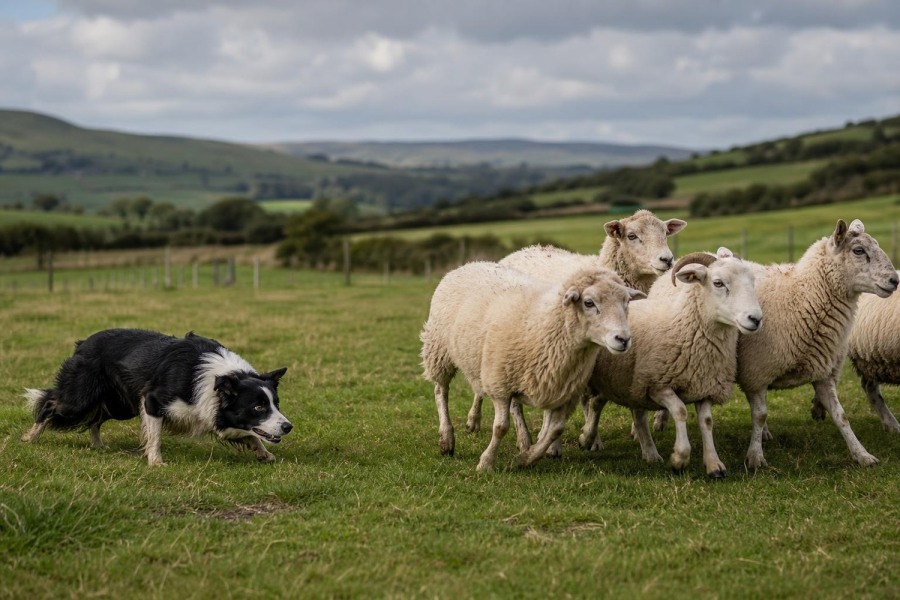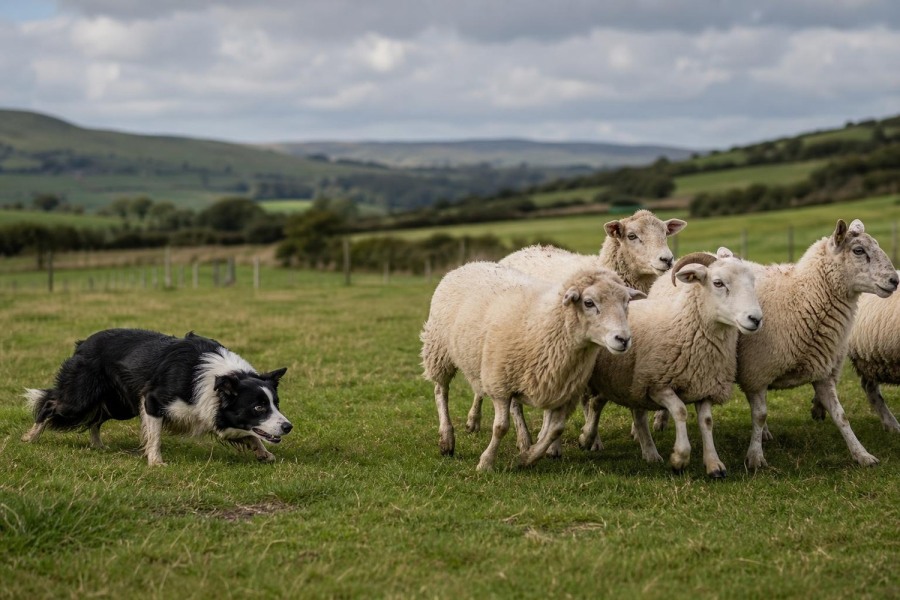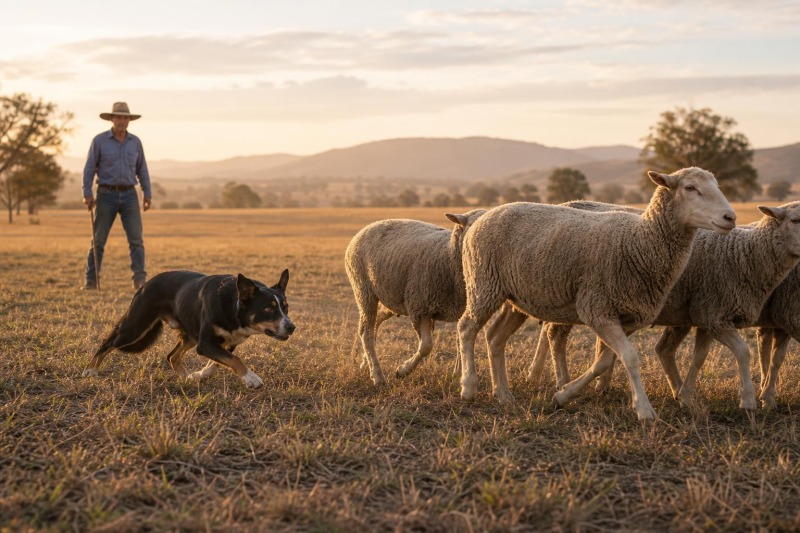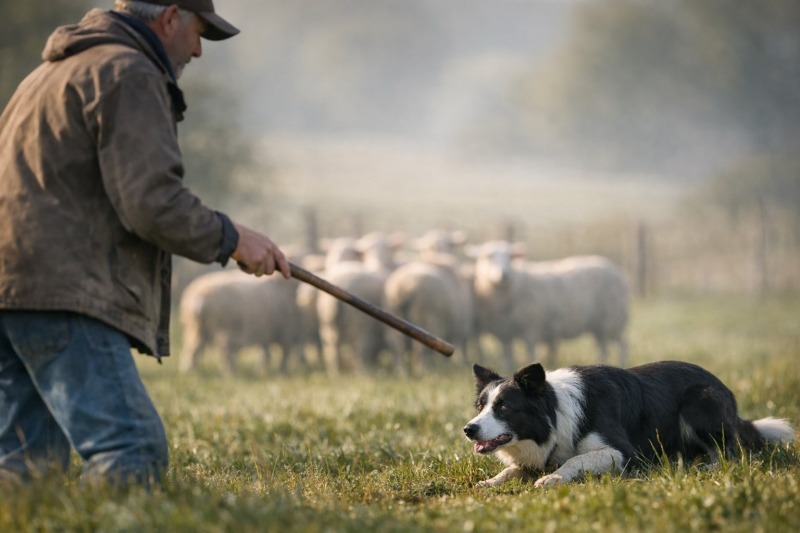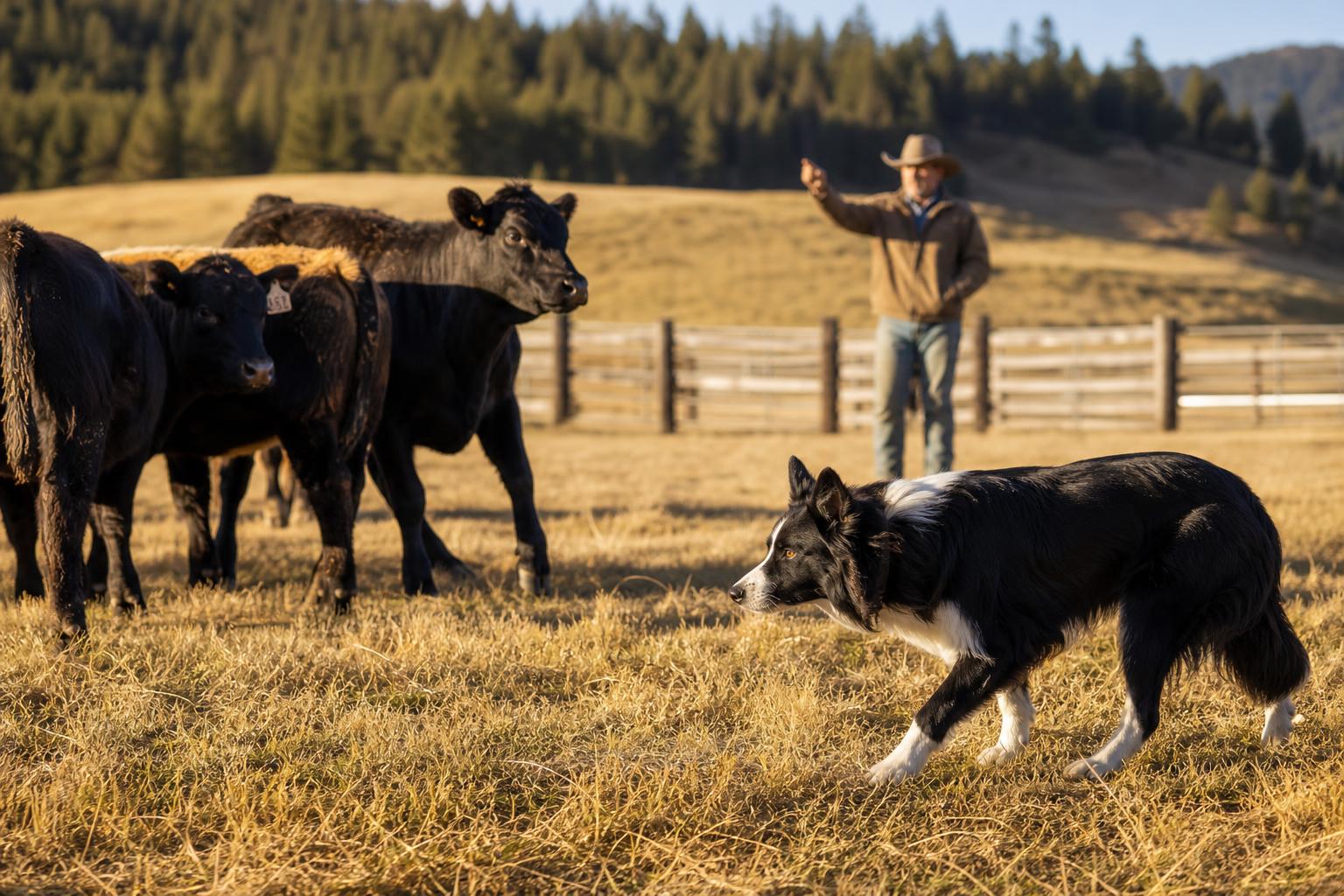
Ranch work asks a dog to handle practical routines with varied stock, ground, and distances. Foundations need to hold up as those conditions change. Training is most useful when it prepares the dog for the actual work on the property.
A pup may carry all the right genetics, but without careful training it can become noisy, reckless, or uncertain around livestock. On the other hand, a well-started dog that learns to read stock, listen under pressure, and hold itself together when things get rough becomes the kind of hand you depend on. When weather turns ugly, cattle break for the wrong gate, or sheep bunch hard in a corner, that is when proper training shows.
Why Ranch Work Demands More Than Basic Herding Instinct
Herding on a ranch is not a trial field with set obstacles and tidy routines. It is uneven ground, shifting weather, half-wild stock, and situations that change in a heartbeat. A dog may be asked to gather cattle from broken pasture at first light, push stubborn ewes through a narrow alley by noon, and help sort pairs before dark. That kind of work requires a clear head and a dog that can switch from pressure to patience without falling apart.
Training herding dogs for ranch work starts with understanding the difference between flashy movement and useful movement. The goal is not to make a dog look busy. The goal is to make the dog effective. Sometimes that means a hard flank and firm push. Sometimes it means standing off and holding quiet pressure. A ranch dog must learn that every step has a purpose, and that lesson comes from repetition, correction, and careful exposure to livestock.
Obedience Before Stock Work
Before a young dog ever puts meaningful pressure on stock, it ought to understand basic obedience. A steady recall, a dependable stop, comfort on a lead, and the habit of looking to the handler for direction are all worth their weight in gold. A dog that will not stop when excitement builds is a liability around livestock.
This stage can feel slow to eager owners. They want to see the pup circle, balance, and gather. That is understandable. Still, rushing into stock work before control is established often creates bad habits that take much longer to undo.
Socialization and Environmental Confidence
Ranch dogs need confidence in all sorts of places. They should be comfortable around trailers, horses, four-wheelers, gates, mud, creeks, and the everyday noise of working ground. A nervous dog wastes energy and makes poor decisions. Expose young dogs to ranch life in manageable pieces. Let them ride along, watch from a safe distance, and learn that commotion does not always mean chaos.
The more normal the ranch becomes, the easier it is for the dog to settle and think once training turns serious.
Introducing Livestock the Right Way
The first stock a dog meets can leave a lasting mark. Quiet, dog-broke animals are worth seeking out if you can get them. They help a young dog discover its instincts without being overwhelmed or rewarded for rough behavior. If the stock explodes at every move, the dog may get wild. If the stock turns and challenges too hard too early, a softer dog may lose confidence. Early sessions should be short, controlled, and aimed at awakening instinct while preserving order.
This is where timing matters most. Encourage interest, but do not let the dog grip, crash, or scatter animals for the thrill of it. A little pressure from the handler at the right moment teaches the pup that stock work has rules. Real training shapes instinct into responsibility.
The Stop and the Recall
On a ranch, things go wrong fast. A calf ducks through a gap, a ewe turns back, cattle pin up in a corner, or a horse steps where it should not. In those moments, a dog that will freeze or come off pressure immediately is worth more than a fancy outrun.
These commands need to hold under excitement, distance, and fatigue. That takes steady reinforcement. Do not assume a dog knows a stop because it did it twice in a small pen. Proof it in different places, around different stock, and when the dog is fully engaged.
Flanking, Balance, and Pressure
A ranch dog has to understand how to move around stock with purpose. Flanking is not just circling. It is taking the correct line to influence movement without blowing animals apart. Balance is the dog’s feel for where it needs to be to control stock relative to the handler. Pressure is how much presence the dog applies. Too little, and stock ignore it. Too much, and they panic or fight.
These qualities are developed through repetition and stock exposure, but they are also sharpened by the handler’s eye. A good trainer reads the stock as much as the dog. If cattle are heavy to one side, if sheep are looking for a gap, if the herd is starting to split, the handler should guide the dog before trouble fully forms. Over time, a seasoned dog begins to see those same problems and answer them on its own.
Driving and Gathering
Many young dogs prefer gathering because it fits natural instinct. Driving, especially taking stock away from the handler in a straight, controlled line, often takes more patience to teach. Yet on a working ranch, driving matters every bit as much. You need a dog that can push cattle down a lane, move sheep through a gate, or hold steady pressure from behind without slicing in and upsetting the bunch.
Success builds understanding. Once the dog realizes that moving stock away from me is part of the job, its confidence grows. A ranch dog that can both gather and drive is far more useful than one with only half the picture.
Building a Dog That Can Handle Real Ranch Conditions
Pasture work changes a dog. Pen work is useful for teaching fundamentals, but open ground reveals whether a dog can think, cast, and hold stock honestly. Distance stretches communication. Wind carries scent and sound away. Livestock have room to test a dog’s authority. This is where conditioning, obedience, and stock sense all come together.
Do not ask for too much too soon in big country. A young dog may look sharp in a small arena and come apart in a wide pasture. That does not mean the dog lacks ability. It means the picture has changed. Break the work into pieces, give the dog manageable tasks, and finish on a note that leaves confidence intact.
Physical conditioning matters more than many owners realize. Ranch dogs cover rough ground, turn hard, and work through heat, cold, and dust. A dog that is out of shape tires in both body and mind, and tired dogs make sloppy decisions. Good feed, sound feet, hydration, and gradual conditioning are part of training whether people say so or not.
Correcting Problems Before They Become Habits
Most faults in herding dogs begin small. A little slicing in on the heads, a tendency to bark from frustration, a habit of gripping when pressure rises, a reluctance to enter tight spaces with stock. Ignore those things long enough and they harden into the dog’s working style. The best time to correct a problem is when it first appears and before the dog has been paid for it over and over.
That does not mean heavy-handed training. The best corrections are clear, timely, and fair. Confused dogs do not improve. They just become anxious or avoidant. Show the dog what you want, interrupt what you do not want, and keep enough structure in the session that the right answer is possible.
There is also wisdom in knowing when not to drill. Repeating the same mistake ten times in one session usually does not fix it. Often it just builds frustration. Sometimes the right move is to simplify the exercise, get one clean response, and quit there.
The Handler’s Role in Making a Finished Ranch Dog
Plenty of dogs get blamed for faults that really belong to the person at the other end of the lesson. Handlers who crowd stock, give late commands, change expectations day by day, or lose their temper can muddy a dog’s progress in a hurry. A ranch dog learns not only from livestock, but from the consistency of the human directing it.
The handler did not need to chatter every second. The dog did not need to be micromanaged. That kind of partnership is earned through repetition and trust. If you want a dog that will stand by you in hard going, you have to become a person the dog can read and rely on.
Finishing the Dog Through Everyday Work
No training session can replace the education that comes from useful chores. Daily ranch work puts seasoning on a dog in a way formal lessons never quite can. Opening a gate while the dog holds pressure, sorting a few head off the bunch, bringing stock from pasture before a storm rolls in, these ordinary moments teach steadiness and judgment.
They were not flashy and they did not make a show of themselves. What made them valuable was that you could trust them. They knew when to step in, when to hold off, and when to take a command at distance as though you were standing right beside them. That sort of reliability is the true mark of a ranch dog.
Training herding dogs for ranch work is a long road, but it is one of the most rewarding jobs a dog owner can take on. When instinct is guided by patience and honest work, a herding dog becomes more than a helper. It becomes a partner woven into the rhythm of the ranch. And once you have worked stock with a dog that truly understands its job, you will never mistake noise and motion for real usefulness again.