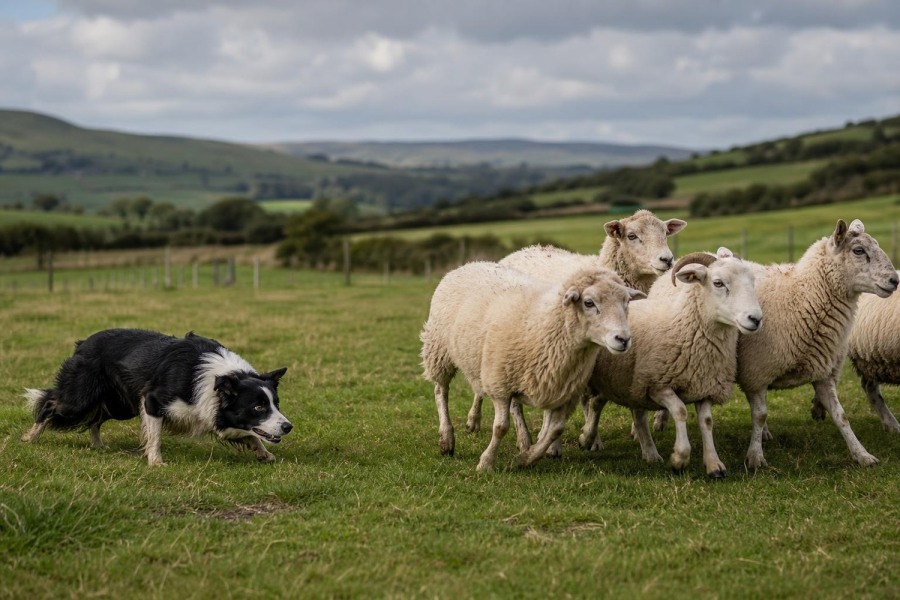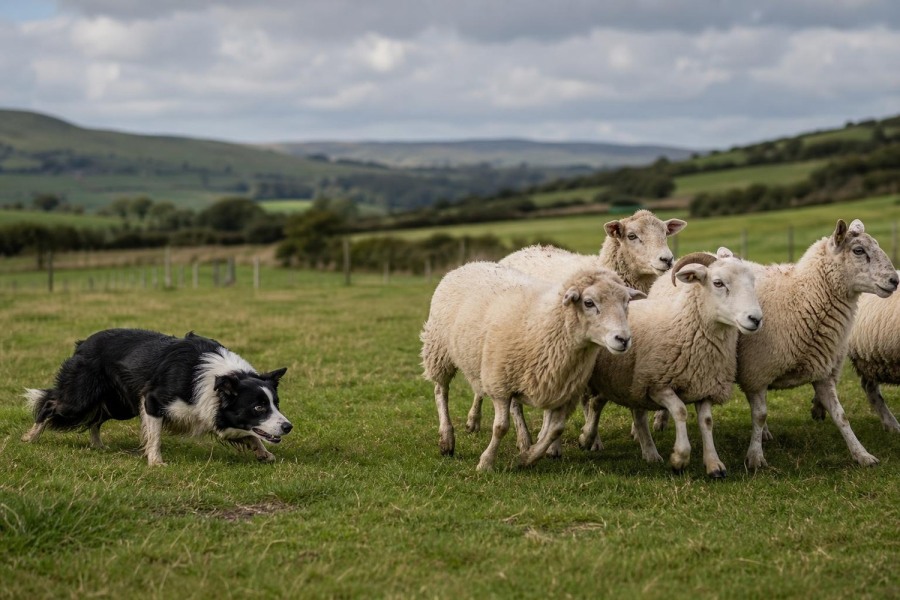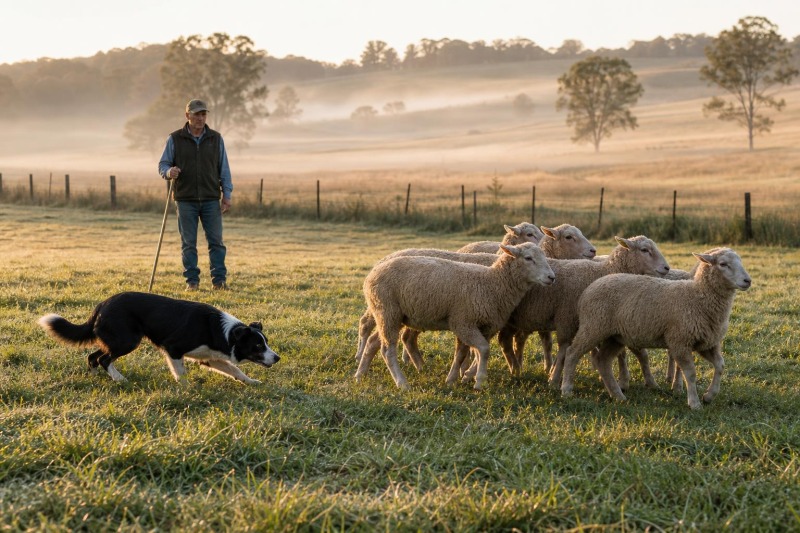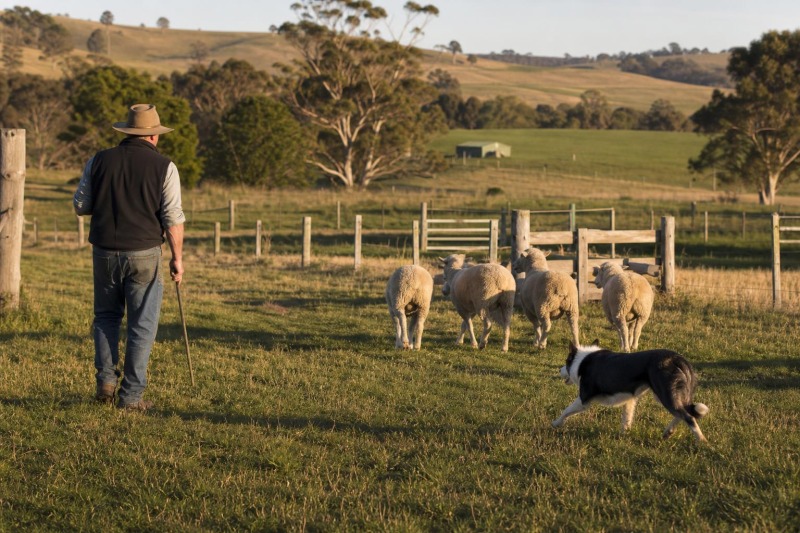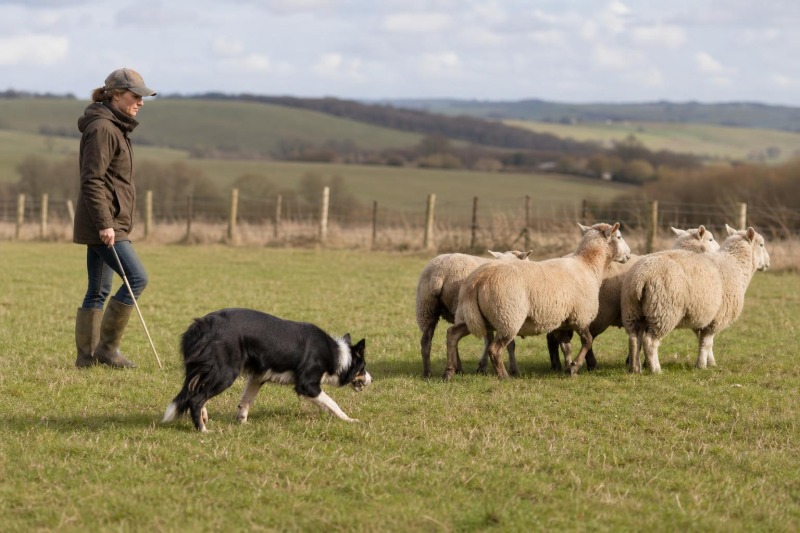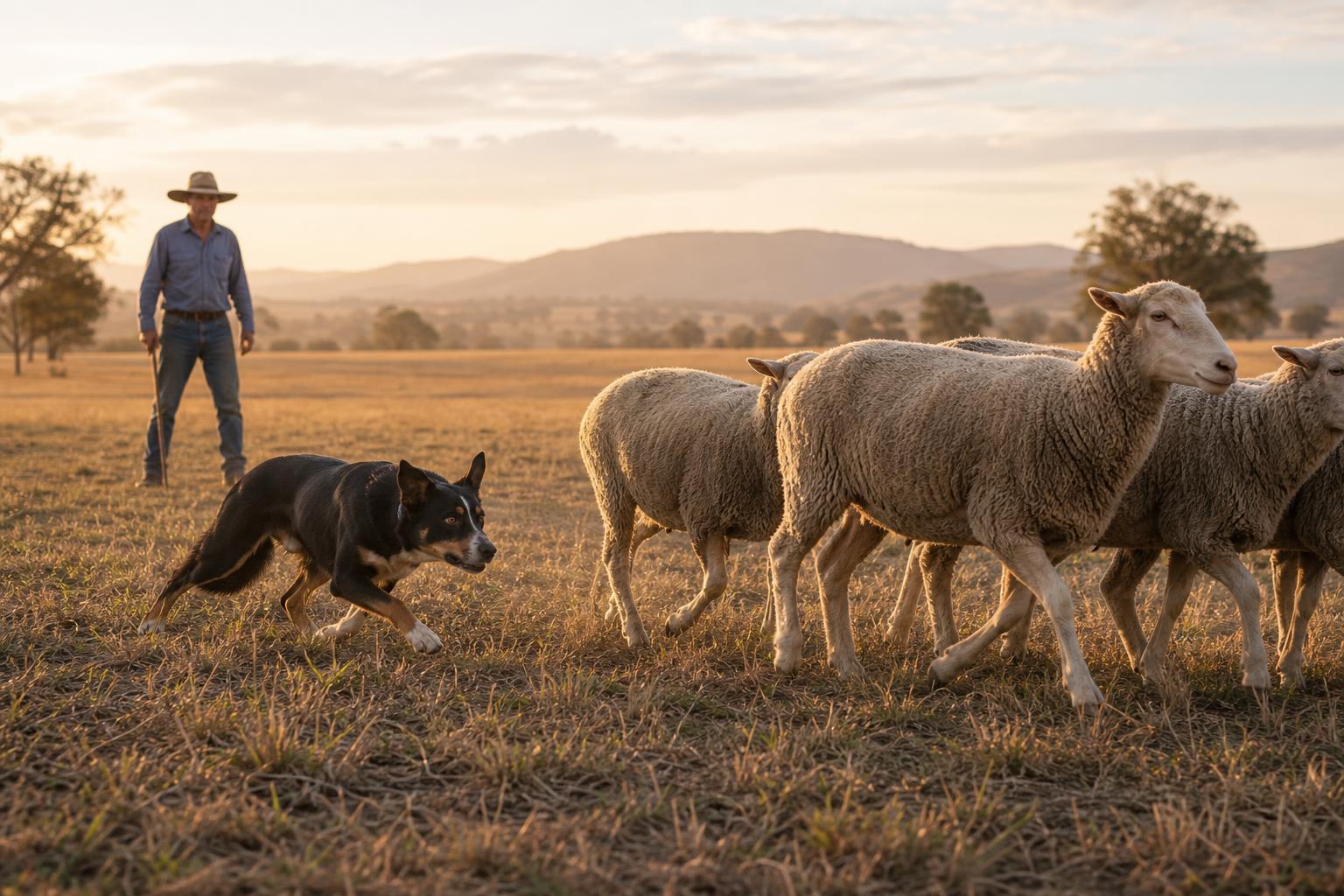
A finished stock dog combines understanding of livestock with dependable handling. That standard is developed through varied, useful experience. The timetable depends on the dog, the available work, and the judgment used during training.
You can ruin a naturally gifted dog by asking too much too early, just as surely as you can waste a useful one by letting bad habits set like concrete. The finished dog most people admire is not just obedient. It is steady under pressure, clear in the mind, responsive to the handler, and smart enough to read livestock as if it were born speaking their language.
Instinct Is the Foundation, Not the Finish Line
Every good stock dog starts with some level of inherited instinct. That desire to gather, balance, hold pressure, and move stock with purpose cannot be manufactured out of thin air. Good breeding gives you a better chance, and in working dogs that chance matters. Still, instinct is only the first piece. A pup may show plenty of eye, plenty of interest, and plenty of speed, but if it cannot learn restraint, take direction, and recover from pressure, it will never become the kind of dog you can build a day around.
A promising dog may make mistakes, but it keeps trying to solve the problem. It begins to show thought. That thoughtfulness is worth more than flashy movement. A dog that thinks can be trained. A dog that only reacts is hard to trust when things get western.
Good Stock Makes Better Dogs
One truth that never changes is this: poor training stock can make training harder than it needs to be. Dog-broke sheep that move honestly and teach a youngster to rate pressure are worth their weight in gold. Wild, sticky, or reckless stock can be useful later, but early on they often create confusion. The young dog needs a chance to learn the right picture. It needs to discover how position affects movement and how calm, steady pressure can control a group better than frantic chasing ever will.
A finished stock dog learns from livestock every bit as much as it learns from the handler. The stock will tell a dog when it is too tight, too loose, too fast, or too timid. The best trainers know when to let those lessons happen and when to step in before the dog loses confidence or slips into bad habits.
Starting a Young Dog the Right Way
Early training should be less about polishing commands and more about building understanding. The first job is to bring instinct under control without dulling it. That is a delicate thing. Push too hard and you can take the heart out of a dog. Stay too hands-off and the pup may learn that excitement is more rewarding than responsibility.
It must begin to understand balance, feel pressure, and find the proper place to move animals toward me rather than scatter them across the county. At this stage, short sessions are usually better than long ones. A few correct lessons stick better than an hour of confusion. Young dogs, like young horses, can get mentally tired before their body tells you so.
Basic commands matter, but they should connect to meaningful work. A stop is not just a trick. It is a safety tool and the beginning of control. A recall is not simply obedience. It is trust. Flanks are not just left and right. They are how a dog learns to take pressure off stock or apply it with purpose. Every useful command should have a job the dog can feel and understand in the field.
Timing Is Everything
The difference between progress and frustration often comes down to timing. Correct too late and the lesson is muddy. Praise too early and you reward the wrong idea. A stock dog handler has to learn to read not only the dog, but the stock and the exact moment when the picture changes. That takes experience, and plenty of handlers get better right alongside the dog.
A finished stock dog does not come from constant conflict. It comes from clear communication, fair standards, and consistency over time.
Building Stock Sense and Practical Judgment
One mark of a truly finished stock dog is stock sense. That phrase gets used a lot, but in plain terms it means the dog understands how livestock think and move. It knows when to step in, when to ease off, when to hold a line, and when to bend around pressure to keep the group together. You cannot teach every one of those decisions like memorized commands. Some of it has to be developed through exposure and work.
This is where time in real situations matters. Arena work has its place, especially for teaching foundations, but fences can lie to a dog. Out in an open field, along a rough lane, or in a crowded sorting lot, the dog starts to learn what holds up when the textbook picture disappears. A finished stock dog must be useful beyond the training pen. It has to handle sheep one day, stubborn cattle the next, and all the small surprises that come with chores and weather and human plans that do not go smooth.
The older, better dogs seem almost quiet in their work. They are not always the fastest or the most dramatic. They simply put themselves where they need to be. They hold pressure with confidence and move stock with very little wasted motion. That kind of practical judgment is where training and maturity finally come together.
The Role of the Handler in Finishing a Dog
No stock dog finishes itself. Even the best-bred dog needs a handler who is willing to be patient, honest, and observant. One of the hardest lessons for people is learning not to micromanage. Young dogs need direction, but if you command every stride, the dog never learns responsibility. On the other hand, if you leave it to fend for itself too often, avoidable mistakes pile up and become patterns.
A good handler gives the dog room to think while still maintaining standards. That balance is hard won. It asks you to know when the dog is being willful and when it is simply green. It asks you to tell the difference between confusion and disobedience. Most of all, it asks for humility. Livestock have a way of exposing holes in training, and there is no sense pretending otherwise.
Confidence Without Carelessness
A finished stock dog should work with confidence, but confidence is not the same thing as recklessness. A hard-charging dog may look impressive for a moment, especially to an untrained eye, yet the real measure is whether the stock move cleanly and efficiently. Good work is economical. It preserves stock, respects the job, and keeps everyone safer.
Confidence grows when the dog is allowed to succeed in steps. One clean gather leads to another. One calm penning job turns into steady sorting. Over time, the dog begins to trust both its own judgment and the handler behind it. That partnership is what separates a merely trained dog from a finished one.
When a Dog Becomes Truly Finished
People often ask when a stock dog is finished. The honest answer is that it depends on the work and the standard. A dog may be solid on a small flock and still be green on range cattle. It may handle routine chores well and still need seasoning in high-pressure situations.
That does not mean perfection. Even seasoned dogs have off moments. What matters is recovery. A finished dog regains itself quickly. It does not fall apart because one sheep breaks, one cow turns back, or one gate clangs at the wrong time. It has depth. That depth is built through honest work in all kinds of conditions, not through a handful of pretty training sessions when everything goes right.
There is also a maturity that comes with time. Some dogs bloom early, others take longer to settle into themselves. Rushing that process seldom helps. The old saying about making the dog you have, not the dog you wish you had, carries a lot of truth. Each good dog gets there on its own timeline, provided the training is fair and the opportunities are there.
The making of a finished stock dog is one of the finest things to witness in the working dog world. It is part genetics, part training, part stock experience, and part relationship between dog and handler. When it all comes together, the work looks simple, and that is exactly why outsiders underestimate it. The finished dog does not just move livestock. It solves problems, saves steps, reduces stress on the herd, and becomes the kind of partner you miss deeply once you have had a good one.
For dog owners interested in herding dogs, the lesson is simple enough: value patience, seek good instruction, use suitable stock, and judge progress by usefulness rather than show. The road from instinct to finish is long, but it is worth every careful step. The best stock dogs are not manufactured by force. They are developed through work that means something, guided by a steady hand, until one day you look up and realize the youngster has become the dog you were hoping for all along.