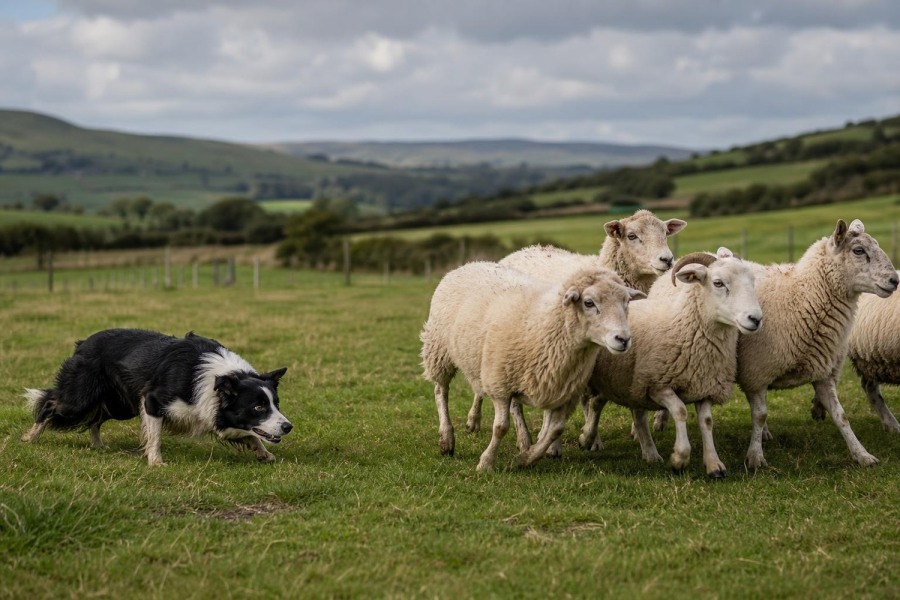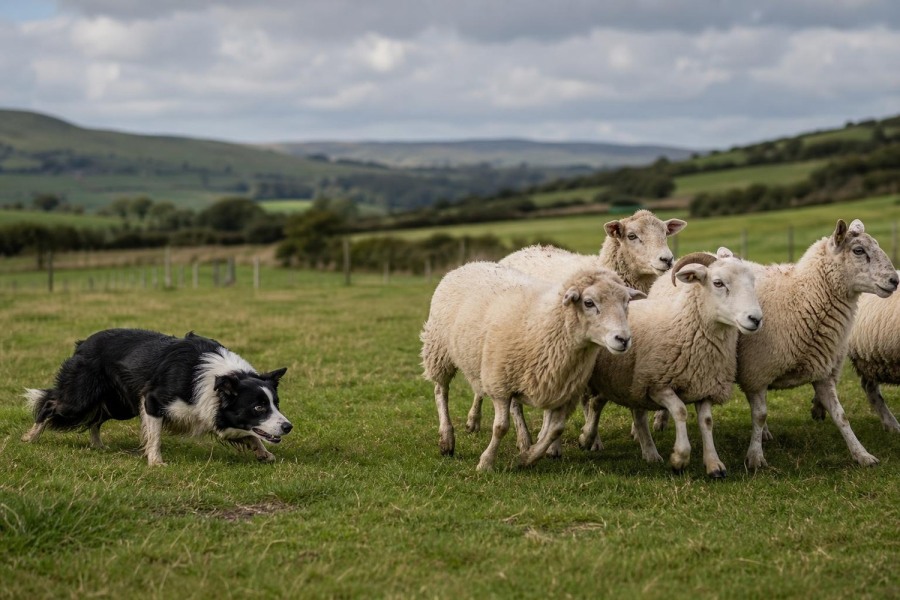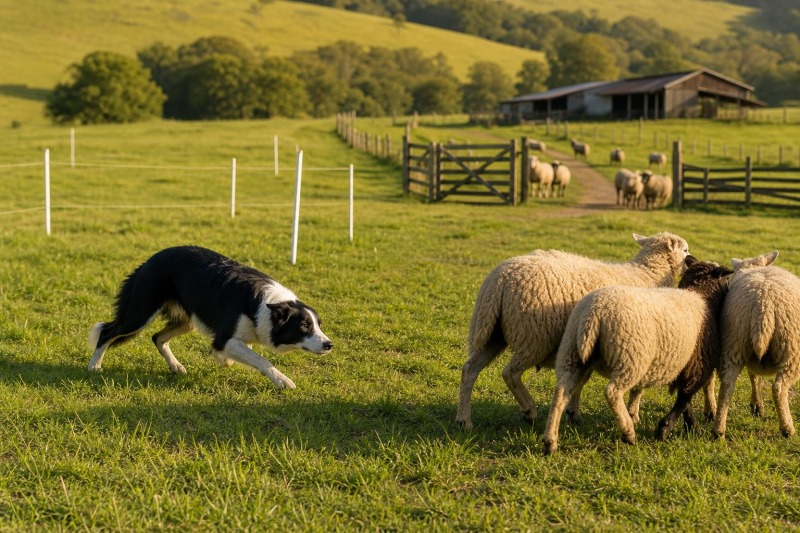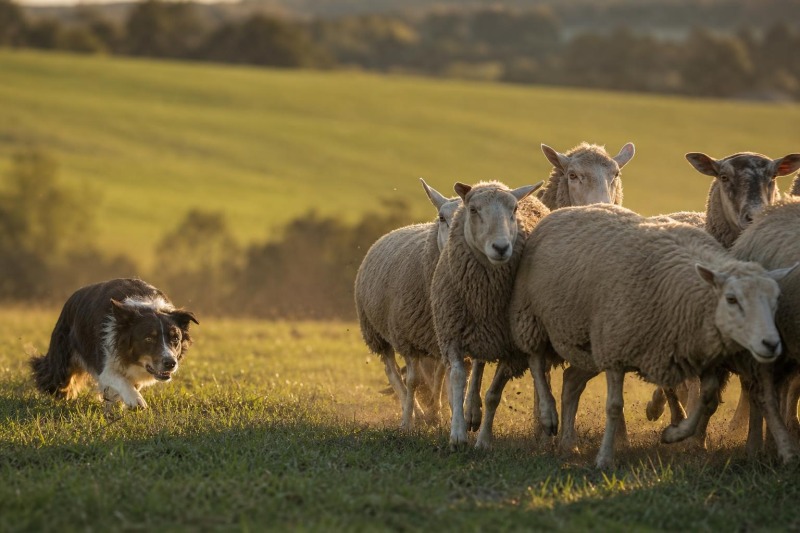
Ranch work and trial work can share foundations while placing different demands on a dog. Stock, ground, routines, and judging requirements all affect the task. Comparing the actual work is more useful than treating either label as a measure of quality.
That distinction matters for dog owners who are trying to understand the working side of herding breeds. Too many people see a flashy trial run and assume that is the whole picture of stock work. Others dismiss trial dogs as fancy specialists with no practical value. Both views miss the mark. The best way to understand the difference is to look at the work itself, because dogs are always honest in the field. They show you what they were bred for, what they were trained for, and what they can handle when livestock, weather, and distance all start testing them at once.
What a Ranch Dog Is Bred and Trained to Do
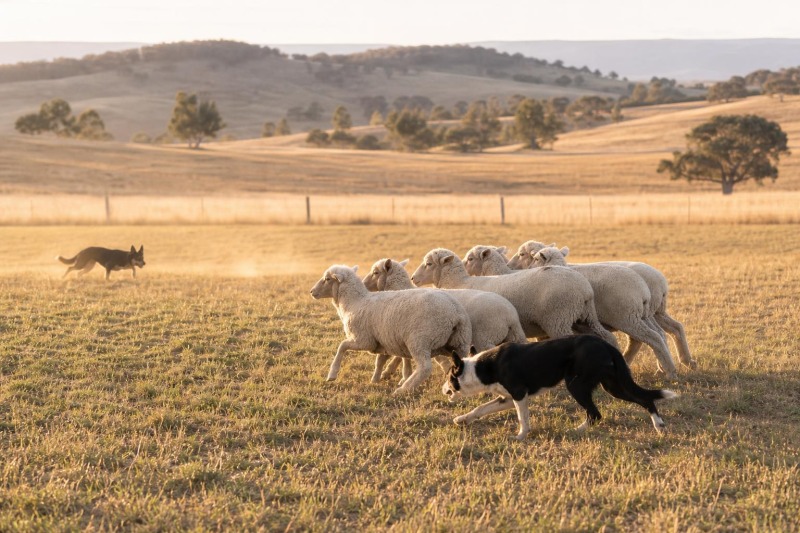
A ranch dog is first and foremost a practical hand. That dog exists to help a person move livestock in the real world, not in a controlled pattern laid out for judges. On a ranch, there are no points for style if the sheep break through a gate, no ribbon if the cattle turn back in thick brush, and no applause when a dog looks pretty but cannot finish the job. The work has to get done, and it has to get done efficiently enough to save steps, save time, and save frustration.
That usually means a ranch dog must be adaptable. One day the dog may gather sheep from a draw, the next day sort pairs in a tight pen, and the day after that push cattle through a muddy alley where every animal is looking for a hole to escape through. Real stock work is uneven. Ground changes. Livestock change. Handlers make mistakes. Good ranch dogs learn to absorb that chaos without falling apart.
Most ranch dogs are valued for their usefulness over polish. They need courage, enough grit to face stubborn stock, enough sense to avoid unnecessary fights, and enough feel to read what the animals are about to do. A ranch dog that can think for itself is worth its weight in feed. Out in the pasture, especially at distance, a handler may not have time to micromanage every move. The dog has to understand pressure, balance, and timing in a way that holds up when the work turns rough.
The Everyday Demands of Ranch Work
One of the clearest differences between ranch dogs and trial dogs is repetition of practical tasks. Ranch work is not built around a single perfect run. It is built around many small jobs strung together over long hours. Opening space for stock to flow, holding pressure at a gate, blocking a break, bringing in stragglers, driving a bunch down a lane, and helping sort off individuals all ask something a little different from the dog. That kind of work rewards steadiness and durability more than dramatic flair.
They knew where to be, knew when to step in, and knew when to back off. Those are ranch dog traits, and they can be hard to measure from the sidelines if you have never seen how much trouble a good dog prevents before it ever starts.
What Makes a Trial Dog Different
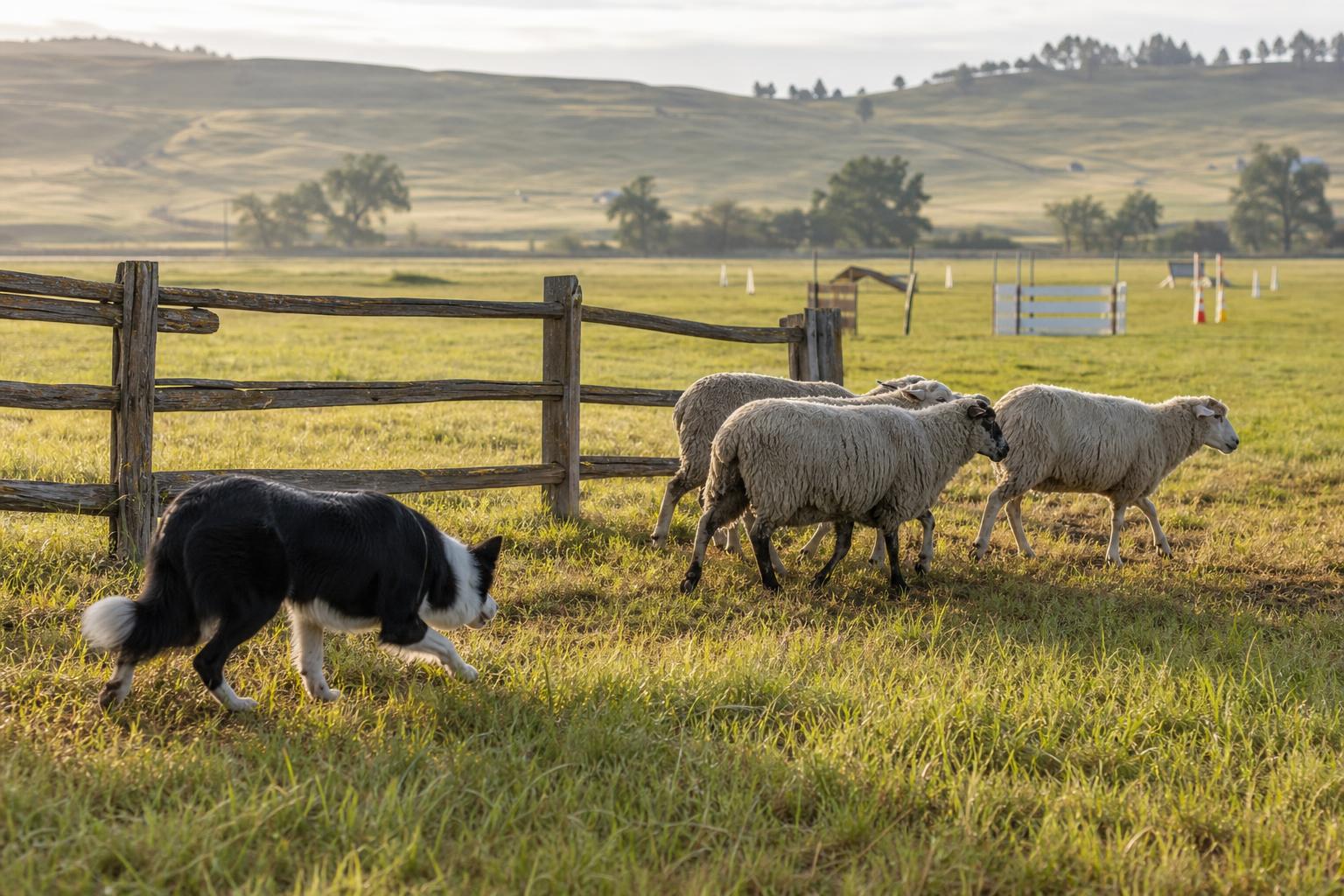
A trial dog is still a working dog, and the good ones are not just ornaments. But trial work asks for a more refined and highly visible form of stock handling. In a trial setting, the dog is judged on how it gathers, drives, sheds, pens, and handles stock under a defined set of rules. The work is structured to showcase precision, control, responsiveness, and stock sense in a way that can be compared from one dog and handler team to another.
That means trial dogs are often developed to show cleaner lines, more exact responses, and a higher level of handling at distance. The outrun may need to be wide and even, the lift calm and controlled, the fetch straight, and the drive balanced in a way that looks nearly effortless when done right. A strong trial dog works with purpose, but also with a kind of finesse that stands out immediately.
There is an art to trial work that outsiders sometimes underestimate. The dog is not merely moving stock from one place to another. It is doing so in a way that demonstrates training, natural instinct, and cooperation under close scrutiny. A trial can expose weakness quickly. If a dog slices in too tight, loses contact, grips out of frustration, or misses subtle commands, the course will reveal it. That level of examination is part of what makes trial dogs so impressive when they are truly good.
Precision Versus Practical Flexibility
Here is where the line between the two becomes easier to see. Trial dogs are often judged by precision. Ranch dogs are judged by results. That does not mean trial dogs cannot be practical, or that ranch dogs cannot be stylish. In fact, the very best dogs often carry some of both. But the emphasis is different.
A trial dog may be trained to hold a beautiful line on a drive because that line matters in competition. A ranch dog may bend the path a little because a patch of bad footing, a fence corner, or a stubborn ewe requires it. The ranch dog is solving a problem in real time. The trial dog is showing a high standard of controlled stock work within the framework of the course. Those are related skills, but they are not identical.
Temperament and Mindset
Temperament often separates these dogs as much as training does. A solid ranch dog usually needs toughness, resilience, and a practical mind. The dog may have to take correction, deal with pressure from rank livestock, and keep working through confusion, weather, and fatigue. It cannot be too soft, and it cannot carry too much unnecessary heat if the work calls for calm endurance.
Trial dogs, especially at a high level, often show exceptional sensitivity and responsiveness to the handler. That can be a huge asset because trial work depends on subtle communication. The dog must take commands cleanly, maintain focus over distance, and adjust almost instantly when asked. Many top trial dogs are extremely biddable without losing their stock sense. They are tuned in, and that makes them a pleasure to watch.
Still, sensitivity cuts both ways. A dog that thrives in the trial field may not always be the dog you want handling rough cattle in a cramped lot every day. On the other hand, a hard, gritty ranch dog that gets the job done under pressure may not show the clean responsiveness that trial judging rewards. Again, there are exceptions, but the working style often reflects the environment the dog was prepared for.
Training Shapes the Final Product
Breeding matters, but training writes a big part of the story. A dog raised and developed on a ranch is going to see practical situations early and often. The lessons come from necessity. The dog learns where pressure works, where it backfires, how to hold livestock together, and how to partner with a handler who may be horseback, on foot, or in an ATV seat with one eye on the weather.
A trial dog’s training usually involves more deliberate shaping. The handler spends time refining flanks, stops, pace, lines, and correct positioning so the dog can handle stock with both authority and composure. Timing becomes critical. Tiny adjustments matter. A dog with natural ability can be sharpened into a beautiful trial partner through patient, skilled training.
What is important for dog owners to understand is that neither path is automatically superior. They are simply aimed at different outcomes. Trouble starts when people buy a dog expecting one style of work and end up with a dog developed for another. A ranch-bred pup may have the grit and practical instincts a stockman loves, but if the buyer wants to compete seriously in trials, the dog may need more finesse than it naturally offers. Likewise, a trial-bred youngster with gorgeous movement and sensitivity may frustrate someone who expects a rough-and-ready chore dog right out of the gate.
Can One Dog Be Both?
Yes, sometimes. Those dogs are special because they combine practical judgment with polish. They have power when needed, patience when it counts, and the kind of balance that cannot be faked.
But that dual talent is not something you should assume in every dog. Even within the same breed, lines can drift toward one emphasis or the other. Some breeders value wide outruns, softness, and trial-style response. Others breed for toughness, practicality, and everyday usefulness on difficult stock. Neither direction is wrong, but buyers need to ask honest questions and match the dog to the job.
Why This Matters for Herding Dog Owners
If you are a dog owner interested in herding breeds, this difference matters whether you own stock or not. It helps explain why one dog may be highly responsive and stylish, while another seems more forceful, independent, or intense. It also helps set fair expectations. Herding dogs are not interchangeable tools. They are products of instinct, breeding, handling, and environment.
The smartest thing an owner can do is decide what kind of work or activity they truly want. If your interest is competition, look for dogs and trainers with a real background in trial success. If your goal is practical stock handling, spend time with working ranch dogs and watch how they operate when the job gets messy. A good dog is not defined by hype. It is defined by fit.
The difference between ranch dogs and trial dogs comes down to purpose. Ranch dogs are built for usefulness in unpredictable, often unforgiving conditions. Trial dogs are shaped to demonstrate a high standard of controlled stock work under evaluation. Both can be brilliant. Both demand instinct, training, and partnership. But they shine in different arenas.
Anyone who has watched a seasoned ranch dog stop a wreck before it starts knows there is genius in practical work. Anyone who has seen a top trial dog cast wide, lift stock softly, and bring them in with perfect feel knows there is beauty in precision. The best handlers respect both, because both represent generations of honest working ability. If you understand the difference, you are already ahead of most people shopping for a herding dog or trying to make sense of the breed’s true nature.