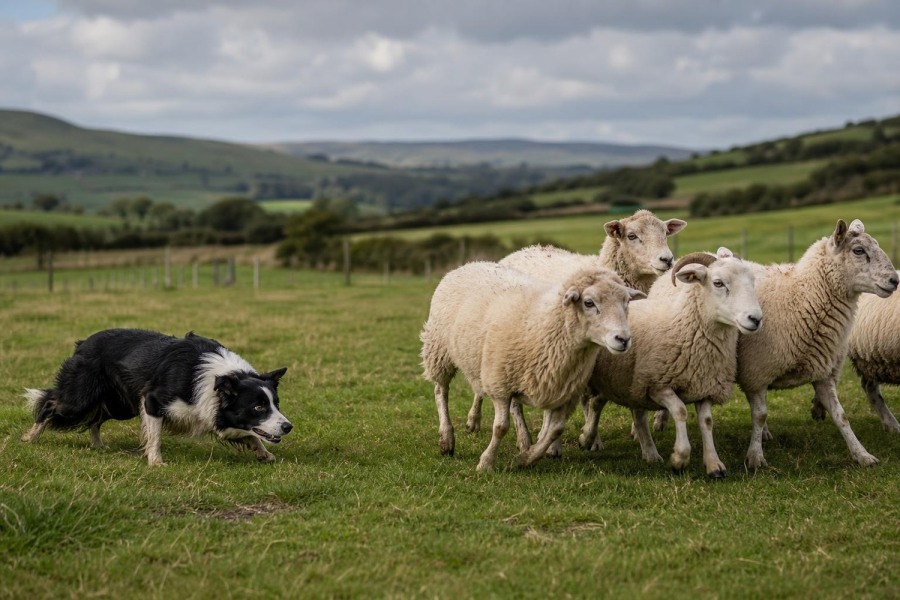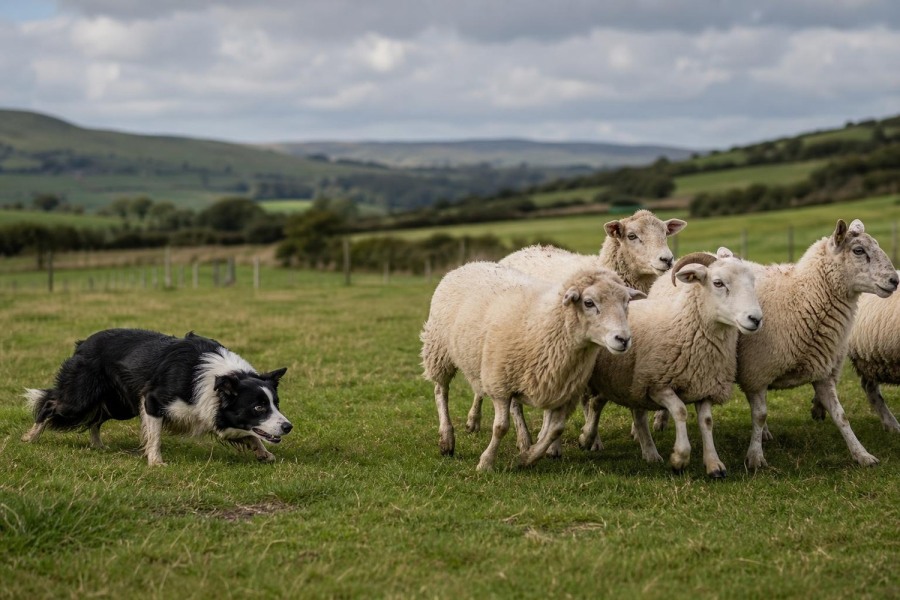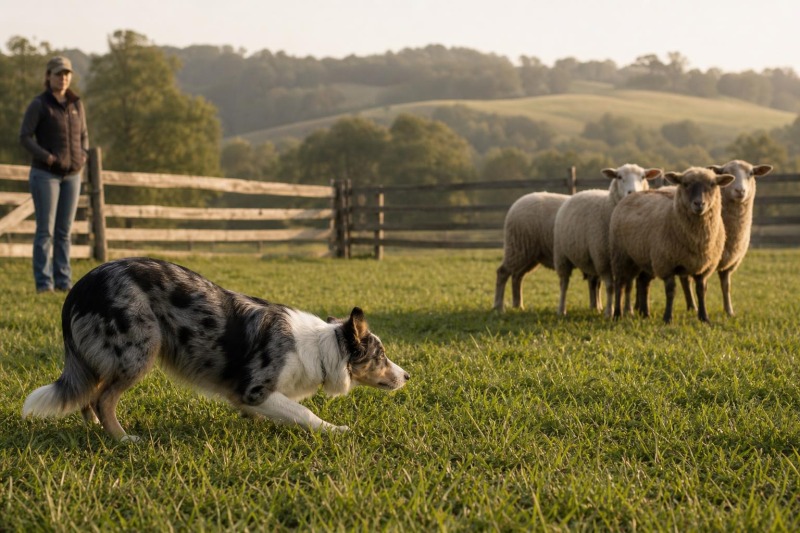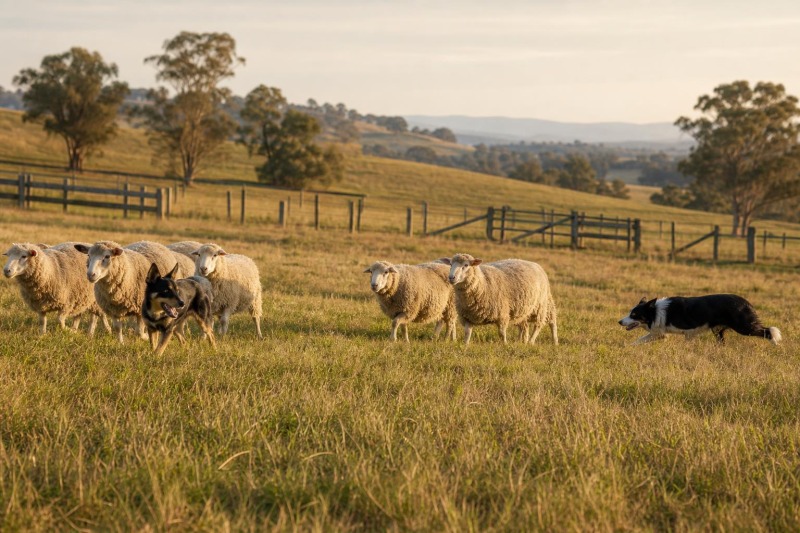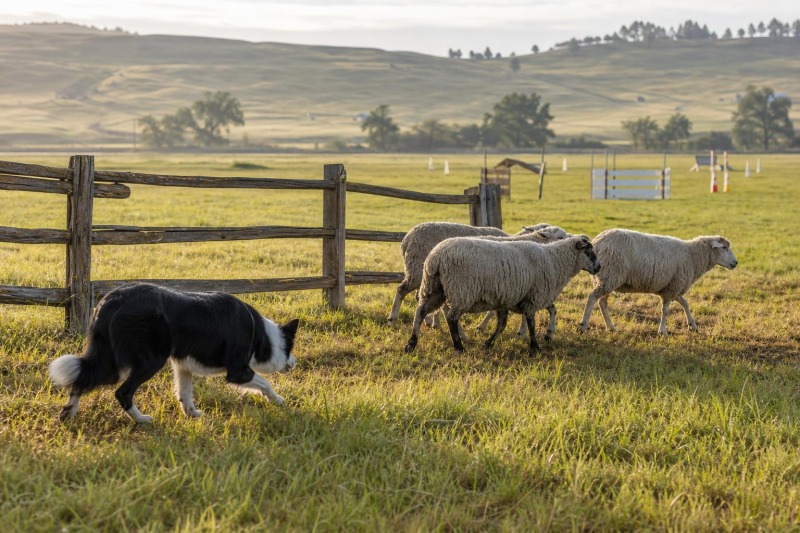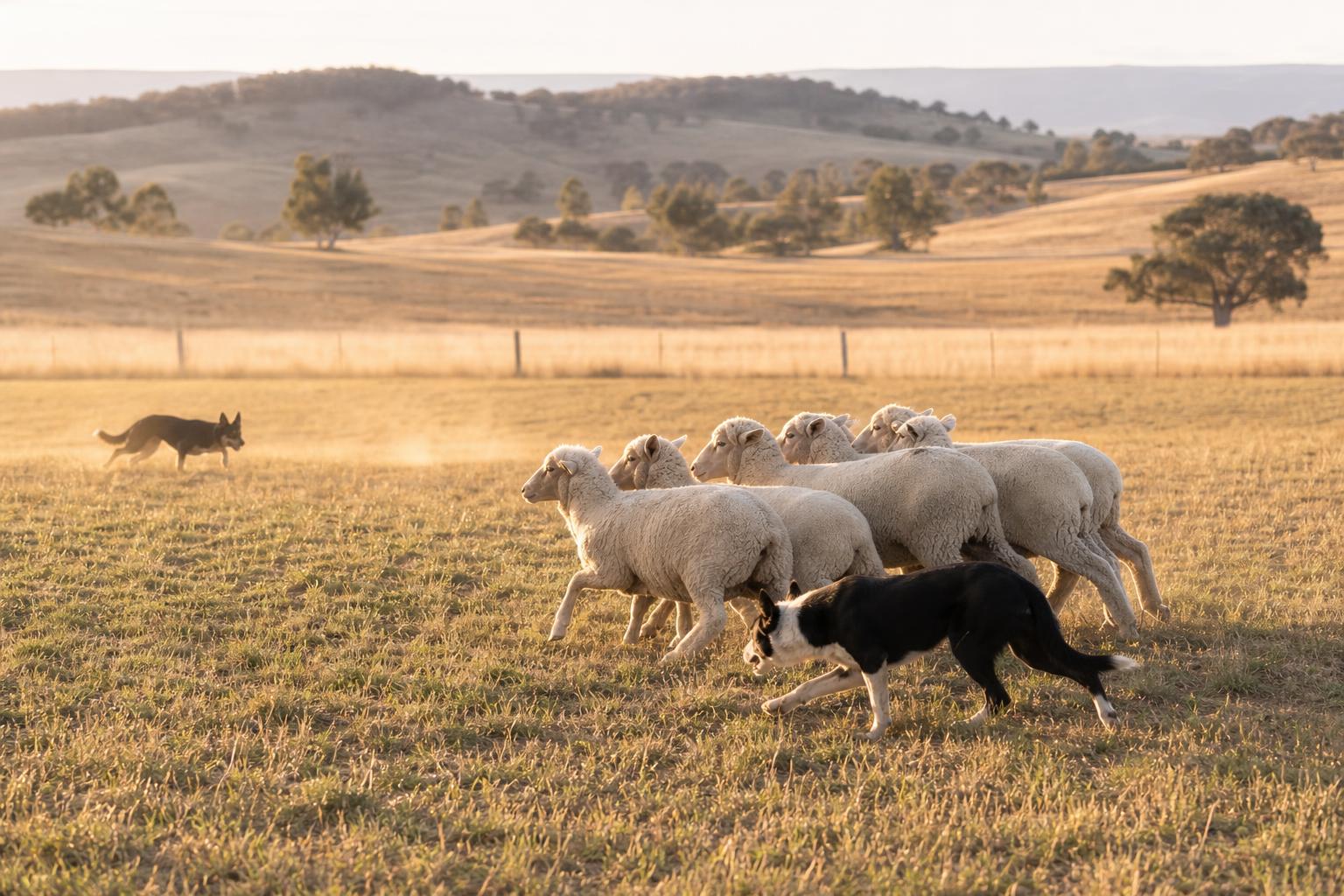
A wide-working dog and a close-working dog present different kinds of pressure to livestock. Experience, confidence, breeding, and the situation can all affect that distance. The aim is useful control rather than one fixed working shape.
Folks new to herding often assume a dog works wide or works close because of a simple training choice. There is some truth in that, but not enough. The real answer runs deeper. A dog’s working distance comes from a mix of breeding, instinct, stock sense, the kind of livestock it handles, the ground under its feet, and the habits of the person on the whistle or behind the gate. If you understand those pieces, you stop trying to force every dog into the same mold and start seeing what kind of worker is in front of you.
Breeding Shapes Working Distance
Long before a young dog ever sees sheep, a lot of its style is already written into it. Generations of selective breeding matter. Certain herding lines were developed for open country where stock might be spread over a hillside, tucked into draws, or drifting toward trouble a quarter mile out. Dogs from those lines often show a natural tendency to cast wide, gather with room, and approach stock without blowing them apart. That kind of distance is useful when the handler cannot walk every step and needs the dog to go out, find balance, and bring animals in clean.
Other dogs come from work that happens in tighter quarters. Small pens, sorting alleys, barn lots, and everyday chore work favor a dog that can stay closer, take direction quickly, and hold stock with more direct pressure. These dogs often have a practical, no-nonsense style. They do not waste motion. They can get in where space is limited and where a big outrun would only create confusion.
That is why even within the broad category of herding dogs, you see real differences. A Border Collie bred for big gathering country may naturally look very different from an Australian Cattle Dog handling stubborn cattle in close, or from an Australian Shepherd doing all-around ranch work where versatility matters more than one ideal pattern. Breed matters, but line matters even more. Two dogs with the same breed label can have entirely different default working distances based on the kind of stock work their families were selected for.
Instinct Is More Than Drive
People talk about drive all the time, but drive alone does not explain whether a dog works wide or close. A dog can have plenty of power and still choose to give stock room. What matters is how that power is expressed. Some dogs naturally feel pressure strongly. They read the movement of stock early, anticipate flight zones, and adjust before the animals ever break. Those dogs often work wide because they understand distance as a tool. They are not being timid. They are being efficient.
Other dogs carry their authority in a more direct way. They step in, challenge movement, and keep animals honest at shorter range. If they also have nerve and stock sense, they can be excellent workers, especially with heavier or pushier livestock that do not respect a soft eye from across the field.
The Type of Livestock Changes Everything
If you want to understand a dog’s working style, watch what kind of stock it handles most often. Sheep, especially lighter sheep, usually reward a wider, more thoughtful approach. Come in too tight and they may scatter, split, or rush. A dog that flanks out with patience can gather them with less fuss and fewer wrecks.
Cattle are a different conversation. Many cattle dogs need to work closer because cattle often require more pressure and more courage. A close-working dog can head off a turn, push through a gate, and hold a stubborn cow in a way a wide, floating style may not accomplish. That does not mean all cattle work is close or all sheep work is wide. It means stock teach the dog what distance gets results.
Goats, ducks, and mixed farm stock complicate things further. Tough goats may demand more presence. Flighty ducks can explode if crowded. A seasoned dog learns to change gears, but most dogs still have a natural comfort zone that shows up again and again.
Terrain and Real Working Conditions Matter
Country shapes style. On a broad hillside, a wide outrun helps a dog get around stock without pushing them away from the handler. In heavy cover, around barns, or in rough trap lots, that same wide cast can become wasted motion or even bad positioning. Dogs adapt to the land they work on, and handlers often reward the style that fits the place. Over time, that becomes habit.
Weather can even play a role. On windy days or in dry conditions where livestock are already edgy, a dog that gives stock extra room may keep things calmer. In mud, snow, or confined handling, a closer style may simply be more useful.
Training Can Refine Style, but It Rarely Rewrites Nature
Here is where many owners get tripped up. Training absolutely influences whether a dog works wide or close, but good training usually develops what is already there instead of fighting it. A naturally wide dog can be taught to tighten up when necessary. A naturally close dog can learn to give stock more room and make cleaner approaches. Still, there are limits. If you spend all your time trying to turn one kind of dog into another, you often lose confidence, rhythm, and usefulness along the way.
A young dog that is repeatedly called in, overhandled, or worked in tiny spaces may begin to operate too close because it never learns to trust its cast. On the other hand, a dog allowed to run wild with no structure may widen out for all the wrong reasons and lose contact with both stock and handler. The goal is not just distance. The goal is purposeful distance.
The Handler’s Habits Show Up in the Dog
Handlers create patterns, whether they mean to or not. A person who likes control and gives constant commands often produces a tighter dog, one that checks in more and takes less initiative. A quieter handler who trusts the dog to gather and think may encourage a wider, freer style. Neither approach is automatically better. The trouble comes when the handler’s preference clashes with the dog’s natural strengths.
They did not nag. They did not micromanage every flank. They let a wide dog use country when country was available, and they taught a close dog to stay honest without taking away its grit.
Confidence, Maturity, and Experience Change Distance
Age matters more than many people realize. Some young dogs work too tight because they are eager, uncertain, or trying to control stock before they truly understand them. Others run too wide because they lack confidence and would rather stay where the pressure feels manageable. As they mature, many settle into a more balanced working distance.
Experience on different stock also teaches lessons no training field can fully replicate. A dog that gets punished by a sharp cow may start respecting space. A dog that sees sheep break repeatedly from a sloppy approach may begin to widen and think. Good dogs learn. Great dogs remember.
Give them a season, put them on real chores, let them gather in the morning and sort in the evening, and suddenly the style starts making sense. What looked like roughness becomes practical close work. What looked like excessive width becomes an intelligent read on light stock.
Wide Is Not Better, and Close Is Not Worse
This is the part owners need to hear clearly. Too many people get attached to one picture of what a herding dog should look like. A beautiful wide outrun is a fine thing to watch, but it is not the only mark of a useful dog. A close-working dog that can move reluctant stock, handle pressure in the pen, and respond instantly around the farm can be worth its weight in feed every single day.
What matters is suitability. Does the dog’s style match the job, the stock, and the country? Can it adjust when asked? Does it keep livestock under control without unnecessary stress? A good herding dog is not measured only by how wide or close it works. It is measured by judgment.
Choosing and Training the Dog in Front of You
If you own a herding dog or are looking for one, pay close attention to natural tendencies. Watch how the dog approaches pressure. See whether it gathers with room or prefers to step in and hold. Ask breeders what kind of work their lines have done for years, not just what titles appear on paper. If possible, match the dog to the work you actually do, not the work you imagine doing someday.
Once the dog is in your hands, train for usefulness rather than style points. Build confidence. Teach responsiveness. Expose the dog to stock and settings that broaden its understanding. But do not punish a dog for being what good breeding made it, provided that style has purpose and control behind it.
Some herding dogs work wide because distance is how they manage stock best. Others work close because pressure at short range is where they are most effective. The smartest handlers learn the difference early. Then they shape, refine, and trust the dog they have. That is how you end up with a partner that does more than look good in a field. That is how you end up with a dog that truly works.