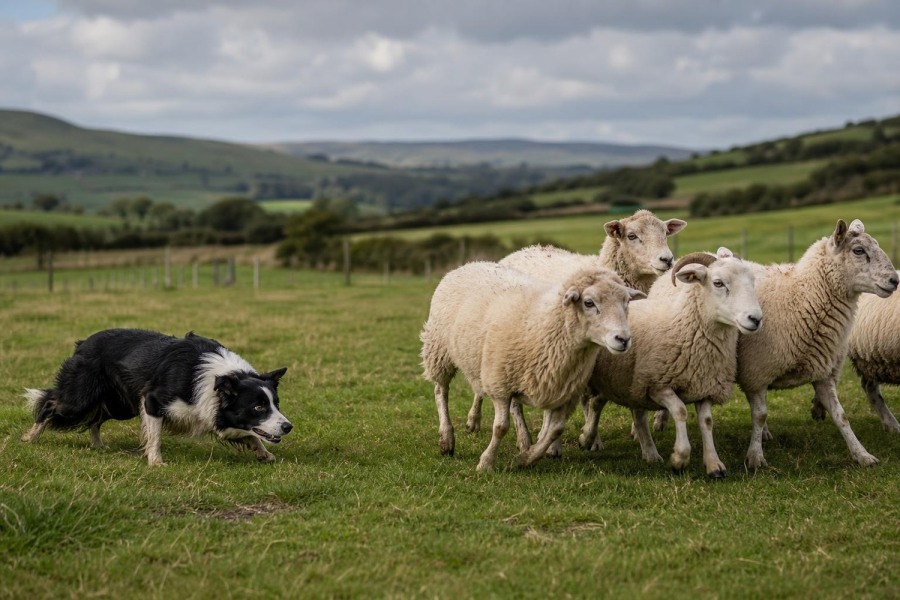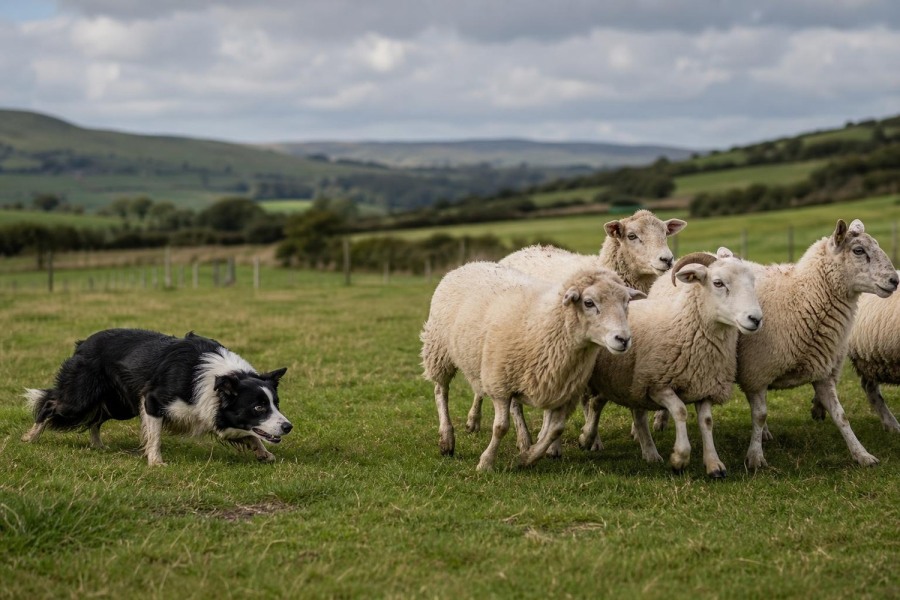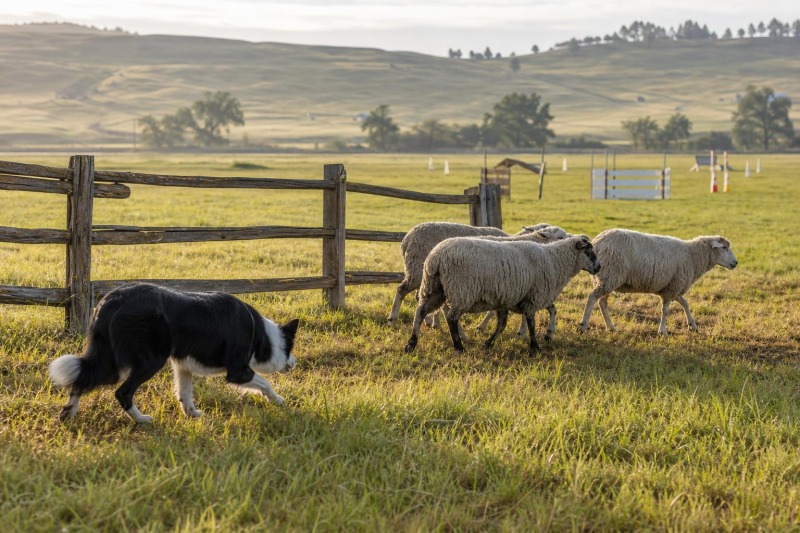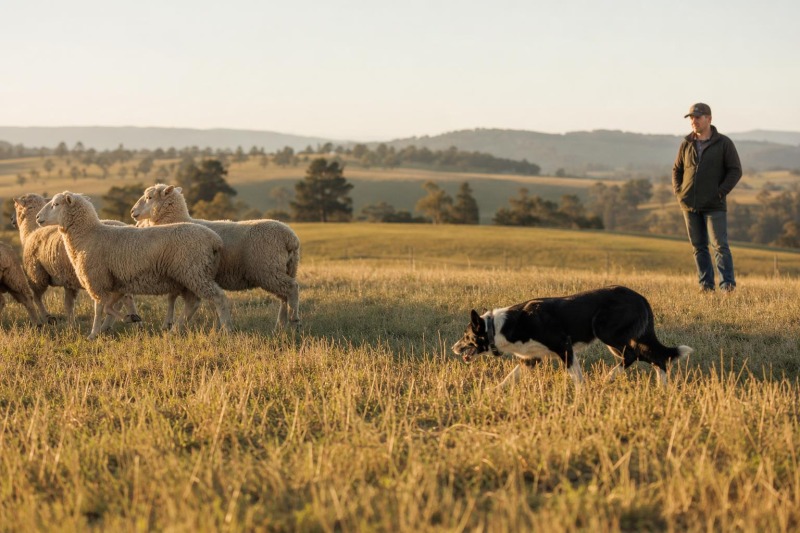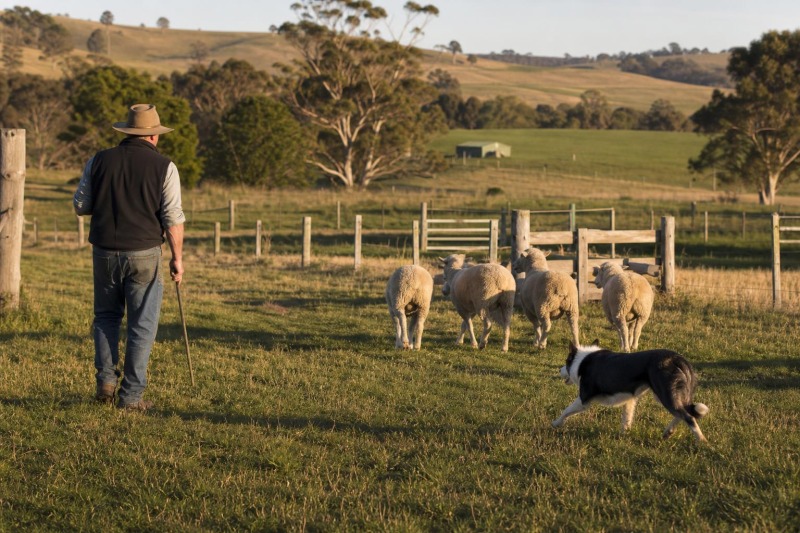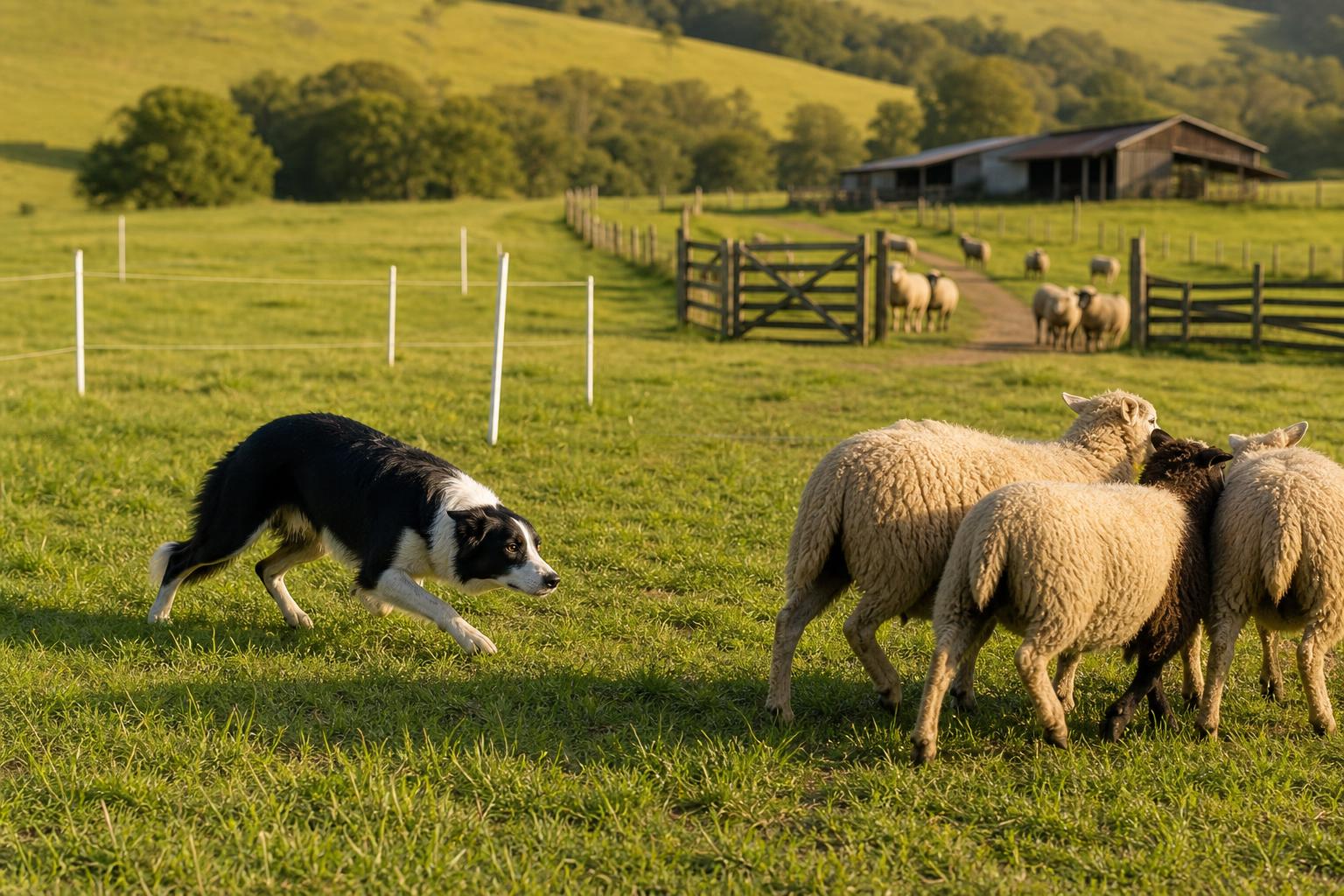
Trials and farm routines test useful skills in different arrangements. The stock, course, time pressure, and handling expectations may vary. A fair comparison looks at what the dog is being asked to do in each setting.
Sometimes those talents live in the same dog. Sometimes they do not. Knowing the difference helps owners make better choices about training, breeding, and what they expect from a working partner.
What Herding Trials Are Designed to Test
At their best, herding trials are a showcase of control, instinct, teamwork, and style. A dog is asked to move stock through a set course with precision. The outrun should be clean, the lift calm, the fetch straight, and the drive steady. Stops matter. Flanks matter. Pressure matters. The dog has to show that it can gather, move, and hold stock without causing unnecessary upset.
There is real value in that. Trials reward polish. They expose holes in training that might get hidden in the noise of daily chores. A handler who steps into the trial field learns quickly whether the dog truly understands commands or whether the work at home has been held together by habit and favorable conditions. When a dog can handle sheep cleanly under pressure, in an unfamiliar setting, with eyes on every move, that says something meaningful.
Good trial training also tends to sharpen communication. The dog learns to respond to subtle cues. The handler learns timing. A stop becomes more than just stopping movement; it becomes a way to release pressure, shape a line, and steady nervous stock. Those are important lessons whether a person plans to compete every weekend or just wants a more finished dog at home.
The Strength of Structure and Precision
One reason herding trials appeal to serious dog people is that they create a standard. The course asks for clean work done in the right order, and that structure pushes training forward. A dog that slices in too tight on the outrun will get marked down. A dog that rushes the lift will show a weakness. A handler who overcommands will hear it from the score sheet, if not from the stock themselves.
That kind of accountability can be useful. It keeps people honest. It also helps preserve working traits that might otherwise go soft around the edges. A truly capable dog should be able to gather stock efficiently, hold pressure without panic, and move with enough feel to keep the animals settled. Trials, when judged well, reward those qualities.
What Practical Farm Training Really Produces
Farm training is different because the work is different. On a farm or ranch, there is no neat course and no set sequence. The day may start with bringing ewes off pasture, shift to sorting pairs, then turn into loading stubborn calves before dark. Gates sag, weather changes, and stock do not always behave in a way that fits a textbook picture. A practical dog has to cope with all of it.
This is where usefulness rises to the top. A farm dog learns how to read stock in changing conditions. It learns when to hold back and when to step in. It figures out how to cover a fence line, block an escape hole, or bring pressure from the right angle without waiting for constant instruction. The best practical training builds judgment, grit, and adaptability.
Anybody can admire a stylish outrun, and rightly so, but when a bunch of cattle decides they have had enough and break toward the wrong corner, style alone will not save the day. A practical dog must think. It must balance obedience with initiative. It must stay useful when the job turns ugly, the footing turns slick, and the handler is too busy to choreograph every step.
The Value of Real-World Decision Making
One of the biggest differences between herding trials and practical farm training is how much independent thinking is required. In trial work, the path is generally known. In farm work, the dog often has to solve problems on the move. That does not mean a farm dog should be disobedient. It means the dog needs enough confidence and sense to make the right move before trouble gets bigger.
A dog bringing sheep down a narrow lane may need to cover the leader before she bolts through a side opening. A dog working cattle in brush may need to widen naturally to hold a drift. Those moments are not always taught in neat repetitions. They are learned through exposure, correction, and miles of honest work. That kind of experience leaves a mark on a dog in the best possible way.
Where Trials and Farm Work Often Clash
The conflict starts when people assume excellence in one setting automatically guarantees excellence in the other. Sometimes it does. Often it does not. A strong trial dog may lack the toughness or practical confidence needed for rank cattle, rough weather, or long unscripted chores. On the other hand, a battle-tested farm dog may be incredibly useful at home and still lose points in a trial for being less polished, less stylish, or less exact in its lines.
There is also the matter of pressure. Some dogs learn to work in a very measured, mannerly way in trial preparation, which is ideal for many situations, especially with light sheep. But practical farm work may demand a little more force at the right time. The dog has to know how to step up without losing its head. Likewise, some farm dogs develop a habit of pushing through problems in a way that gets the job done, yet that same approach can look rough and costly under trial rules.
Neither world is wrong. They simply value different expressions of working ability. Trials tend to emphasize refinement, correctness, and consistency. Farms emphasize efficiency, durability, and getting the work finished under real conditions.
Which Is Better for the Average Herding Dog Owner?
For most dog owners interested in herding dogs, the answer depends on their goal. If you want to measure instinct, improve handling skills, and enjoy a clear training path, herding trials offer a lot. They can be a powerful way to deepen your understanding of stock work and reveal your dog’s strengths and weaknesses. They also build a community around training, learning, and preserving working breeds.
If your goal is a truly useful dog for daily chores, practical farm training is hard to replace. Nothing teaches a dog to manage real stock like real stock in real situations. The dog develops stamina, judgment, and grit through repetition that matters. A dog that can gather escaped sheep in sleet, sort quietly in a cramped pen, and hold stock at a gate while you wrestle with a chain has earned a kind of education no ribbon can fully describe.
For many owners, the smartest path is not choosing one over the other, but blending both. Trial-style training can clean up a dog’s flanks, stop, and pace. Farm work can deepen the dog’s feel, nerve, and usefulness. When the two are balanced well, you often get the best kind of partner: a dog with manners, skill, and the sense to handle the unexpected.
Why Balance Usually Creates the Best Dog
They could work quietly and accurately when finesse was needed, then dig in and hold tough stock when the job turned serious. That kind of range rarely comes from a narrow training approach. It comes from exposing the dog to both disciplined handling and practical problem solving.
A balanced dog is not just easier to live with. It is more dependable. It understands commands, but it is not helpless without them. It respects stock, but it is not intimidated. It works with confidence because it has seen enough to know that jobs change and pressure shifts. Those are the dogs people remember for years.
How to Choose the Right Training Direction
Start by being honest about your lifestyle and expectations. If you do not have regular access to livestock, trial-oriented lessons may be the most realistic way to develop your dog. If you live on working ground and need daily help, practical farm training should be your foundation. If you are breeding or buying a dog, ask whether the line has been tested in one setting, the other, or both. That answer tells you a lot about what may come naturally to the dog.
It also helps to consider temperament. Some dogs thrive under the structure of trial preparation and bloom when communication gets precise. Others reveal their true value only when given room to problem-solve on a farm. The good trainer learns the dog in front of them and shapes the work accordingly rather than forcing every dog into the same mold.
Sheep and cattle do not care much about arguments. They respond to pressure, timing, and confidence. A dog that understands those things is useful whether it wears a trial number or heads out at daylight to gather stock off wet grass. The question is not which world is more honorable. The question is what kind of dog you need, and how you plan to build it.
Herding trials and practical farm training are not enemies. They are different roads leading toward the same old ideal: a dog with instinct, brains, control, and heart. If you keep that in mind, you will train with more purpose, judge dogs more fairly, and end up with a partner that is more than impressive for a moment. You will have one that is worth feeding every day of the year.