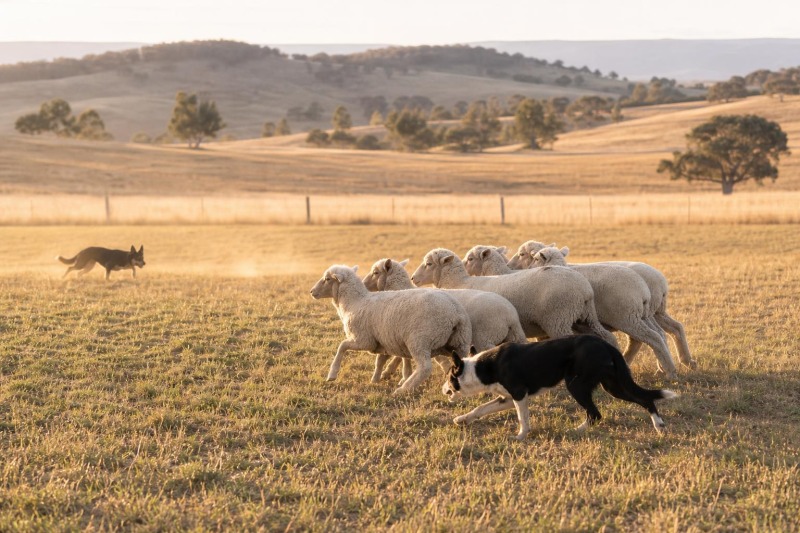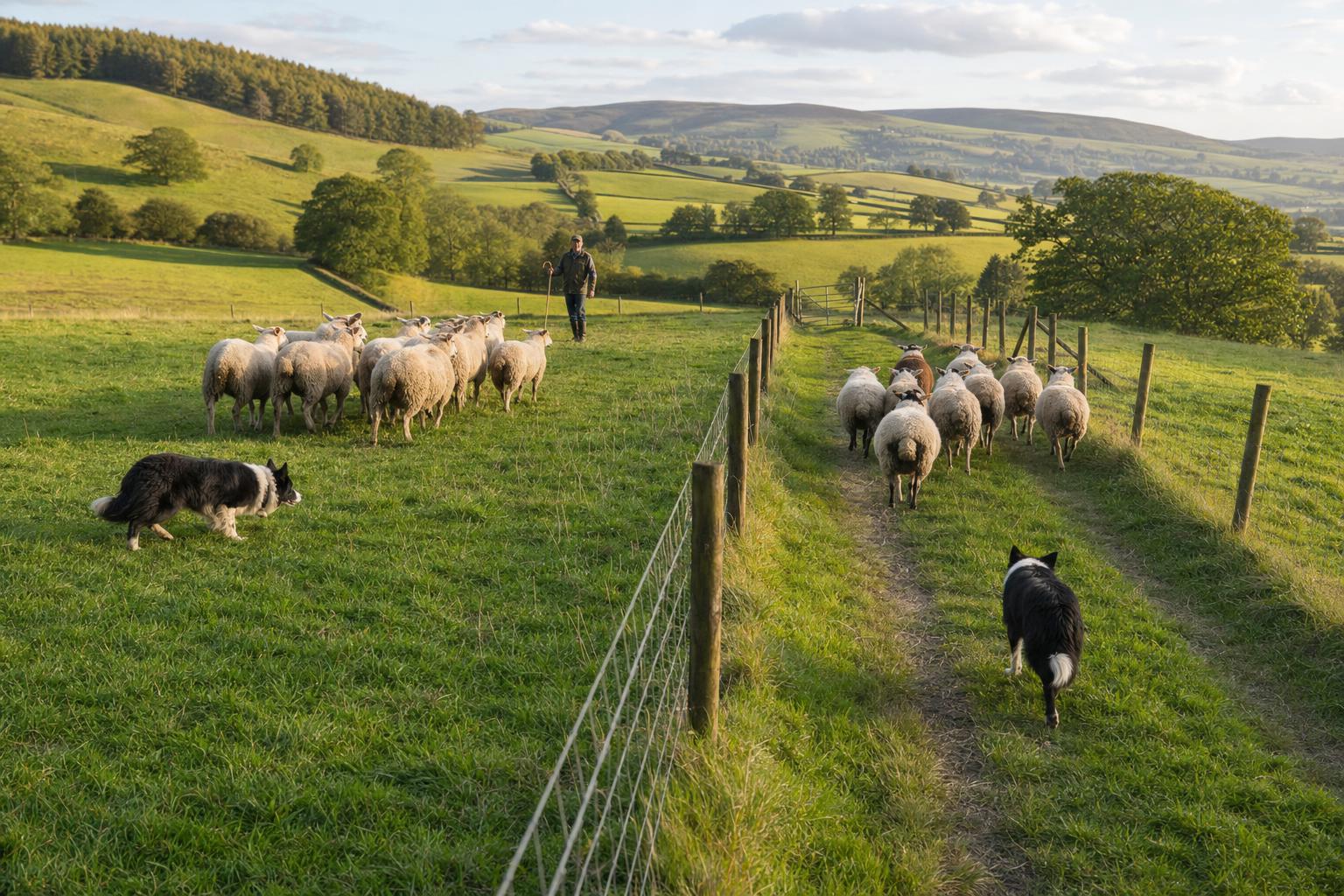
Gathering brings stock toward the handler; driving moves them away or along a chosen route. Those different jobs change where the dog needs to be and how its pressure affects the animals.
At the simplest level, gathering dogs are bred to go out, collect stock, and bring them back to the handler. Driving dogs are bred to push stock away from the handler and keep them moving where they need to go. That sounds straightforward, but in the field, the difference is more than direction. It shows up in posture, eye, distance, pressure, bite, bark, and the way the dog reads livestock under stress.
A driving dog feels more like a hard day in the alley, the lane, or the road, where stock need to be pushed with confidence and held to the path. Both are herding dogs. Both are valuable. But they were shaped by different jobs, different terrain, and different kinds of livestock handling.
What Is a Gathering Dog?
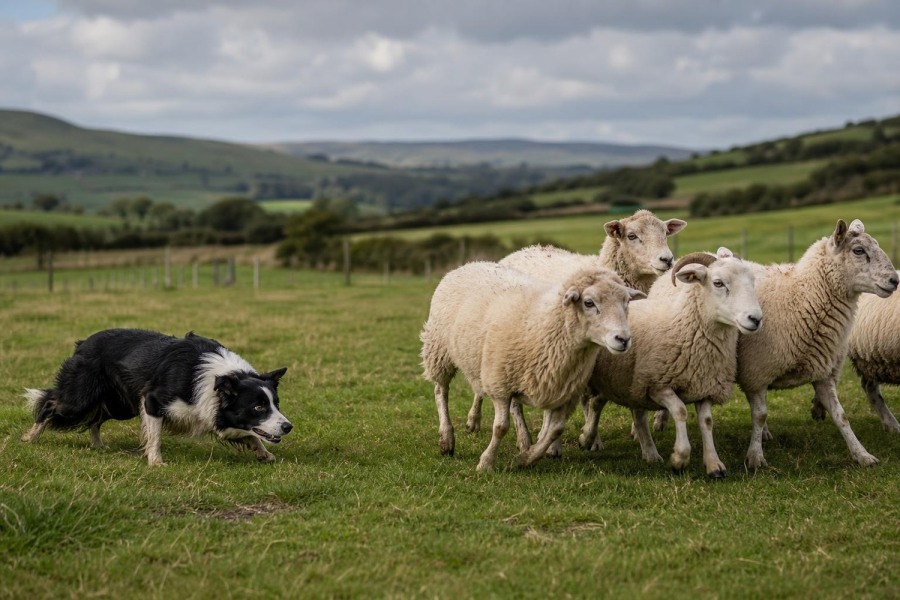
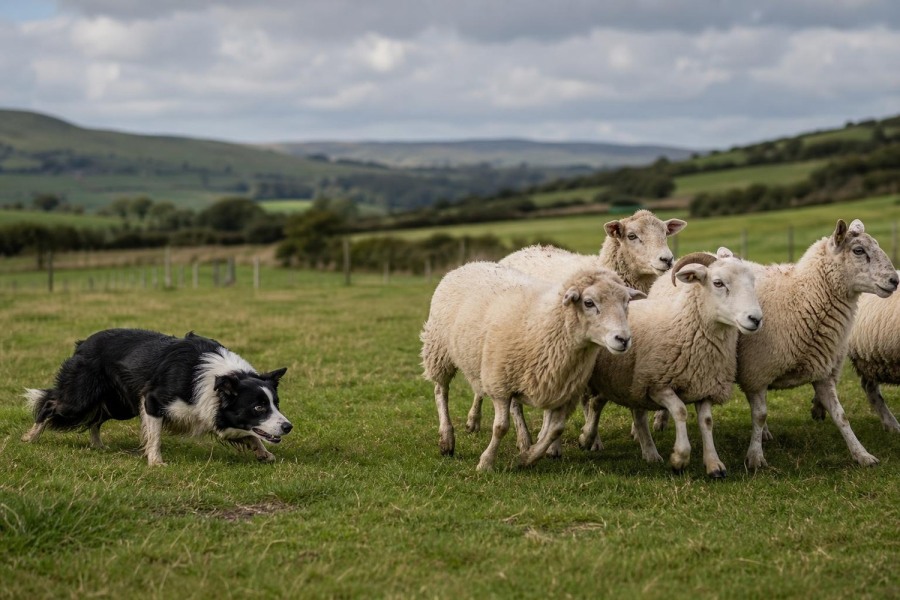
A gathering dog is designed to find stock, get around them, and bring them back to the handler in an organized way. This style is most closely associated with sheep work, especially in open country where the dog may need to cover a lot of ground. The classic picture is a dog making a wide outrun, coming to balance at the head of the flock, then lifting the animals calmly and fetching them back.
Border Collies are the best-known gathering dogs, and for good reason. A good one can seem almost surgical in the way it controls sheep. It uses presence more than force. It reads movement before the stock fully commits. It knows when to hold pressure and when to give ground. That sensitivity is part of what makes gathering dogs so admired, but it also means they often thrive best with handlers who appreciate finesse rather than chaos.
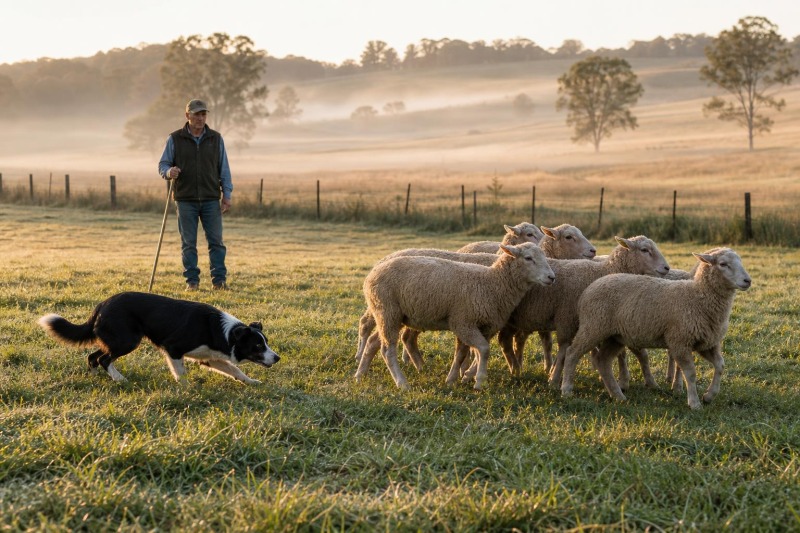
Gathering dogs usually work with a strong sense of balance. In plain terms, they naturally position themselves opposite the handler, controlling the stock from the head and keeping the animals grouped between dog and person. That instinct is what makes them so useful when the task is to bring scattered stock in from the hills, the far pasture, or the back section of a ranch.
How Gathering Dogs Move Stock
Most gathering dogs rely on controlled pressure rather than rough contact. Many work low to the ground, with a steady gaze and measured movement. That famous “eye” seen in some breeds, especially Border Collies, is not just for show. It is a way of influencing stock without constant barking or gripping. Not every gathering breed works with strong eye, but many share the same core goal: control the heads, keep the group together, and draw the animals back.
Because of that style, gathering dogs are often favored for sheep and ducks, though some also work cattle. They are especially useful where stock may be spread out and need to be collected with minimal upset. A dog that can gather well saves steps, time, and temper. On a big place, that matters more than most folks realize.
What Is a Driving Dog?
A driving dog is bred to push stock forward and move them away from the handler. This is the style that developed where livestock needed to be taken down roads, through village lanes, into pens, or from one grazing area to another. Instead of collecting animals from the outside and bringing them in, the dog applies pressure from behind or from the side to keep them moving ahead.
Driving breeds often show a tougher, more upright, more forceful way of working. They may bark more freely. They may heel or nip when needed, especially with stubborn cattle. They tend to be comfortable in tighter quarters and under heavier pressure. If a gathering dog often looks like a quiet strategist, a driving dog can look more like a practical hand who is willing to get in there and make things happen.
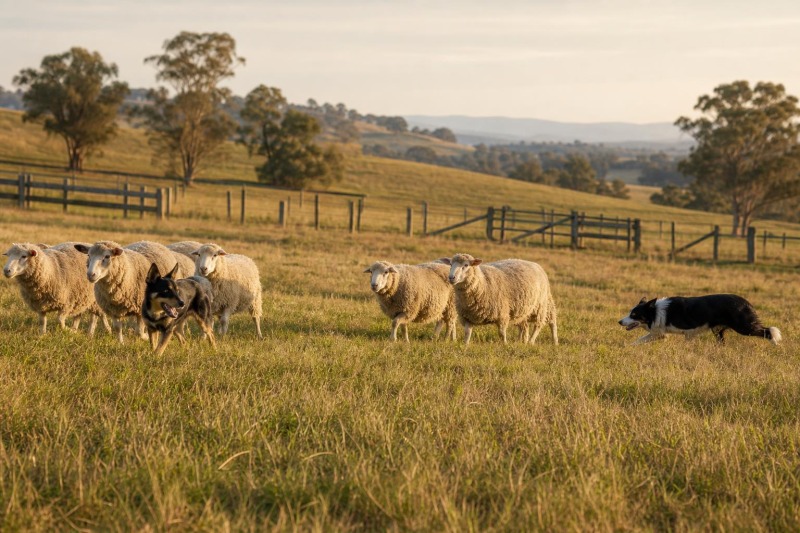
Breeds such as the Australian Cattle Dog, Bouvier des Flandres, and Old English Sheepdog have roots in driving work, though each has its own style and history. Australian Cattle Dogs, in particular, became famous for moving tough cattle over rough country. They are not delicate dogs, and they were never meant to be. Their courage, grit, and willingness to take a kick and come back to work are part of what made them useful.
How Driving Dogs Handle Pressure
Driving dogs are generally less concerned with drawing stock back to the handler and more focused on maintaining forward motion. They often work closer to livestock, especially cattle, and are more likely to use bark, body pressure, or a quick heel nip to keep animals from stalling or turning back. In practical farm work, that can be exactly what is needed.
Put a hard little heeler on those cattle and suddenly things start moving. That does not make one style better than the other. It simply proves that herding work is about matching the dog to the job.
The Biggest Differences Between Gathering and Driving Dogs
The clearest difference is direction. Gathering dogs bring stock to you. Driving dogs send stock away from you. But if you stop there, you miss the finer points that matter when choosing a breed or training a young dog.
Gathering dogs are often more responsive to subtle handler input at distance. They excel in open spaces, wide outruns, and controlled collection. Many have a natural instinct to maintain balance and regulate livestock movement from the front. Their best work often looks quiet, thoughtful, and efficient.
Driving dogs tend to shine where steady forward motion matters more than elegant collection. They can be more physical, more vocal, and more willing to challenge resistant stock. They are often useful in close quarters, on droving routes, and with larger or tougher animals. Their work may look less polished to the untrained eye, but it is often exactly what the situation calls for.
Temperament can differ too. Many gathering breeds are intensely sensitive, highly trainable, and quick to react to pressure from the handler. Many driving breeds are bolder, harder, and more independent in rough work. Those are broad patterns, not rules carved in stone, but they are worth considering for anyone bringing one of these dogs home.
Can One Dog Do Both?
Yes, to a degree. Good herding dogs are not robots, and many can perform both gathering and driving tasks with training. A skilled Border Collie can drive stock beautifully, and some breeds developed for driving can gather when the work demands it. Still, most dogs have instincts that lean one way or the other.
That natural preference matters. Training can shape behavior, but instinct sets the foundation. Asking a dog bred for close, forceful cattle work to handle light sheep with endless softness can be an uphill road. Asking a wide-casting gatherer to grip hard-headed cattle all day may be just as unfair. You can improve weaknesses, but it is always easier to work with the grain of the dog rather than against it.
Why Breed Purpose Still Matters
In today’s world, many owners fall in love with herding breeds for their intelligence and personality without fully understanding what those instincts were built for. That is where trouble often starts. A dog bred to gather may circle children, stalk bicycles, or fixate on movement. A dog bred to drive may nip heels, bark at pressure, or challenge boundaries more directly. None of that means the dog is bad. It means the wiring is doing what it was designed to do.
When owners understand the original job, behavior starts to make more sense. You stop seeing random quirks and start seeing old working traits showing through in a modern home.
Which Type Is Better for Dog Owners?
For most dog owners interested in herding dogs, the better question is not which style is best overall, but which one fits your stock, property, experience, and expectations. If you have sheep, room to work, and an interest in traditional herding training, a gathering breed may be the natural fit. If your work centers on tougher livestock, tighter handling areas, or a dog with more push and grit, a driving breed may suit you better.
If you are not working livestock at all, then lifestyle matters even more. Gathering breeds often need intense mental engagement and can become obsessive without enough structure. Driving breeds may be tougher-minded, louder, and more physical in daily life. Neither type is casual decoration. These are purpose-built dogs, and they do best when their brains and bodies have a job, even if that job is sport, training, ranch chores, or consistent advanced obedience.
Do you want a dog that is soft, responsive, and highly tuned in, but possibly sensitive? Or one that is tougher, pushier, and more durable, but sometimes harder-headed? There is no shame in preferring one over the other. The mistake is pretending those differences do not matter.
Gathering and driving dogs come from the same broad herding tradition, but they represent two distinct ways of controlling stock. The gathering dog collects, balances, and brings animals in. The driving dog pushes, presses, and keeps them moving out. One is often associated with range and finesse. The other with grit and forward pressure. Both are products of real work, shaped by generations of practical need.
If you understand that, you are already ahead of many owners shopping for a herding breed based on looks or popularity alone. Watch the dog work if you can. Talk to people who use them for the jobs they were bred to do. Pay attention to the kind of livestock, the kind of country, and the kind of handler each style seems to favor.
The best herding dog is not the one with the fanciest reputation. It is the one whose instincts match the work in front of it. That has been true in the pasture, on the road, and in the trial field for a long time, and it is still true today.