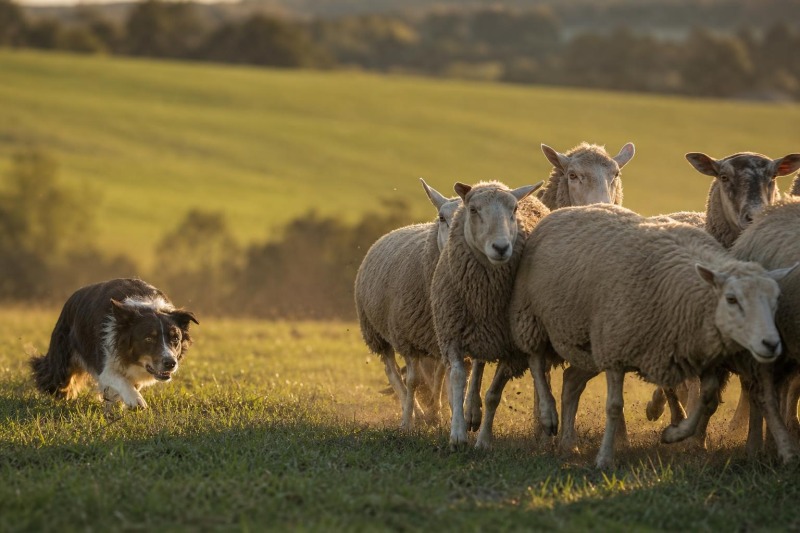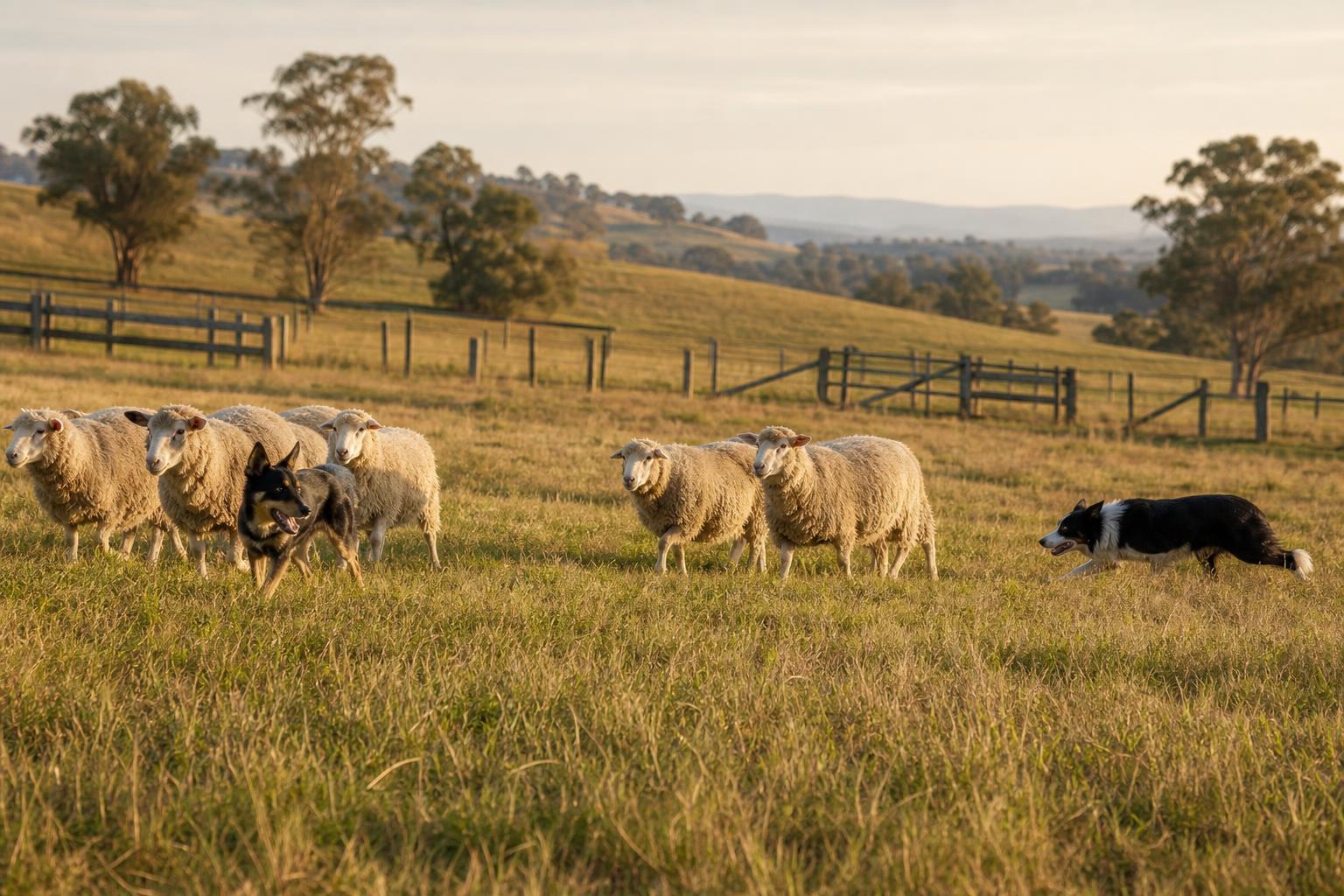
Herding dogs differ in how they use their gaze, movement, and presence around stock. Strong eye and loose eye describe working tendencies rather than a simple ranking of ability. The useful style depends on the livestock and the job.
Folks new to herding often hear those terms and assume one is better than the other. In truth, they describe style more than value. Each style was shaped by work, terrain, livestock, and generations of selection. A good stock dog is not just obedient. It is a thinking partner. Understanding whether that dog is loose-eyed or strong-eyed tells you a lot about how it reads pressure, how it moves stock, and how it may fit into your life beyond the pasture.
What “Eye” Means in a Herding Dog
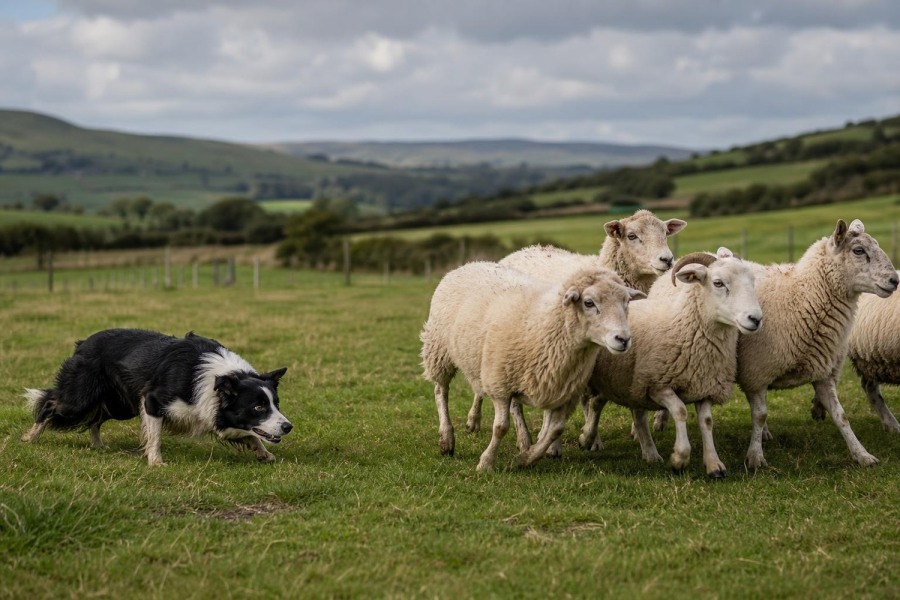
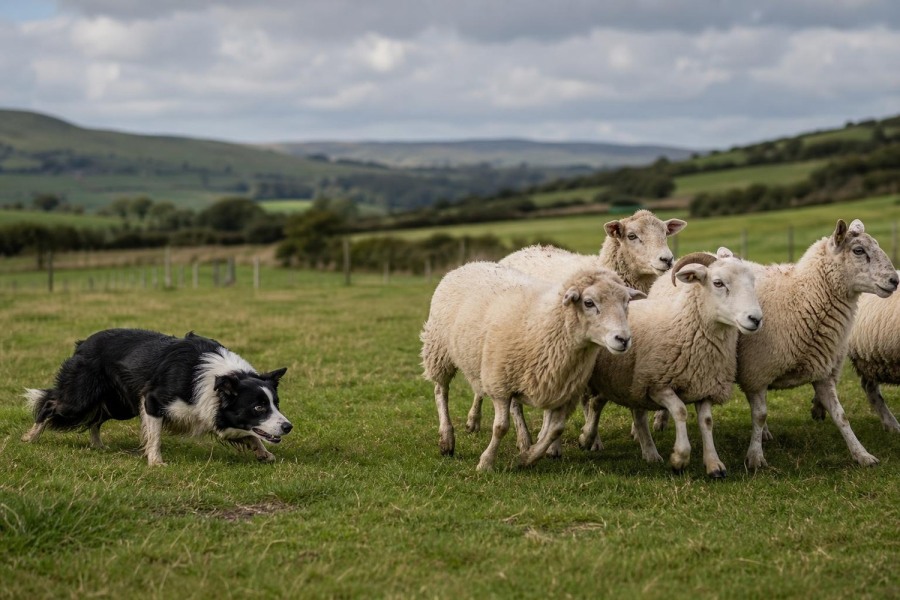
In stock dog terms, “eye” is the dog’s natural tendency to control livestock through focused stare and body pressure. Some dogs use a great deal of eye. They lock onto stock with stillness and intensity, often crouching low and moving in a measured, deliberate way. Other dogs use less eye. They may stand taller, move more freely, and rely on presence, position, and movement rather than a hard stare.
That eye is not just a look. It changes the whole shape of the dog’s work. Strong-eyed dogs often create pressure before they ever touch the balance point. Loose-eyed dogs may cover ground more openly and push stock with less visible tension. Neither style exists in a perfect box, and many dogs fall somewhere in the middle. But the distinction matters because style affects trainability, stock response, and the kind of work the dog is naturally built to do.
The Nature of a Strong-Eyed Herding Dog
A strong-eyed herding dog tends to work low, controlled, and intense. Border Collies are the breed most people think of here, especially lines bred for sheep work. These dogs often gather with precision, hold stock through stare, and make livestock feel that pressure without a lot of barking or rushing. When a strong-eyed dog is right, the stock seems drawn to the dog’s control as if by wire.
That intensity can be a gift on light, flighty sheep. A strong-eyed dog can settle a nervous bunch, shape them cleanly, and hold a line with little wasted motion. In open country or trial settings, this style can look almost artistic. But that same eye can become too much for certain livestock. Heavy cattle, tough ewes, or animals that resent pressure may challenge a dog that relies too heavily on stare without enough push behind it. Some strong-eyed dogs also become sticky, meaning they lock on and hesitate to flow freely when movement is needed.
The Nature of a Loose-Eyed Herding Dog
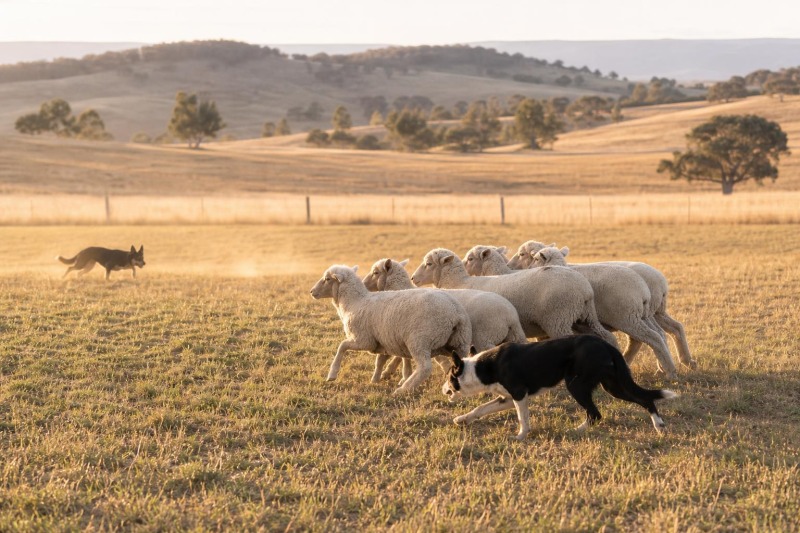
Loose-eyed dogs generally work more upright and more openly. Australian Shepherds, Australian Cattle Dogs, Kelpies, and many farm collies can show this style, though every breed has variation. These dogs tend to gather and drive with less fixation and more practical movement. They may flank wider or looser, step in more readily, and use body presence, heel nips, bark, or simple forward pressure to move stock that needs a stronger hand.
On cattle, especially rank or stubborn cattle, a loose-eyed dog often shines because it does not get bogged down in staring contests. It moves its feet, takes pressure, and stays useful when stock push back. Loose-eyed dogs can also be easier for some owners to live with because their instinct is spread over the whole job rather than concentrated in that laser-like fixation. Still, a looser style can be less refined on flighty sheep if the dog lacks feel. Too little eye paired with too much force can scatter stock in a hurry.
How Herding Style Changes Real-World Work
The best way to understand this difference is to picture stock, not theory. Imagine a bunch of light sheep grazing on a windy slope. They are quick to break, quick to panic, and they hate being crowded. A strong-eyed dog that reads them well can ease into balance, hold them together, and bring them in with a kind of quiet gravity. The dog does not need much noise. It just needs feel. Now picture a rough pen of cattle that have seen dogs before and do not care much for them. A dog that only stares may get walked over. A looser-eyed dog with confidence and push may get the job done.
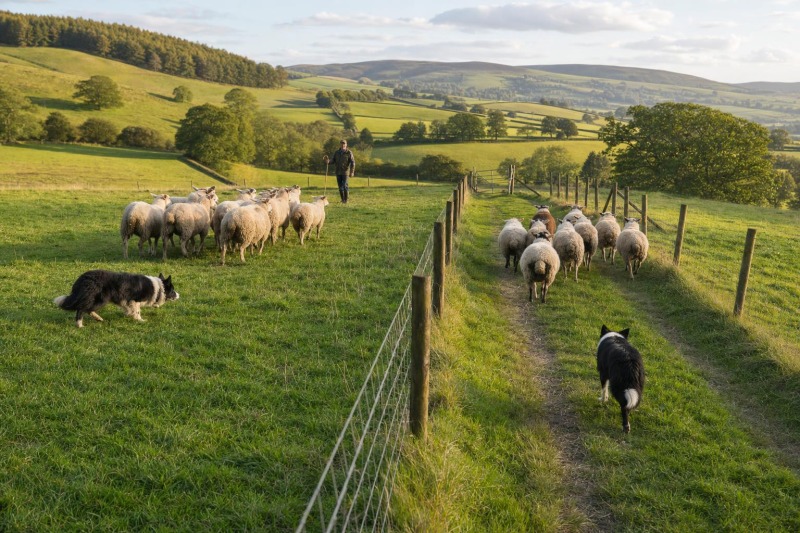
Terrain matters too. Wide country often favors dogs that can cast naturally, hold distance, and manage stock with subtle pressure. Tight pens and daily chore work may favor dogs that can adapt fast, step in, and handle mixed stock without overthinking. This is why arguments over which style is superior usually miss the point. Good stockmen match dog to work. That has always been the honest answer.
Training Differences Between Loose-Eyed and Strong-Eyed Dogs
Training a strong-eyed dog often means teaching flow. Many of these dogs come to stock with plenty of instinct, but they can become tense, overfocused, and reluctant to release pressure. A trainer may spend time encouraging freer movement, cleaner flanks, and confidence to push through stock rather than freeze them in place. These dogs usually respond best to calm handling and timing that respects their sensitivity. Too much correction can sour them or make them tighter.
Loose-eyed dogs often need the opposite. They may have all the enthusiasm in the world, but they need shape, rate, and a better sense of stock. The trainer works on control without taking away initiative. That is a fine line. If you drill too hard, you can flatten the dog. If you let too much slide, you end up with a busy dog that never truly settles into useful work. A good loose-eyed dog learns when to step in and when to soften, and that lesson comes from thoughtful exposure, not just commands.
No matter the style, real herding talent is not measured by flashy movement alone. It is measured by feel. A dog that can read one ewe peeling off, a calf thinking about breaking back, or the mood shift in a pen full of stock is worth more than all the dramatic crouching in the world.
What These Styles Mean for Dog Owners at Home
Even for owners who will never work stock every day, herding style still matters. Strong-eyed dogs often carry their intensity into home life. They may fixate on movement, stalk children, shadow other pets, or become obsessed with balls, bikes, or patterns in the yard. With good training and enough job satisfaction, many make excellent companions, but they usually need thoughtful outlets. Their minds are busy, and they do not always shut off on their own.
Loose-eyed dogs can be every bit as driven, but their energy often shows up differently. They may be more likely to patrol, gather the family, bark at motion, or throw themselves into active jobs with a little more bounce. Some settle more easily, and some do not. Temperament, breeding, and daily structure matter just as much as style. Still, if you are choosing between herding breeds, this loose-eyed versus strong-eyed difference gives you a useful clue about what kind of instincts may show up in your living room.
Choosing the Right Herding Dog for Your Needs
If your main interest is sheep work, stock dog trials, or precision gathering, a stronger-eyed dog may fit naturally, especially from proven working lines. If your work involves cattle, mixed chores, rougher stock, or a more all-purpose farm role, a looser-eyed dog may feel more practical. For active pet owners, the right answer depends on how much intensity you want to manage and what sort of training commitment you are ready to make.
The smartest thing a prospective owner can do is watch dogs work, not just read breed descriptions. Stand at the fence and pay attention to how a dog approaches stock. Does it grip the flock with presence alone, or does it move with freer rhythm and more push? Does the stock settle, challenge, or scatter? That moment tells you more than a polished breed summary ever will.
Strong-eyed dogs bring finesse, control, and that unforgettable intensity that can make sheep move like water. Loose-eyed dogs bring adaptability, push, and a practical toughness that earns its keep in the daily grind. The finest dogs, regardless of style, are the ones that read stock honestly and adjust without fuss.
For dog owners interested in herding dogs, this is the real takeaway. Do not choose based on romance alone. Choose based on work, lifestyle, and the kind of mind you want at the end of the leash. Eye matters, but balance matters more. A dog that fits your stock, your land, and your home will always look smarter than one admired for style alone.