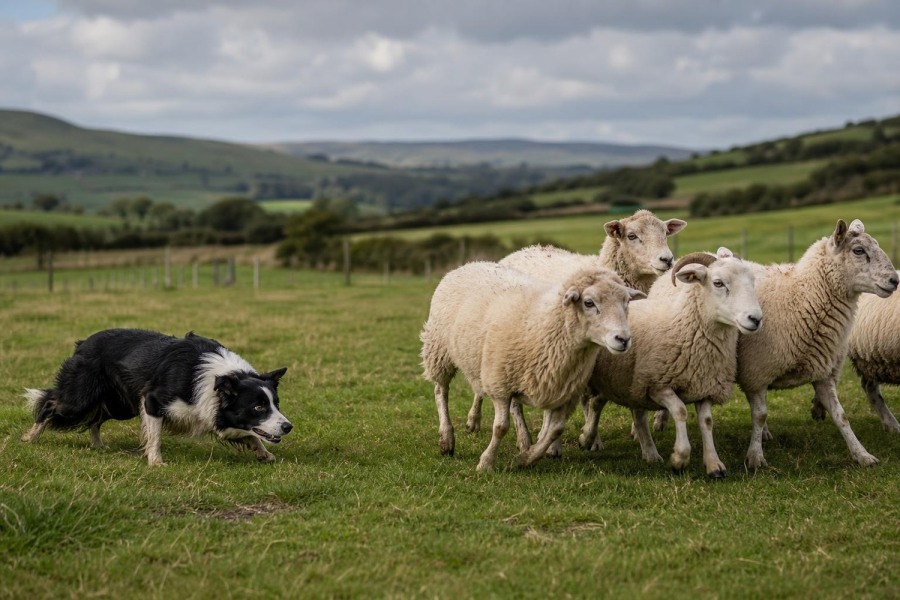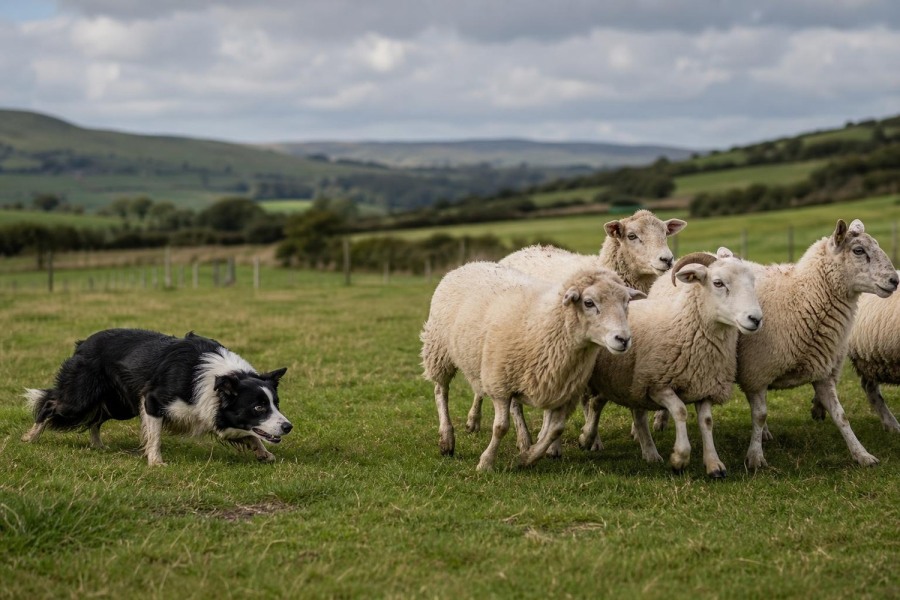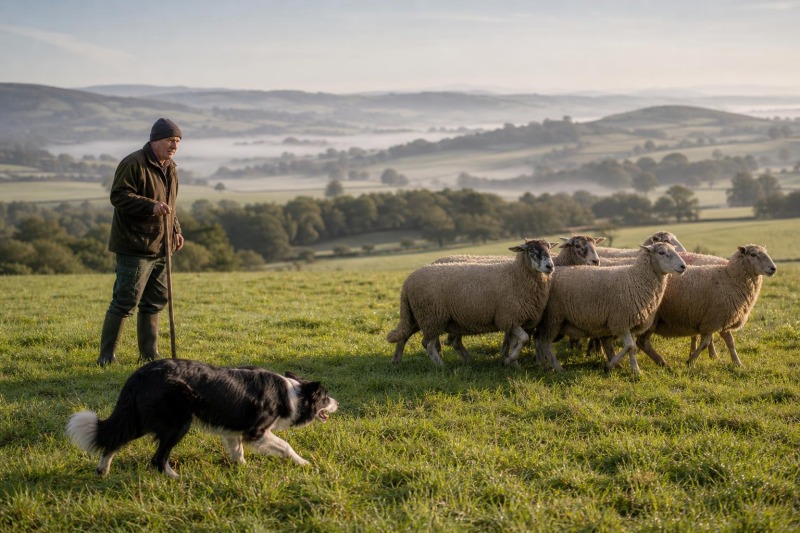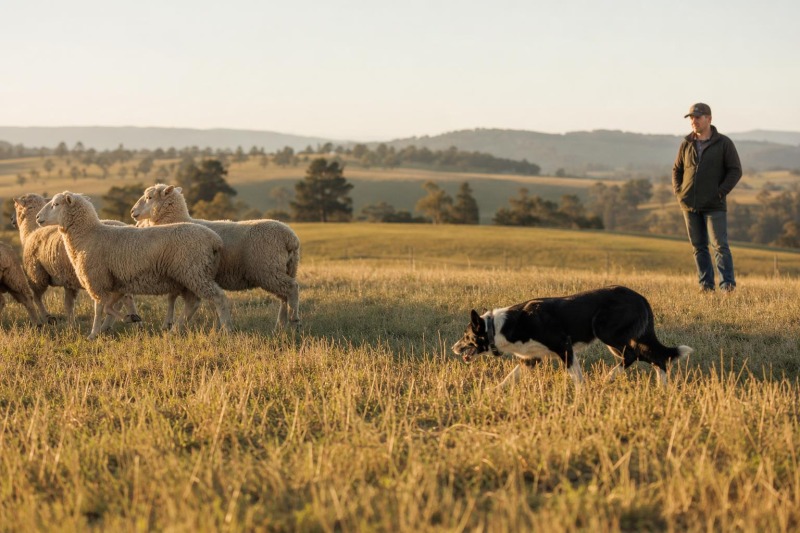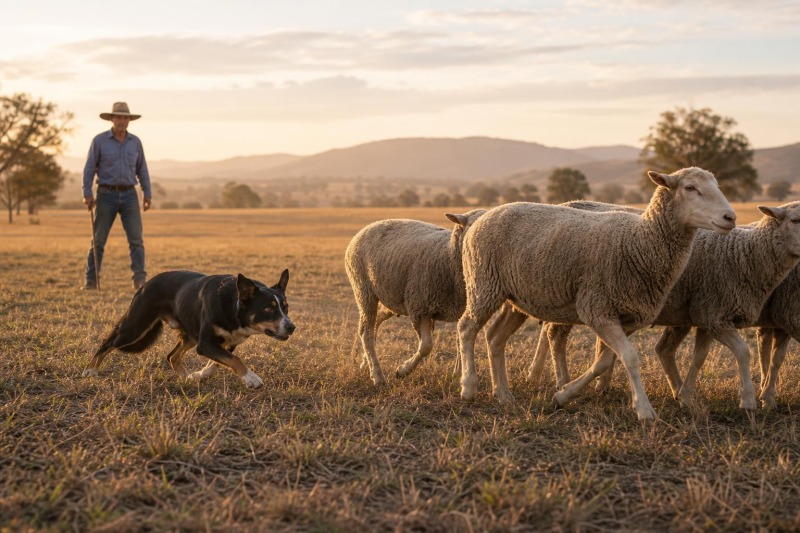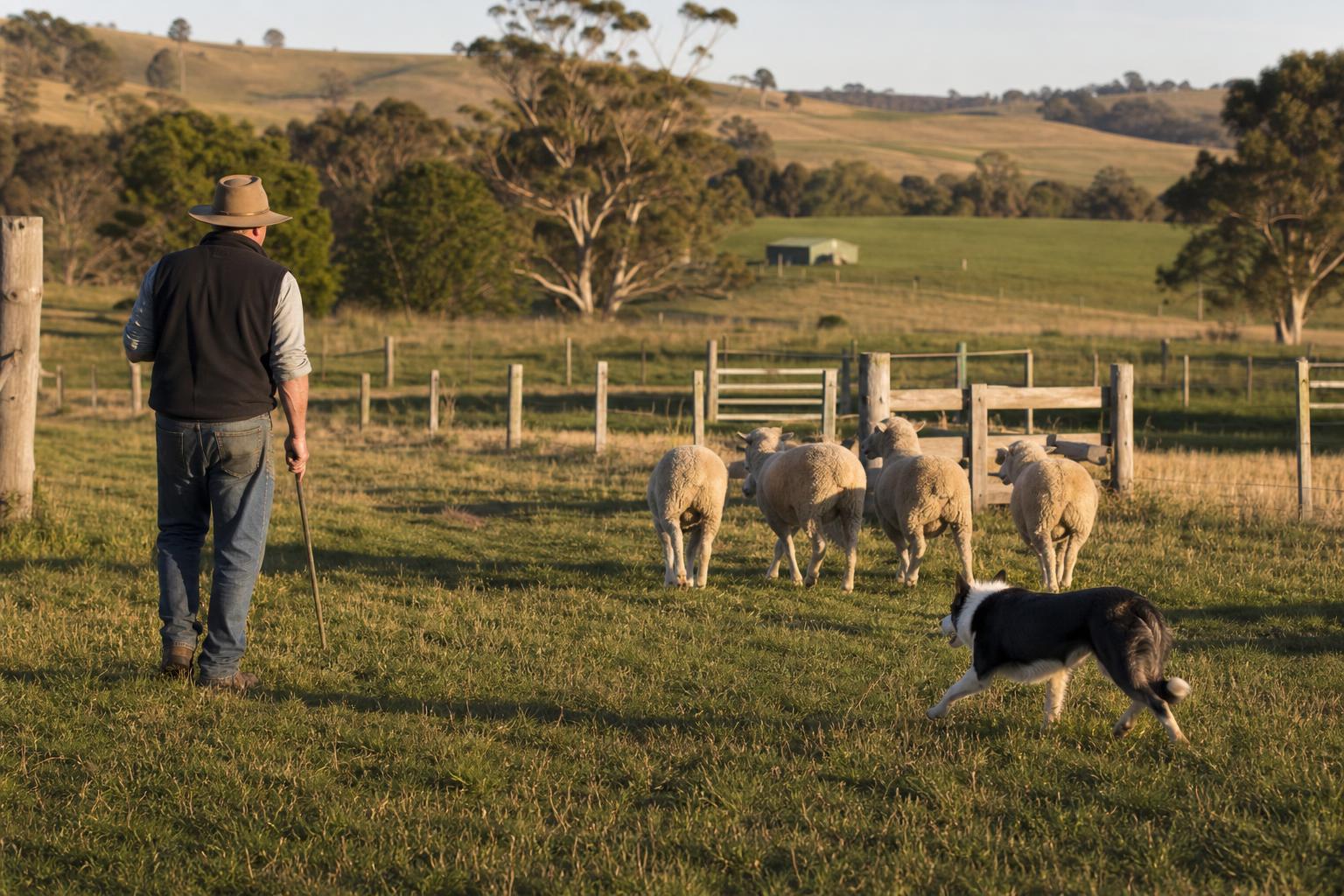
Driving changes the dog’s relationship to the handler and the stock. The dog must keep animals moving along a chosen route while remaining responsive. Short, understandable exercises help build that confidence without losing control of the group.
For dog owners interested in herding dogs, this is where instinct meets discipline. A dog that learns to drive stock cleanly becomes far more useful in daily work. Whether you are moving sheep to fresh pasture, pushing cattle toward a pen, or sending a small bunch through a handling system, driving demands steadiness, nerve, and clear communication between dog and handler. It is not flashy work, but it is honest work, and good dogs earn their keep here.
What Driving Livestock Really Means
When a dog gathers, it brings stock to the handler. The handler acts like the center of gravity, and the dog naturally wants to bring the animals back into that draw. Driving reverses that picture. The stock are moving away from the handler, and the dog has to stay in position behind or to the side, applying enough pressure to keep them going without blowing them apart.
That sounds simple until you put a green dog on live stock. Many dogs want to flank around and reestablish the fetch because it feels right to them. Others get uncertain because the handler is no longer the destination. Some crowd too hard and cause a break. Some lose contact entirely. This is why training dogs to drive livestock should not begin until the dog already understands flanks, stop, pace, and basic stock sense.
Why Young Dogs Struggle With the Drive
A young dog often reads pressure in terms of bringing order back to the handler. Asking that same dog to push stock away can feel unnatural at first. That is not stubbornness. It is confusion. Good training clears that up by showing the dog where the balance point changes and how to hold stock on a line without losing contact.
Start With the Right Foundation
Before you spend much time on the drive, the dog should stop reliably, take both flanks, and handle a short fetch with some composure. It also helps if the dog can work on light, honest stock that will move off pressure without panicking. Heavy, stubborn animals can teach a seasoned dog toughness, but they are a poor classroom for introducing the drive. In the beginning, you want stock that let the dog feel success.
The setup matters more than many handlers realize. A small field or secure pen system with good visibility makes learning cleaner. If the area is too tight, the dog feels trapped and may crowd. If it is too wide, the dog can drift and lose shape. Good driving work is built on repetition of correct pictures, not on long, messy sessions.
Use the Fence Line to Teach a Straight Line
One of the oldest and most useful tricks in herding dog training is the fence. A dog learning to drive often benefits from a physical boundary that helps hold stock in a line. By working sheep along a fence, you reduce the chances of the bunch spilling left or right, and the dog gets a simpler lesson. The stock move forward, the dog stays behind the pressure point, and the handler can correct flanks and pace without chasing chaos across an open field.
That kind of structure gives the dog confidence. The first time a dog truly feels how to keep sheep moving away without circling around to fetch them back, you can almost see the light come on. It is not magic. It is just a clear lesson delivered at the right moment.
How to Teach the First Drive
The dog usually wants to correct and bring them back. That is where timing matters. A calm flank command, a steady stop, and a little handler movement can hold the dog in the right pocket long enough for the stock to drift forward. The moment they do, the dog starts to understand that forward movement is the right answer.
At first, you may only get a few good steps. That is enough. Stop there, reset, and do it again. Training dogs to drive livestock is a lesson in patience. Too much pressure too soon creates slicing, gripping, and confusion. Short, controlled efforts teach far more than a long battle.
The handler’s position is important throughout this phase. Stay close enough to support the dog, but not so close that the stock feel more pressure from you than from the dog. If the handler dominates the movement, the dog never learns responsibility. If the dog is left on its own too early, it often fills the gap with bad habits.
Teach Pace Before Distance
A common mistake is trying to build a long drive before the dog can control speed. Distance means nothing if the stock are rushed, split, or turned back. A useful driving dog learns to match the movement of the animals. If they are walking quietly, the dog should walk quietly. If they stall, the dog should step in with purpose. That change of gear is what separates a farm dog from a dog that only knows commands.
You cannot fake it. A dog either feels stock well enough to regulate pressure, or it does not. The drive exposes that truth quickly.
Correcting Common Problems
The first problem most handlers see is flanking too wide and losing the line. The dog starts the drive, then swings around because instinct pulls it back toward balance. When that happens, shorten the lesson and use your stop. Ask for smaller, more deliberate flanks. Keep the stock near a fence or another natural barrier until the dog understands the path.
Another common issue is crowding. Some dogs, especially keen young ones, get excited when stock move off and rush in too close. Sheep then speed up, split, or challenge the dog. The answer is not always more force. Often it is better timing, clearer stops, and a setup that slows the picture down enough for the dog to think.
There is also the dog that becomes uncertain and drops pressure altogether. These dogs need confidence, not constant correction. Use lighter stock, shorter distances, and calm praise when they hold position properly. Timid driving improves when the dog understands exactly where it belongs. Once that picture gets consistent, confidence follows.
Reading the Stock Is Half the Lesson
A dog may look wrong when the stock are actually causing the trouble. Fresh sheep that want to break, rank ewes that challenge pressure, or cattle that test a dog’s nerve can all distort a training session. The handler has to know whether the dog is making a mistake or reacting to difficult animals. That judgment only comes from time around stock. It is one reason experienced trainers seem to make quiet corrections. They are reading the whole picture, not just the dog.
Building Practical Farm Use
Once the dog can hold a straight, calm drive for a modest distance, begin adding real jobs. Move stock through gates. Push a small bunch down an alley. Drive them from one pasture to another. Real work teaches lessons that a practice field cannot. Gates narrow pressure. Corners test flanks. Uneven ground exposes weak positioning. These are the places where a dog learns to stay useful under changing conditions.
He wanted to gather every sheep that drifted off line. But the day we had to move a small bunch through two gates and up a lane before a storm rolled in, something clicked. The job had purpose, and the dog settled into it. By the end of that week, his driving was cleaner because it finally made practical sense to him. Dogs often learn fastest when the work means something.
Patience Makes a Better Driving Dog
No part of this should be rushed. A dog that drives livestock well is not built through force or endless repetition. It is shaped through consistent pictures, fair corrections, sensible stock, and enough real work to make the lesson stick. Some dogs take to driving naturally. Others need months of careful handling before they stop fighting the pull to fetch. Both kinds can become useful if the training stays honest.
For owners raising or working herding dogs, driving is one of the most valuable skills you can develop. It turns instinct into serviceable work. It makes everyday livestock handling smoother and safer. More than that, it deepens the partnership between dog and handler because the dog must trust direction even when the job runs against its first impulse.
When you see a trained dog step in behind a bunch of sheep, hold them straight through a gate, and carry them down a field with quiet authority, you are looking at more than obedience. You are seeing understanding. And on any farm worth the name, that understanding is what makes a dog truly useful.