First livestock experiences should give a young dog a manageable introduction to the task. Suitable stock, adequate space, and experienced help matter. A useful lesson leaves the dog able to learn and the livestock under control.
When farmers introduce young dogs to livestock, they are not usually trying to prove what the dog can do in one day. They are looking for signs. They watch how the pup handles pressure, whether it leans in with confidence or peels off when stock turns to face it. They watch for balance, that natural draw to move to the right place and hold stock to the handler. They watch for eye, bark, grip, and restraint. The dog is reading the livestock, and the farmer is reading the dog.
That first introduction ought to be quiet, controlled, and honest. Not dramatic. Not chaotic. A good start makes all the difference.
Why the First Livestock Introduction Matters
Young dogs carry early impressions for a long time. If they are thrown into a pen with flighty stock and too much freedom, they can learn bad habits before anyone gets a hand on the wheel. They may discover that charging in makes animals scatter. They may get kicked, rammed, or frightened, and start avoiding pressure. On the other side, a dog that is handled too heavily can lose initiative and begin waiting for every answer from the person at the gate.
Farmers who know stock dogs aim for a middle road. They want the dog to feel its instinct wake up, but inside a setting where mistakes do not spiral. That means using sensible livestock, a manageable space, and short sessions that end before the dog boils over or tunes out. It is less about drilling commands and more about teaching the pup that livestock move from calm pressure, position, and timing.
Choosing the Right Age and Maturity Level
Not every young dog is ready at the same age. Some show signs of stock sense early, while others need time to mature mentally before they can handle the noise, movement, and challenge of livestock. Farmers often begin by exposing a pup to the farm environment long before formal stock work starts. The dog hears gates clang, sees animals bunch and drift, and learns that barnyards and pens are normal places to think, not just explode with excitement.
For some dogs, that first true introduction may happen when they are still quite young, especially if instinct is strong and the dog is bold without being wild. Others do better if the handler waits until the dog has basic recall, some self-control, and enough confidence to stay engaged when livestock push back. Age helps, but maturity matters more. A dog with a level head is easier to guide than one running on raw adrenaline.
Reading the Dog Before the First Session
Before a farmer ever opens the gate, there is value in asking a plain question: is this dog ready to learn, or just ready to react? A useful youngster is curious, responsive, and willing to stay in the conversation with the handler. It does not have to be polished. In truth, it rarely is. But it should show enough steadiness that the handler can interrupt, redirect, and reward at the right moments.
That is why many experienced folks will spend time on simple obedience before stock training gets serious. A stop, a recall, and the habit of checking in can save a young dog from making a mess of itself and the animals. Those tools do not replace instinct. They give instinct some boundaries.
Using the Right Livestock and the Right Pen
If you ask old hands what ruins young dogs, plenty will tell you it is bad stock and poor setup. Fresh, flighty animals can make a novice dog look flashy for about thirty seconds before everything falls apart. Heavy, dog-broke stock that neither panic nor bully are usually best for early lessons. Sheep are common for a reason. They tend to show pressure clearly, and they do not ask as much of a beginner as cattle often do.
The pen matters too. Most farmers prefer a space small enough that the dog stays connected to the stock and handler, but not so tight that the pup feels trapped. In a sensible round pen or small training lot, the dog can begin to circle, gather, and feel balance without the livestock running off into the next county. Good fencing, solid footing, and minimal distractions help keep that first lesson clean.
What the First Introduction Usually Looks Like
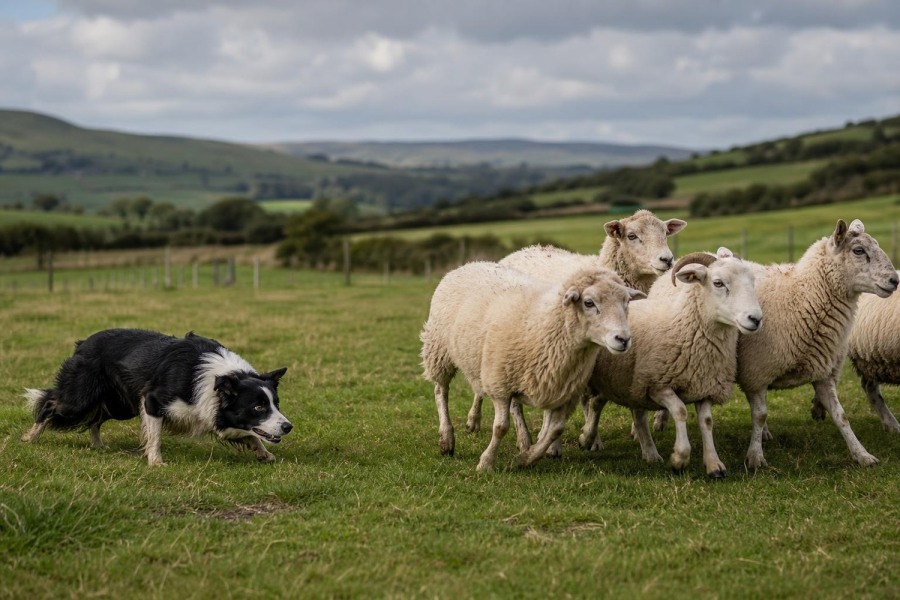
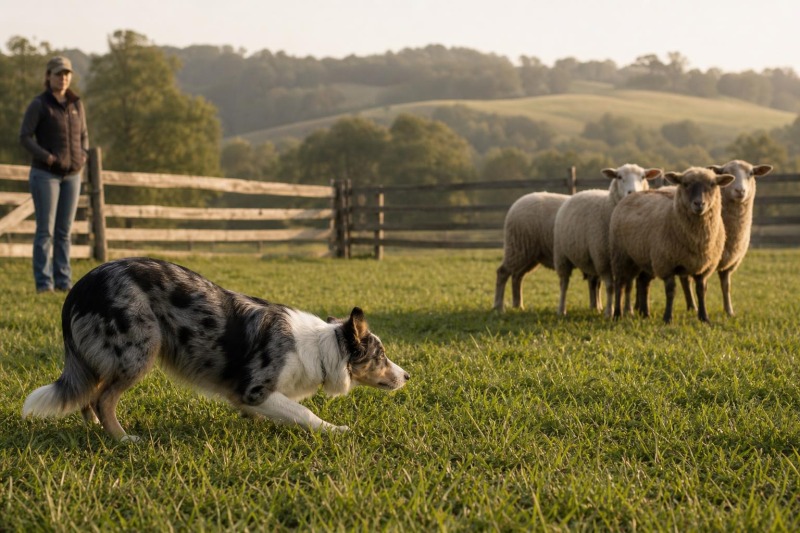
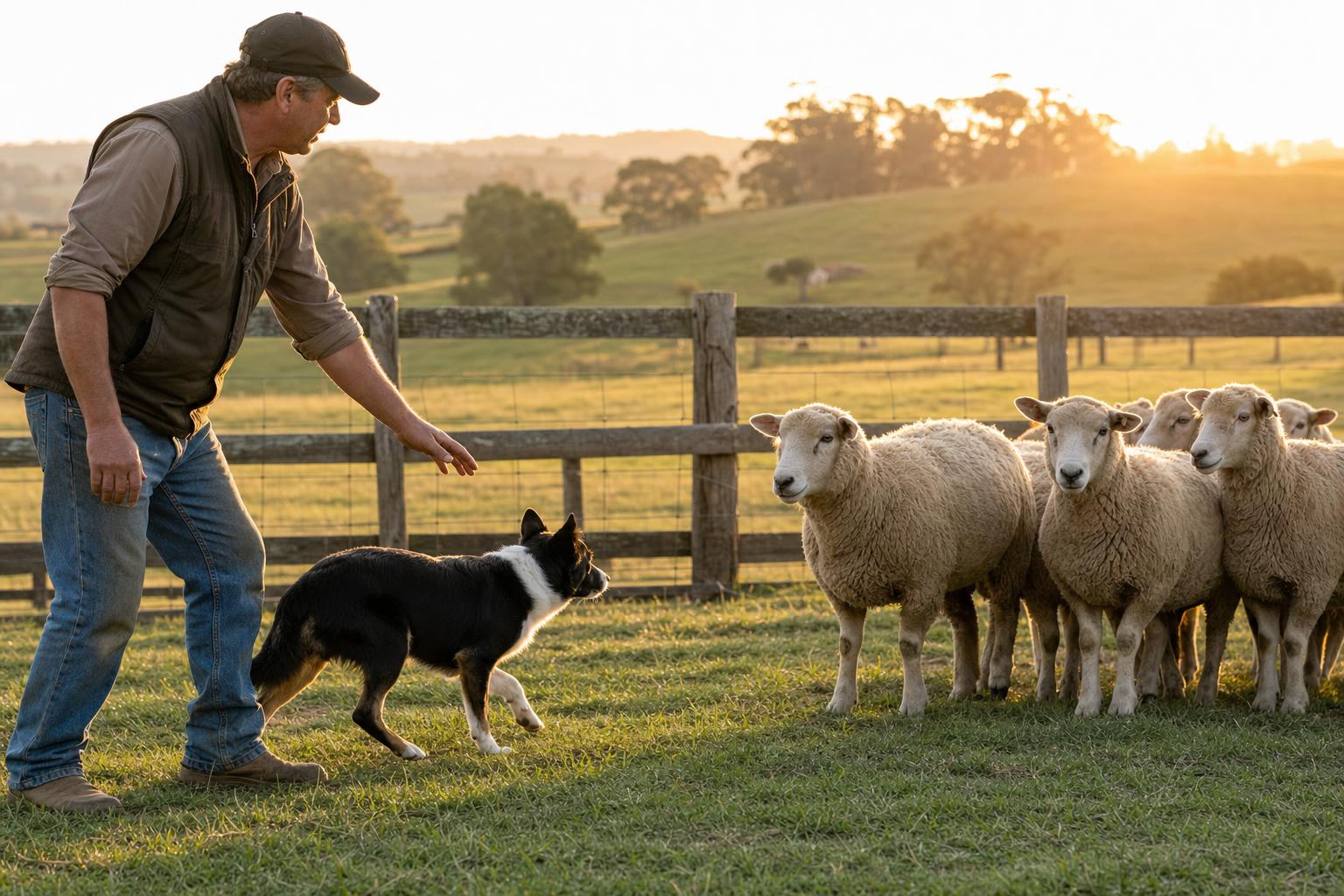
When the time comes, experienced farmers tend to keep things simple. The dog is brought in under control, often on a line at first or close enough to be stopped and redirected. The livestock are already settled, not stirred up with unnecessary commotion. Then the handler watches what rises naturally in the dog.
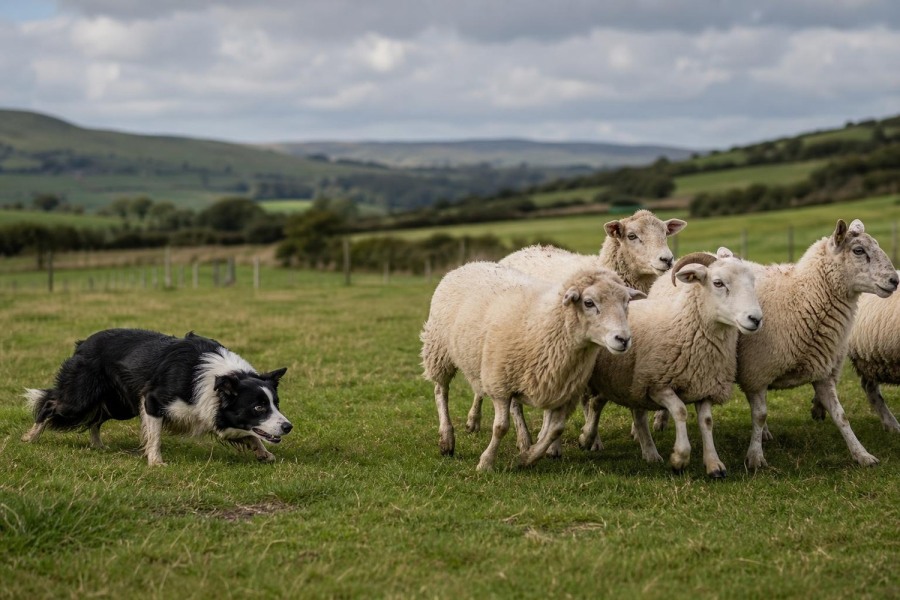
Some pups widen out and start circling. Some lock on with strong eye. Some come in too hot and need to be taken down a notch. Others hesitate, then find their nerve once the stock moves. This is where patience earns its keep. A farmer who has done it before does not nag constantly. He lets the dog search a little, feel the movement, and discover that stepping to the proper side changes the stock. That lesson, learned in the dog’s own bones, sticks better than a stream of chatter.
One moment they were just pups with muddy feet, the next they were reading shoulders, matching drift, and trying to hold a small bunch to the handler. It is a fine thing to watch, but even then, good handlers do not get greedy. They take a little and quit while the dog is wanting more.
Keeping Control Without Smothering Instinct
This is the delicate part. Farmers want control, but they do not want to clamp down so hard that the dog stops offering anything natural. Too much pressure from the handler can make a young dog sticky, doubtful, or dependent. Too little can produce chasing, slicing through stock, or gripping out of frustration.
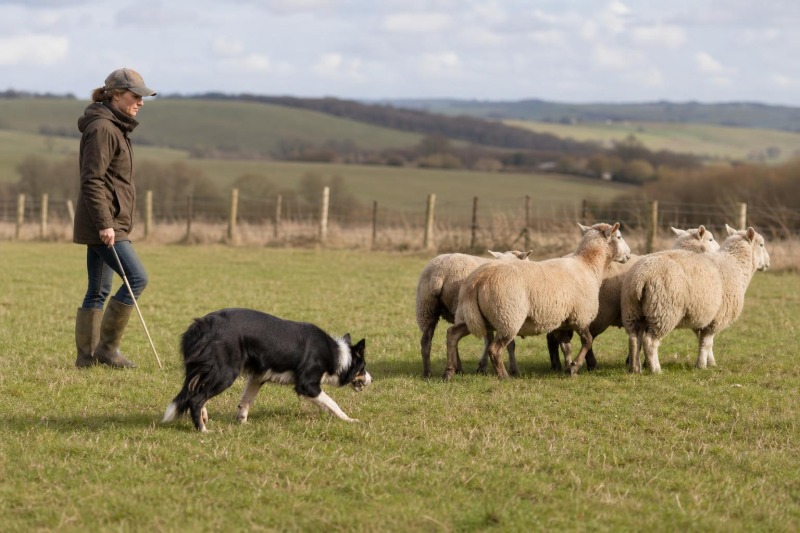
The best stockmen make small corrections at the right time. They step into the dog’s path to shape its line, use voice sparingly, and reward a correct flank or pause by letting the work continue. In that way, the livestock become part of the lesson. The dog learns that calm, useful movement keeps the job going, while rash movement brings interruption.
Building Confidence Session by Session
Introducing a young dog to livestock is not one event. It is a string of short sessions, each one adding a layer. Farmers usually end early, especially in the beginning. A tired, overfaced pup starts making sloppy decisions, and sloppy decisions around stock become habits fast. Ten good minutes can be worth more than forty bad ones.
As the dog settles, the handler gradually asks for more. Maybe the youngster begins to hold stock to the fence, then gather from a little distance, then fetch quietly to the farmer. Later come cleaner flanks, steadier pace, and better response under pressure. None of it has to happen in a rush. Good dogs are built through repetition, clarity, and fair stock, not through spectacle.
Confidence grows when the dog can succeed. That may mean changing the stock, shrinking the lesson, or stepping in before confusion turns into conflict. Farmers with sense know that a young dog does not need to win every battle. It needs to understand the game.
Common Mistakes Farmers Try to Avoid
One of the biggest mistakes is asking too much too soon. A pup that has barely learned to read sheep should not be expected to sort stubborn ewes in a crowded alley or push cattle that know exactly how green it is. Another error is letting excitement masquerade as talent. Fast feet and hard eye can impress a spectator, but if the dog cannot settle, balance, and take direction, the shine wears off quickly.
There is also danger in drilling obedience so hard that the dog forgets to think. Herding dogs need room to problem-solve. A farmer should guide, not remote-control. And then there is the human habit of staying in the pen too long, chasing one more good moment after the dog has already given enough. More than one promising young dog has gone sour because somebody would not quit on time.
Safety for Dog and Livestock
No introduction should ignore safety. Livestock can hurt a dog in a heartbeat, and a reckless dog can stress or injure stock just as fast. Farmers watch footing, fence lines, horned animals, and the dog’s level of arousal. They choose stock that will teach without crushing confidence. They step in when the pressure rises too high. A sound start protects both the dog’s future and the livestock’s welfare.
The End Goal of Early Stock Work
The purpose of those early introductions is not to create a finished farm dog overnight. It is to uncover instinct, shape self-control, and begin a working partnership. The dog learns that livestock are not prey to scatter for fun. They are animals to move with purpose. The farmer learns what kind of dog stands before him, what strengths are there, and where the rough edges need smoothing.
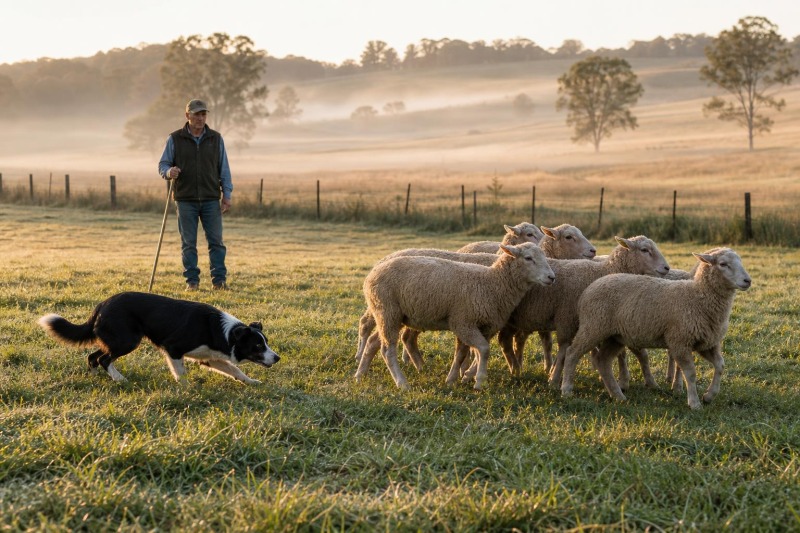
Done right, those first sessions lay a foundation for years of useful work. A well-started young dog grows into one that can gather quietly at daylight, move stock through a gate without fuss, and handle pressure with a clear head. That sort of dog is not made by chance. It is made by patience, feel, and a farmer who understands that the first lesson around livestock should leave the dog wanting to come back wiser the next time.