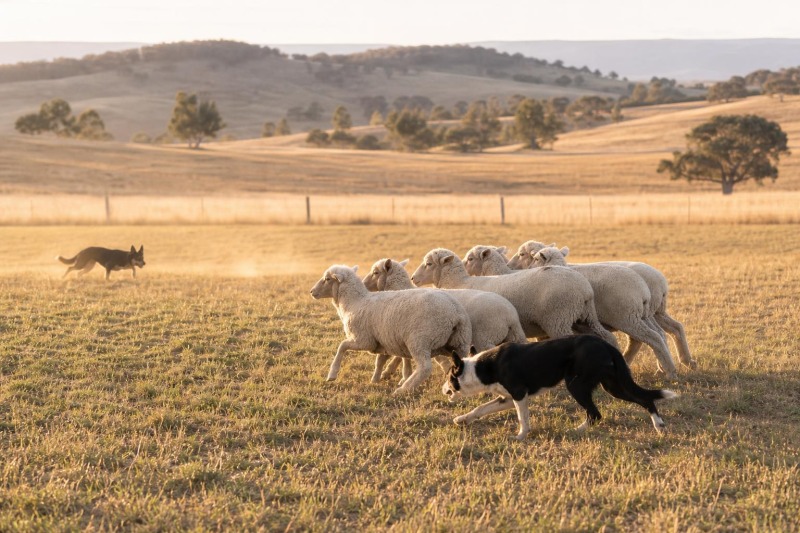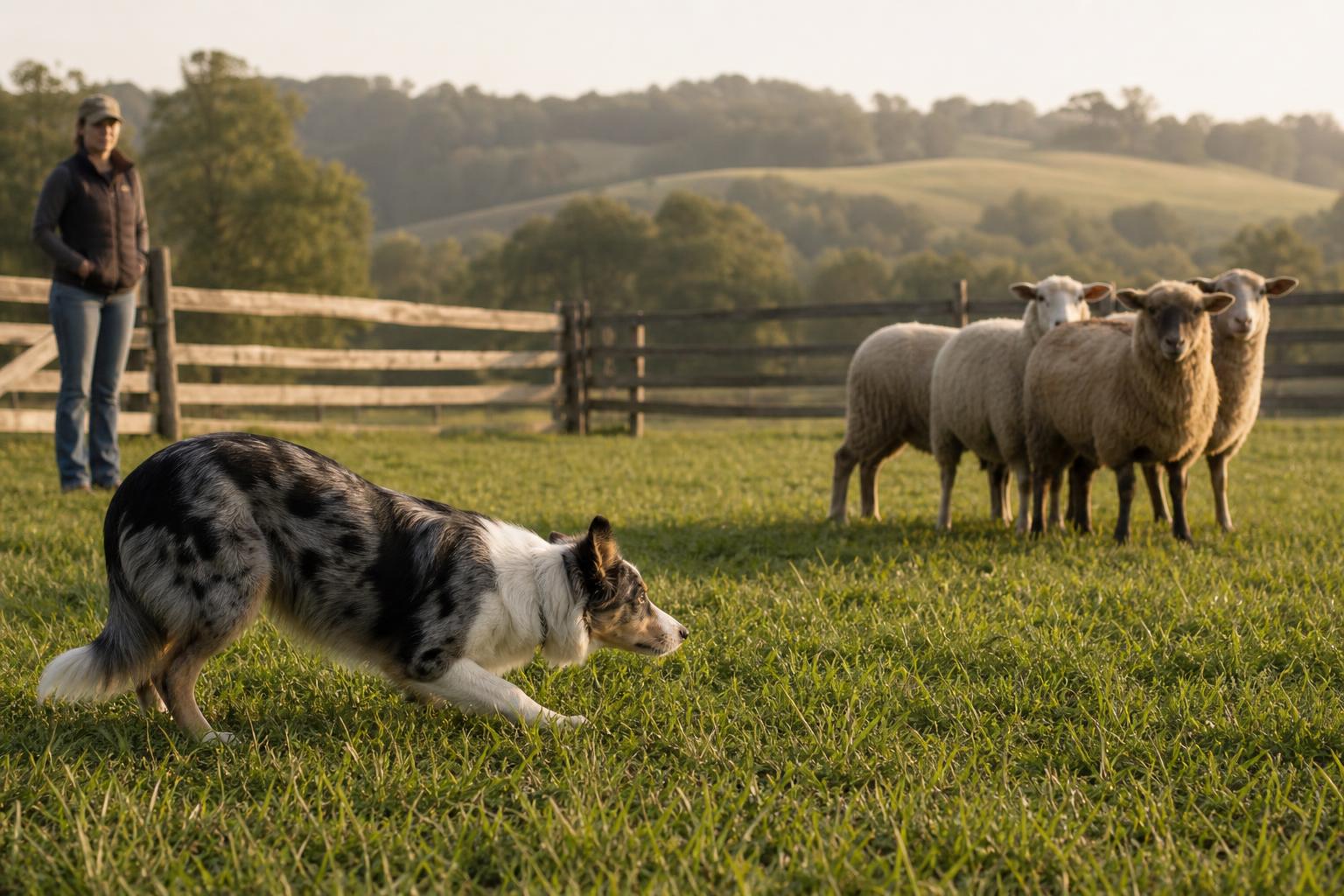
A young stock dog may show interest in livestock before it has the control or experience to work them usefully. Development means giving that interest direction while judging the individual dog’s confidence and maturity.
One pup may show balance and eye before it is half grown. Another may look more interested in birds, leaves, or the heel of your boot until one day the switch flips and stock suddenly matter. That is why understanding how herding instinct develops matters so much. Owners who know what they are seeing are far more likely to nurture a talented dog instead of rushing it, suppressing it, or mistaking normal development for a problem.
What Herding Instinct Really Means
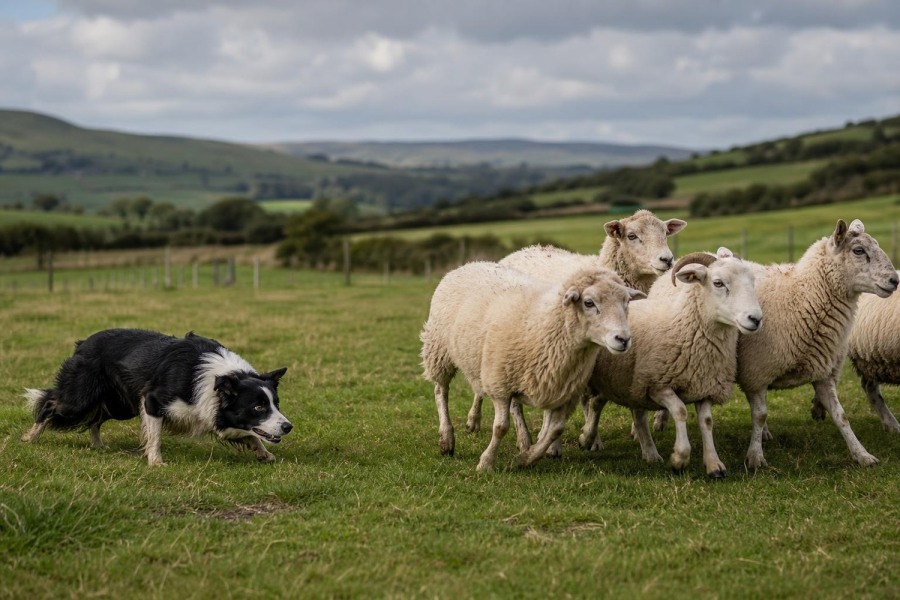
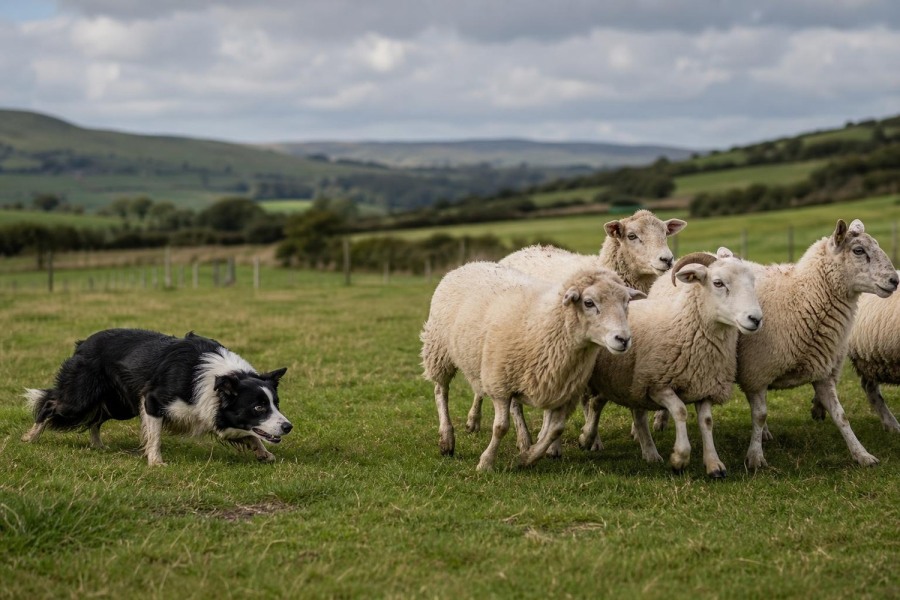
At its core, herding instinct is the natural tendency to gather, control, and move livestock. In a well-bred herding dog, this behavior comes from generations of selective breeding. Different breeds express it in different ways. A Border Collie may crouch, stare, and work with intense focus. An Australian Shepherd may work more upright and with a little more push. A Corgi often uses movement and grit from down low, while a German Shepherd from herding lines may show a different style altogether. The shape of the instinct changes with the breed, but the foundation is the same: the dog feels a deep, internal pull to influence the movement of stock.
That instinct is not just chasing. Plenty of dogs chase. Herding dogs show purpose. Even as pups, they often begin trying to circle, block, gather, or contain movement. It may be clumsy in the beginning, and sometimes a little comical, but there is intent in it. A young dog with herding instinct often wants to control motion rather than simply explode after it.
The Role of Genetics in Early Development
If you want to understand a young herding dog, start with its breeding. Bloodlines matter. A pup from generations of proven working dogs is more likely to show strong instinct than one from lines selected mainly for appearance or companionship. That does not mean every working-bred pup will be a standout, but it does mean the odds improve.
Instinct can appear very early. Some pups begin showing pieces of it in ordinary play at eight or ten weeks old. They may circle littermates, cut off another puppy’s path, or respond sharply to movement in a way that feels different from roughhousing. Good breeders often notice these little signs before the pup ever leaves for a new home. They can tell you which pup is bold, which one thinks before acting, which one has natural balance, and which one may be more sensitive. That kind of information is worth a lot.
Still, genetics are only the starting point. A dog may inherit the tools, but maturity, exposure, confidence, and handling all determine how those tools are used. A pup with strong instinct can be dulled by poor experiences. A slower-starting pup can surprise everyone if given time and the right opportunities.
Early Signs Owners Often Notice
Most owners first spot herding instinct in everyday life. The puppy may circle children in the yard, try to keep ducks grouped by the fence, or position itself in the hallway to stop another dog from passing. Some pups become intensely interested in anything that moves as a unit. They are fascinated by groups, by direction, by shifting patterns. There is thought in their behavior, even when the behavior itself is immature.
You may also notice unusual responsiveness to pressure and motion. A pup may naturally move to the side of a running child rather than trailing behind. It may cast out, then turn in as though trying to gather. In some dogs, there is a pause before action, a moment of reading the situation. That ability to notice and react to movement is one of the raw materials of good stock work.
On the other hand, some puppies show their instinct through pushiness. They bark, rush, grip at heels, or become overexcited when things start moving fast. That does not necessarily mean the instinct is poor. It often means the dog is young, hot, and unrefined. The challenge is teaching control without crushing drive.
Stages of Mental and Physical Maturity
Herding instinct develops in layers. In the earliest stage, the puppy is simply aware of movement and wants to affect it. Later comes the desire to gather or hold. Then comes understanding pressure, distance, pace, and cooperation with the handler. Those pieces do not always arrive in a neat order.
Physical maturity matters too. A pup may have plenty of instinct but lack the coordination and body control to express it well. Young dogs often outrun stock, crowd too close, or lose balance because their minds and feet are not yet in agreement. Give them time. A dog that looks messy at six months may look entirely different at twelve or eighteen months.
Confidence also rises and falls during development. A bold pup may go through a soft patch after one hard lesson from a ewe with a lamb or a cranky cow that turns and stares. That does not mean the instinct is gone. It means the dog is learning that stock push back. Those lessons, handled properly, are part of making a sensible worker.
Environment Shapes Natural Talent
A young herding dog needs room to develop its mind. That does not always mean daily access to livestock, though regular, controlled exposure helps. It means the dog should be raised in a way that supports curiosity, resilience, and responsiveness. Puppies that explore varied ground, hear different sounds, meet people, and learn to handle frustration often come into stock work better than those kept in a bubble.
They watch older dogs work from a distance. They learn that gates matter, that livestock move with pressure, that calm attention gets them farther than blind excitement. These things sink in quietly. Even when a pup is not directly working, it is gathering information.
Home life matters as well. A dog allowed to practice bad habits every day, like nipping children or obsessively controlling household movement, can become harder to shape later. Owners should not punish the instinct out of the dog, but they should set boundaries. A good herding dog needs an off switch as much as it needs desire.
Why Timing Matters
The first real introduction to stock often tells you a great deal, though not always the whole story. Some pups light up the moment they enter the pen. Their posture changes, their eyes sharpen, and suddenly they move with purpose. Others seem uncertain, even indifferent, then come alive on the second or third session. That is why patience is worth more than drama.
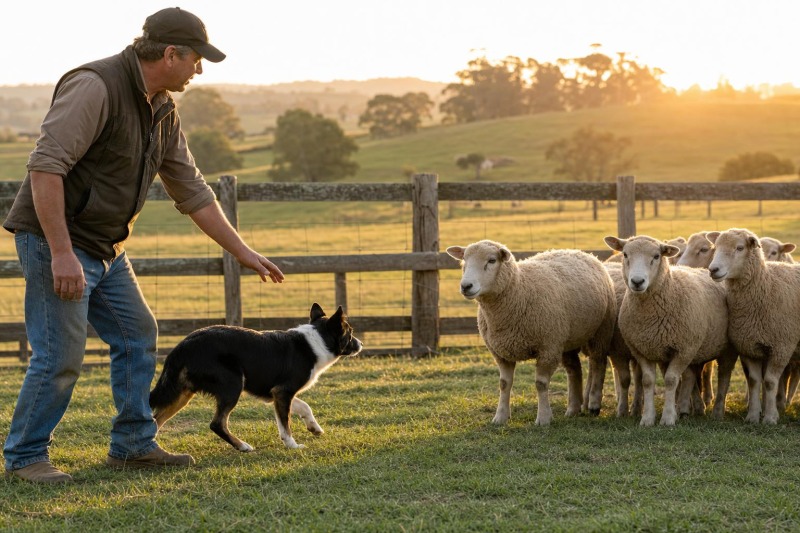
Ideally, early exposure happens with calm, dog-broke livestock in a safe setting. The goal is not to prove how much fire the pup has. The goal is to let instinct surface without fear or chaos. When the stock are steady and the pressure is controlled, you can see whether the dog wants to gather, whether it naturally seeks balance, and how it handles movement and correction.
First time around sheep, he drifted wide, stopped on the head without being shown, and turned the bunch back to me as neat as you please. He was not trained. He simply knew more than he had ever had a chance to show. That is the beauty of inherited instinct. When it appears, it often feels like finding a spring in dry country.
Training Refines What Nature Starts
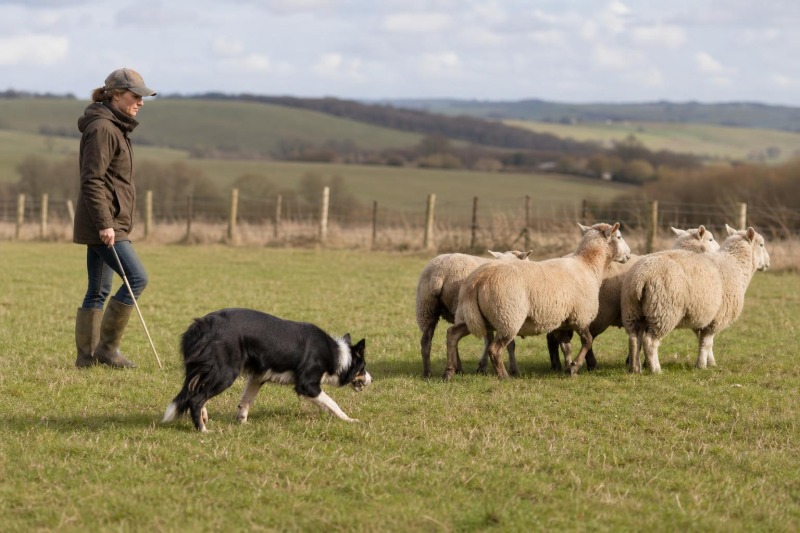
Instinct is the seed, but training is the weather, the soil, and the fence around the garden. A young dog may have all the natural ability in the world and still become rough, confused, or unreliable without proper guidance. Early training should build confidence while introducing rules. The dog learns that stock are not toys, that pace matters, that listening to the handler leads to success.
Good trainers do not ask too much too soon. They set up situations where the dog can be right. They reward calm thinking. They interrupt foolishness without turning every lesson into a fight. The best young dogs are not always the flashiest. The best ones are often those willing to take correction, recover quickly, and keep trying to understand the stock.
Some dogs are naturally stylish. Others are practical. Some have great eye but need encouragement to move freely. Others have plenty of push but must learn softness. Development is not about forcing every dog into the same mold. It is about helping each dog mature into the best version of its inherited style.
Common Misunderstandings About Herding Instinct
Many owners assume a puppy that chases everything must have strong herding instinct. Sometimes that is true, but often it is just prey drive without stock sense. The difference shows up in purpose and adaptability. A true herding prospect begins to read movement, influence direction, and respond to pressure. The dog is not merely excited. It is trying to solve a moving puzzle.
Another common mistake is writing off a late-blooming dog too soon. Not every pup announces itself early. Sensitive dogs, thoughtful dogs, and physically immature dogs may take longer to show what is in them. As long as the breeding is there and the interest is genuine, time can reveal a lot.
It is also a mistake to believe instinct alone is enough. Even naturally gifted dogs need exposure, structure, and experience. Raw talent can carry a dog only so far before gaps begin to show. The strongest instinct in the world is still only potential until it is shaped into useful work.
Helping Young Herding Dogs Thrive
For owners interested in raising a young herding dog well, the goal is balance. Encourage natural behavior, but do not let it become unruly habit. Provide exercise, but also mental work. Expose the pup to the world without overwhelming it. When the time comes for stock, seek experienced help if you are new to the process. A few careful sessions can teach you more than months of guessing.
Most of all, learn to watch. Young dogs tell you what they are made of if you slow down enough to see it. Watch how they approach movement. Watch how they recover from pressure. Watch whether they think before they act. Those details matter. Over time, they reveal whether the pup in front of you is simply energetic or whether it carries that old, valuable instinct bred into true herding dogs.
There is a special satisfaction in seeing that instinct mature. The wild edge softens into purpose. The chaos becomes control. What begins as a pup circling in the yard can, with breeding, patience, and wise handling, turn into a dog that moves stock with quiet authority. And once you have seen that happen a few times, you stop looking for magic and start respecting the slow, steady way good dogs are made.