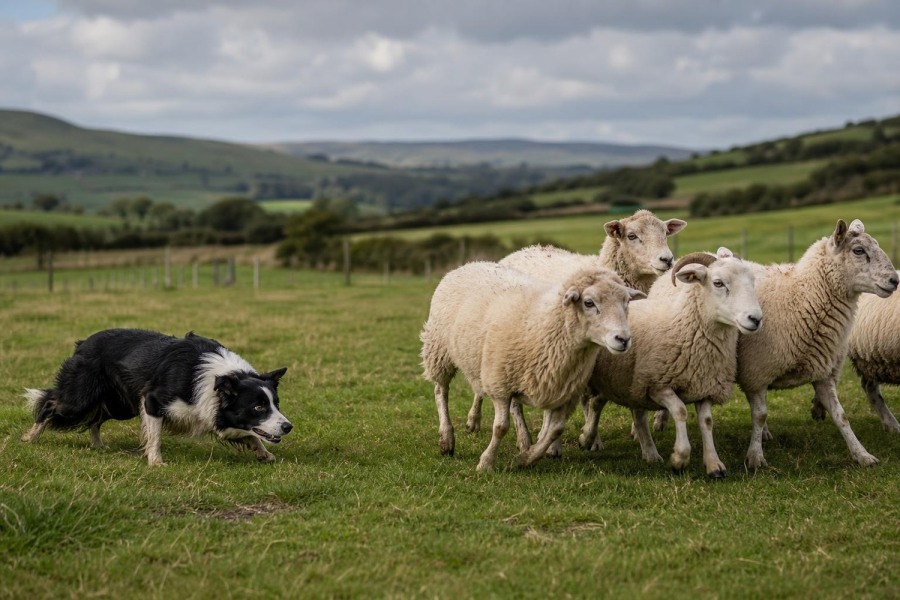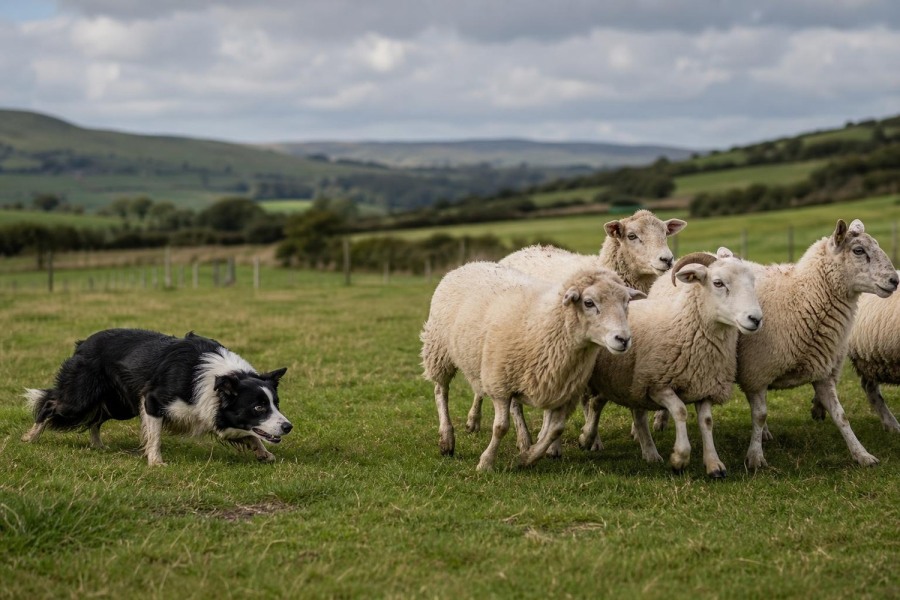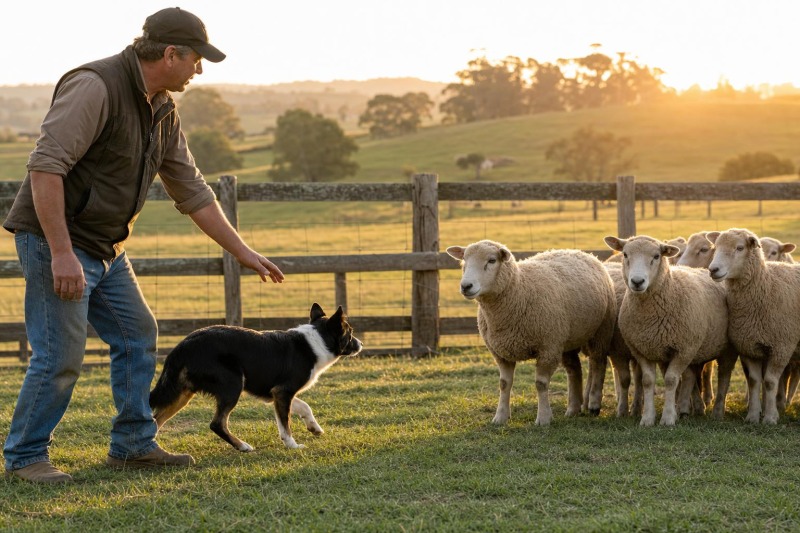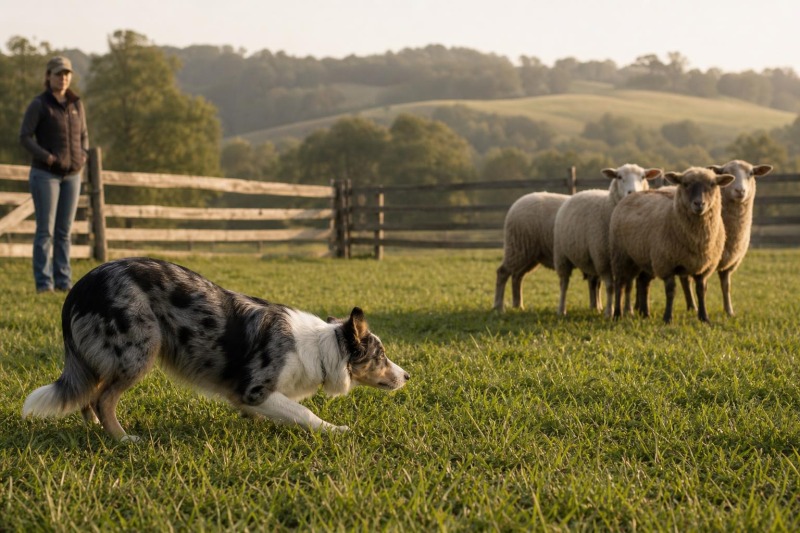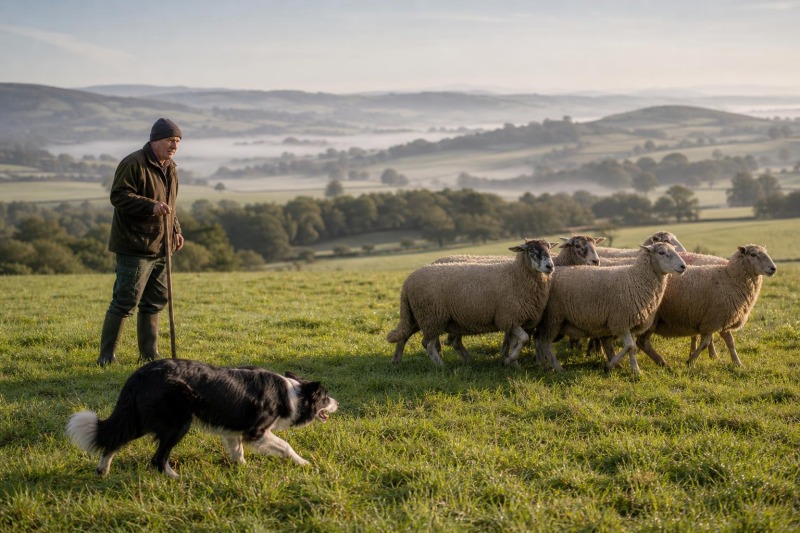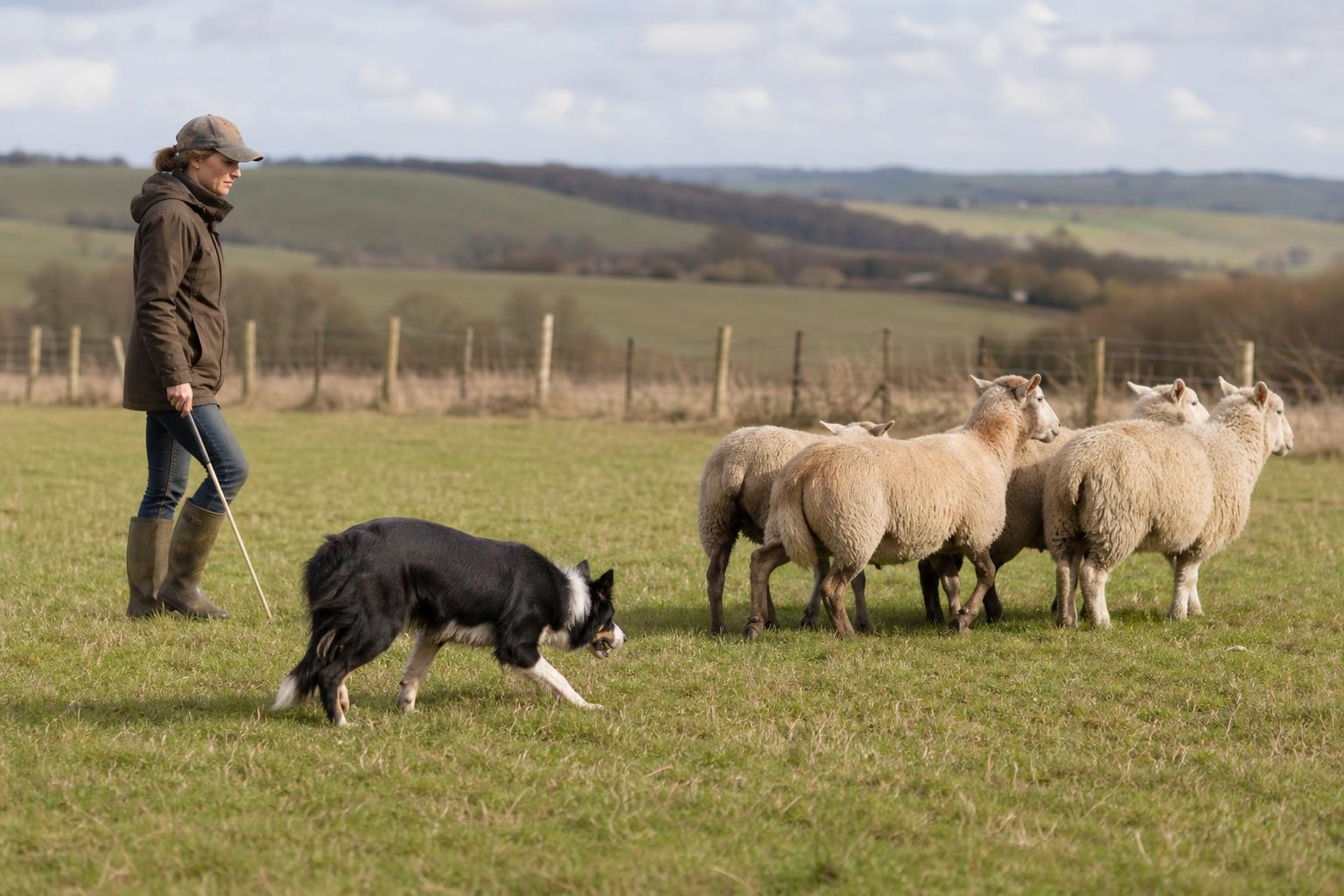
A first sheep session needs to suit the young dog and the stock available. Confidence and control develop through manageable work, not simply more excitement. Experienced supervision helps keep the lesson useful for the dog and fair to the sheep.
Starting a young herding dog on sheep is not about proving how much pressure a pup can take. It is about giving natural ability a proper place to surface. A good beginning should leave the dog wanting more, thinking through the stock, and learning that sheep are not toys to chase but animals to gather, rate, and control. For dog owners interested in herding dogs, this stage is where dreams of a useful partner either gain strong footing or begin to wobble.
When a Young Dog Is Ready to Start
Age matters, but not as much as maturity. Some young dogs show strong instinct at six or seven months, while others are better left alone until they are closer to a year old. A dog can have all the breeding in the world and still not be ready if the mind has not caught up to the body.
The best young herding dogs often carry a mix of fire and thoughtfulness. They want to engage, but they are not so frantic that they cannot hear you. That matters because early sheep work is not just about instinct. It is also about introducing control without smothering the dog’s initiative. If the youngster is mentally soft, too much pressure can shut it down. If it is hard-headed and overamped, a poor setup can turn instinct into reckless gripping and blind chasing.
In plain terms, start when the dog is ready to learn, not when the calendar tells you it should be ready.
Choosing the Right Sheep for First Lessons
Quiet, dog-broke sheep are worth their weight in gold for early training. You want stock that will move off pressure without exploding, bunch sensibly, and give the dog something it can read. Wild sheep can make a promising youngster look foolish in a hurry. On the other side of it, stubborn sheep that turn and challenge too hard can force a green dog into gripping before it understands how to control movement.
A small group is usually best. Three to five sensible sheep in a round pen or small training paddock gives the young dog a fair chance to find balance and influence without being overwhelmed. When the setup is right, you can almost see the dog’s mind working. It flanks a little too wide, then cuts in too tight, then corrects itself because the sheep tell it the truth. That is real learning, and stock teach it better than we do when we choose them carefully.
Setting Up the First Session
The first lesson should be short, quiet, and purposeful. Too many people make the mistake of turning the first exposure into a test. It is not a test. It is an introduction. The point is to help the youngster engage stock, feel pressure, and begin to understand that movement comes from position, not chaos.
Bring the dog in calm if you can. Some dogs tremble with excitement the first time they smell sheep. Some bark. Some crouch and lock on as if they have been waiting for this day since birth. That is fine. Let the instinct show itself, but do not let the session spin out into a free-for-all. A long line can be useful with certain pups, though it needs experienced hands. In the wrong moment, a line can tangle, create panic, or interrupt the dog just when it is beginning to think correctly.
Most young dogs will naturally circle. That is where the beginnings of gathering come from. Watch for the dog trying to get to the point of balance, the place opposite you where it can hold the sheep to the handler. That instinctive movement is one of the first signs that the dog is not simply chasing. It is trying to control.
Reading Instinct Versus Excitement
There is a world of difference between raw prey drive and useful stock sense. A young dog may race after sheep with all the enthusiasm you could ask for, but if it cannot settle, read pressure, or adjust its path to influence the flock, you are not looking at polished herding instinct yet. You are looking at beginnings that need shape.
What you want to encourage is thoughtful movement. A good youngster starts noticing that when it steps in, sheep move. When it pushes too hard, they break. When it gives a little room, they settle and stay grouped. These are small lessons, but they become the foundation for outruns, lifts, fetching, and eventually practical farm work. A trainer’s job in the early going is to protect those lessons from too much noise and too much correction.
Using Pressure the Right Way
Pressure is the language of stock work. Sheep feel it, dogs learn to apply it, and handlers must understand when to add it or release it. Starting a young herding dog on sheep means teaching the dog that pressure does not always mean charging harder. Often it means holding the right line, easing off at the right moment, and learning that control comes through placement.
This is where many green handlers get into trouble. They see the dog diving in and immediately start shouting commands the dog does not truly understand yet. The result is a confused youngster getting corrected for instinct it has never been taught to channel. Early commands should be few and meaningful. A calm recall, a stop if the dog has one, and gentle body positioning from the handler often do more good than a flood of words.
There is a quiet kind of stockmanship that young dogs respond to. Step where you need to step. Block reckless entries without anger. Let the sheep help shape the flank. If the dog slices in too close and blows the flock apart, reset and try again. Done calmly, these small adjustments teach more than heavy-handed discipline ever will.
Teaching Balance and Feel
Balance is the heart of useful herding work. In the beginning, most of what you are really doing is helping the dog discover where balance lives. A naturally talented youngster will hunt that spot almost on its own. It may overrun it one moment and undercut it the next, but if the instinct is there, the dog starts searching for the place where the sheep stay to you.
Feel is harder to describe, but anyone who has watched a good dog work knows it when they see it. It is the dog’s sensitivity to stock, its ability to read tension before the sheep burst away, and its willingness to adjust without being micromanaged. You cannot drill feel into a dog like a obedience command. You can only develop it by giving the dog the right stock, the right room, and enough thoughtful repetitions to make sense of what it is sensing.
That transition is one of the finest things in dog work. It is where instinct begins turning into craft.
How Long Early Sessions Should Last
Shorter is usually better. Ten good minutes can teach more than half an hour of confusion. A young dog’s mind tires before its body does, and once fatigue sets in, bad habits tend to creep forward. You may see gripping, mindless circling, tuning out the handler, or simply losing interest. End while the dog is still engaged and before the wheels come off.
Leave the pen with the dog wanting another chance. That hunger helps carry the lesson forward to the next session.
Common Mistakes That Set Young Dogs Back
One of the biggest mistakes is starting on the wrong stock in the wrong place. Another is trying to force advanced control before the dog understands stock. A stop, a flank, and a clean fetch are all worthy goals, but first the youngster has to learn why those movements matter. Commands laid over confusion do not create understanding. They just create noise.
Another common error is overfacing the dog. Too much pressure, too many sheep, too much open ground, or too much correction can make a keen young dog either frantic or timid. Neither response is helpful. You want a dog that is bold enough to take responsibility and sensible enough to stay adjustable.
Then there is the temptation to mistake excitement for progress. A dog tearing around the pen can look impressive to an untrained eye, but useful herding is not measured in speed or drama. It is measured in control, stock sense, and the dog’s willingness to work with you instead of merely around you.
Building Toward a Reliable Working Partner
The finest herding dogs are not built in a weekend. They are shaped through many fair lessons, good stock, and a handler who knows when to step in and when to stay quiet. Starting a young herding dog on sheep is less about showing the dog everything at once and more about putting one sound brick on top of another. Confidence, balance, responsiveness, and steadiness all come that way.
If you are patient in the beginning, the dog usually rewards you later. The youngster that learned to rate sheep instead of blasting through them will be easier to train on gathers. The dog that discovered balance early will understand fetching more naturally. The pup that was not crushed for making green mistakes will keep offering effort when work gets hard.
Anyone can make noise around sheep. It takes judgment to bring a dog along so the instinct stays bright while the edges get polished. When you do it right, those first circles around a small bunch of sheep turn into something worth having: a dog that thinks, listens, and handles stock with purpose.
For owners drawn to herding breeds, there is nothing quite like watching that spark catch. The trick is not to rush it. Give the young dog a fair start, honest stock, and room to learn, and you may be looking at the beginning of a truly useful partner.