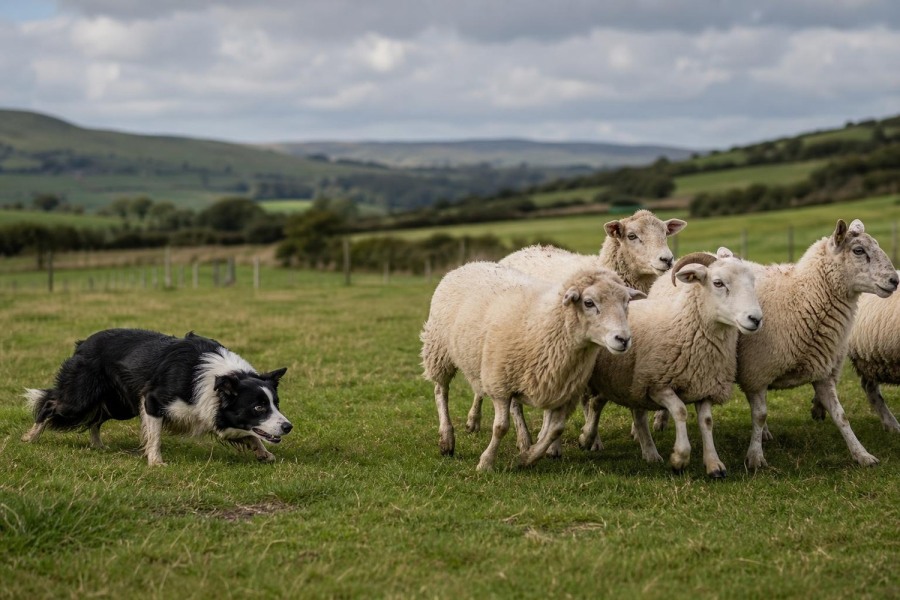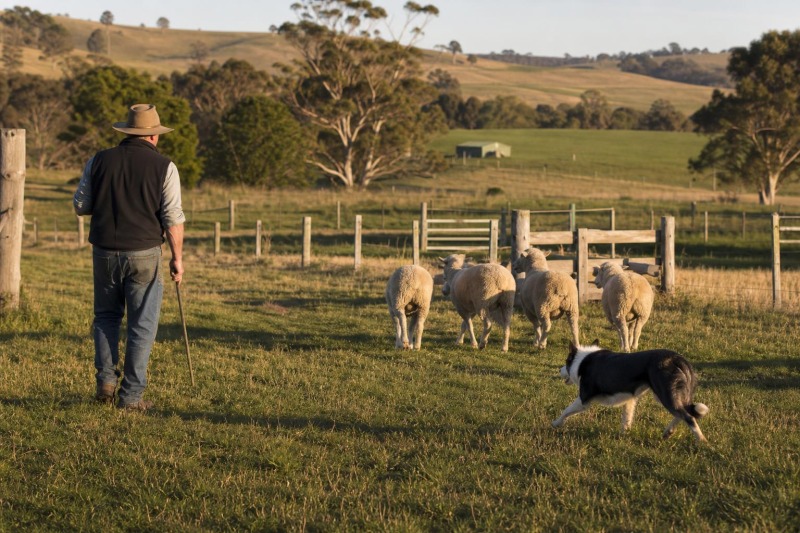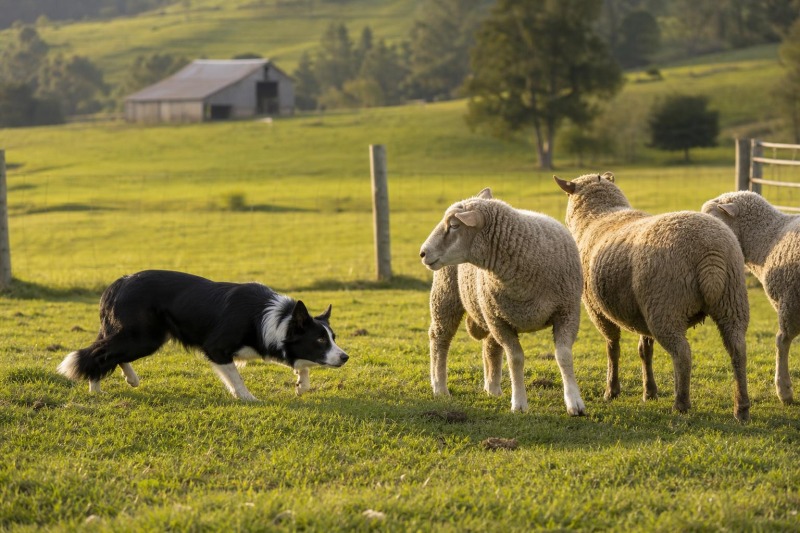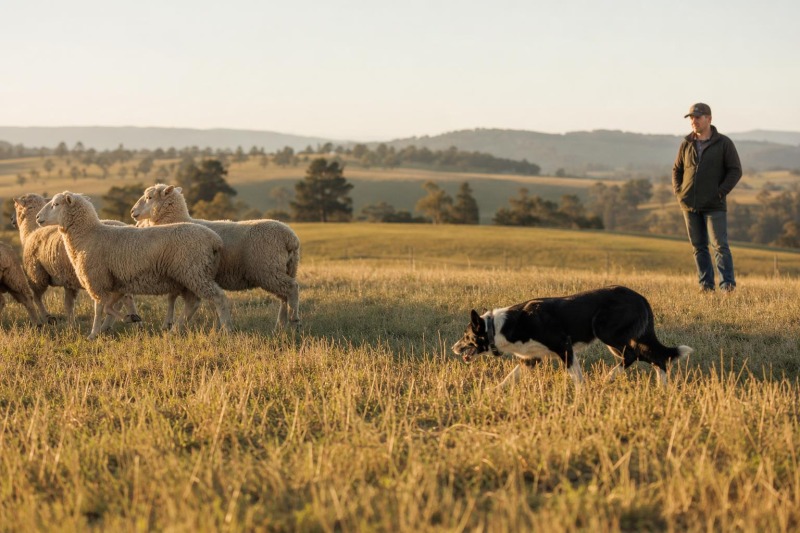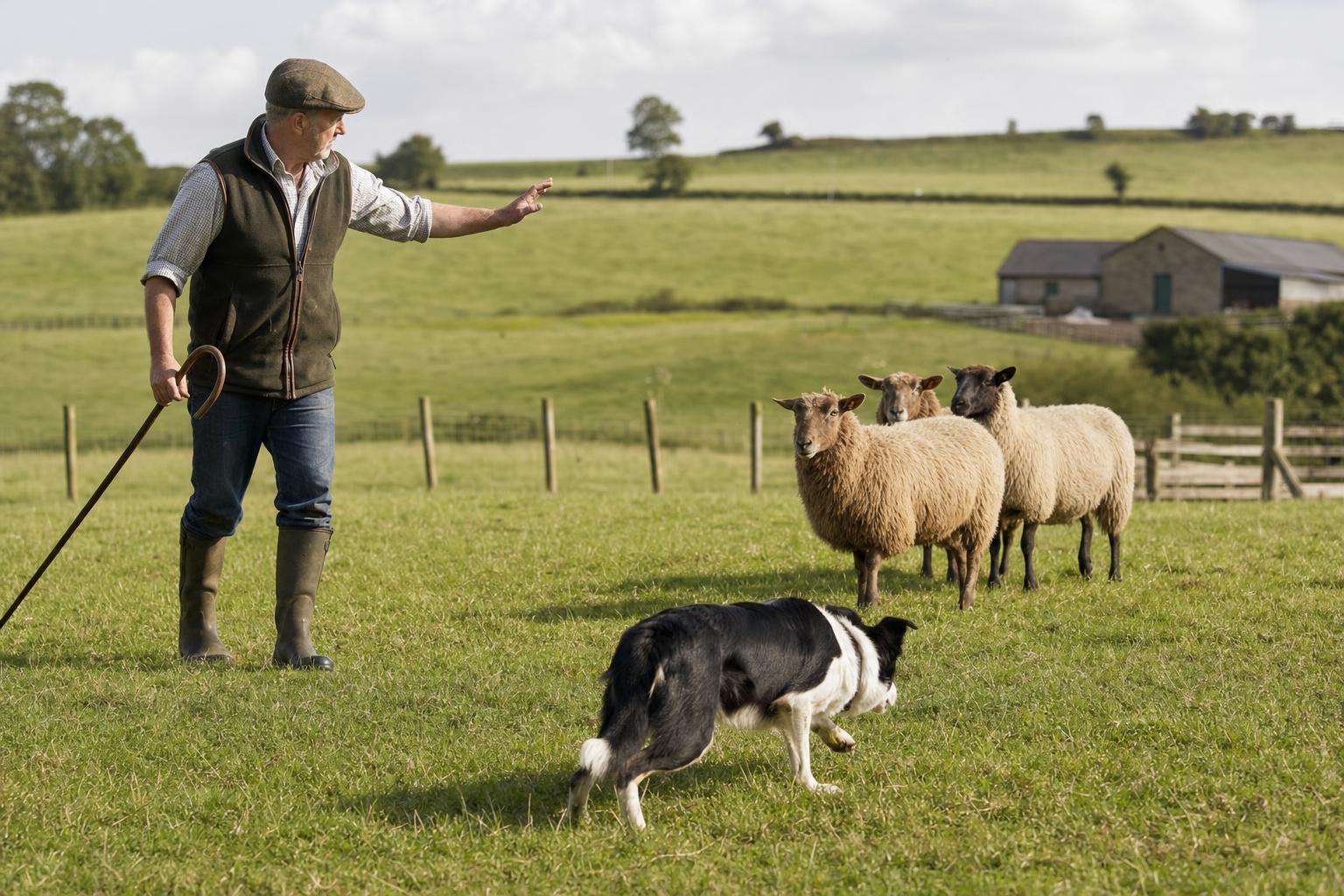
Stock-dog communication includes position, movement, timing, voice, and sometimes a whistle. The dog reads more than the handler’s chosen words. Consistency across those signals makes the work easier to understand.
For dog owners interested in herding dogs, this is one of the most important ideas to understand. A stock dog is not a remote-controlled machine, and it is not a pet expected to obey in the same way a house dog might. Communication with stock dogs is more dynamic than that. The handler is reading livestock, reading the dog, and making decisions in the moment. The dog is reading the same stock, responding to commands, and often filling in gaps before the handler speaks. That kind of teamwork does not happen overnight. It is built in small moments, and it is tested when the sheep get sticky, the cattle turn stubborn, or the field opens up wider than expected.
The Language Starts With Pressure and Balance
Before a handler ever worries about whistles or polished commands, there is a simpler truth underneath good stock dog work. Dogs move livestock by applying pressure and by understanding balance. Handlers communicate inside that same system. A dog learns where to place itself to hold stock to the handler, to bring them in a clean line, or to drive them away without breaking the group apart. When the handler steps left, slows down, or angles a shoulder, that movement affects the dog just as surely as a spoken word can.
If the handler crowds the stock, the dog may grip or rush to cover. If the handler hangs too far back, the dog may overflank or lose authority. Good communication begins when the handler understands the stock’s line and the dog’s natural draw to balance. In plain terms, the dog is often trying to keep the stock collected between itself and the handler. Once you see that, the whole picture makes more sense.
Why Balance Matters in Everyday Work
Balance is the anchor of stock dog communication. If a flock of sheep wants to drift toward a gate, the dog feels that draw. If a cow wants to break back toward the herd, the dog reads that pressure too. The handler’s job is not always to micromanage every step. Often it is to place the dog where the right answer becomes obvious. A quiet dog on balance can do more good than a noisy dog taking constant correction. That is one lesson the stock will teach you quickly.
Voice Commands Build the Foundation
Most handlers begin with voice because it is simple, natural, and available at close range. Common commands usually cover direction, pace, and control. A dog may be taught to flank one way or the other, to lie down or stand, to walk up, to come in, or to look back for additional stock. The exact words matter less than consistency. Stock dogs do not care whether you say “come bye,” “away,” “lie down,” or some local variation heard on your home ground. They care that the meaning stays clear every time.
Voice carries emotion, and that is both useful and dangerous. A calm, steady tone can settle a keen dog and slow a fast one. A sharp correction can stop trouble before it starts. But handlers who talk too much often teach their dogs to tune them out. If you chatter through every second of a gather, the dog starts sorting your voice into background noise. Then, when you really need a stop, you may not get one.
The best handlers use their voices like tools, not decorations. They speak when they need to shape the work. They stay quiet when the dog is reading stock correctly. That silence is not absence. It is trust.
Whistles Reach Farther Than the Human Voice
Once distances get longer, whistles become one of the most valuable forms of communication with stock dogs. Wind, terrain, and livestock noise can swallow spoken commands in a hurry. A good whistle cuts through all that. It carries farther, stays more consistent, and gives the dog a sharper sound to pick out at distance. On open ground, that matters.
Whistle commands are especially useful for outruns, wide gathers, and driving work where the dog may be several hundred yards away. A dog that can hear and trust whistle cues gives the handler more control without forcing the handler to crowd the stock. That distance can make all the difference when working flighty sheep or cattle that need room.
There is another advantage too. Whistles tend to be cleaner emotionally than voice. Handlers may get tired, frustrated, or excited, and all of that can leak into spoken commands. A whistle, if practiced well, stays crisp. Dogs often respond to that consistency with more confidence. Still, whistles only work well when they are trained properly. A sloppy whistle system confuses dogs just as quickly as inconsistent voice commands do.
Teaching the Meaning Behind the Sound
No whistle command means anything by itself. The dog learns it through repetition paired with movement and outcome. A flank whistle must lead into an actual flank. A stop whistle must be reinforced until stopping becomes reliable under pressure. In early training, many handlers pair voice and whistle together so the dog links the new sound to a known cue. Over time, the whistle can stand on its own.
Body Language Often Speaks First
One of the quiet truths of handling stock dogs is that dogs are usually reading body language before they process the command itself. A handler leaning forward may add pressure without realizing it. A handler turning hips toward the dog may block one flank and open the other. A few steps in the wrong direction can pull the dog off a clean line. That is why experienced handlers look almost economical in their movement. They are not wasting steps, and they are not sending mixed signals.
They know when to step into pressure and when to release it. They know how to help a dog cover a break without running livestock harder than necessary. The dog sees all of that. In many cases, the dog responds to the handler’s posture before the verbal cue ever arrives.
For beginners, this can be humbling. A person may think the dog is ignoring a command when the truth is the handler’s body said the opposite. That is not failure. It is part of learning the craft. Working stock dogs teaches people to become clearer creatures.
Timing Is the Difference Between Noise and Communication
Good communication is not just about what command is given. It is about when it is given. Timing is everything with stock dogs. A command delivered one second too late may reward the wrong movement. A stop given after the sheep already broke may feel meaningless to the dog. A flank command offered just before pressure builds can prevent a wreck before it starts. This is where experience shows itself.
On a training field, timing can be practiced. In practical work, timing gets tested. Sheep that were calm in the pen may split in the pasture. Cattle may challenge a dog one minute and yield the next. The handler has to recognize what is developing and communicate early enough to matter. The dog, in turn, learns whether the handler’s directions are useful. Dogs remember that. If your commands consistently help the dog manage stock, the dog gains confidence in you. If your commands repeatedly place the dog in trouble, the partnership starts to fray.
Trust Makes the Whole System Work
Trust is the hidden element behind all effective stock dog communication. A talented dog must trust that the handler will not interfere needlessly and will step in when needed. The handler must trust the dog enough to allow initiative. This balance is hard to teach because it comes from honest work over time. Young handlers often want to command every move. Young dogs often want to solve everything with speed. Both have to mature.
The dog was already reading the stock correctly, but the constant interference created tension. Once the handler allowed the dog to hold pressure and think, the work smoothed out. The opposite is true as well. Some dogs need clearer support and more direction until they gain confidence. Trust is not the absence of guidance. It is the right amount of guidance for the dog in front of you.
Reading the Individual Dog
No two stock dogs communicate exactly the same way. A bold, hard-eyed dog may need softer handling to keep it thoughtful. A sensitive dog may shut down under too much pressure from the handler. Some dogs take whistles beautifully. Others respond best to the handler’s presence and a few plain words. Good handlers adapt. They do not force every dog into the same mold.
Communication Changes With the Stock and the Setting
Handlers also communicate differently depending on what they are working. Sheep often require finesse and thoughtful positioning. Cattle may call for more authority and a dog that can hold pressure without losing control. Tight pens demand quick, precise communication. Big country calls for trust, distance control, and a dog that can make smart choices out of reach.
That is why practical stock dog work always feels alive. The language never becomes stale. A command that means one thing in a small sorting pen may need a different weight in an open field. The handler learns to adjust tone, spacing, and timing to suit the day’s work. The dog learns that the job stays the same even when the conditions change: control the stock, keep order, and stay connected to the handler.
The Best Work Looks Quiet
At the end of it all, the finest communication between handlers and stock dogs usually looks simple. There is less shouting than most folks expect. Less drama too. A whistle floats out across a field, the dog bends wide, the sheep lift and settle, and the whole thing seems almost effortless. But that smoothness is earned. It comes from hundreds of small corrections, fair repetition, and hard-won understanding between dog and handler.
For dog owners interested in herding dogs, that is the beauty of the work. Communication with stock dogs is not about dominance or endless command. It is about clarity. It is about learning how a dog reads pressure, how livestock respond to movement, and how a handler can shape both without fighting either one. When it comes together, there is nothing robotic about it. It feels old, practical, and honest. A good stock dog listens, yes, but it also thinks. And a good handler knows when to speak, when to whistle, when to step in, and when to let the dog do the work it was born to do.