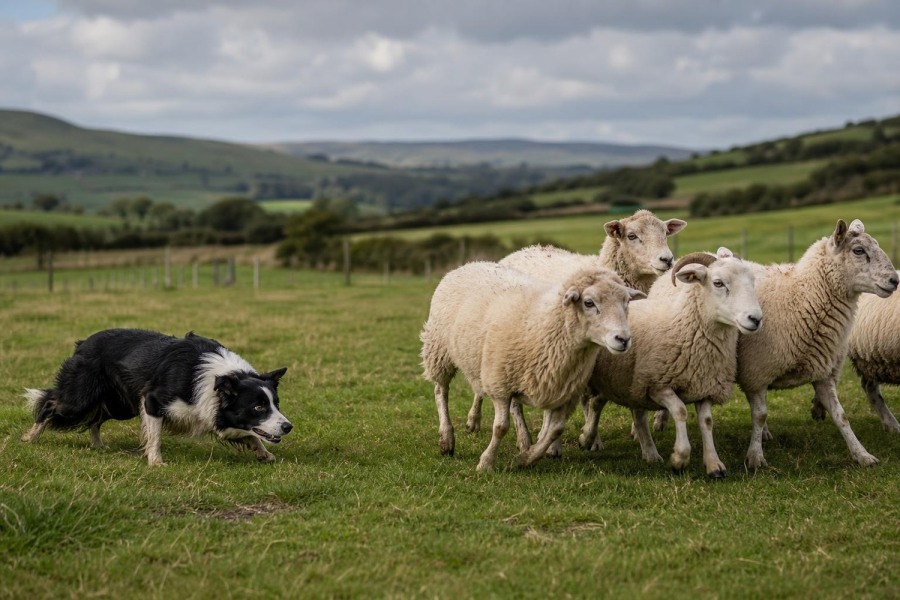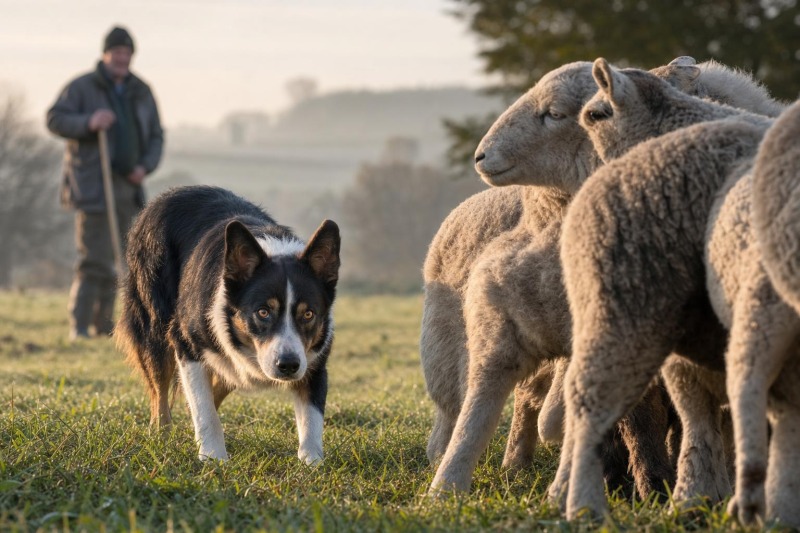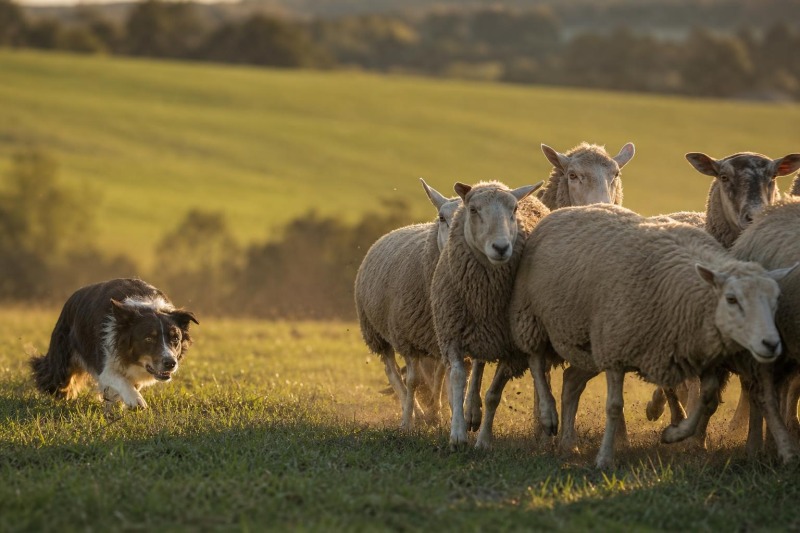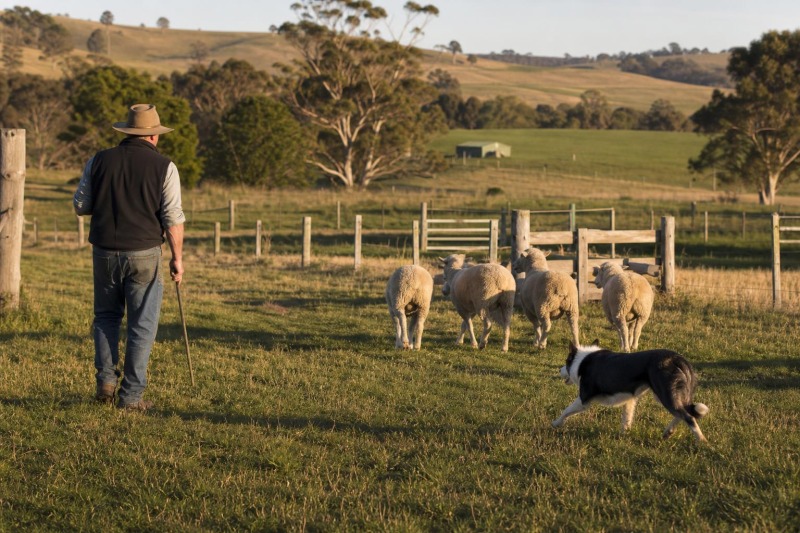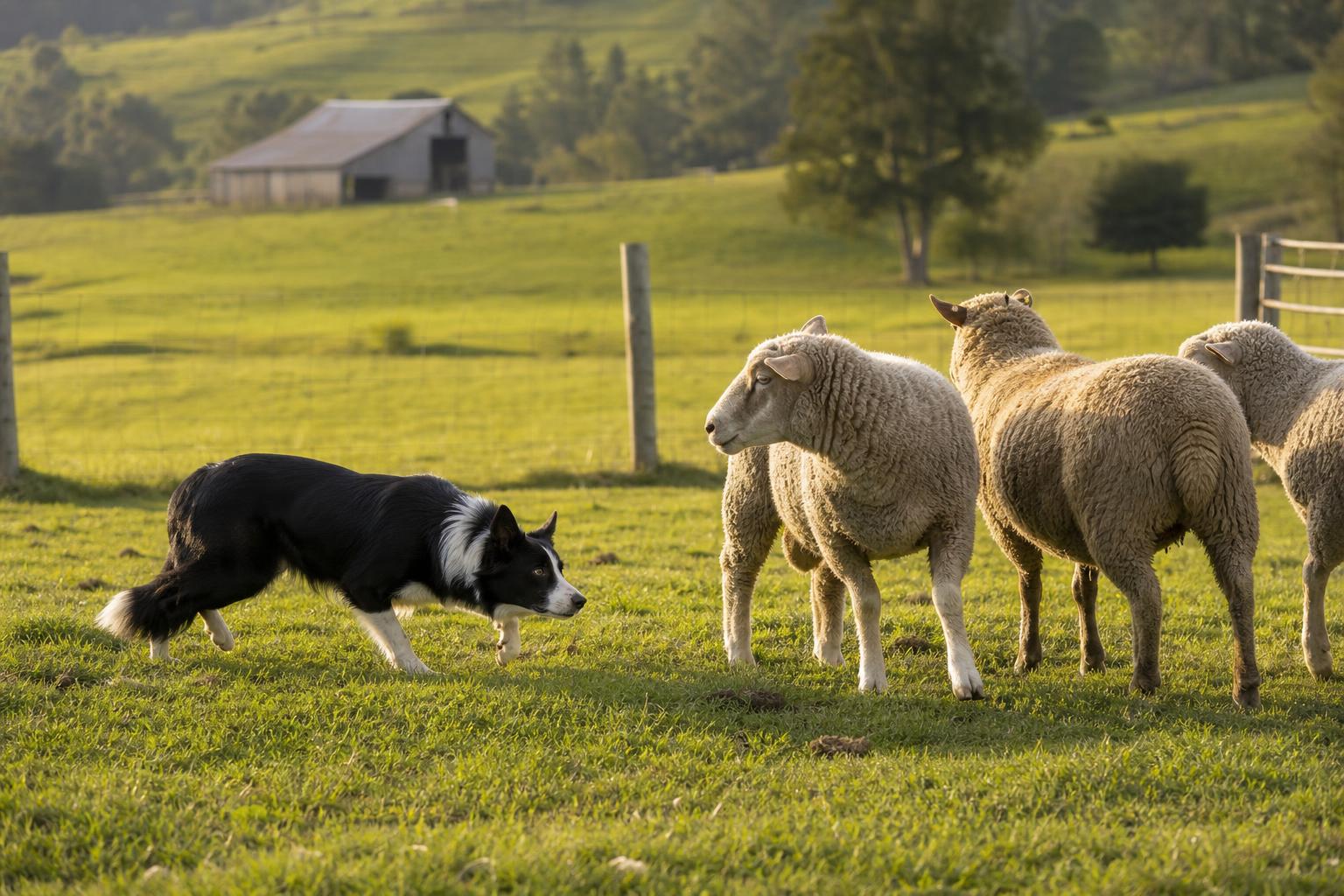
A stock dog needs to notice where animals are looking, how they group, and when they are ready to move. Its position and pace can then change the pressure on them. Reading those exchanges helps a handler understand the work.
A true working herding dog is never just moving animals from one place to another. It is constantly studying them. It notices which ewe is light and likely to break, which cow is bluffing, which lamb is looking for a hole in the fence line, and which group is ready to turn as one body if handled right. The best dogs do this in real time, adjusting with every stride. That is what separates blind excitement from useful stock sense.
Why Reading Livestock Matters in Herding Work
Livestock do not move at random. Sheep, cattle, goats, and ducks all respond to pressure, space, leadership, fear, and habit. A herding dog that understands those reactions can move stock smoothly, with less stress and less waste. A dog that does not understand them tends to rush, grip unnecessarily, split a group, or create panic where calm would have done the job better.
In the field, that difference matters. Calm stock hold flesh better, travel better, and are easier to sort and pen. Handlers stay safer too. A dog that reads trouble before it starts can prevent a wreck at the gate, stop a breakaway at the corner, or head off a charge from a sour cow before a person ever has to step in. That kind of awareness is worth more than flashy speed or hard-eyed intensity alone.
The Dog Is Reading Pressure More Than Motion
Most people think herding is about chasing movement. In truth, the dog is reading pressure. Pressure is what happens when the dog enters an animal’s comfort zone and influences its decision. Every species feels that pressure a little differently, and every individual animal does too. A dog with good stock sense learns where that line is and how much force to apply.
With sheep, the line can be delicate. Step in too hard and they may bolt. Give them room and they flow. With cattle, especially those used to dogs, the pressure often needs to be steadier and more committed. A green dog learns this by trial, correction, and repetition. An experienced dog can feel it almost before the stock fully show it. You see that in the way the dog checks itself, widens out, or comes in tighter depending on the response coming back from the animals.
What Herding Dogs Watch in Livestock
A capable herding dog reads body language the way an old woodsman reads tracks in wet dirt. Tiny signs matter. A lifted chin, a tipped ear, a shifting shoulder, a hind foot set just a little outward—those clues tell the dog whether the stock are preparing to turn, hold, break, or challenge.
Head position is one of the clearest signals. Sheep that drop their heads and settle are usually accepting direction. Sheep that lift their heads high and stare are thinking, questioning, or preparing to flee. Cattle are even more expressive through the head and shoulder. A cow that swings its head and squares up is saying something very different from one that arcs away and yields. Good dogs recognize that before contact ever happens.
The shoulder line matters just as much. Livestock usually move away from pressure applied at the balance point, and dogs learn where that point shifts as the animal turns. That is why a seasoned dog seems to be in the right place without being told every second. It is reading angles, not just chasing tails.
Eye Contact and Mental Pressure
Many herding breeds use eye in different degrees. Border Collies are famous for it, but eye is only useful when the dog understands what the stock are saying back. Too much stare on light sheep can lock them up. Too little authority on stubborn cattle can invite a challenge. The dog must judge whether eye will draw movement, stop movement, or create friction.
That judgment is part instinct and part education. Dogs that mature into first-rate workers tend to learn when to soften their gaze, when to hold it, and when to abandon subtlety and step in with more presence. They are not just looking at stock. They are feeling the stock’s emotional state through posture and reaction.
How Dogs Anticipate the Next Move
The finest herding dogs are often one step ahead of the livestock. That anticipation is what makes their work look effortless. They do not wait for the break to happen if they can prevent it by sliding into the gap first. They do not let the lead ewe pull the flock off line if they can influence her shoulder before she commits. In practical terms, the dog is constantly making predictions based on patterns.
Livestock are creatures of habit. They look for openings, follow leaders, return to feed, drift toward companions, and avoid pressure that feels dangerous. Dogs learn those tendencies. On a gather, the dog knows a few sheep may try to peel toward the draw or cut back to the set-out point. In a penning situation, it knows pressure at the wrong instant can cause a rebound. Around cattle, it learns which animal is all talk and which one means business. That memory becomes part of the dog’s reading ability.
They knew where trouble lived before a younger dog ever smelled it. That is one reason seasoned dogs are such valuable teachers for handlers and pups alike.
Flight Zone, Draw, and Balance
Three ideas explain a lot of what herding dogs read: flight zone, draw, and balance. The flight zone is the animal’s personal space, the area where pressure causes movement. The draw is where stock naturally want to go, whether that is toward the barn, the flock, fresh pasture, or an open gate. Balance is the point where the dog’s position best controls the stock relative to the handler or destination.
A dog reading livestock well is constantly adjusting all three. If the sheep are heavy to the barn, the dog may need to flank wider to keep from over-pressuring the lead. If cattle are sticky in a corner, the dog may need to step in deeper and hold a shoulder. If lambs are flighty, the dog may back off and let movement develop instead of forcing it. This is not mechanical work. It is live reading, second by second.
Breed Traits Shape How Dogs Read Stock
Different herding breeds often read livestock through different styles. Border Collies tend to use distance, eye, and finesse. Australian Shepherds often bring a more upright, looser style and can be practical all-around workers on mixed operations. Australian Cattle Dogs generally read pressure through toughness and directness, especially when handling harder cattle. Kelpies, Corgis, and other herding breeds each bring their own approach to stock and space.
Still, breed only sets the starting point. A dog may have all the instinct in the world and yet need time on stock to make sense of it. Some dogs are naturally gifted at reading a flock from the first few exposures. Others are bold enough but must learn patience. Others have plenty of feel but not enough confidence early on. Good training does not erase instinct. It shapes it into useful judgment.
How Handlers Help or Hinder Stock Reading
A dog can only read livestock clearly if the handler gives it room to think. One of the worst mistakes beginners make is overhandling every stride. If the dog is constantly being redirected, corrected, or micromanaged, it starts working the person instead of the stock. That robs it of the chance to develop timing and feel.
That does not mean letting a young dog make a mess unchecked. It means knowing when to step in and when to stay quiet. A smart handler watches whether the dog noticed the drifting ewe, the turned head, the animal loading up to bolt. If the dog sees it and makes the right adjustment, leave it alone. That is how confidence and stock sense grow.
At the same time, poor livestock can confuse a young dog. Dog-broke sheep can teach clean lessons. Wild, crashing stock may teach panic. Rank cattle can teach respect in a hurry, sometimes too much respect. Matching the dog’s stage of development to the right kind of livestock is one of the oldest truths in training, and it still holds.
Signs of a Dog With Real Stock Sense
You can spot a dog with genuine livestock-reading ability even before it is fully polished. The dog looks at the whole picture. It is aware of the group, not just one runner. It changes speed without being told. It covers the heads when stock think about breaking. It steadies when the animals are on the edge of panic. It presses when they get sticky. Most of all, it appears connected to the stock rather than merely excited by them.
That connection is hard to fake. Plenty of dogs have energy. Plenty will chase. Fewer can influence stock with the least force needed and the greatest effect. That economy is the mark of a useful worker. It saves wear on the dog, on the stock, and on the handler’s nerves.
Why This Skill Matters to Everyday Dog Owners
Even if you do not run a working farm, understanding how herding dogs read livestock helps you better understand the dog in your home. These breeds were developed to notice movement, control space, and respond to subtle shifts in behavior. That sensitivity does not disappear just because the dog is living in a backyard or going on neighborhood walks.
Many herding dogs watch children, other pets, bicycles, and strangers with that same instinct to read and influence motion. Owners who understand the roots of the behavior are in a better position to channel it. Training becomes clearer. Exercise becomes more purposeful. The dog stops being seen as stubborn or overly intense and starts being understood as a thinking animal bred for responsive work.
A good herding dog reads livestock the way a veteran outdoorsman reads weather, water, or game sign. The clues are small, but the meaning is big. Pressure, posture, eye, movement, memory, and instinct all come together in a living skill that has been shaped over generations. When it is working right, the dog does not just move stock. It understands them well enough to influence their choices with precision.
That is the beauty of a real stock dog. It is not all noise and action. Much of the finest work happens in the quiet moments, when the dog sees trouble before it blooms and changes the outcome with one smart step. For dog owners interested in herding breeds, that is worth appreciating. Beneath the intensity and drive is a deeply observant mind, always reading, always adjusting, always working the language of livestock.