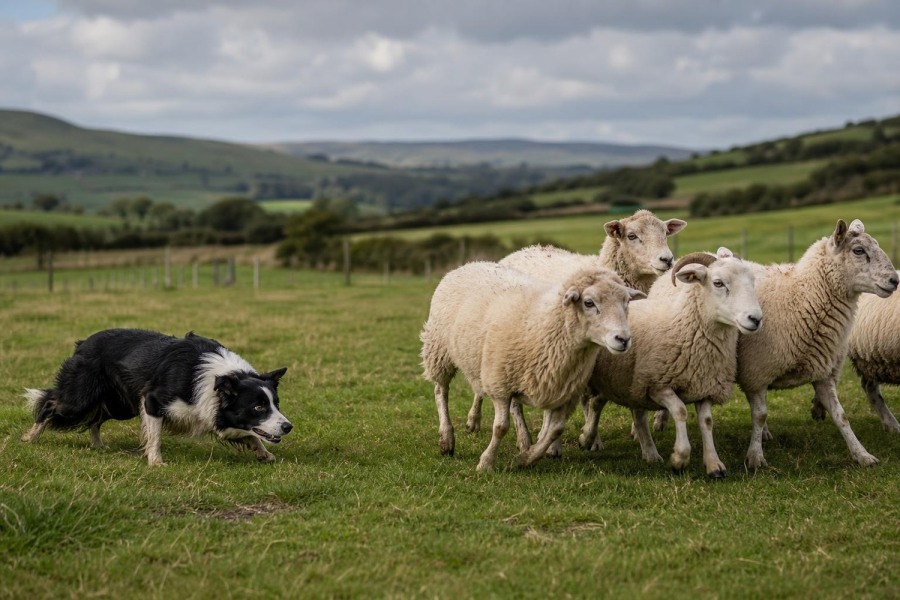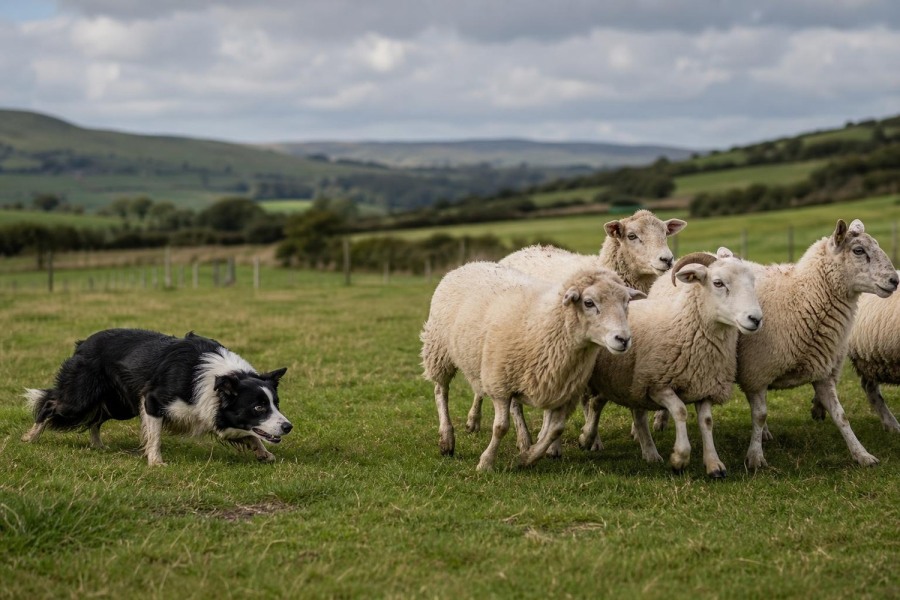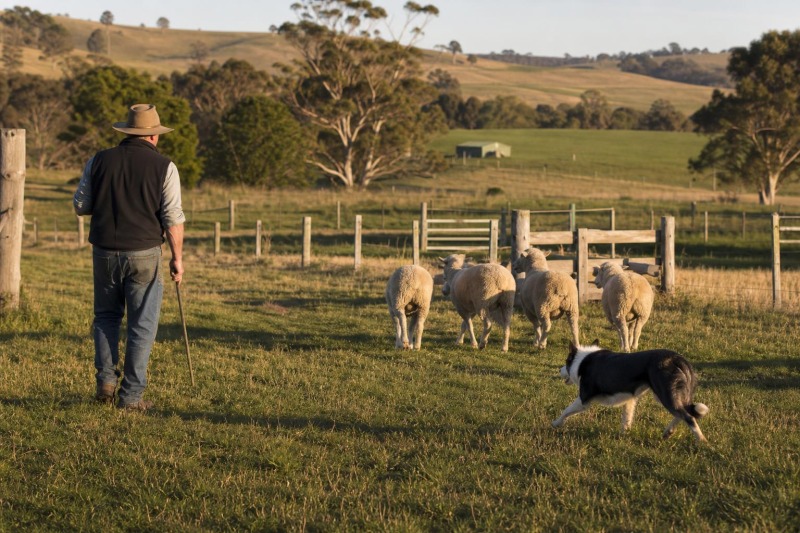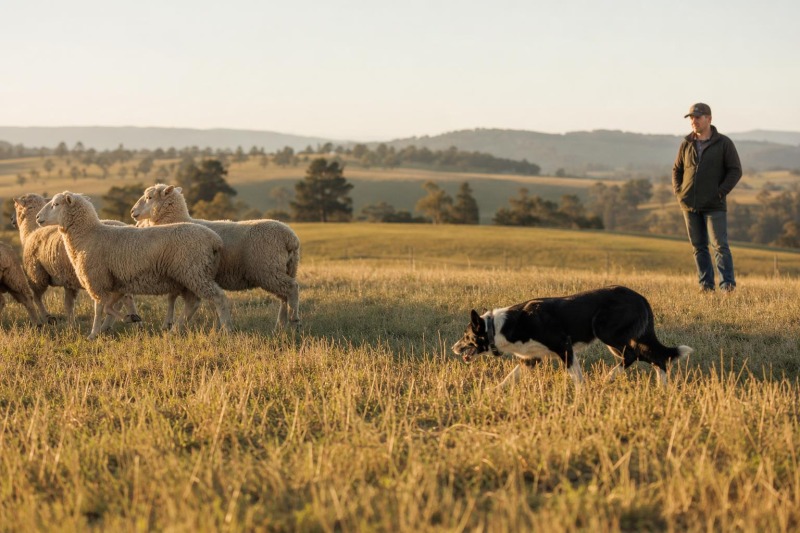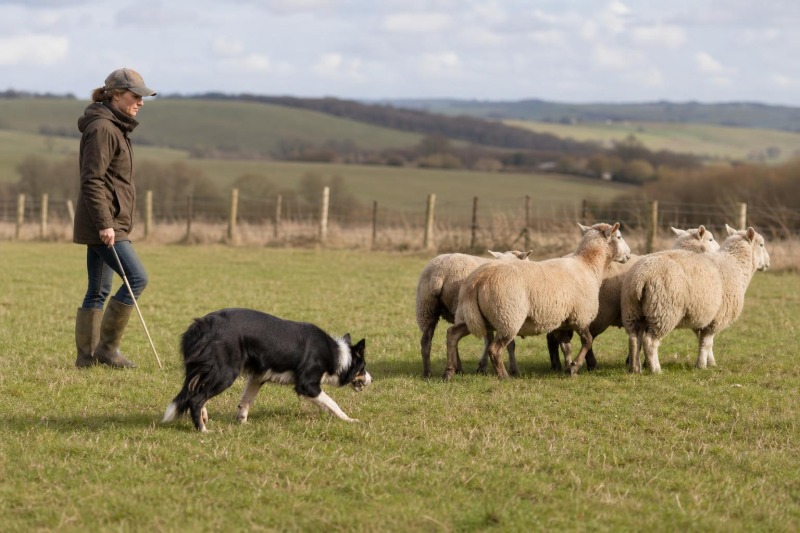
Gathering asks a dog to find a suitable route around stock and bring them toward the handler. Width, pace, and pressure need to fit the animals. A reliable gather develops through experience supported by clear control.
Sheep remember rough treatment, and dogs do too. If you want a reliable herding partner, the work starts with control, trust, and learning when to let instinct teach and when to step in.
What Gathering Really Means
In practical terms, gathering means the dog goes out, finds the sheep, brings them together, and draws them back to the handler without unnecessary panic. That sounds simple until you step into a field with flighty stock, shifting wind, and a young dog trying to figure out how close is too close. Gathering dogs need enough initiative to cast out and collect scattered sheep, but enough steadiness to keep a soft line on the flock once they are moving.
The best gathering dogs work with feel. They shape their path to the stock, hold balance naturally, and understand that their job is not to split the group unless asked. This is why training dogs to gather sheep is not just about commands. It is about building a dog that can think under pressure and read livestock in real time.
Start with the Right Foundation
A dog that barrels through every lesson with its ears shut will struggle on stock, and the sheep will pay for that confusion. Time spent on basic control away from livestock is never wasted.
Just as important is confidence. Young herding dogs should be exposed to different places, footing, gates, pens, and general farm movement. If a dog is rattled by every new sight or sound, the stock work becomes muddy. You want the dog entering the training field curious and ready, not overwhelmed.
Reading Instinct Before Formal Training
Not every herding breed gathers the same way, and not every individual dog has the same style. Some dogs come in wide and thoughtful. Others come in tight and hot. A first introduction to sheep should happen in a controlled pen or small arena with dog-broke stock and an experienced eye on the session. This first look tells you a lot. Does the dog circle naturally? Does it grip from frustration? Does it show confidence without recklessness? You are not looking for perfection. You are looking for a starting point.
One of the biggest mistakes handlers make is trying to command every movement in those early sessions. A good trainer watches first. Instinct needs room to surface. If the dog wants to head stock straight on, you may need to block and redirect. If it shows a natural outrun, let that picture develop. Early stock work is less about drilling and more about discovering how that dog sees livestock.
First Lessons on Sheep
A small group of calm sheep in a round pen or small paddock gives the dog a chance to stay connected without getting lost in distance. The aim is to help the dog find balance, the point opposite the handler that naturally brings sheep toward you.
That balance point is the heart of gathering. Once a dog understands that moving to balance controls the flock, the whole lesson starts to make sense. The dog no longer chases blindly. It begins to place itself with purpose. You may use simple flank cues, usually sending the dog around in one direction or the other, but timing matters more than volume. A quiet correction delivered at the right moment teaches far more than a loud command delivered too late.
If the dog pushes too hard and the sheep rush, slow the picture down. Step in, reduce pressure, and reset. If the dog gets sticky and stares without moving, encourage motion before that eye turns into a standstill. Good gathering work lives in that middle ground between too much force and too little authority.
Teaching the Outrun and Lift
As the dog begins to understand balance, you can begin shaping the outrun, the path it takes to go around the sheep, and the lift, the first moment the flock starts moving. A clean outrun should be wide enough not to scatter the sheep and confident enough not to droop off line. The lift should be calm. If the sheep explode at pickup, the dog came in wrong, too tight, too straight, or too fast.
A polite dog arrives in a way the sheep can accept. That does not mean weak. It means measured. A gathering dog that can lift sheep softly will save miles of trouble later in the fetch.
Developing the Fetch
Once the dog can go out, gather, and start the sheep toward you, the next piece is the fetch. This is where many young dogs wobble. They may bring the sheep partway, then slice in too close, overflank, or drift because they have not yet learned to hold a straight line. The handler’s job is to make the right path easy and the wrong one uncomfortable, all without draining confidence.
Walking backward can help in early stages, keeping the sheep coming and giving the dog a clear point of balance. If the dog crosses in front and turns the sheep off line, stop the drift early. Little mistakes become habits if they are repeated often enough. At the same time, do not nitpick every imperfect step. Sheep are living teachers, and a dog learns plenty by feeling the flock start to slip when it is out of position.
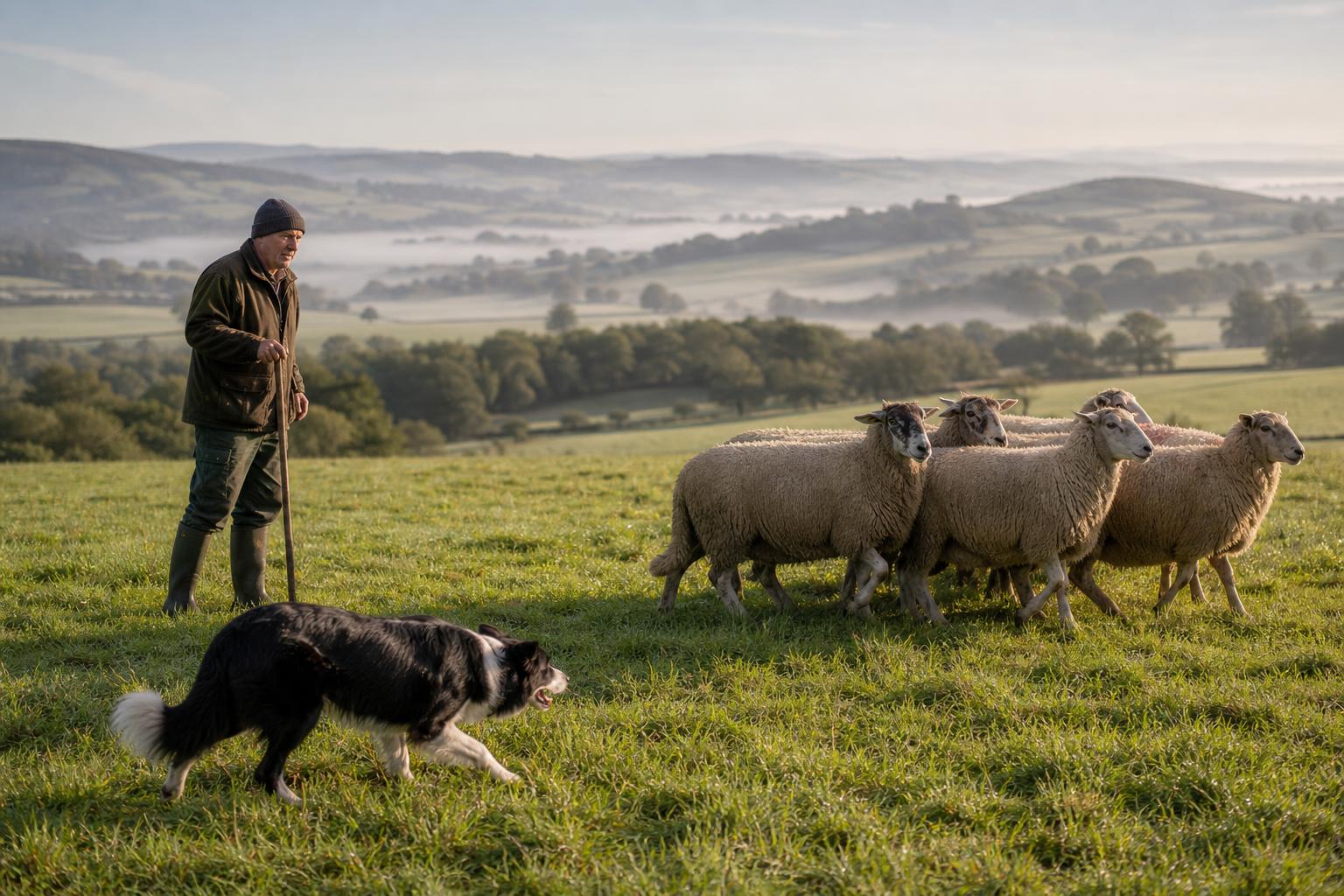
There is a kind of morning light on a training field when everything clicks. The sheep settle into a steady walk, the dog floats behind them with just enough presence, and you can feel the line tighten between all three parts of the job. Those are the moments worth chasing, and they do not come from force. They come from timing and repetition.
Common Problems When Training Dogs to Gather Sheep
Most trouble in herding work comes from pressure, either too much or too little. A dog that rushes in and splits sheep usually needs help with pace and flank shape. A dog that hangs back and cannot move stock may need confidence, stronger support from the handler, or better sheep. The stock matters more than many beginners realize. Wild sheep can make a sensible young dog look foolish, while dog-broke sheep can teach calm, correct movement.
Gripping is another issue that needs honest handling. Some dogs grip from power and some from panic. The answer depends on why it happens. If sheep challenge the dog and a quick heel bite keeps order, that can be part of practical stock work in the right dog. But random, frustrated biting is a fault that should not be excused as style. A good gathering dog uses enough force to hold stock and no more.
Handlers also get in the way by talking too much. If every second is filled with noise, the dog never learns to read sheep. Quiet handlers tend to make thoughtful dogs. Step into the lesson when you need to shape, protect stock, or prevent a bad habit. Then get out of the picture and let the dog work.
Knowing When to End a Session
Short sessions beat long, messy ones. End on a useful effort, even if it is small. Maybe the dog finally made a clean flank. Maybe it held balance for twenty yards without slicing in. That is enough for the day. Young dogs improve between sessions as much as during them. If you drill until the dog is mentally fried, tomorrow’s lesson starts in a hole.
Building a Finished Gathering Dog
As training progresses, widen the field, vary the sheep, and add real-world tasks. Gather from corners. Bring sheep through gates. Work in different wind and light. The polished dog is not just one that performs in a familiar pen. It is one that can go find stock on a hillside, bring them off quietly, and adapt when things do not go according to plan.
That kind of dog is built slowly. You are shaping judgment as much as mechanics. Commands matter, but judgment is what saves a gather when a ewe breaks, lambs lag behind, or the flock starts to funnel toward the wrong opening. The best dogs carry a kind of calm authority. They do not waste steps, and they do not need to prove themselves every minute.
For dog owners interested in herding dogs, the takeaway is simple. Training dogs to gather sheep is part instinct, part stock sense, and part patient repetition. You cannot rush feel into a dog, but you can create the kind of lessons where feel has room to grow. Work with good sheep when possible. Keep pressure fair. Learn to watch more than you talk. And remember that the finest gathering dogs are not the flashiest ones at the start. Often they are the dogs that listen, think, and come back the next day a little wiser than before.
A dependable sheep gathering dog is one of the handiest partners a stockman can have. There is deep satisfaction in sending a dog across a field and watching it gather with purpose, bringing the flock to hand as if the whole thing were carried on a quiet string. That sort of work never gets old, and it is earned one honest lesson at a time.