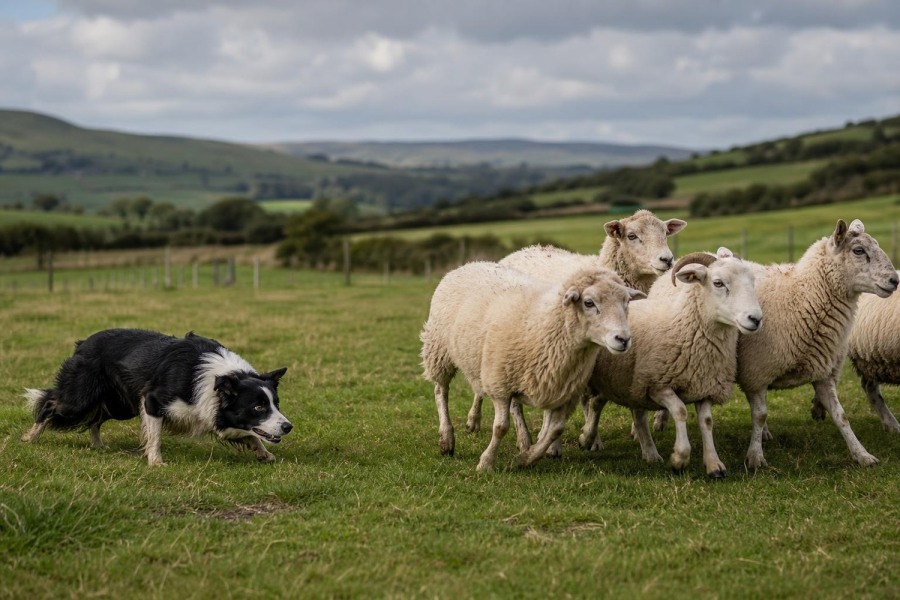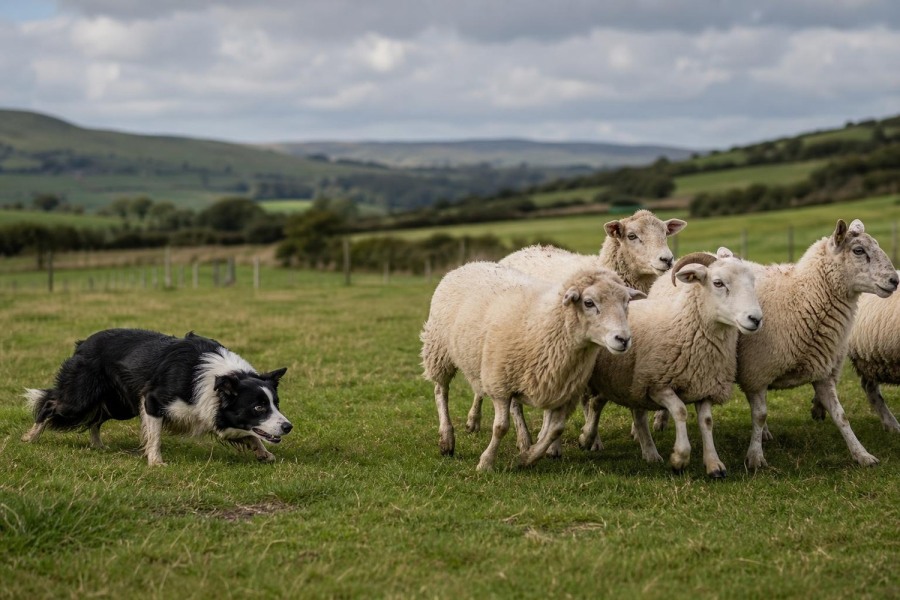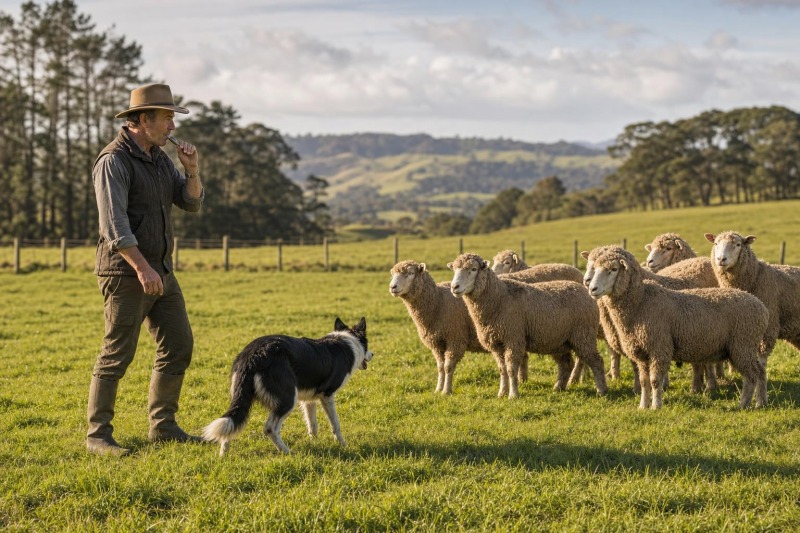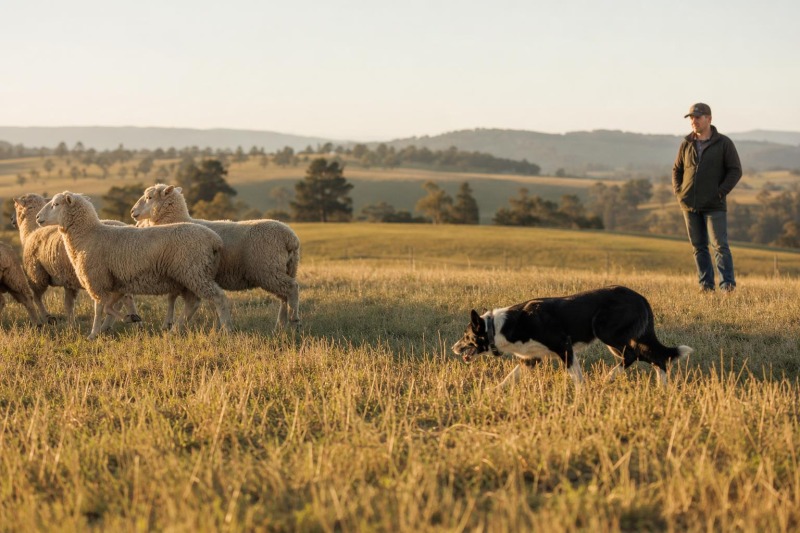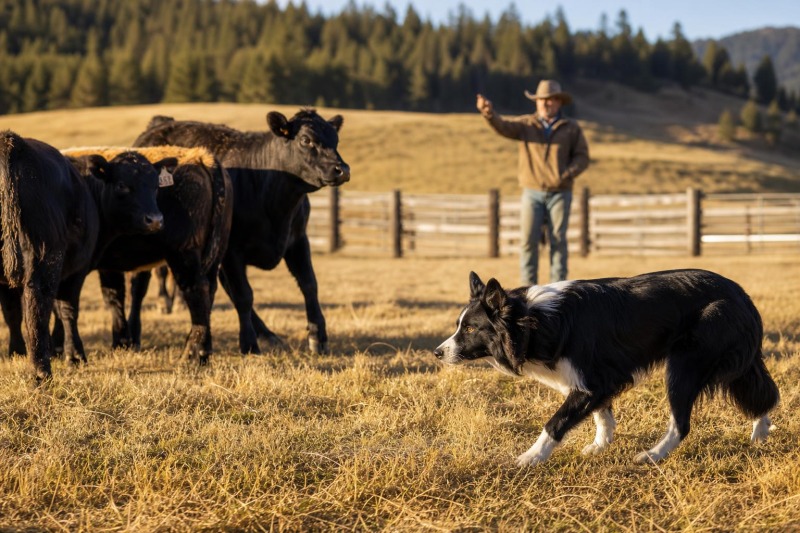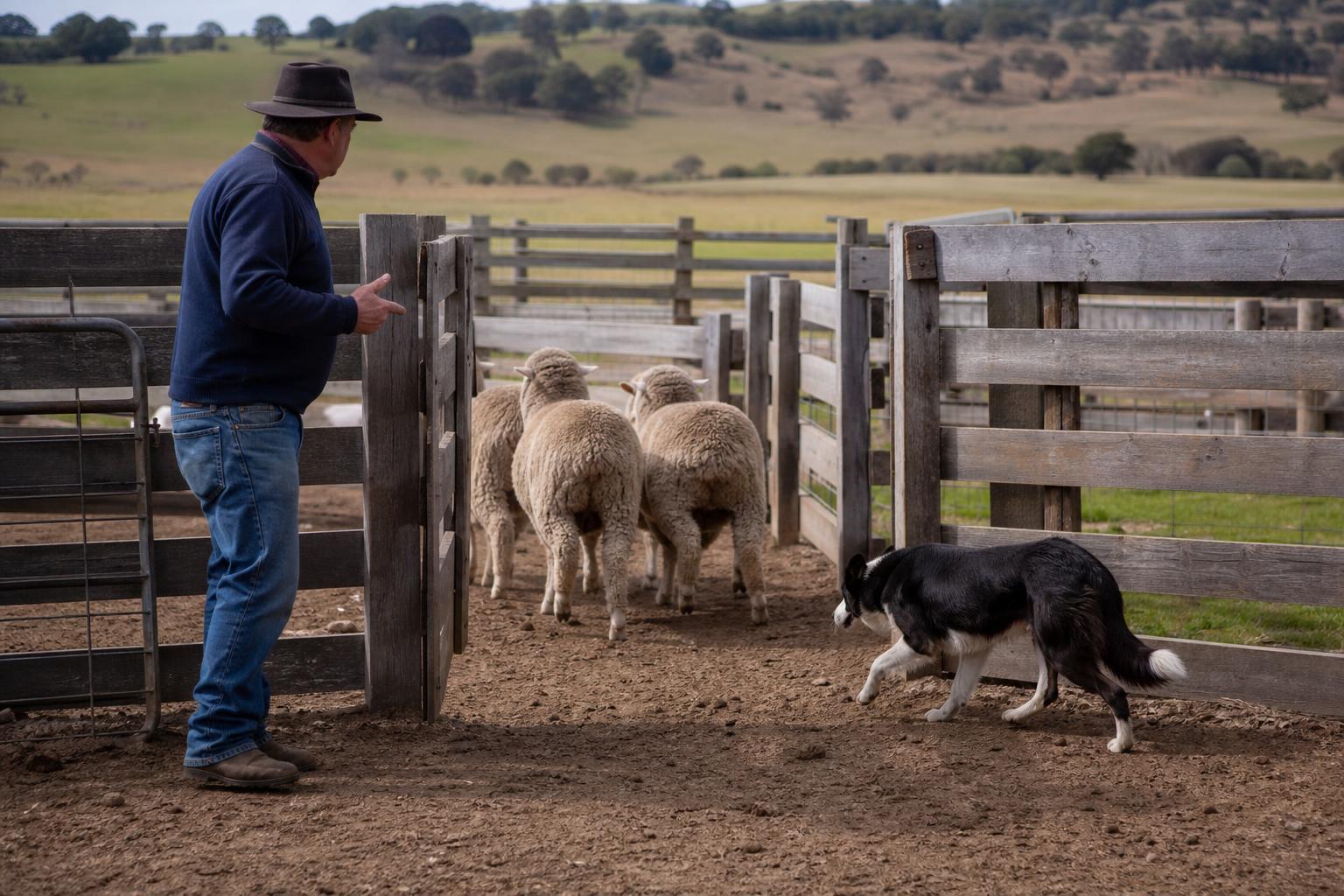
Gates and pens create pressure points for livestock and dogs alike. Useful work depends on position, pace, and a route the animals can take. Clear handling helps the dog influence movement without adding unnecessary force or confusion.
A dog that can gather sheep in the open is enjoyable to watch. A dog that can hold a bunch at a narrow opening while you swing a gate, then ease the right animals through without a wreck, is the kind of partner you remember after a long season. Teaching dogs to work gates and pens takes patience, timing, and a good understanding of how stock react in confined places, but it is one of the most practical lessons you can give a herding dog.
Why Gate and Pen Work Matters
Most chores on small farms and working properties eventually come down to control in tight quarters. You may be moving sheep into a catch pen for treatment, sorting a few lambs off their mothers, or shifting goats from one pasture to another. In each case, the gate becomes a pressure point. Livestock bunch there, hesitate there, and try to rush there. A dog that understands how to hold, step in, back off, and cover an opening can make the whole job look easy.
Pen work asks even more of a dog. Tight spaces amplify excitement. Stock have fewer escape routes, and a young dog can get over-eager in a hurry. The goal is not to create a dog that dives into pressure blindly. The goal is a dog that reads the space, responds to commands, and keeps stock settled enough to move where you want them. Calm control is worth far more than speed.
Start With Solid Foundations
Before you ever ask a dog to work a gate or pen, it should already understand the basics of balance, flanking, stopping, and taking pressure off when asked. If a dog does not reliably stop, lie down, or stand when stock are moving, gate work will expose that weakness fast. The opening in a fence acts like a magnet to livestock, and a dog without brakes tends to overrun the moment.
That side-to-side control becomes important at gates, because often the dog does not need to drive stock hard. It needs to block a drift, cover a shoulder, or slide over just enough to keep one ewe from slipping past. Those are fine movements, not dramatic ones.
Choose the Right Stock and Setup
A young or inexperienced dog should learn on sensible livestock, not flighty animals looking for a reason to explode. Quiet sheep or cattle that respect a dog but do not panic will teach more in one session than wild stock will in ten. The training area matters too. A small pen can be useful, but not so tight that the dog gets crowded into making poor choices. A larger catch area leading to a gate often works better at first, because it gives everyone room to think.
Good footing helps. Clear fencing helps. A gate that swings freely and does not bang around is worth more than many people realize. You are trying to teach timing and feel, not test whether your dog can recover from avoidable chaos.
Teaching the Dog to Hold a Gate
The first lesson is usually simple in theory and surprisingly hard in practice: teach the dog to hold stock off a gate without crashing into them. If the dog crowds too hard, the animals rush and scatter. If the dog hangs back too far, one slips through and the lesson gets muddy.
What you want is a dog that feels the line of pressure. It should learn that a half-step forward can close the door and a half-step back can invite movement. That moment of quiet is part of the reward. A dog begins to understand that steady control, not frantic action, is what makes the work come together.
Some dogs naturally grip the opening and hold it well, but they can become sticky, refusing to release pressure when it is time to let stock flow through. Others are too loose and let the gate leak. Neither fault is unusual. Both improve when the handler stays consistent and asks for small, clear adjustments instead of too much at once.
Teaching Release at the Right Moment
Holding a gate is only half the job. The dog must also learn to let stock pass when invited and then cover the opening again if needed. This is where timing matters more than volume. A shouted command after the lead ewe has already blasted through is usually too late. The dog needs direction just before the movement begins, while the pressure is still soft enough to shape.
If everything stays calm and measured, the work unfolds cleanly. If the dog gets excited before the right moment, the chance is spoiled. Herding at a gate is much the same. The dog has to trust that there is a time to hold and a time to yield.
Working Dogs in and Around Pens
Pens create a different kind of pressure. The walls stop motion, corners trap stock, and the dog has less room to gather balance. Young dogs commonly overcommit in pens because they feel stock bunching and want to force a result. That usually produces the opposite. Livestock jam tighter, heads come up, and the whole pen gets electric.
The dog must learn that in close quarters, less can be more. A quiet presence at the correct angle often moves stock better than a hard charge.
Sorting Without Creating a Wreck
Sorting is where training shows. You may only need two sheep out of ten, but the dog has to help isolate them without boiling the whole bunch. They are the ones that can slow themselves down, read the lead animal, and change pressure as the opening appears. Sometimes that means stepping in boldly. Sometimes it means freezing for two seconds while the right animal commits to the gate.
Pen work takes concentration. A dog that can work for an hour in the field may only give you fifteen really thoughtful minutes in a sorting pen before fatigue starts showing as pushiness or confusion.
Common Mistakes Handlers Make
People walk a young dog up to a tight gate with nervous stock and expect instinct to carry the day. Sometimes instinct will help, but training is what makes the work dependable. Another common error is too much noise from the handler. Constant commands clutter the dog’s mind. At a gate or pen, one well-timed command is worth ten late ones.
Handlers also tend to stand in the wrong place. Your position changes the pressure picture. If you block the opening carelessly or drift toward the stock at the wrong angle, you may be causing the rush you blame on the dog. Good dog work and good stockmanship always go together. You cannot teach one without practicing the other.
Building a Reliable Farm Dog Over Time
There is no shortcut to polished gate and pen work. It comes from many small lessons stacked carefully. One day the dog learns to hold a gap without lunging. Another day it learns to release three ewes through a gate and stop the fourth. Weeks later it begins reading the whole setup before you say a word. That is when training starts turning into partnership.
A good herding dog does not just move animals. It saves steps, lowers stress, and makes rough jobs more manageable. When you can walk to a pen with confidence because your dog understands the work, the place runs smoother. More importantly, the stock stay calmer, and the dog gains the kind of steady usefulness every owner hopes for.
If you are patient, fair, and willing to reward thoughtful work, your dog will start to understand that gates and pens are not places for panic or brute force. They are places for precision. And once a dog learns that lesson, it becomes far more than an enthusiastic helper. It becomes a real working partner.