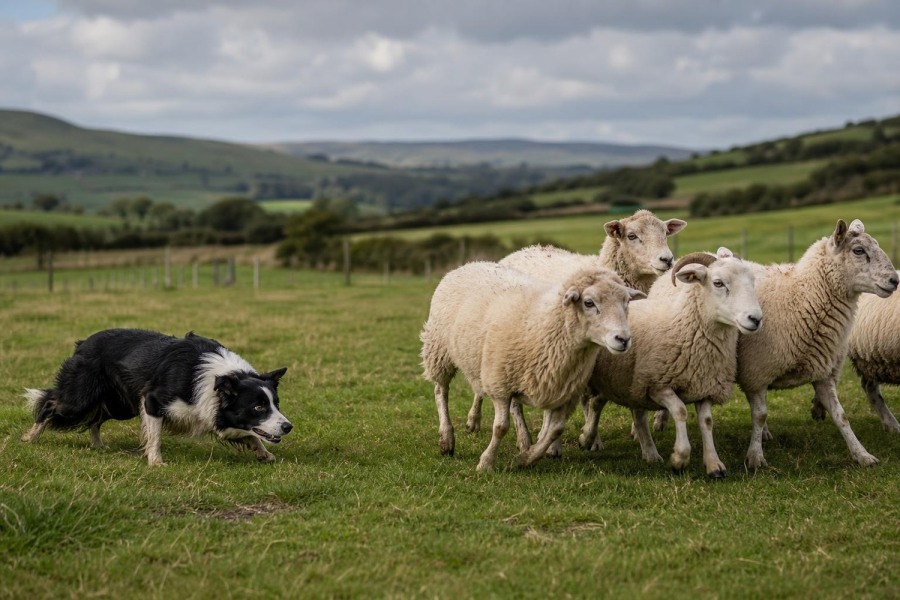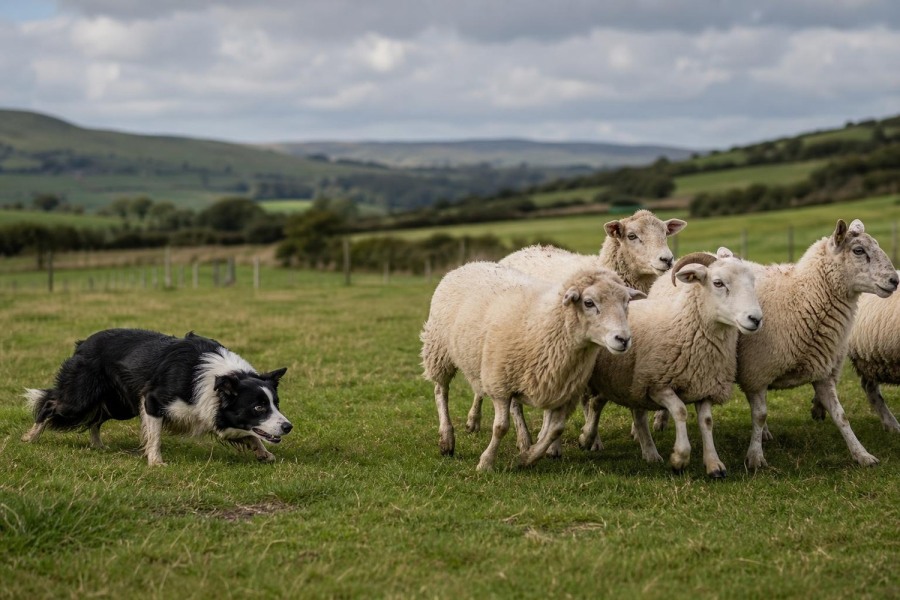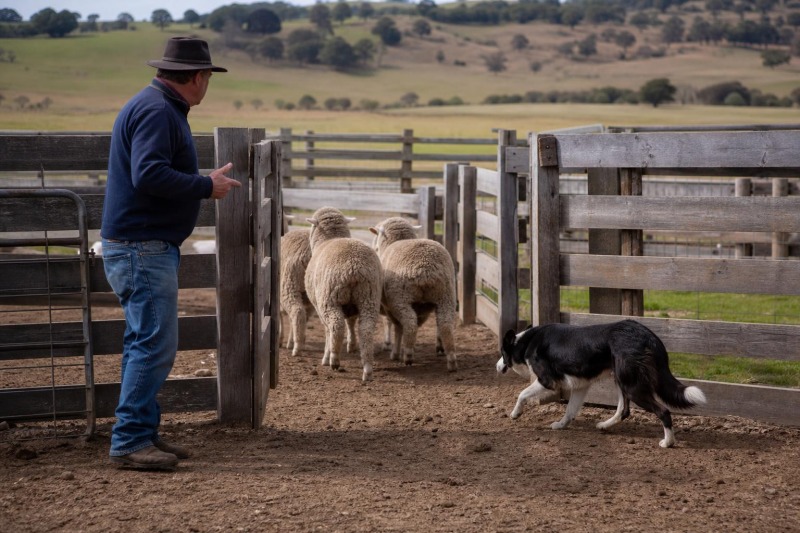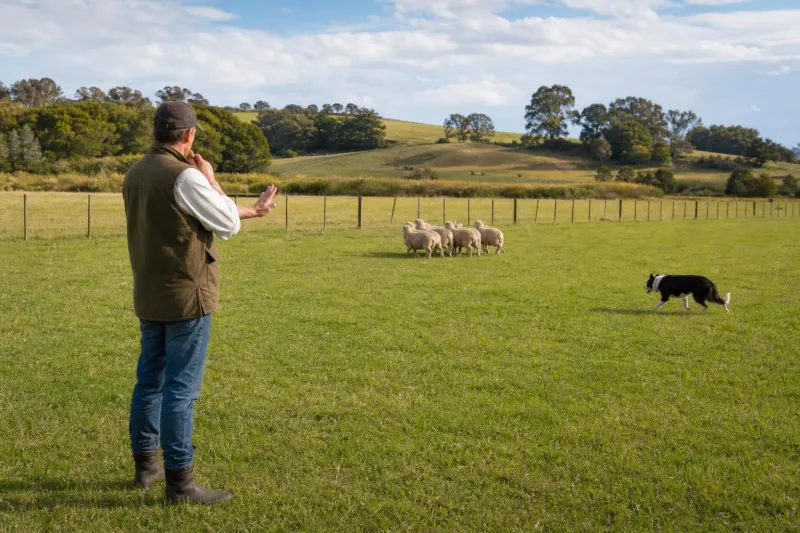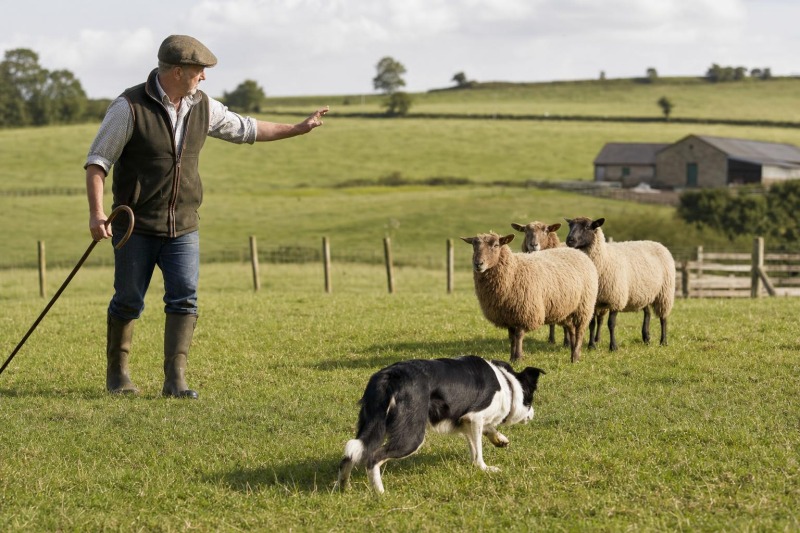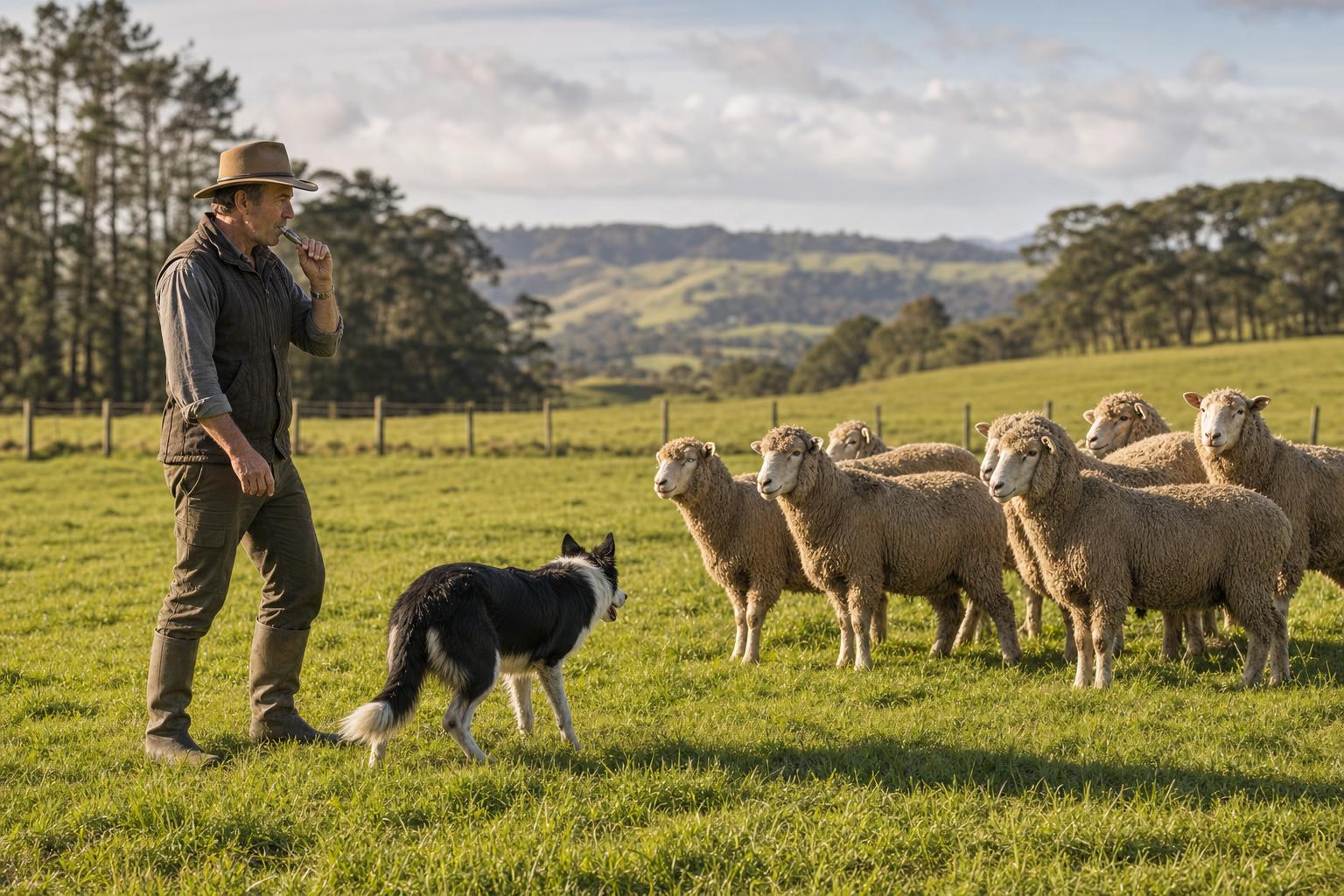
A whistle cue needs to mean the same thing each time the dog hears it. Clear signals and gradual increases in distance help preserve that meaning. The dog must understand the underlying response before the whistle can direct useful stock work.
There is less confusion in the field when the cues stay sharp and familiar. A dog that hears the same clean whistle every time learns to trust it. That trust becomes steadiness. Steadiness becomes useful work. For owners interested in training a herding dog properly, whistle commands are one of the most valuable tools you can add to your program.
Why Whistle Commands Matter in Herding Work
Herding dogs are often asked to think at a distance. That is one of the real beauties of the work. A good dog can gather stock from the far side of a hill, take a flank around a stubborn ewe, or stop clean at the top of pressure, all while the handler remains well back. Voice commands can work in close quarters, but as space opens up, whistles begin to shine. The sound carries farther, stays more consistent, and does not change nearly as much with the handler’s mood, fatigue, or stress.
That consistency is no small thing. Dogs are students of pattern. If one day your “come by” sounds calm and the next it sounds rushed and strained, some dogs will still manage, but many will hesitate. A whistle cue, once learned, keeps the message clean. It also helps when livestock are noisy, weather turns rough, or the terrain makes it hard for your dog to hear spoken words.
There is another advantage many beginners overlook. Whistle commands often make handlers better, too. Because you cannot ramble with a whistle, you tend to become more deliberate. You think about timing. You give one cue and let the dog work. That can improve your stockmanship as much as your dog’s responsiveness.
Starting with the Right Foundation
Before a whistle ever enters the picture, your dog should understand basic movement and pressure. A whistle is not magic. It does not create a trained dog out of an unstarted one. It simply gives shape and reach to commands the dog already knows. If your dog does not understand stop, flank, and recall in some form, start there first with voice and body position.
Once the dog has a fair grasp of the basics, you can pair the whistle with commands it already knows. This is the cleanest way to teach. Blow the whistle cue, then immediately give the voice command the dog recognizes. When the dog responds correctly, release pressure and reward with continued work. For many herding dogs, the work itself is the reward. They want access to stock, movement, and purpose more than a treat in your pocket.
Do not rush this stage. Good whistle training is built through repetition that stays calm and meaningful. Pick your cues and stick with them.
Common Whistle Commands Herding Dogs Learn
There is no single universal whistle language that every handler uses exactly the same way, but certain commands show up again and again. Most trainers teach a stop or lie down whistle first because it is the safety brake. Then come flank commands, often one for moving clockwise around stock and one for moving counterclockwise. Many handlers also teach a recall or walk-up cue, and some add a steady or slow signal for dogs that push too hard.
The exact sound matters less than consistency. One long blast might mean stop. Two short notes might mean come by. A rising trill might mean away to me. What matters is that each command stays distinct, easy for you to reproduce, and clear enough for the dog to separate from the others. Complicated patterns may sound impressive, but simple commands usually hold up better in the field.
How to Teach Whistle Commands Step by Step
Start in a controlled setting where the dog is not overwhelmed. A small pen or training paddock with calm stock often works best. Begin with one cue, usually the stop. Blow the whistle and immediately back it up with the voice command the dog already knows. The instant the dog complies, soften everything. Let the stock settle. Let the dog feel that the right answer brings relief and order.
When that response becomes reliable, begin fading the voice. Some dogs connect the whistle fast. Others need more sessions before they truly understand the whistle alone carries the meaning. Be patient. This is not a race. A whistle trained properly can serve that dog for years.
After the stop is dependable, move to one flank at a time. Pair whistle and voice, then gradually separate them as the dog catches on. Keep your timing honest. If the dog is already taking the correct flank before the whistle, you are not teaching the cue as clearly as you think. Give the signal early enough that the dog can respond to it, not merely appear to respond after guessing right.
Her handler had put in the quiet work. Every whistle meant one thing. No clutter, no emotion, no shouting after the fact. That dog looked as if she were reading the wind, but really she was reading a language she knew by heart.
Building Distance and Reliability
Once the dog understands the whistle close in, begin stretching the work. Add a little distance at a time. Change fields. Work in different wind conditions. Let the dog hear the whistle when sheep are moving, when they are standing, and when they are trying to break. Reliability comes from proofing, not from one good afternoon.
This is where many owners discover whether they have trained the cue or just rehearsed it in one setting. A dog that stops beautifully in a pen may ignore the same whistle on open ground if that understanding has not been carried forward. Do not treat that as failure. Treat it as information. Go back a step, clean it up, and build again.
Keep your whistle use fair. Too many commands can sour a dog and make it sticky. Herding dogs need direction, but they also need room to think. A strong working partnership balances control with trust. Blow the whistle when the dog needs guidance, not every second the stock wiggles.
Common Mistakes Handlers Make
The first mistake is inconsistency. If your stop whistle changes from one long note to two uneven puffs depending on how winded you are, your dog has extra work to do. The second is poor timing. A late whistle often feels like punishment to the dog because the stock situation has already shifted. The third is overhandling. Some dogs become dependent on constant instruction and never develop the confidence to hold stock naturally.
Another issue is skipping the stop command in favor of flashy flanks. The stop is the command that protects livestock, dog, and handler. Build that foundation well. A dog that can stop clean under pressure is safer and far more useful than a dog that knows five stylish whistles but blows through every one of them.
Finally, some owners expect the whistle to replace relationship and stock sense. It cannot. Herding is part training, part instinct, and part judgment earned by time in the field. The whistle supports all of that, but it does not replace it.
Choosing a Whistle and Using It Well
There are different styles of dog whistles, and handlers tend to get loyal to what suits their mouth and breathing best. Some prefer a pealess whistle for its sharpness and reliability in wet weather. Others like traditional shepherd-style whistles they can shape with the tongue. The best whistle is the one you can blow consistently without fumbling, especially when pressure is on and sheep are headed for trouble.
Practice without the dog if you have to. Sit in the truck, on the porch, or at the gate and make sure your notes come out the same way every time. That little bit of private repetition saves a lot of confusion later. A whistle should feel like a tool you own, not one you wrestle with.
Making Whistle Training Part of Everyday Work
The finest whistle-trained herding dogs are not usually the ones drilled endlessly in artificial setups. They are the ones whose handlers use the whistle thoughtfully in everyday jobs. Bringing sheep through a lane, holding cattle off a feeder, gathering stock from the back section, moving a few stubborn animals through a gate: those practical moments give whistle commands real meaning.
Dogs learn best when the work matters. They remember what solves a problem. When your whistle helps the dog shape stock cleanly and brings calm to a messy situation, the lesson sticks deeper than it does in a string of empty repetitions.
For dog owners interested in herding breeds, whistle commands are worth the time because they sharpen communication and give your dog a clearer role in the work. They also deepen the partnership. There is a quiet satisfaction in sending a dog wide with one note, stopping it with another, and watching stock settle as if all of you are tied to the same invisible line.
That is the real value of whistle commands for herding dogs. They are not just sounds in the air. They are trust made audible, carried across distance, and proven one clean response at a time.