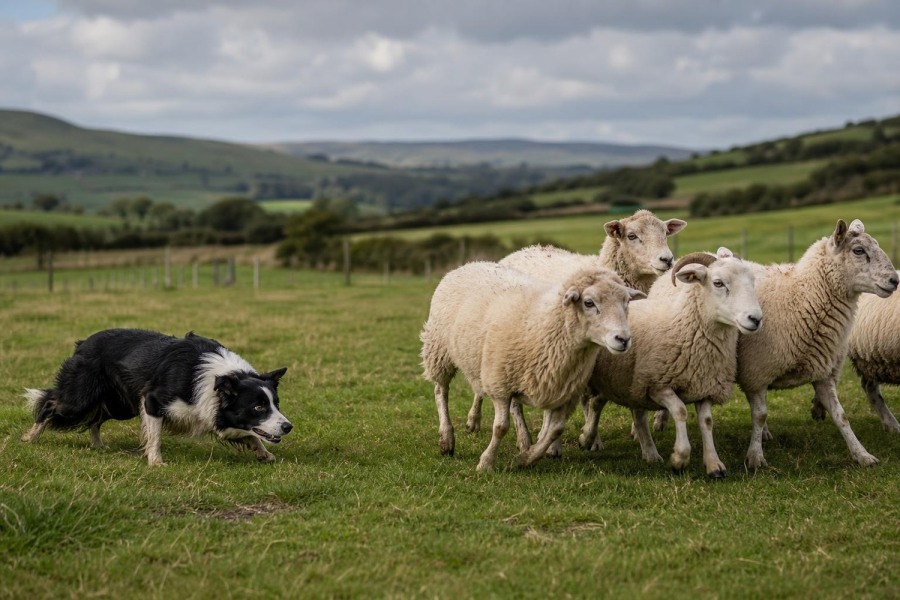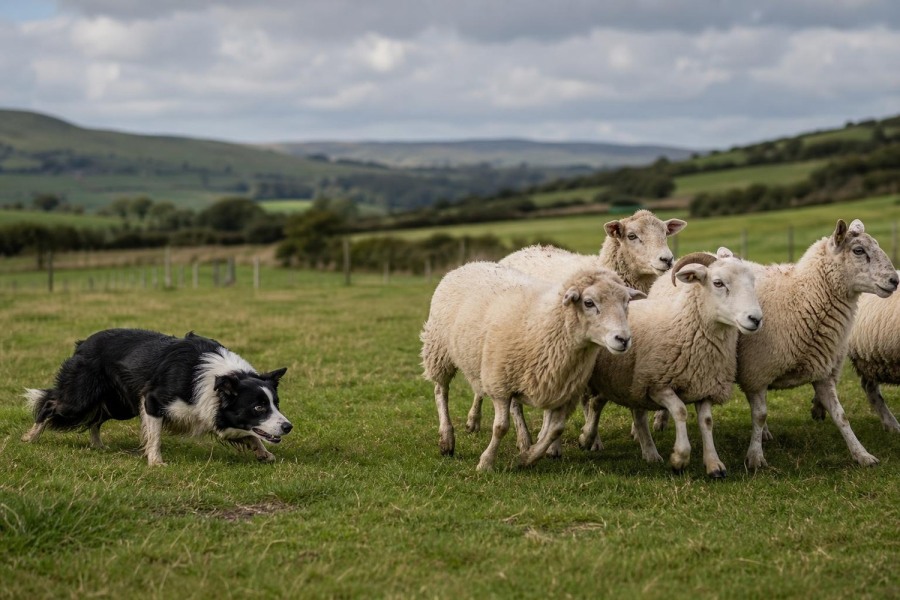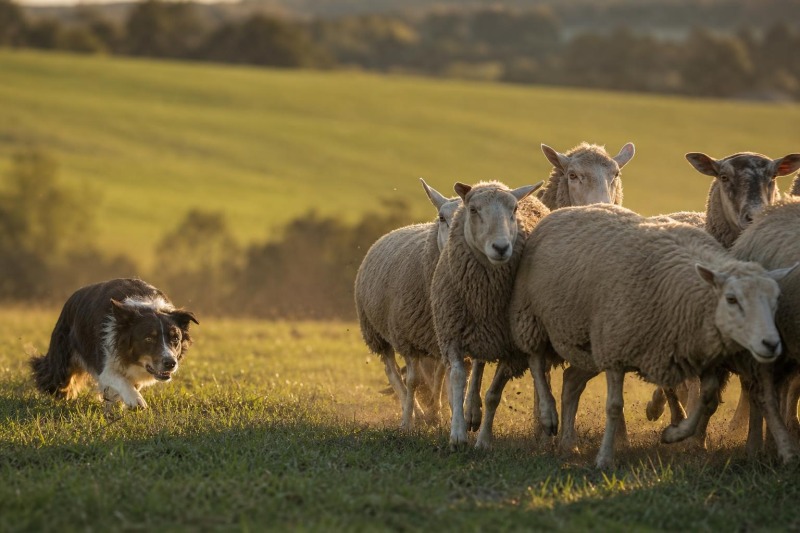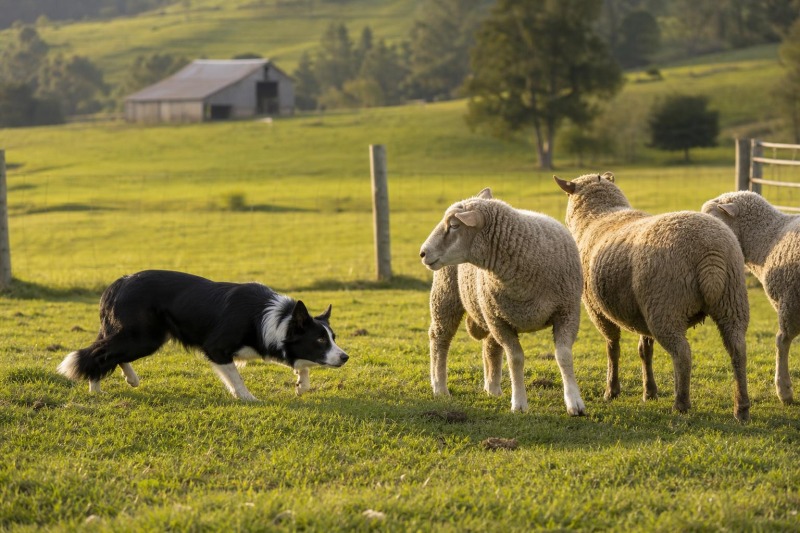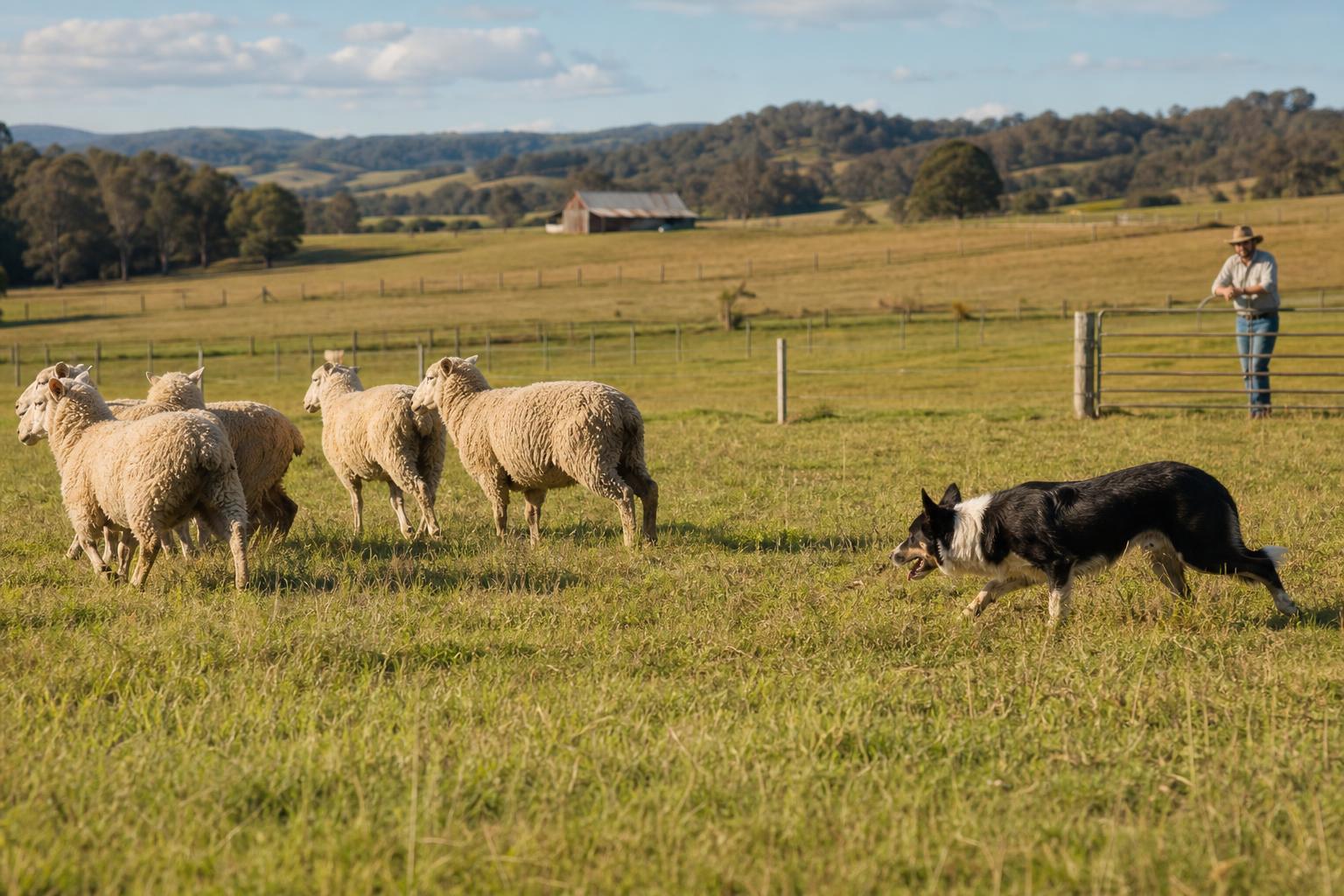
A well-started dog can reach positions and influence stock in ways that are difficult for a person on foot. That advantage depends on sensible handling. The dog and handler work best when their pressure on the animals is coordinated.
The difference is not just speed. It is understanding. Herding dogs work better with livestock than humans do because they speak the language of movement, pressure, and instinct in a way we never naturally will.
Herding Dogs Understand Livestock Pressure
Livestock are creatures of pressure and release. Push too hard and they bolt. Give too little and they stall, drift, or challenge you. Good herding dogs seem born knowing how close they can get, how much eye to use, when to flank wide, and when to step in. A person can learn some of that with experience, but even experienced handlers usually rely on the dog to do the fine work.
What makes a dog so effective is that it moves like a predator without acting like one. That may sound strange, but it is at the heart of stock work. Sheep, in particular, respond to a dog because the dog triggers ancient instincts. The dog does not need to grab, bark constantly, or charge wild to make animals move. Often all it takes is the right angle, the right distance, and just enough presence to influence the herd. Humans usually apply pressure in cruder ways. We stand upright, move awkwardly compared to a dog, and tend to use noise and body motion that can unsettle stock instead of guiding them.
The dog reads the lead animal, watches the edges, and understands where the break is likely to happen before it happens. That instinctive feel is what stockmen call stock sense, and it is one of the biggest reasons herding dogs outperform humans in the field.
Instinct Gives Dogs a Natural Advantage
Humans have to learn stock movement from the outside. Herding dogs, when they come from strong working lines, start with an internal blueprint. Training matters, no question about it, but training shapes instinct rather than creating it from nothing. You can teach commands, pace, and manners. You cannot manufacture genuine feel for livestock where none exists.
That natural advantage shows up early. Young dogs often begin by circling stock, finding balance, and applying pressure in ways nobody explicitly taught them. They may be rough at first or overexcited, but the raw material is there. They are wired to gather, contain, and control movement. A human, by contrast, often tries to dominate the animals physically or force them with straight-line pressure. Livestock rarely respond well to that for long.
In practical terms, instinct allows a dog to react in the instant. If a ewe ducks toward a gap in the fence, the dog is already moving. If a calf turns back in an alley, the dog sees the hesitation before the handler notices it. That kind of response cannot be duplicated by shouting from fifty yards away or jogging through mud in work boots. Dogs are not just faster. They are mentally connected to the movement of stock in real time.
The Value of Stock Sense in Daily Work
Stock sense is one of those qualities people talk about until they see it, and then they understand. It is the dog that knows when to hold pressure and when to soften. It is the dog that can move stubborn cattle without blowing them up. It is the dog that notices the weak lamb lagging behind and keeps the group together without creating panic.
This matters every single day on a farm or ranch. Gathering from rough country, sorting pairs, moving stock through gates, loading trailers, or bringing animals in for treatment all go smoother with a dog that can think. Humans can direct the operation, but the dog handles the conversation with the livestock.
Dogs Move Better, Faster, and With Less Stress
One of the most overlooked reasons herding dogs work better than humans is simple efficiency. A dog covers ground fast, changes direction on a dime, and works low and smooth in a way that does not waste energy. A person trying to gather stock from a broad pasture is slow by comparison. By the time a human gets to one side, the animals have already slipped another way. A dog closes that gap almost effortlessly.
But speed alone is not the whole story. The best dogs reduce stress on livestock because they move them cleanly. Instead of repeated failed attempts, broken groups, and loud pressure, the dog keeps the herd together and pointed in the right direction. Animals that are handled calmly lose less condition, suffer fewer injuries, and become easier to work over time. That is good for welfare and good for the owner.
Sometimes it works, but often it turns into a lesson in how fast things can fall apart. A good cattle dog slipping into the right spot can change the entire mood. The stock settle, find the opening, and flow where they need to go. That is not luck. It is the dog controlling pressure with far more finesse than a human can muster alone.
Herding Dogs Build a Working Relationship With Livestock
Another reason herding dogs often outperform humans is consistency. Livestock remember pressure. They remember who caused confusion and who moved them fair. Over time, stock become accustomed to a good dog. They learn how that dog works and respond with less resistance. In many cases, the herd develops a clearer relationship with the dog than with the people around them.
That relationship is not affection in the way a house dog shows affection. It is respect and predictability. The livestock know the dog will hold the line, stop the break, and keep things moving. They also learn the dog will not bring chaos every time it shows up. Humans can certainly build calm handling habits, but dogs communicate in a direct physical language that livestock understand immediately.
This is especially useful with sensitive sheep and flighty goats. Those animals can become frazzled by too much human pressure. A dog with the right amount of eye and rate can gather them in a way that feels natural to the animals. That keeps the work cleaner and safer, especially in tight spaces or rough terrain.
Why Timing Matters More Than Force
People often make the mistake of thinking livestock work is about being tough enough or loud enough. It is not. It is about timing. The dog that steps in one second too late can lose the head. The handler who pushes too early can blow the group apart. Timing is where herding dogs shine. Their bodies are built for quick adjustments, and their minds are tuned to small changes in stock behavior.
A person usually reacts after seeing a mistake develop. A skilled dog often prevents the mistake from happening at all. That difference saves labor, reduces wear on the animals, and keeps the whole operation more controlled.
Humans Still Matter, but the Best Work Is a Partnership
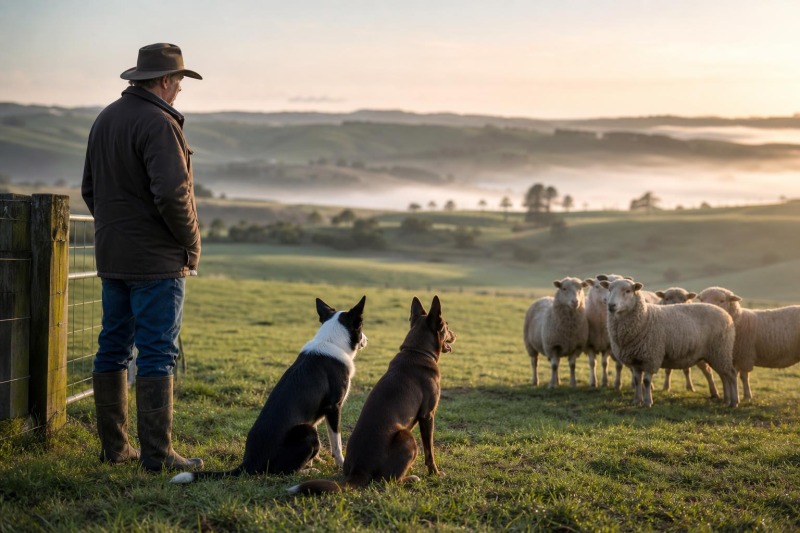
None of this means humans are unnecessary. Far from it. A trained herding dog reaches its full value only with a handler who understands stock and trusts the dog. The human sets the plan, chooses the route, decides which animals to cut out, and reads the larger picture. The dog carries out the close work with speed and finesse. It is a partnership, but it is a partnership where the dog often does the part humans are least naturally suited for.
That is why the best stockmen do not micromanage every stride. They give the dog room to think. A smart handler knows when to whistle, when to stop the dog, and when to stay quiet. The dog knew the job, the stock trusted the pressure, and the handler simply guided the edges of the picture.
For dog owners interested in herding breeds, this is worth remembering. These dogs are not just athletic pets with extra energy. They were shaped by generations of practical work. Their instincts, intelligence, and responsiveness make them extraordinary with livestock when given proper training and purpose. Without that outlet, many of them struggle because the drive is still there, looking for a job.
Why Herding Dogs Remain Irreplaceable
Modern equipment has changed farming and ranching in a thousand ways, but a good herding dog still does something machines and humans cannot do alone. It thinks on the move. It responds instantly. It works with the instincts of the herd instead of against them. That makes the dog not just useful, but often irreplaceable.
When people ask why herding dogs work better with livestock than humans do, the answer is not that humans are clumsy or incapable. It is that dogs were built for this work in body, mind, and instinct. They can read stock, shape movement, and hold pressure in a language livestock have understood for ages. A human may lead the operation, but the dog is often the one truly talking to the herd.
Anyone who has stood in a field at first light and watched a good dog gather stock out of the haze knows this in their bones. The sheep lift their heads, bunch, and start to flow. The dog swings wide, drops into balance, and brings them in as if pulled by an invisible line. No wasted shouting. No chaos. Just old instinct meeting old instinct. That is why herding dogs still matter, and why, when it comes to livestock, they so often do the job better than we ever could.